BookBrief
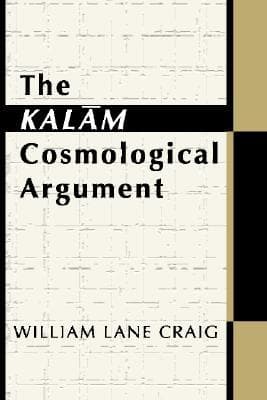
The Kalam Cosmological Argument cover
Archivist's Choice

The Kalam Cosmological Argument

William Lane Craig (2000)

Genre

Spirituality / Science / Philosophy

Reading Time

240 min

Key Themes

See below

Track Your Reading

Sign in to track this book

William Lane Craig builds a philosophical and scientific case for God's existence, addressing objections to the universe's finite past and its cause.

Core Idea

William Lane Craig defends the Kalam Cosmological Argument, stating that the universe has a cause. He argues for two premises: first, everything that begins to exist has a cause, and second, the universe began to exist. He supports the second premise with philosophical arguments against an infinite past and with scientific evidence like the Big Bang theory and thermodynamics. From these, Craig concludes that the universe has a cause outside itself. Craig then explores the nature of this first cause, saying it is uncaused, timeless, spaceless, immaterial, and powerful. He addresses common objections, such as 'who caused God?' by clarifying that the argument applies to *everything that begins to exist*, not to everything. He argues that the characteristics of this first cause point to a personal creator, making a philosophical and scientific case for a transcendent being responsible for the universe's origin.
Reading time
240 min
Difficulty
Hard
✓ Read this if...
You are interested in a rigorous philosophical and scientific defense of the existence of a creator based on the origin of the universe, and want to understand the Kalam Cosmological Argument in depth.
✗ Skip this if...
You are not open to arguments for a transcendent cause of the universe or prefer a less technical, more narrative approach to cosmology and philosophy of religion.

Core idea

The central argument and framework that powers the entire book.

William Lane Craig defends the Kalam Cosmological Argument, stating that the universe has a cause. He argues for two premises: first, everything that begins to exist has a cause, and second, the universe began to exist. He supports the second premise with philosophical arguments against an infinite past and with scientific evidence like the Big Bang theory and thermodynamics. From these, Craig concludes that the universe has a cause outside itself.

Craig then explores the nature of this first cause, saying it is uncaused, timeless, spaceless, immaterial, and powerful. He addresses common objections, such as 'who caused God?' by clarifying that the argument applies to everything that begins to exist, not to everything. He argues that the characteristics of this first cause point to a personal creator, making a philosophical and scientific case for a transcendent being responsible for the universe's origin.

At a glance

Reading time

240 min

Difficulty

Hard

Read this if...

You are interested in a rigorous philosophical and scientific defense of the existence of a creator based on the origin of the universe, and want to understand the Kalam Cosmological Argument in depth.

Skip this if...

You are not open to arguments for a transcendent cause of the universe or prefer a less technical, more narrative approach to cosmology and philosophy of religion.

Key Takeaways

1

Everything That Begins to Exist Has a Cause

The foundational premise that underpins the entire argument for a cosmic creator.

Quote

The first premise of the Kalam Cosmological Argument is that whatever begins to exist has a cause.

This premise, often called the Causal Principle, comes from our everyday experience and scientific understanding. Craig says it is an obvious metaphysical truth. We see that objects and events in the natural world do not appear without a cause. From a tree growing to a supernova exploding, every new entity or change has a prior cause. Denying this premise would lead to skepticism that undermines philosophy and scientific inquiry, which aims to find causes for observed effects. Craig stresses that this principle applies to things that ...

Supporting evidence

Everyday observation of the natural world, scientific methodology's reliance on causal explanations (e.g., in physics, chemistry, biology).

Apply this

When encountering arguments for uncaused events or spontaneous generation, critically evaluate whether such claims contradict fundamental intuitions about causality and the observed order of the universe.


causal-principlemetaphysicsex-nihilo
2

The Universe Began to Exist

Scientific and philosophical evidence strongly suggests a finite past for the cosmos.

Quote

The second premise is that the universe began to exist.

This premise is essential for the Kalam argument to conclude something specific about the universe's origin. Craig supports it with two types of arguments: philosophical points against an actual infinite, and scientific evidence. Philosophically, he argues that an actual infinite cannot exist in reality because it leads to absurdities (e.g., Hilbert's Hotel paradox). If the universe had an infinite past, an infinite number of events would have had to pass to reach the present, which is impossible. Scientifically, the Big Bang theory, ...

Supporting evidence

Philosophical arguments against an actual infinite (Hilbert's Hotel), scientific evidence for the Big Bang (cosmic background radiation, red shift, galaxy distribution), the Second Law of Thermodynamics (increasing entropy).

Apply this

Engage with scientific news and discoveries about cosmology, understanding how they contribute to our understanding of the universe's origin and implications for philosophical arguments.

big-bang-theoryactual-infinitethermodynamicscosmology
3

Therefore, the Universe Has a Cause

A logical deduction from the first two premises, necessitating an external cosmic cause.

Quote

From these two premises, it logically follows that the universe has a cause.

This is the conclusion of the Kalam Cosmological Argument. If everything that begins to exist has a cause, and the universe began to exist, then the universe has a cause. This conclusion is a deductive necessity. Craig argues that denying this conclusion, if the premises are true, is a logical error. The implications are significant: if the universe has a cause, that cause exists outside the universe, beyond space, time, and matter. It cannot be an event or entity within the universe, because the universe itself is what is being exp...

Supporting evidence

The logical structure of a syllogism: Premise 1 (P1) + Premise 2 (P2) = Conclusion (C).

Apply this

Practice constructing and evaluating deductive arguments in daily life, recognizing how conclusions necessarily follow from true premises.

deductive-reasoningsyllogismtranscendent-cause
4

The Nature of the First Cause: Uncaused and Timeless

The cause of the universe must possess specific, extraordinary attributes.

Quote

Since the cause of the universe transcends space and time, it must be spaceless, timeless, immaterial, and enormously powerful.

After showing that the universe has a cause, Craig looks at the attributes of this 'First Cause'. Since the cause brought space and time into existence, it must exist outside of space and time. This means it is spaceless and timeless. Also, since matter and energy began with the universe, the cause is immaterial. Its ability to create the cosmos suggests great power. Craig argues that such a cause is uncaused; otherwise, we would have an infinite regress of causes, which he has shown to be impossible. This leads to the idea of a nec...

Supporting evidence

The logical implications of creating space, time, and matter; the necessity of avoiding infinite regress.

Apply this

When considering the nature of ultimate reality, reflect on what properties a truly 'first' cause would logically need to possess to initiate existence.

first-causeuncreated-creatornecessary-beingtheism
5

The Absurdity of an Actual Infinite Past

Philosophical arguments demonstrate the impossibility of an endless series of past events.

Quote

An actual infinite cannot exist. A collection of things can be potentially infinite, but it cannot be actually infinite.

Craig focuses on the philosophical problems of an actual infinite. He distinguishes between a 'potential infinite' (a series that can extend indefinitely but is never complete, like counting) and an 'actual infinite' (a complete set with an infinite number of members). He argues that an actual infinite cannot exist in reality because it leads to logical absurdities. Hilbert's Hotel is a classic example: a hypothetical hotel with infinite occupied rooms. A new guest can be accommodated by moving every guest to the next room (guest 1 to...

Supporting evidence

Hilbert's Hotel paradox, the problem of traversing an infinite series of past events.

Apply this

When encountering concepts of infinity, discern between potential and actual infinities and consider the practical and logical implications of each.

potential-infinitehilberts-hotelinfinite-regressparadox
6

The Scientific Case for a Beginning: Big Bang and Thermodynamics

Modern cosmology provides strong empirical support for a finite universe.

Quote

The scientific evidence for the beginning of the universe is compelling, especially the Big Bang theory and the Second Law of Thermodynamics.

Beyond philosophical arguments, Craig uses scientific consensus to support the universe's beginning. The Big Bang theory is the main cosmological model, stating that the universe began from a very hot, dense state about 13.8 billion years ago and has been expanding since. Evidence like the cosmic microwave background radiation, the redshift of distant galaxies (Hubble's Law), and the abundance of light elements all support this model. Also, the Second Law of Thermodynamics says that the entropy (disorder) of a closed system always inc...

Supporting evidence

Cosmic Microwave Background (CMB) radiation, Hubble's Law (redshift), Big Bang nucleosynthesis, the Second Law of Thermodynamics.

Apply this

Stay informed about developments in astrophysics and cosmology, understanding how scientific models contribute to our understanding of cosmic origins.

cosmic-microwave-backgroundhubble-lawentropyheat-death
7

Why Not a Multiverse or Cyclic Universe?

Alternative cosmological models still face the same fundamental problem of a beginning.

Quote

Even multiverse models or cyclic universe theories, when properly understood, often require a beginning themselves.

Craig addresses common counter-arguments against a cosmic beginning, such as multiverse theories or oscillating/cyclic universe models. He argues that even these scenarios usually still need a first cause. Many multiverse models, for example, suggest a 'meta-universe' or 'multiverse generator' that itself had a beginning. Similarly, oscillating universe models, which propose Big Bangs and Big Crunches, face theoretical challenges, including increasing entropy across cycles (each cycle would be larger and longer, eventually leading to ...

Supporting evidence

Theoretical challenges in cyclic cosmology (entropy increase, lack of bounce mechanism), the 'beginning' problem often re-emerging in multiverse theories (e.g., inflation models needing a beginning).

Apply this

When evaluating complex scientific theories, consider whether they truly resolve fundamental philosophical questions or merely defer them to a higher level of explanation.

multiverseoscillating-universecyclic-cosmologyinflationary-cosmology
8

The Personal Nature of the First Cause

From a timeless cause, only a personal agent can spontaneously create.

Quote

The only way to have a timeless cause for a temporal effect is if the cause is a personal agent who freely chooses to create.

This is a bold, yet logically sound, step in Craig's argument. If the cause of the universe is timeless and changeless, how can it produce a temporal effect (the universe's beginning)? An impersonal cause (like a physical law or conditions) would, if sufficient, eternally produce its effect. For example, if water freezes below 0°C, then water would eternally be frozen if the temperature were eternally below 0°C. So, for a timeless cause to produce a temporal effect, it must be an agent with free will who chooses to create the effe...

Supporting evidence

The logical distinction between impersonal causes (which eternally produce their effects if conditions are met) and personal agents (who can choose to act spontaneously).

Apply this

Consider how the concept of free will allows for actions to originate without being predetermined by prior physical conditions, and how this might apply to the ultimate origin of the universe.

free-willpersonal-agentcreation-ex-nihilodivine-will
9

Addressing Objections: 'Who Caused God?'

The question misunderstands the premise, as God is argued to be uncaused.

Quote

The objection 'Who caused God?' fundamentally misunderstands the first premise, which states that *whatever begins to exist* has a cause.

A common objection to the Kalam argument is, 'If everything has a cause, then who caused God?' Craig says this question misrepresents the first premise. The premise is not 'Everything has a cause,' but 'Whatever begins to exist has a cause.' Since the First Cause (God) is argued to be timeless, spaceless, immaterial, and powerful, it is by definition an uncreated, eternal being that does not begin to exist. Therefore, the question of its cause is irrelevant to the entity being discussed. The First Cause is the end point for the ...

Supporting evidence

The precise wording and scope of the first premise: 'Whatever *begins to exist* has a cause,' not 'Everything has a cause.'

Apply this

When evaluating arguments, pay close attention to the precise wording of premises and avoid misrepresenting them to create facile objections.

straw-man-fallacyuncreated-creatorfirst-causebegins-to-exist

Critical analysis

Notable Quotes

For the universe to pop into being uncaused out of nothing is a greater miracle than the resurrection of Jesus.

Craig's argument against an uncaused universe from nothing.

If the universe had a beginning, and if everything that begins to exist has a cause, then the universe must have a cause.

The core logical structure of the Kalam Cosmological Argument.

The cause of the universe must be an uncaused, beginningless, changeless, immaterial, timeless, spaceless, enormously powerful, personal creator.

Deriving the attributes of the first cause based on the universe's origin.

An actually infinite number of things cannot exist.

Craig's philosophical argument against the possibility of an actual infinite.

A potential infinite can exist, but an actual infinite cannot.

Distinguishing between potential and actual infinities in his argument.

The scientific evidence for the beginning of the universe is very strong.

Referring to evidence from big bang cosmology and thermodynamics.

The second law of thermodynamics implies that the universe had a beginning.

Using the second law of thermodynamics as scientific support for a finite past.

Nothing comes from nothing.

A foundational premise of the argument, often stated as 'ex nihilo nihil fit'.

If the universe began to exist, then it has a cause.

The first premise of the Kalam argument, asserting the principle of causality.

The cause must be transcendent of space and time.

Since the cause brought space and time into existence.

The Kalam Cosmological Argument is a powerful cumulative case for the existence of God.

Craig's overall assessment of the argument's strength.

To say that the universe just popped into being uncaused from nothing is to abandon serious metaphysics.

Criticizing alternative explanations for the universe's origin.

The universe is not eternal; it had a beginning.

A central assertion of the Kalam argument, supported by both philosophical and scientific reasoning.

The cause must be personal, for how else could a timeless, changeless cause give rise to a temporal effect?

Arguing for the personal nature of the first cause, as an act of free will.

Quiz

Test Your Knowledge

Ready to see how well you understood this book? Take our interactive quiz with 10 questions.

10
Questions
~5
Minutes
?
Best Score

Key Questions (FAQ)

The Kalam Cosmological Argument is a philosophical argument for the existence of God. It posits that everything that begins to exist has a cause, the universe began to exist, and therefore the universe has a cause, which is identified as God.

About the author