BookBrief
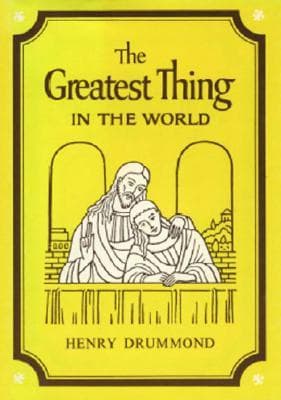
The Greatest Thing In the World cover
Archivist's Choice

The Greatest Thing In the World

Henry Drummond (1890)

Genre

Spirituality / Philosophy

Reading Time

45 min

Key Themes

See below

Track Your Reading

Sign in to track this book

Drummond shows how Christian love goes beyond simple feeling to become the foundation of a good life.

Core Idea

Henry Drummond closely examines Paul's First Epistle to the Corinthians, chapter thirteen. He argues that love (charity) is not just one virtue among many, but the main law of the spiritual and moral world. He states that all other human traits and achievements—like intelligence, sacrifice, faith, or miracles—are temporary and worthless if they lack love. Drummond believes love is the single, essential element for a meaningful life and the real measure of human worth, mirroring God's own nature.
Reading time
45 min
Difficulty
Easy
✓ Read this if...
You are seeking a profound, yet accessible, spiritual reflection on the nature and supremacy of love, and wish to understand its practical implications for daily living.
✗ Skip this if...
You are looking for a historical or critical theological analysis, or prefer a purely secular philosophical perspective on ethics.

Core idea

The central argument and framework that powers the entire book.

Henry Drummond closely examines Paul's First Epistle to the Corinthians, chapter thirteen. He argues that love (charity) is not just one virtue among many, but the main law of the spiritual and moral world. He states that all other human traits and achievements—like intelligence, sacrifice, faith, or miracles—are temporary and worthless if they lack love. Drummond believes love is the single, essential element for a meaningful life and the real measure of human worth, mirroring God's own nature.

At a glance

Reading time

45 min

Difficulty

Easy

Read this if...

You are seeking a profound, yet accessible, spiritual reflection on the nature and supremacy of love, and wish to understand its practical implications for daily living.

Skip this if...

You are looking for a historical or critical theological analysis, or prefer a purely secular philosophical perspective on ethics.

Key Takeaways

1

Love as the Ultimate Law

Beyond faith and hope, love is the foundational principle for a meaningful life.

Quote

The greatest thing a man can do for his Heavenly Father is to be kind to some of His other children.

Drummond says that faith, hope, and knowledge are valuable but temporary. Love, however, is eternal and includes all virtues. It is not just an emotion but a guiding law, a 'supreme good' that shapes our lives and our connection with God and others. He argues that without love, even great spiritual gifts or intellectual achievements mean little. This raises love from a feeling to the basic system for human well-being and spiritual connection, suggesting that a life without active, caring love is ultimately incomplete, no matter what e...

Supporting evidence

Drummond's central argument is an extensive exposition of 1 Corinthians 13, dissecting each facet of love described by Paul and contrasting it with other virtues.

Apply this

Evaluate daily interactions through the lens of love's qualities (patience, kindness, humility). Prioritize acts of service and empathy over intellectual debates or personal gain.

agape-lovespiritual-virtueschristian-ethics
2

The Anatomy of Love

Love is a composite of specific, actionable virtues, not a vague feeling.

Quote

Love suffereth long, and is kind; love envieth not; love vaunteth not itself, is not puffed up, doth not behave itself unseemly, seeketh not its own, is not provoked, taketh not account of evil; rejoiceth not in unrighteousness, but rejoiceth with the truth; beareth all things, believeth all things, hopeth all things, endureth all things.

Drummond carefully lists love's thirteen traits from 1 Corinthians 13, turning an abstract idea into a practical guide. He stresses that love is not a single emotion but a group of specific behaviors and attitudes: patience, kindness, generosity, humility, courtesy, unselfishness, good temper, honesty, and sincerity. By breaking love into these parts, he gives a clear way to develop it. This detailed breakdown challenges the common idea of love as just a passing feeling. Instead, it presents love as a disciplined practice needing cons...

Supporting evidence

The entire essay is structured around an in-depth analysis of each clause of 1 Corinthians 13:4-7, providing detailed explanations and examples for each attribute.

Apply this

Choose one specific quality of love (e.g., patience or kindness) to focus on for a week. Observe your interactions and actively practice that quality, journaling your experiences.

virtue-ethics1-corinthians-13character-development
3

Love's Unselfish Core

True love prioritizes the well-being of others above personal gain or ego.

Quote

Love seeketh not its own. That is the supreme characteristic. The greatest thing in the world is to be unselfish.

Drummond highlights 'unselfishness' as a main characteristic of love. He argues that selfishness causes most human conflict and suffering, while true love focuses outward. This means not just avoiding personal gain but actively seeking the good of others, even at personal cost. He contrasts this with pride, ambition, and self-centeredness, which he sees as opposite to love. This focus on unselfishness is a strong call to shift one's life from ego-driven goals to a real concern for humanity, making altruism not just a moral good but th...

Supporting evidence

Drummond dedicates significant attention to the phrase 'seeketh not its own,' explaining how it manifests in humility, courtesy, and a lack of envy.

Apply this

Before making a decision or reacting in a conversation, pause and ask: 'What would be the most unselfish response here?' Practice active listening without formulating your own reply.

altruismego-deathselflessness
4

The Practicality of Patience and Kindness

Love begins with the foundational practices of enduring and showing grace.

Quote

Love suffereth long, and is kind. These two words are a summary of love, and contain its very essence.

Drummond puts great importance on patience and kindness as ways to begin practicing love. He describes patience as the ability to 'suffer long' without anger or retaliation, especially when provoked or when things are slow. Kindness, on the other hand, is the active show of goodwill, 'doing good turns.' These are not passive traits but deliberate choices that require conscious effort and self-control. He suggests that mastering these two basic virtues is essential, as they set the stage for all other aspects of love. Without patience,...

Supporting evidence

He starts his exposition of 1 Corinthians 13 by immediately focusing on 'suffereth long' and 'is kind,' demonstrating their primary importance.

Apply this

Identify a recurring source of irritation in your daily life (e.g., traffic, a difficult colleague). Commit to responding with patience and a small act of kindness (even internal) for a set period.

temperanceempathyinterpersonal-skills
5

Love's Immunity to Evil

Love does not dwell on wrongdoing but seeks truth and restoration.

Quote

Love taketh not account of evil, rejoiceth not in unrighteousness, but rejoiceth with the truth.

Drummond explains that true love does not remember wrongs, nor does it enjoy others' failures or misfortunes. Instead, it actively resists the urge to dwell on past hurts or to gloat over unfairness. He emphasizes that love aims for truth and rightness, meaning it tries to understand, forgive, and restore, rather than to condemn or punish. This view is vital for healthy relationships, as it encourages moving past complaints and building trust and reconciliation. It is a powerful way to fight bitterness and resentment, pushing for a co...

Supporting evidence

The phrase 'taketh not account of evil' is a direct translation from the Greek, which Drummond interprets as love refusing to 'keep a ledger' of offenses.

Apply this

When someone wrongs you, consciously choose not to replay the incident or recount it to others. Instead, try to understand their perspective or focus on a positive attribute they possess.

forgivenessreconciliationnon-judgment
6

The Enduring Power of Love

All other gifts and knowledge will fade, but love alone remains eternal.

Quote

When that which is perfect is come, then that which is in part shall be done away... But now abideth faith, hope, love, these three; and the greatest of these is love.

Drummond powerfully contrasts love with other spiritual gifts and human achievements, stating its unique and eternal nature. He argues that prophecy, tongues, and even knowledge are temporary, serving a purpose in this life but becoming obsolete when ultimate truth arrives. Faith and hope, while essential, are also temporary, fulfilled when their goals are met. Love, however, is not a means to an end but the end itself. It is the very essence of the divine and the ultimate state of being. This view offers great comfort and direction, ...

Supporting evidence

Drummond directly quotes and expounds upon 1 Corinthians 13:8-13, particularly 'love never faileth' and 'now abideth faith, hope, love, these three; but the greatest of these is love.'

Apply this

Reflect on your life's priorities. Are you investing more in temporary gains (career, possessions, fleeting knowledge) or in building lasting relationships and practicing love?

eternityspiritual-legacydivine-nature
7

Love as the Measure of Greatness

True significance is found not in power or intellect, but in the depth of one's love.

Quote

The only great thing in the world is love.

Drummond challenges common ideas of greatness, seeing worldly achievements like wealth, fame, power, or even deep intelligence as less important than developing love. He says a person's real worth is measured by their capacity for patience, kindness, humility, and selflessness. This new definition of greatness encourages a big shift in values, urging readers to prioritize character over accomplishment. It is a freeing idea, suggesting that anyone, no matter their place in life, can achieve true greatness by showing love in their daily...

Supporting evidence

He implicitly contrasts love with the 'sounding brass or a tinkling cymbal' of those who speak with tongues but lack love, and with the 'knowledge' that is temporary.

Apply this

When you admire someone, reflect on *why* you admire them. Is it for their achievements, or for their character and how they treat others? Strive to emulate the latter.

humilitymoral-philosophyvirtuous-living
8

The Growth of Love

Love is not innate, but a skill cultivated through consistent practice and intention.

Quote

The greatest thing in the world is to learn how to love.

Drummond emphasizes that love is not just a gift given to a few, but a skill that can be learned and grown through intentional practice. He compares its growth to that of a plant, needing consistent effort, care, and attention to each of its virtues. This view offers hope and power, suggesting that anyone can grow in love regardless of where they start. It changes the pursuit of love from a passive hope into an active, lifelong effort of self-improvement and spiritual discipline. The implication is that a lack of love is not a fixed s...

Supporting evidence

Drummond repeatedly uses analogies of character development and spiritual growth to describe how love is formed within a person, contrasting it with instantaneous 'gifts.'

Apply this

Start a 'Love Practice' journal. Each day, identify one opportunity to practice patience, kindness, or another specific aspect of love, and reflect on your efforts and outcomes.

spiritual-disciplinehabit-formationself-mastery
9

Love as the Divine Image

Embodying love aligns humanity with the very nature of God.

Quote

God is Love. He that loveth not knoweth not God.

For Drummond, the ultimate meaning of love in theology is that it is the very essence of God. To love, then, is to share in the divine nature, to reflect the image of the creator. This raises the practice of love beyond just morality or good manners; it becomes a spiritual necessity, a way to deeper connection with God. He suggests that understanding and embodying love is the deepest way to understand and connect with the divine. This view provides a strong reason for cultivating love, framing it not just as a human virtue, but as the...

Supporting evidence

Drummond directly references the Biblical statement 'God is Love' (1 John 4:8) and uses it as a foundational premise for his entire discourse.

Apply this

View acts of love and kindness not just as good deeds, but as moments of connection with the divine. Reflect on how your loving actions contribute to manifesting God's nature in the world.

theology-of-loveimago-deispiritual-communion

Critical analysis

Notable Quotes

The Greatest Thing, then, in the world, is Love.

The concluding statement of the essay, summarizing its main argument.

You will find, if you think over it, that almost all the problems and sorrows of life arise from a lack of love.

Discussing the practical implications of love's absence in daily life.

Love is the sum of all virtue.

Explaining love's encompassing nature and its role as the foundation for other virtues.

The greatest thing a man can do for his Heavenly Father is to be kind to some of His other children.

Illustrating the practical manifestation of divine love through human kindness.

What does it matter whether you have faith, or hope, or all the talents in the world, if you have not love?

Emphasizing love's supremacy over other spiritual gifts and human abilities.

The one thing that cannot be overdone is love.

Highlighting love's unique quality as something that can always be given more of without detriment.

Love is patient, love is kind. It does not envy, it does not boast, it is not proud. It is not rude, it is not self-seeking, it is not easily angered, it keeps no record of wrongs.

A direct quotation from 1 Corinthians 13, expounded upon throughout the essay.

If you have not love, you have nothing. If you have love, you have everything.

A concise summary of love's essential value and its profound impact on human existence.

The man who is not kind has no religion.

Arguing that true religious practice is fundamentally demonstrated through kindness.

Nothing that we can do is of any avail, unless it is done in love.

Stressing that love is the essential ingredient that gives meaning and power to all actions.

Love is eternal. It never fails.

Contrasting love's enduring nature with the temporary nature of other gifts like prophecy or knowledge.

To be gentle, to be patient, to be self-forgetful, to be pure, to be modest, to be true – this is to be Christ-like.

Describing the practical attributes of a life lived in accordance with Christ's teachings, centered on love.

Life is not a having and a getting, but a being and a becoming.

Reflecting on the true purpose of life beyond material possessions, emphasizing personal growth and character development.

The only way to get love is to give love.

Explaining the reciprocal nature of love and the importance of active giving.

Quiz

Test Your Knowledge

Ready to see how well you understood this book? Take our interactive quiz with 10 questions.

10
Questions
~5
Minutes
?
Best Score

Key Questions (FAQ)

'The Greatest Thing in the World' is a spiritual and philosophical book by Henry Drummond that explores the paramount importance of love, as described in 1 Corinthians 13, in the Christian life. It delves into the various facets and practical applications of love, presenting it as the ultimate virtue.

About the author