“For the secret of man's being is not only to live but to have something to live for.”
— The Grand Inquisitor explains why humanity prefers security over freedom.

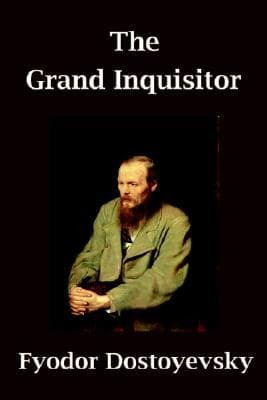
Genre
Spirituality / Philosophy
Reading Time
30 min
Key Themes
See below
Sign in to track this book
A 90-year-old Grand Inquisitor justifies the Church's abandonment of Christ's teachings, arguing that people want miracle, mystery, and authority more than freedom.
“For the secret of man's being is not only to live but to have something to live for.”
— The Grand Inquisitor explains why humanity prefers security over freedom.
“Nothing has ever been more insupportable for a man and a human society than freedom.”
— The Inquisitor argues that freedom is a burden people cannot bear.
“We have corrected Thy work and have founded it upon miracle, mystery, and authority.”
— The Inquisitor declares how the Church has replaced Christ's teachings.
“Man is tormented by no greater anxiety than to find someone quickly to whom he can hand over that gift of freedom with which the ill-fated creature is born.”
— Describing humanity's desire to relinquish freedom for comfort.
“For fifteen centuries we have been wrestling with Thy freedom, but now it is ended and over for good.”
— The Inquisitor asserts the Church's victory over Christ's ideals.
“Thou didst desire man's free love, that he should follow Thee freely, enticed and taken captive by Thee.”
— Christ's expectation of voluntary faith, as criticized by the Inquisitor.
“We shall allow them even sin, they are weak and helpless, and they will love us like children because we allow them to sin.”
— The Inquisitor explains how the Church controls through permissiveness.
“In the end they will lay their freedom at our feet, and say to us, 'Make us your slaves, but feed us.'”
— Predicting humanity's surrender of freedom for material security.
“Thou wouldst not enslave man by a miracle, and didst crave faith given freely, not based on miracle.”
— Christ's refusal to perform miracles to compel belief.
“We are not working with Thee, but with him—that is our mystery.”
— The Inquisitor reveals the Church's alliance with the devil.
“They will marvel at us and will look on us as gods, because we are ready to endure the freedom which they have found so dreadful.”
— The Inquisitor's vision of the Church's divine status.
“For what is the use of freedom to them if they are ignorant?”
— Questioning the value of freedom without guidance.
“We shall tell them that every sin will be expiated, if it is done with our permission.”
— The Church's promise to absolve controlled sin.
“Thou didst think too highly of men therein, for they are slaves, though rebels by nature.”
— The Inquisitor criticizes Christ's faith in human freedom.
Ready to see how well you understood this book? Take our interactive quiz with 10 questions.

Fyodor Mikhailovich Dostoevsky, sometimes transliterated as Dostoyevsky, was a Russian novelist, short story writer, essayist and journalist. Numerous literary critics regard him as one of the greatest novelists in all of world literature, as many of his works are considered highly influential masterpieces.
Kay Lynn Mangum
4.3
Stormie Omartian
4.3
Jerry Bridges
4.3
Walter Brueggemann
4.3

Rhonda Byrne
4.3
Brother Lawrence
4.3
Joseph Campbell
4.3
Unknown
4.3