“Maybe God is just a really big mirror. You look into it and you see what you already are.”
— Paul reflects on his understanding of God and self-discovery.

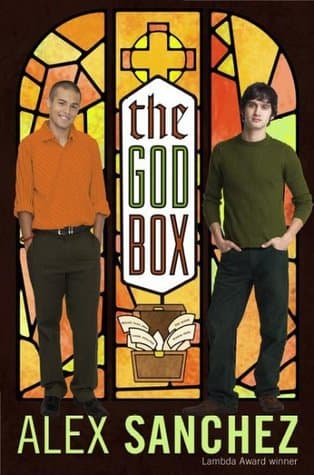
Alex Sanchez (2007)
Genre
Spirituality / Young Adult / Romance
Reading Time
270 min
Key Themes
See below
Sign in to track this book
A religious high school senior's life changes when an openly gay Christian arrives, making him face hidden desires and reconcile his faith with his sexuality amid growing town prejudice.
Paul, a high school senior, lives in a small, conservative town and is active in his church. He sings in the choir, attends Bible club, and has dated his girlfriend, Angie, since middle school. Their relationship is comfortable and expected, based on shared faith and respect. Paul believes in his Christian faith and tries to live by its teachings, finding comfort and purpose in the church. He is well-liked and seen as a good kid, embodying his community's values. His life, from an outsider's view, seems perfectly aligned with his spiritual beliefs and social expectations.
Paul's stable life changes with the arrival of Manuel, a new transfer student. Manuel is immediately noticeable as openly gay, which causes a stir in their small, conservative school. What truly surprises and interests Paul, however, is that Manuel also says he is a committed Christian, actively joining Bible club and expressing his faith. This combination of identities – openly gay and Christian – is new to Paul and conflicts with everything he has learned about faith and sexuality. Manuel's confident and clear discussions about his identity make Paul confront his own hidden thoughts and questions.
Paul finds himself drawn to Manuel, and they start having conversations beyond typical school interactions. Manuel openly shares his view on faith, arguing that being gay is compatible with Christianity. He cites various biblical interpretations and personal experiences, challenging the traditional views of Paul and their community. These discussions create doubt in Paul's mind, making him re-examine long-held beliefs about homosexuality, scripture, and his own identity. He begins to question the strict interpretations he has always accepted, feeling a growing internal conflict between his inherited faith and Manuel's new ideas.
As Paul spends more time with Manuel, he feels increasingly attracted to him. This attraction is confusing and frightening, as it directly contradicts his understanding of his own sexuality and his commitment to Angie. The internal struggle grows, as Paul deals with the realization that he might be gay, or at least bisexual, a truth he has suppressed for years. He feels deep guilt and betrayal toward Angie, and fear about how this revelation would affect his standing in the church and his relationship with God. Manuel's presence acts as a trigger, bringing these suppressed feelings to the surface.
Manuel's openness is not limited to private talks with Paul. In Bible club, he openly challenges traditional interpretations of scripture regarding homosexuality, advocating for a more inclusive and loving understanding. This causes significant tension and discomfort among other members, including Angie and the group leader. While some are simply uncomfortable, others are openly hostile, seeing Manuel's views as sacrilegious. This public conflict further complicates Paul's position, as he is torn between defending his friend and maintaining his long-standing loyalty to the church's teachings and his girlfriend's beliefs.
Angie becomes more worried by Manuel's influence and the disruption he causes in their church community. She firmly believes in traditional Bible interpretations and sees homosexuality as a sin. She expresses her concerns to Paul, expecting him to agree with her and stand with her. Paul, however, cannot fully agree or comfort her, as his own beliefs are quickly changing. He finds it impossible to tell Angie about his growing attraction to Manuel or his own emerging questions about his sexuality, leading to a widening emotional distance between them and a deeper sense of isolation for Paul.
Manuel's refusal to back down from his beliefs, along with his open gay identity, leads to increasing tensions at school. He becomes a target of bullying and harassment from some students who are uncomfortable or hostile toward his sexuality and his challenge to their religious norms. The school administration struggles to handle the situation, balancing freedom of speech with maintaining a safe environment. The conflict ends in a frightening incident where a group of students physically confronts and threatens Manuel, putting him in real danger and forcing Paul to see the direct results of intolerance.
Witnessing the attack on Manuel forces Paul to make a choice. He can no longer stay silent or undecided. In a moment of clarity and bravery, Paul steps in to defend Manuel, publicly siding with his friend and implicitly acknowledging his own changing understanding of faith and sexuality. This act is a major turning point, showing Paul's shift from passive acceptance to active support. While not explicitly stating his own sexual orientation at this exact moment, his actions speak volumes, indicating a deep personal change and a willingness to stand up for what he believes is right, regardless of the personal cost.
Paul's stand has immediate and important consequences. His relationship with Angie is permanently altered, and he faces criticism and judgment from some members of his church community. However, he also finds a new sense of freedom and authenticity. He begins the difficult process of accepting his own sexuality and reconciling it with his faith, understanding that his spirituality can be broad enough to embrace all parts of him. The book ends with Paul on a path of self-discovery and acceptance, having found the courage to live authentically, even if it means challenging the deeply held beliefs of his upbringing.
The Protagonist
Paul transforms from a compliant, questioning youth into a courageous individual who stands up for his beliefs and embraces his authentic self.
The Supporting/Catalyst
Manuel maintains his strong sense of self and faith, inspiring others and enduring significant challenges for his beliefs.
The Supporting
Angie remains steadfast in her traditional beliefs, ultimately leading to the dissolution of her relationship with Paul as he deviates from those beliefs.
The Mentioned/Supporting
Remains a static representation of traditional religious authority.
The Mentioned/Supporting
Their perspective is largely static, representing the traditional family environment Paul comes from.
This is the novel's main conflict, exploring the perceived incompatibility between being Christian and being gay. Paul struggles with his conservative church's teachings, which condemn homosexuality, while feeling an undeniable attraction to Manuel. Manuel, however, shows that faith and sexuality can coexist, offering different interpretations of scripture that emphasize love and acceptance. The book challenges the reader, along with Paul, to rethink strict religious rules and explore a more inclusive understanding of spirituality. This is clear in Paul's internal struggle during Bible club discussions and his eventual realization that he doesn't have to abandon his faith to embrace his true self.
“"How could I choose between my sexuality and my spirituality, two of the most important parts that made me whole?"”
The novel deeply explores the journey of self-discovery and the courage needed to embrace one's true identity. Paul spends much of the book suppressing his feelings and conforming to societal and religious expectations. Manuel's arrival acts as a catalyst, making Paul confront his hidden desires and question who he truly is. The theme highlights the importance of authenticity, even when it means challenging long-held beliefs and risking social isolation. Paul's journey powerfully illustrates finding the strength to accept and express one's full self, ending with his public stand and subsequent emotional freedom.
“"It was a terrifying thing, this feeling, because it meant I wasn't who I thought I was. And if I wasn't that, then who was I?"”
The sharp contrast between tolerance and intolerance drives the story. Manuel's open gay identity and his inclusive interpretation of Christianity are met with various reactions, from Paul's initial curiosity to outright hostility from other students and community members. The novel shows the painful consequences of prejudice and the bravery required to oppose it. Scenes of bullying and the attack on Manuel clearly illustrate the dangers of intolerance, while Paul's eventual defense of Manuel shows the power of empathy and supporting marginalized individuals. It prompts thought on how communities react to difference.
“"Love your neighbor as yourself, not just the ones who look and act like you."”
A significant theme is the discussion and reinterpretation of biblical passages, especially those traditionally used to condemn homosexuality. Manuel challenges literal and often decontextualized readings, advocating for an understanding of scripture that emphasizes God's love, compassion, and justice. Through their conversations, Paul learns about different ways to interpret religious texts, making him critically examine his faith's foundations. This theme highlights that religious texts can be interpreted in multiple ways, and that a strict, exclusionary approach may not align with the core message of love.
“"The Bible is about love, Paul. All of it. If an interpretation doesn't lead to love, then it's probably wrong."”
A symbolic representation of Paul's compartmentalized faith and suppressed identity.
While not a physical object, the 'God Box' serves as a powerful metaphor for Paul's internal struggle. It represents the rigid, confined understanding of God and faith that he has inherited, which dictates what is 'acceptable' and 'unacceptable' within his spiritual life. It also symbolizes the box in which Paul has kept his true feelings and sexual identity, separate from his public, religious persona. The journey of the novel is Paul's gradual dismantling of this metaphorical box, allowing his faith to expand and encompass his whole self, breaking free from restrictive dogmas.
A character whose presence directly drives the protagonist's internal and external conflict.
Manuel's role in the narrative is primarily that of a catalyst. His arrival in Paul's life is the inciting incident that disrupts Paul's seemingly stable existence. Manuel's open identity as both gay and Christian directly challenges Paul's deeply ingrained beliefs and forces him to confront his own suppressed feelings and questions. Without Manuel's presence, challenging discussions, and the subsequent conflicts he faces, Paul's journey of self-discovery and his eventual stand would likely not have occurred, or at least not in the same profound way. He is the spark that ignites Paul's transformation.
The narrative technique of revealing Paul's thoughts and emotional struggles.
The novel heavily relies on Paul's internal monologue to convey his deep-seated conflicts, fears, and evolving understanding. This device allows the reader direct access to Paul's raw emotions as he grapples with his sexuality, his faith, his relationship with Angie, and his growing feelings for Manuel. It highlights the profound internal battle he faces between societal expectations, religious teachings, and his authentic self. The internal monologue makes his journey intensely personal and relatable, showing the nuances of his doubt, confusion, and eventual clarity, rather than just his external actions.
“Maybe God is just a really big mirror. You look into it and you see what you already are.”
— Paul reflects on his understanding of God and self-discovery.
“Love isn't about finding the perfect person. It's about seeing an imperfect person perfectly.”
— Paul grapples with his feelings for Chris and the complexities of relationships.
“Sometimes the biggest questions are the ones you're afraid to ask, even of yourself.”
— Paul confronts his internal struggles and unacknowledged desires.
“The God Box wasn't a place for wishes; it was a place for honest questions.”
— Paul describes the purpose of the 'God Box' given to him by his pastor.
“It's like trying to hold water in your hands. The harder you squeeze, the more it slips away.”
— Paul contemplates the elusive nature of certainty and control in his life.
“Silence isn't empty. It's full of everything you're trying not to hear.”
— Paul experiences a moment of quiet reflection, confronting his inner thoughts.
“Being different isn't a curse. It's a superpower waiting to be discovered.”
— Paul considers his identity and feelings of being an outsider.
“Maybe faith isn't about having all the answers, but about trusting the questions.”
— Paul redefines his understanding of faith amidst his spiritual journey.
“The hardest part of growing up is realizing that not everything has a neat answer.”
— Paul reflects on the complexities of life and his journey into adulthood.
“Sometimes, the only way to find yourself is to get a little lost first.”
— Paul experiences moments of confusion and uncertainty that lead to self-discovery.
“Fear can be a compass, pointing you to what truly matters.”
— Paul confronts his fears, realizing they often highlight his deepest desires.
“You can't choose who you love, but you can choose how you love them.”
— Paul struggles with his feelings for Chris and the societal expectations around love.
“Every question is a prayer, even the ones whispered in doubt.”
— Paul finds solace in the idea that his questioning is a form of spiritual engagement.
Ready to see how well you understood this book? Take our interactive quiz with 10 questions.

Alex Sanchez is a contemporary fiction author known for his poignant exploration of family, identity, and resilience. His novel, "The God Box," a Lambda Literary Award finalist, delves into the complexities of grief and healing through the eyes of a young protagonist. Sanchez's work often resonates with themes of LGBTQ+ experiences and the search for belonging.

Kay Lynn Mangum
4.3
Stormie Omartian
4.3
Jerry Bridges
4.3

Walter Brueggemann
4.3

Rhonda Byrne
4.3
Brother Lawrence
4.3
Joseph Campbell
4.3

Unknown
4.3