BookBrief
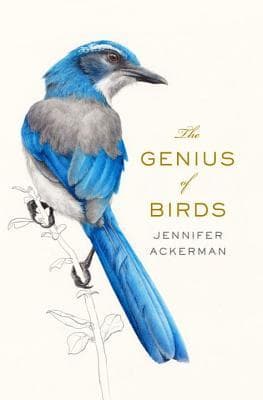
The Genius of Birds cover
Archivist's Choice

The Genius of Birds

Jennifer Ackerman (2016)

Genre

Science

Reading Time

7-9 hours

Key Themes

See below

Track Your Reading

Sign in to track this book

Jennifer Ackerman explores new research to show how bird intelligence, from tool-making to communication, is changing how we define genius.

Core Idea

Jennifer Ackerman's "The Genius of Birds" challenges the idea that 'bird-brained' means unintelligent. The book shows the remarkable thinking skills of many bird species. Using scientific research and stories, it explains that birds can solve problems, use tools, have complex social lives, remember well, and communicate in detailed ways. Ackerman argues that the bird brain, though different from a mammal's, is an efficient evolutionary design. It allows birds to live in complex places, find new solutions, and do things once thought only possible for primates or humans. The main idea is that birds are not just driven by instinct. They are intelligent beings with unique ways of thinking, which offers insights into what intelligence is. The book changes how we see bird life, encouraging readers to value bird intelligence and consider its impact on conservation and our view of nature.
Reading time
7-9 hours
Difficulty
Medium
✓ Read this if...
You are fascinated by animal intelligence, curious about the latest scientific discoveries in ornithology, or want to challenge your preconceptions about the cognitive abilities of non-mammalian species. This book is perfect for nature enthusiasts, science readers, and anyone who enjoys well-researched and engaging non-fiction.
✗ Skip this if...
You prefer fiction, are not interested in detailed scientific explanations of animal behavior, or are looking for a light, quick read with minimal scientific terminology. While accessible, it is a comprehensive exploration of a complex topic.

Core idea

The central argument and framework that powers the entire book.

Jennifer Ackerman's "The Genius of Birds" challenges the idea that 'bird-brained' means unintelligent. The book shows the remarkable thinking skills of many bird species. Using scientific research and stories, it explains that birds can solve problems, use tools, have complex social lives, remember well, and communicate in detailed ways. Ackerman argues that the bird brain, though different from a mammal's, is an efficient evolutionary design. It allows birds to live in complex places, find new solutions, and do things once thought only possible for primates or humans.

The main idea is that birds are not just driven by instinct. They are intelligent beings with unique ways of thinking, which offers insights into what intelligence is. The book changes how we see bird life, encouraging readers to value bird intelligence and consider its impact on conservation and our view of nature.

At a glance

Reading time

7-9 hours

Difficulty

Medium

Read this if...

You are fascinated by animal intelligence, curious about the latest scientific discoveries in ornithology, or want to challenge your preconceptions about the cognitive abilities of non-mammalian species. This book is perfect for nature enthusiasts, science readers, and anyone who enjoys well-researched and engaging non-fiction.

Skip this if...

You prefer fiction, are not interested in detailed scientific explanations of animal behavior, or are looking for a light, quick read with minimal scientific terminology. While accessible, it is a comprehensive exploration of a complex topic.

Key Takeaways

1

Beyond the Avian Brain Stereotype

Birds possess complex brain structures that enable sophisticated cognitive abilities, challenging the 'bird-brained' insult.

Quote

The avian brain, once dismissed as a simple, reptilian relic, is now recognized as a marvel of compact, efficient design, capable of astonishing feats of intelligence.

For centuries, 'bird-brained' meant stupid, based on a misunderstanding of bird brains. Ackerman shows that while bird brains are smaller than mammal brains, they are packed with neurons, especially in areas linked to higher thinking. This dense structure allows for efficient processing, enabling complex problem-solving, memory, and tool use. The book explains that how neurons are arranged, not just how many there are, determines intelligence. This makes birds a strong example of evolutionary skill and challenges human-centered views ...

Supporting evidence

Ackerman discusses research showing that bird brains, despite their size, can have a higher neuron density per unit volume in certain regions than even primate brains. She references studies on the avian pallium, homologous to the mammalian cortex, demonstrating its role in complex thought.

Apply this

Re-evaluate assumptions about intelligence in other species. Recognize that different evolutionary paths can lead to comparable, or even superior, cognitive outcomes. This encourages humility and a broader understanding of what 'intelligence' truly entails.


avian-neuroanatomycognitive-densitypallium
2

Tool Use: Not Just for Primates

Many bird species demonstrate sophisticated tool manufacture and use, showcasing planning, innovation, and learning.

Quote

New Caledonian crows are not just using tools; they are making them, refining them, and even learning from each other in a cultural transmission of innovation.

A strong point for bird intelligence is their skill with tools. Ackerman focuses on the New Caledonian crow, a species that has changed what we thought about tool use. These crows do not just pick up things; they change natural materials like twigs and leaves to make hooks and saws for getting insects. Their tool-making involves planning, understanding cause and effect, and often multiple steps. Studies also show these skills are passed down culturally, with younger crows learning from older ones. This is a form of social learning onc...

Supporting evidence

The extensive research on New Caledonian crows, particularly the studies by Alex Kacelnik and his team, showcasing their ability to fashion complex tools from raw materials and even solve multi-stage puzzles requiring specific tool selection and use. The famous 'Betty' crow experiment, where she bent a straight wire into a hook to retrieve food, is a prime example.

Apply this

Observe the natural world more closely, recognizing that intelligence manifests in diverse forms beyond human-centric definitions. Support conservation efforts for species known for complex behaviors, as their unique cognitive abilities represent invaluable evolutionary achievements.

tool-manufacturenew-caledonian-crowcultural-transmission
3

The Power of Play and Practice

Play behavior in birds is not merely recreational; it's a critical component of cognitive development and skill acquisition.

Quote

Play, for many birds, is a serious business – a laboratory for learning, a rehearsal for survival, and a crucible for creativity.

Ackerman looks at the role of play in bird intelligence, saying it is more than just fun. For many birds, especially crows and parrots, play is a key way to develop. Young birds play by exploring, using objects, trying behaviors, and testing limits. This seemingly light activity is actually a complex way of learning. It lets them practice hunting, social interactions, and problem-solving in a low-risk setting. Through play, birds improve their physical skills, learn about their surroundings, and even invent new behaviors. This highlig...

Supporting evidence

Examples of play in young ravens and parrots, such as manipulating novel objects, engaging in mock fights, or repeatedly dropping and retrieving items. Ackerman references studies suggesting a correlation between complex play behavior and later success in foraging and social problem-solving.

Apply this

Encourage playful exploration and experimentation in learning environments, recognizing its role in skill development and creative problem-solving. Allow for 'unstructured time' for both humans and animals to foster intrinsic learning.

avian-playcognitive-developmentskill-acquisition
4

Social Intelligence: The Flock as a Brain

Birds exhibit complex social dynamics, demonstrating self-recognition, empathy, and sophisticated communication within their communities.

Quote

The social lives of birds are as intricate and nuanced as any human drama, filled with alliances, betrayals, and sophisticated forms of communication.

Birds are social animals, and their social intelligence is a key part of their thinking skills. Ackerman explains how birds manage complex social structures, form lasting pair bonds, and even help raise young together. She points to examples of what seems like self-recognition in magpies, a trait once thought only in primates and dolphins. She also shows evidence of empathy and clever deception in birds like scrub-jays. Their ability to remember hundreds of individual birds in their flock, understand intentions, and share detailed inf...

Supporting evidence

Studies on magpies passing the mirror test, indicating self-recognition. Observations of scrub-jays 're-caching' food when they suspect another bird is watching, suggesting an understanding of another's perspective. The complex alarm calls of chickadees, conveying specific predator information.

Apply this

Recognize the importance of social structures and cooperation in fostering intelligence and problem-solving. Apply lessons from avian social dynamics to human teams and communities to enhance collective intelligence and communication.

social-cognitionself-recognitionempathyflock-intelligence
5

Memory Marvels: Beyond Simple Recall

Birds possess extraordinary spatial and episodic memory, essential for survival and demonstrating advanced cognitive mapping.

Quote

For a bird, remembering is not just recalling a place, but reliving a moment, complete with the 'what,' 'where,' and 'when' of their past experiences.

The memory skills of birds are amazing, much better than once believed. Ackerman spends time on the spatial memory of birds that hide food, like Clark's nutcrackers. These birds can remember where thousands of buried seeds are for months, even under snow. This is not just simple memorization; it involves making detailed mental maps, using landmarks, sun angles, and even small changes in the ground. More impressively, some birds show memory like human episodic memory, remembering not just where they hid food, but what kind of food ...

Supporting evidence

The famous studies on Clark's nutcrackers by Russell Balda and others, demonstrating their ability to recall thousands of cache sites. Experiments on Western scrub-jays showing they remember not only the location but also the type and freshness of cached food.

Apply this

Appreciate the complexity of non-human memory and its adaptive significance. Consider how environmental cues and spatial awareness contribute to sophisticated memory systems, offering insights into human memory formation as well.

spatial-memoryepisodic-memorycaching-behaviorcognitive-maps
6

Language and Communication: More Than Just Chirps

Avian communication involves complex syntax, semantics, and even the ability to learn and mimic human speech, suggesting deep processing.

Quote

The calls and songs of birds are not mere vocalizations; they are intricate conversations, laden with meaning and structured by rules that echo the complexities of human language.

The sounds birds make, often heard as simple chirps and songs, are shown by Ackerman to be a complex form of communication. She explains how many species use complex 'syntax' in their calls. The order of notes or elements changes the meaning, like how word order changes meaning in human sentences. Also, birds show 'semantic' communication. Specific calls refer to specific objects or predators, giving exact information. Parrots, especially African Greys like Alex, have famously shown they can not only copy human speech but also underst...

Supporting evidence

Studies on chickadee alarm calls, where combinations of 'dee' notes vary based on predator size and threat. Research on African Grey parrots like Alex, demonstrating their ability to associate words with objects, colors, and quantities, and to answer questions about them.

Apply this

Listen more attentively to avian vocalizations, recognizing them as rich sources of information and complex communication. This could inspire new approaches to understanding and modeling language acquisition and evolution.

avian-languagevocal-learningsemanticssyntax
7

Problem-Solving and Innovation

Birds exhibit remarkable ingenuity in solving novel problems, demonstrating flexibility and adaptive learning.

Quote

Faced with a challenge, birds often don't just react; they innovate, pulling from a mental toolkit of past experiences and improvising new solutions.

Ackerman provides many examples of birds' ability to solve new problems, often in ways that surprise researchers. From pulling strings to get food to dropping stones into water to raise the level and reach a treat, birds show they can reason about cause and effect and plan ahead. This is not just trial-and-error; it often involves a sudden 'aha!' moment, where a bird seems to understand how a problem works. Their flexibility in dealing with new challenges, even those not in their natural environment, shows a strong ability to learn an...

Supporting evidence

The 'string-pulling' experiments, where birds learn to pull a string to bring food closer. The 'water displacement' experiments (e.g., Aesop's Fable test with rooks), where birds drop objects into water to raise the level of a reward.

Apply this

Design learning and work environments that encourage experimentation and creative problem-solving rather than rote memorization. Provide opportunities for individuals to encounter novel challenges and develop innovative solutions.

causal-reasoninginnovationadaptive-learningproblem-solving
8

The Evolution of Avian Genius

Bird intelligence evolved independently from mammals, offering unique insights into the diverse pathways of cognitive development.

Quote

The avian brain is not a less-evolved version of the mammalian brain; it is a parallel triumph of evolution, demonstrating that intelligence can arise through multiple, distinct anatomical and neurological architectures.

One of the most important points of Ackerman's work is the idea that bird intelligence developed differently from mammal intelligence. Birds and mammals share an ancestor, but their brains grew in separate ways. This led to very different brain structures that still produce similar, and sometimes better, thinking skills. This 'convergent evolution' of intelligence is a strong argument against a single, linear view of how intelligence develops. It suggests there is not one 'right' way to build an intelligent brain. Ecological pressures...

Supporting evidence

Comparison of avian and mammalian brain structures, emphasizing the differences in organization (e.g., avian pallium vs. mammalian cortex) while highlighting their analogous functions in higher cognition. Discussion of the evolutionary pressures on birds, such as flight and metabolism, that may have favored compact, efficient brains.

Apply this

Embrace the concept of multiple intelligences and diverse cognitive styles in both human and non-human contexts. Recognize that different biological and environmental factors can lead to equally valid and effective forms of intelligence.

convergent-evolutionavian-evolutioncognitive-diversitybrain-architecture
9

Sensory Worlds and Perception

Birds experience the world through unique sensory filters, influencing their intelligence and problem-solving.

Quote

To truly understand bird intelligence, we must try to see the world through their eyes, hear it through their ears, and feel it through their unique sensory filters.

Ackerman reminds us that intelligence is tied to how an animal perceives the world. Birds live in a sensory world very different from ours, which shapes their thinking skills. Their four-color vision, for example, lets them see into the ultraviolet spectrum, showing patterns on feathers or fruits invisible to humans. Their sharp hearing and ability to process fast sound changes are important for complex vocal communication and navigating dense environments. Understanding these unique sensory adaptations is key to valuing their intelli...

Supporting evidence

Discussion of tetrachromatic vision in birds and its implications for mate selection, foraging, and predator avoidance. Examples of birds' acute auditory processing, such as distinguishing individual calls within a flock or pinpointing sound sources.

Apply this

Cultivate empathy and perspective-taking by attempting to understand how other species perceive the world. Design technologies and interactions that account for diverse sensory experiences, moving beyond human-centric defaults.

tetrachromatic-visionsensory-perceptionecological-nicheavian-senses
10

Conservation through Cognition

Recognizing the profound intelligence of birds underscores the critical importance of their conservation.

Quote

Every species lost is not just a loss of biodiversity, but a loss of unique ways of knowing, a diminishment of the very fabric of intelligence on Earth.

The discoveries about bird intelligence in Ackerman's book have important ethical implications, especially for conservation. If birds can think, remember, and feel in such complex ways, then their decline and extinction are not just an ecological problem. They are a loss of unique ways of thinking and understanding the world. Habitat destruction, climate change, and human-wildlife conflict are not just harming 'simple' creatures. They threaten highly intelligent beings with complex social lives and problem-solving skills developed ove...

Supporting evidence

The broader context of declining bird populations due to human activity (habitat loss, pesticide use, climate change). The ethical argument that recognizing complex intelligence in a species should elevate its conservation priority.

Apply this

Support conservation organizations and policies that protect avian habitats and mitigate human impact. Advocate for ethical treatment of all animals, recognizing that intelligence is not exclusive to humans and exists on a broad spectrum.

conservation-ethicsbiodiversity-losssentiencewildlife-protection

Critical analysis

Notable Quotes

The more we learn about birds, the more we find that they are not just feathered automatons, but sentient beings with rich inner lives, capable of problem-solving, tool use, and even empathy.

Introducing the book's central theme about avian intelligence.

They build nests of astonishing complexity, navigate across continents with pinpoint accuracy, and sing songs that would put many human composers to shame.

Highlighting diverse examples of bird capabilities.

What does it mean to be smart? For birds, it means having a brain exquisitely tuned to the challenges and opportunities of their particular ecological niche.

Discussing the definition of intelligence in a avian context.

The avian brain, though small, is packed with neurons, arranged in a way that allows for remarkable processing power.

Explaining the neurological basis of bird intelligence.

A bird's song is not just a pretty sound; it's a complex communication system, conveying information about territory, mating status, and even alarm calls.

Delving into the communicative aspects of bird song.

Corvids, in particular, stand out as avian Einsteins, capable of feats of cognition that rival those of primates.

Focusing on the intelligence of corvid species.

The ability to recognize individual humans, to remember faces, suggests a level of social intelligence we often underestimate in birds.

Discussing specific examples of social cognition in birds.

Tool use, once thought to be a uniquely human trait, is now well-documented in a variety of bird species, from New Caledonian crows to woodpecker finches.

Challenging anthropocentric views on tool use.

Birds don't just react to their environment; they actively shape it, and in doing so, demonstrate a remarkable capacity for planning and foresight.

Highlighting proactive behaviors and planning abilities.

The sheer diversity of avian problem-solving strategies is a testament to the power of natural selection to produce intelligence in myriad forms.

Reflecting on the evolutionary drivers of diverse intelligence.

Perhaps the most profound lesson birds teach us is that intelligence comes in many guises, and that our own human-centric definitions may be too narrow.

Concluding thought about the broader implications of studying bird intelligence.

Mimicry in birds isn't just imitation; it's a form of sophisticated social learning and a display of cognitive flexibility.

Explaining the depth of vocal mimicry in birds.

Even seemingly simple acts, like caching food, involve complex spatial memory and planning, crucial for survival.

Illustrating intelligence in everyday survival behaviors.

The intricate dances and elaborate displays of many bird species are not just for show; they are vital communication tools, conveying fitness and intention.

Discussing the intelligence behind courtship rituals.

Quiz

Test Your Knowledge

Ready to see how well you understood this book? Take our interactive quiz with 10 questions.

10
Questions
~5
Minutes
?
Best Score

Key Questions (FAQ)

'The Genius of Birds' by Jennifer Ackerman explores the astonishing intelligence of birds, revealing how new research demonstrates that some species rival primates and even humans in their cognitive abilities. The book delves into the latest scientific discoveries about the bird brain and how this brilliance evolved.

About the author