BookBrief
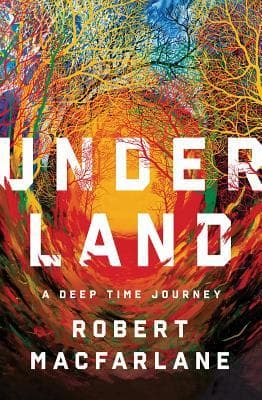
Underland cover
Archivist's Choice

Underland

Robert Macfarlane (2019)

Genre

Lifestyle / History / Science

Reading Time

12-16 hours

Key Themes

See below

Track Your Reading

Sign in to track this book

Explore Earth's hidden depths, from ancient ice caves to nuclear waste sites, to understand humanity's complex relationship with the underworld through time.

Core Idea

Robert Macfarlane's "Underland" journeys into Earth's hidden depths, showing subterranean worlds not just as geological features, but as places holding time, memory, and human influence. The book argues that by going into caves, mines, catacombs, and even nuclear waste repositories, we face the vastness of Deep Time. We see both the ancient processes that shaped our planet and the lasting marks of human civilization, from prehistoric art to modern worries about waste. Macfarlane suggests that understanding these underlands helps us grasp our place in geological history and our duty to future generations, encouraging a renewed sense of wonder for the Earth's mysterious interior.
Reading time
12-16 hours
Difficulty
Medium
✓ Read this if...
You are fascinated by geology, deep history, the hidden aspects of nature, human impact on the planet, and poetic non-fiction that blends science, philosophy, and adventure.
✗ Skip this if...
You prefer fast-paced narratives, dislike extensive descriptive prose, or are not interested in philosophical reflections on time, memory, and environmental themes.

Core idea

The central argument and framework that powers the entire book.

Robert Macfarlane's "Underland" journeys into Earth's hidden depths, showing subterranean worlds not just as geological features, but as places holding time, memory, and human influence. The book argues that by going into caves, mines, catacombs, and even nuclear waste repositories, we face the vastness of Deep Time. We see both the ancient processes that shaped our planet and the lasting marks of human civilization, from prehistoric art to modern worries about waste. Macfarlane suggests that understanding these underlands helps us grasp our place in geological history and our duty to future generations, encouraging a renewed sense of wonder for the Earth's mysterious interior.

At a glance

Reading time

12-16 hours

Difficulty

Medium

Read this if...

You are fascinated by geology, deep history, the hidden aspects of nature, human impact on the planet, and poetic non-fiction that blends science, philosophy, and adventure.

Skip this if...

You prefer fast-paced narratives, dislike extensive descriptive prose, or are not interested in philosophical reflections on time, memory, and environmental themes.

Key Takeaways

1

Deep Time's Unsettling Scale

Our human lifespan is a mere flicker against geological epochs.

Quote

We are a short-lived species, prone to short-term thinking, and deep time is the dizzying scale against which we must measure our impacts.

Macfarlane makes us confront 'deep time,' the immense stretches of geological history that make human existence seem tiny. This idea is not just academic; it is a powerful realization that our species' entire history is brief. Understanding deep time changes our perspective, challenging our human-centered views and showing the lasting effects of our actions. It gives places, especially the underland, a sense of ancient knowledge and strength that existed before and will last beyond humanity, prompting us to rethink our role as caretak...

Supporting evidence

His journey through the ancient art of the Norwegian sea caves (like those on Traena) and the geological layers of the Krubera-Voronja cave system, where he witnesses rock formations millions of years in the making, directly illustrates the vastness of deep time.

Apply this

Cultivate a 'deep time' perspective in daily decisions by considering the multi-generational or even multi-millennial impact of choices, particularly regarding environmental stewardship and resource consumption. Ask: 'What will this look like in 1,000 or 10,000 years?'


deep-timeanthropocenegeological-history
2

The Underland as Memory Keeper

Beneath the surface, the Earth holds the echoes of all that has been.

Quote

The underland remembers. It is a vast, slow archive, storing the impressions of time, life, and human endeavor.

Macfarlane shows the underland not just as a physical place but as a huge, living archive where the past is physically kept. From ancient fossils to prehistoric handprints in caves, from layers of human civilizations in catacombs to the chemistry of ice cores, the Earth beneath us carefully records history. This 'memory' is not passive; it is active, affecting current geological processes and offering insights into evolution and culture. The underland reminds us that nothing truly disappears; it only changes or gets buried, waiting to...

Supporting evidence

His exploration of the catacombs of Paris, where the bones of millions of Parisians are meticulously stacked, and the ancient burial mounds of the Bronze Age, which preserve human remains and artifacts, directly showcases the underland's role as a keeper of memory.

Apply this

Engage with local historical sites, particularly those with underground elements (like old mines, cellars, or natural caves), to connect tangibly with the 'memory' of the land and its past inhabitants. Support efforts to preserve geological and archaeological sites.

earth-memoryarchaeologypaleontologygeological-archive
3

Darkness as a Realm of Transformation

The absence of light fosters unique life, thought, and even fear.

Quote

Darkness is not merely the absence of light, but a presence in itself, a medium for life forms and thought forms utterly distinct from those of the sunlit world.

Macfarlane takes us into the underland's deep darkness, showing it as a transforming force rather than just an empty space. This darkness is home to specialized life forms—blind fish, chemosynthetic bacteria—that evolved without the sun. For humans, it removes visual cues, sharpening other senses and forcing us to face primal fears, self-reflection, and sometimes, spiritual experiences. In this 'darkness,' new viewpoints appear, challenging our reliance on sight and inviting a deeper understanding of space and self. The book suggests ...

Supporting evidence

His experiences caving in the Krubera-Voronja system, the world's deepest cave, where the complete absence of light forces an extreme reliance on other senses and confronts the limits of human endurance and perception.

Apply this

Practice 'darkness immersion' through activities like blindfolded walks (in safe environments), sensory deprivation, or simply spending time in truly dark natural settings to explore heightened senses and inner reflections. Engage with art or music created in response to darkness.

darkness-psychologytroglodyte-lifesensory-deprivationsubterranean-ecology
4

The Networked Earth: Fungal Intelligence

Trees communicate through vast, unseen subterranean fungal networks.

Quote

The wood-wide web is a living internet, a subterranean fungal network that connects trees, allowing them to share resources and communicate warnings.

One of the book's surprising revelations is the 'wood-wide web,' the complex fungal networks that connect trees and other plants underground. This subterranean system challenges our individualistic view of nature, revealing a cooperative ecosystem where trees share nutrients, water, and signals. Macfarlane uses this biological wonder to show deep interconnectedness, suggesting that the health of individual organisms is tied to the health of the collective. It is a powerful metaphor for our own societal interdependence and a call to re...

Supporting evidence

He delves into the scientific research of Suzanne Simard and others who have mapped these fungal networks, demonstrating how 'mother trees' can nourish saplings and how distress signals are shared across the forest floor.

Apply this

Support local forest conservation efforts and avoid disturbing forest floors where these networks thrive. Consider planting diverse native trees to foster robust underground communities. Observe and appreciate the unseen connections in nature.

mycorrhizal-networkswood-wide-webforest-ecologyinterconnectedness
5

The Burden of Our Ancestral Legacy

How our present actions cast long shadows into deep time.

Quote

Are we being good ancestors? This is the question that haunts the book, particularly when confronting the toxic legacies we are burying for the future.

Macfarlane asks a challenging question: 'Are we being good ancestors?' This question drives his look at places like the Onkalo nuclear waste repository in Finland, built to store radioactive material for 100,000 years. This extreme example highlights the huge burden we place on future generations, requiring solutions that go beyond human timescales. The book implicitly criticizes our short-sightedness and consumerism, urging a shift towards 'deep time' responsibility. It is a serious reflection on the lasting marks we leave on Earth a...

Supporting evidence

His detailed account of the Onkalo facility, a 'hiding place' for nuclear waste, and the profound challenges of communicating its dangers across tens of thousands of years, serves as the ultimate example of this ancestral burden.

Apply this

Advocate for sustainable practices, responsible waste management, and renewable energy policies. Engage in discussions about intergenerational ethics and what kind of planet we are leaving for our descendants. Support long-term environmental planning.

nuclear-wasteintergenerational-ethicsenvironmental-legacyfuture-generations
6

The Allure and Peril of Descent

Going underground is a journey into both wonder and the subconscious.

Quote

To descend is to enter a different order of experience, a journey not only into the earth but into the self, where the line between myth and reality blurs.

Macfarlane's personal trips into the underland are central to the book, acting as both literal and metaphorical journeys. These expeditions often involve physical danger and mental strain, pushing human limits. Going underground removes the familiar, forcing a confrontation with claustrophobia, isolation, and nature's raw power. Yet, it also brings great wonder, revealing hidden beauty, ancient histories, and a deeper connection to the Earth's core. The danger and appeal are linked, making each descent a transformative experience that...

Supporting evidence

His harrowing, detailed descriptions of caving in the limestone systems of the Mendip Hills and the monumental effort required to navigate the icy depths beneath the Greenland ice cap, where the fear of being trapped is palpable.

Apply this

Engage in activities that challenge your comfort zone and encourage introspection, whether through exploring natural wonders (safely!) or pursuing hobbies that require deep focus and resilience. Reflect on the psychological aspects of 'going deep' in any pursuit.

cavingsubterranean-explorationpsychological-depthsmythic-journeys
7

The Underland's Fluidity and Instability

What lies beneath is not static, but constantly shifting and reshaping.

Quote

The underland is not fixed; it breathes, it flows, it collapses, reminding us that the ground beneath our feet is far from solid and immutable.

Contrary to the common idea of Earth as a solid, stable foundation, Macfarlane clearly shows the underland's dynamic and often unstable nature. Glaciers move, ice caps melt, sinkholes open, and underground rivers carve new paths. This constant geological change reminds us of the planet's active processes and the fragility of human structures built on it. It also highlights the increasing effects of climate change, as ancient ice melts and permafrost thaws, releasing buried secrets and worsening instability. The underland's fluidity ch...

Supporting evidence

His visits to the melting blue ice depths of the Greenland ice cap, where he witnesses the rapid changes and the release of ancient air bubbles, and his exploration of karst landscapes prone to collapse and sinkhole formation.

Apply this

Understand the geological context of your local area and the potential impacts of climate change on ground stability. Support scientific research into geological processes and climate adaptation strategies. Be mindful of the ground you walk on.

geological-processesclimate-change-impactskarst-topographypermafrost-thaw
8

Language as a Tool for Deep Mapping

Precise vocabulary unlocks deeper understanding of subterranean worlds.

Quote

To name is to know, and the rich lexicon of the underland allows us to perceive its nuances, its forms, its very being, with greater precision and wonder.

Macfarlane, a master of language, shows how precise and vivid words are needed to understand and appreciate the underland. He enjoys terms like 'karst,' 'speleothem,' 'permafrost,' and the specific names for cave formations, showing how these words are not just labels but keys to deeper scientific, aesthetic, and historical insights. By expanding our vocabulary for these hidden realms, he expands our ability to perceive and wonder, allowing us to 'map' these complex environments more richly in our minds. This focus on language underli...

Supporting evidence

Throughout the book, Macfarlane introduces and meticulously explains specialized geological, archaeological, and speleological terms, enriching the reader's understanding of the specific features and processes he encounters.

Apply this

Actively seek out and learn the specific terminology related to natural environments, geology, and local ecology. Use precise language when describing natural phenomena to foster deeper appreciation and understanding in yourself and others.

geological-terminologylexiconenvironmental-languagespeleology
9

The Sublime in the Subterranean

Underground spaces evoke awe, terror, and profound beauty.

Quote

The underland holds its own forms of the sublime, not in vast mountain ranges or roaring seas, but in the echoing chambers, the ancient darkness, and the fragile, enduring beauty forged by deep time.

Macfarlane argues that the underland offers a unique kind of sublime, different from the grandeur of mountains or oceans. This subterranean sublime is found in the vastness of geological formations, the deep silence of caves, the terrifying claustrophobia, and the beauty of calcite formations or ancient cave art. It is a sublime that often comes with fear and discomfort, forcing us to face human insignificance and Earth's raw power. Experiencing this 'dark sublime' changes us, expanding our aesthetic and emotional range and deepening ...

Supporting evidence

His descriptions of the 'Crystal Cave' in the Krubera-Voronja system, with its glittering, translucent formations, and the awe-inspiring prehistoric art of the Norwegian caves, which evoke both wonder and a sense of ancient mystery.

Apply this

Seek out experiences that evoke a sense of awe and wonder, even if they involve discomfort or challenge. Visit natural caves, underground cathedrals, or even explore the 'sublime' in urban underground spaces (e.g., subway systems) with an open mind.

sublime-aestheticcave-artgeological-beautyawe-and-wonder
10

Re-enchanting the Earth's Depths

Beyond utility, the underland possesses intrinsic value and mystery.

Quote

We need to re-enchant the underland, to see it not merely as a resource to be exploited or a void to be filled, but as a living, mysterious realm with its own rights and rhythms.

Ultimately, Macfarlane advocates for a 're-enchantment' of the underland. In a world driven by extraction and utility, he urges us to look beyond the surface, beyond mineral wealth or waste disposal space, and recognize the intrinsic value, mystery, and ecological importance of what lies beneath. This re-enchantment involves appreciating the underland for its ancient beauty, its role in supporting life, and its ability to inspire awe and reflection. It is a call to build a deeper, more respectful relationship with the entire planet, a...

Supporting evidence

His consistent portrayal of the underland's diverse wonders, from the ancient art to the fungal networks, contrasts sharply with the utilitarian approach to sites like nuclear waste repositories, highlighting the need for a shift in perspective.

Apply this

Support initiatives that protect underground ecosystems and archaeological sites. Challenge utilitarian views of natural resources. Cultivate a sense of wonder and respect for all parts of the natural world, visible and hidden.

environmental-ethicsintrinsic-valuenature-conservationecological-awareness

Critical analysis

Notable Quotes

We are a species that lives on the surface, but we are haunted by what lies beneath.

Opening reflection on humanity's relationship with the underground.

To enter the underland is to leave the overworld behind. It is to step out of time, and into a different kind of time.

Describing the experience of descending into deep caves.

The dark is not empty. It is full of presences, of memories, of stories.

Exploring the rich history and life within subterranean spaces.

Forests are not just trees. They are also the vast, intricate, and largely unseen networks of fungi that connect them.

Discussing the 'wood wide web' and subterranean fungal networks.

We have made the world into a mirror, reflecting our own anxieties and desires.

A critique of how humans project their fears onto the environment, especially concerning nuclear waste.

The Earth is not just a place we live on, but a place we live with.

Emphasizing a symbiotic relationship with the planet, rather than mere habitation.

What is buried is not dead, but dormant. Waiting.

Reflecting on ancient ice, seeds, and even nuclear waste, all preserved underground.

The mind, too, has its underlands, its hidden depths, its forgotten passages.

Drawing a parallel between physical underground exploration and psychological introspection.

Silence is not the absence of sound, but the presence of a different kind of sound.

Describing the profound and often unsettling quiet of deep underground environments.

We are all, in a sense, underlanders, living above a world we only partly understand.

A broader philosophical statement about human knowledge and the unknown.

To truly see the world, we must sometimes look away from it, and into what lies beneath.

Advocating for a shift in perspective to gain deeper understanding.

The past is not a foreign country; it is the ground beneath our feet.

Linking historical understanding to the literal strata of the Earth.

There are places on Earth where time itself seems to slow, or even stop.

Referring to geological deep time encountered in caves and ancient ice.

What we bury, we remember. What we forget, we lose.

Discussing the human act of interment, both physical and metaphorical, and its role in memory.

Quiz

Test Your Knowledge

Ready to see how well you understood this book? Take our interactive quiz with 10 questions.

10
Questions
~5
Minutes
?
Best Score

Key Questions (FAQ)

Deep time refers to the immense, dizzying expanses of geologic time that stretch far away from the human present. Macfarlane uses this concept to frame humanity's place within the Earth's long history, from the universe's birth to a distant post-human future.

About the author