BookBrief
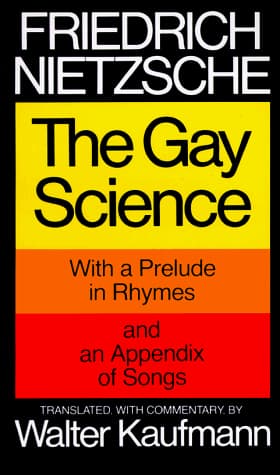
The Gay Science cover
Archivist's Choice

The Gay Science

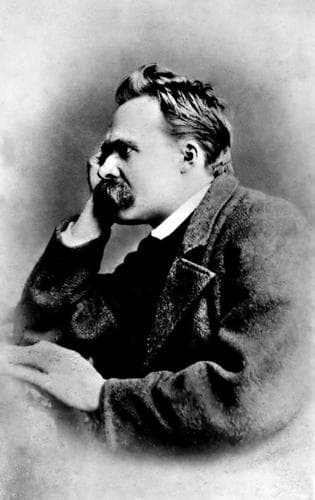
Friedrich Nietzsche

Genre

Spirituality / Science / Philosophy

Reading Time

360 min

Key Themes

See below

Track Your Reading

Sign in to track this book

Nietzsche's 'The Gay Science' explores his personal thoughts, introducing the death of God and eternal recurrence, while examining art, morality, and truth through aphorisms and poetry.

Core Idea

Nietzsche's 'The Gay Science' addresses the implications of the 'death of God' – the breakdown of traditional moral systems – on human life and values. He argues for a strong affirmation of life, embracing suffering and chance through 'Amor Fati' and the idea of 'eternal recurrence,' which asks individuals to create a life they would happily relive forever. The book promotes a 'joyful wisdom' that blends scientific accuracy with artistic creation, urging people to become self-governing creators of their own values and meaning in a world without inherent purpose. It encourages constant questioning of established truths and moralities to build robust, life-affirming individualism.
Reading time
360 min
Difficulty
Hard
✓ Read this if...
You are interested in the philosophical foundations of nihilism, existentialism, and postmodern thought, and want to explore a radical revaluation of values, morality, and the human condition from a profoundly influential thinker.
✗ Skip this if...
You prefer systematic philosophy, are easily offended by provocative and anti-egalitarian ideas, or are looking for a comforting or conventionally spiritual perspective on life.

Core idea

The central argument and framework that powers the entire book.

Nietzsche's 'The Gay Science' addresses the implications of the 'death of God' – the breakdown of traditional moral systems – on human life and values. He argues for a strong affirmation of life, embracing suffering and chance through 'Amor Fati' and the idea of 'eternal recurrence,' which asks individuals to create a life they would happily relive forever. The book promotes a 'joyful wisdom' that blends scientific accuracy with artistic creation, urging people to become self-governing creators of their own values and meaning in a world without inherent purpose. It encourages constant questioning of established truths and moralities to build robust, life-affirming individualism.

At a glance

Reading time

360 min

Difficulty

Hard

Read this if...

You are interested in the philosophical foundations of nihilism, existentialism, and postmodern thought, and want to explore a radical revaluation of values, morality, and the human condition from a profoundly influential thinker.

Skip this if...

You prefer systematic philosophy, are easily offended by provocative and anti-egalitarian ideas, or are looking for a comforting or conventionally spiritual perspective on life.

Key Takeaways

1

The Death of God: A Cultural Reckoning

Nietzsche's declaration signifies the decline of traditional religious and moral frameworks, leaving humanity to forge new values.

Quote

God is dead. God remains dead. And we have killed him. How shall we comfort ourselves, the murderers of all murderers? What was holiest and mightiest of all that the world has yet owned has bled to death under our knives: who will wipe this blood off us? What water is there for us to cleanse ourselves?

Nietzsche's 'death of God' is not a literal atheistic statement, but an observation on the culture of his time. It means the decline of Christian beliefs and their moral systems. This decline, caused by science, secularization, and critical thinking, leaves a void. Humanity, no longer guided by divine rules, must create its own values and purpose. This 'death' is both a crisis and an opportunity: a crisis where old meaning collapses, but also a chance for self-creation and the re-evaluation of all values. This realization places respo...

Supporting evidence

Nietzsche's parable of 'The Madman' (Aphorism 125) vividly illustrates the incomprehension and unpreparedness of society for this monumental shift, portraying the madman's desperate cries in the marketplace met with laughter and bewilderment.

Apply this

Reflect on how modern society grapples with meaning and morality in the absence of universally accepted divine authority. Identify areas in your own life where inherited values might be ripe for re-evaluation and conscious reconstruction.
nihilismpost-theismvalue-creation
2

Amor Fati: The Love of One's Fate

Embrace every aspect of existence, good and bad, as necessary and beautiful, transforming suffering into affirmation.

Quote

My formula for greatness in a human being is amor fati: that one wants nothing to be different, not forward, not backward, not in all eternity. Not merely to bear what is necessary, still less to conceal it—all idealism is mendacity in the face of what is necessary—but to love it.

Amor Fati, the love of one's fate, is a core part of Nietzsche's philosophy for a full life. It is not passive acceptance but an active, joyful affirmation of everything that has happened and will happen. This includes successes, joys, pain, suffering, and perceived failures. To love one's fate means seeing every event as an essential part of one's unique journey, shaping who one becomes. It is an appreciation of one's life as a work of art, where even dark parts contribute to the whole. By embracing the necessity of all events, one m...

Supporting evidence

Nietzsche frequently alludes to the Stoic concept of acceptance, but elevates it to an active, passionate 'love' rather than mere endurance. He contrasts this with the 'mendacity' of idealism that seeks to deny or escape reality.

Apply this

Practice reframing past difficulties not as misfortunes, but as crucial experiences that forged your character or led you to where you are. When faced with a challenging situation, try to identify what lessons or strengths it might cultivate.

eternal-recurrenceself-overcomingaffirmation-of-life
3

The Eternal Recurrence of the Same

Confront the terrifying yet liberating thought that every moment of your life will repeat infinitely, demanding a life lived without regret.

Quote

What if a demon were to steal after you into your loneliest loneliness some day or night, and say to you: 'This life as you now live it and have lived it, you will have to live once more and innumerable times more; and there will be nothing new in it, but every pain and every joy and every thought and sigh and everything unutterably small or great in your life will have to return to you, all in the same succession and sequence'… How well disposed would you have to become to yourself and to life to crave nothing more fervently than this ultimate eternal confirmation and seal?

The eternal recurrence is Nietzsche's most challenging thought experiment. It suggests that all events in the universe, including every detail of our lives, will repeat infinitely. This idea is not a scientific theory but a profound ethical command. If one truly believed in eternal recurrence, every decision, action, and moment would have immense weight. Would you live your life so that you would joyfully affirm its endless repetition? This thought acts as a 'greatest weight,' forcing individuals to examine their life choices and valu...

Supporting evidence

Aphorism 341, 'The Greatest Weight,' introduces the demon's challenge, directly presenting the hypothesis of eternal recurrence as a thought experiment for the reader.

Apply this

Before making a significant decision, ask yourself: 'Would I want to repeat this choice an infinite number of times?' Use this as a filter for actions that truly align with your deepest values and aspirations.

amor-fatiwill-to-powerexistentialism
4

The Joyful Wisdom (Gay Science)

Embrace intellectual honesty, a playful skepticism, and an artistic approach to life, even in the face of harsh truths.

Quote

This book perhaps requires more than five senses to be appreciated: this victory over oneself that is called truth; this cheerfulness in the face of death and uncertainty; this new joy in transience itself, which burns like a flame.

The title, 'The Gay Science,' or 'The Joyful Wisdom,' captures a main idea: the combination of rigorous intellectual inquiry with a lighthearted, artistic, and celebratory approach to life. Nietzsche champions intellectual honesty that bravely confronts difficult truths, even those that break cherished illusions. However, this confrontation is not meant to cause despair, but a new, strong joy. It is a call to approach philosophy and life with the spirit of an artist—experimental, creative, and playful—rather than a rigid dogmatist. Th...

Supporting evidence

Nietzsche's use of aphorisms and poetry throughout the book, rather than systematic philosophical treatise, exemplifies this 'gay science' – a fragmented, artistic, and evocative style of inquiry.

Apply this

Cultivate a spirit of intellectual curiosity and open-mindedness, challenging your own assumptions with a sense of playful exploration rather than rigid dogma. Find joy in the process of learning and unlearning.

perspectivismart-of-livingskepticism
5

The Problem of Knowledge and Truth

Truth is not a fixed, objective reality but a human construct, a useful fiction for survival, shaped by our perspectives and needs.

Quote

What, then, is truth? A mobile army of metaphors, metonymies, anthropomorphisms... truths are illusions about which one has forgotten that this is what they are; metaphors which are worn out and without sensuous power.

Nietzsche questions traditional ideas of objective truth and knowledge. For him, truth is not a universal match with reality, but a human invention, a necessary simplification of a chaotic world for survival. Our 'truths' are essentially metaphors, language conventions, and ingrained perspectives that have been useful over time. We forget their origin as fictions and start treating them as absolute. This perspectivism means there is no single, privileged viewpoint from which to grasp ultimate reality. Instead, knowledge is always inte...

Supporting evidence

Aphorisms like 'On the Problem of Knowledge' and 'Our New 'Infinite'' directly question the foundations of scientific and philosophical knowledge, highlighting its human-centric nature.

Apply this

Question the 'truths' you hold dear, particularly those presented as absolute. Consider their origins and how they might serve particular needs or perspectives, including your own. Practice empathy by trying to understand different perspectives, recognizing that each is a valid interpretation of reality.

perspectivismepistemologywill-to-power
6

The Value of Suffering

Suffering is not merely to be avoided, but can be a powerful catalyst for growth, self-overcoming, and the creation of new values.

Quote

To those human beings who are of any concern to me I wish suffering, desolation, sickness, ill-treatment, indignities... I wish that they should not remain ignorant of this profound reason for their existence—the way of overcoming and becoming.

Unlike common moral systems that aim to eliminate suffering, Nietzsche argues for its deep value. He sees suffering not as something evil to be removed, but as an essential tool for strength, character, and depth. It is through facing hardship, pain, and adversity that individuals are pushed to their limits, forced to re-evaluate their values, and ultimately to 'overcome themselves.' This process of self-overcoming is central to Nietzsche's philosophy, leading to a stronger, more resilient, and creative individual. Avoiding suffering,...

Supporting evidence

Nietzsche's own life, marked by chronic illness and profound loneliness, serves as a testament to his philosophy of embracing suffering as a path to intellectual and personal growth.

Apply this

Instead of immediately seeking to escape discomfort or pain, pause and consider what lessons or strengths this experience might be offering. Frame challenges not as obstacles, but as opportunities for growth and resilience.

will-to-powerself-overcomingamor-fati
7

The Artist as a Model for Life

Life should be approached as a creative act, where one sculpts oneself and one's values, rejecting passive acceptance.

Quote

We want to be the poets of our life—first of all in the smallest, most everyday matters.

Nietzsche often presents the artist as a model for living, especially when traditional meaning systems are falling apart. The artist does not just observe reality; they interpret, create, and give it new meaning and form. Similarly, in a post-God world, individuals are called to become the artists of their own lives. This means actively shaping one's character, values, and experiences, rather than passively accepting what is given. It is an aesthetic approach to existence, where the goal is to create a life that is beautiful, strong, ...

Supporting evidence

Nietzsche's own writing style, filled with aphorisms, parables, and poetic language, embodies this artistic approach to philosophy, valuing evocative expression over rigid systematic argument.

Apply this

Identify an area of your life where you feel constrained by convention. How could you approach it with a more creative, artistic mindset, re-imagining its possibilities and shaping it according to your own vision?

value-creationwill-to-poweraesthetic-existence
8

The Danger of Pity and Altruism

Excessive pity can weaken both the giver and receiver, hindering individual growth and self-overcoming.

Quote

Pity is the most agreeable feeling for those who have little pride and no prospect of great conquests: for them, to commiserate is to be equal to the strong... Pity is a kind of self-enjoyment at the expense of another's misfortune.

Nietzsche criticizes what he sees as excessive pity and certain kinds of altruism, particularly those based in Christian morality. He argues that pity, though seemingly kind, can be harmful. For the one who pities, it can be a subtle form of self-importance, a way to feel superior or to escape one's own suffering by focusing on another's. For the one who is pitied, it can encourage weakness, dependence, and hinder their potential for self-overcoming. Nietzsche is not advocating for cruelty, but for a philosophy that empowers individua...

Supporting evidence

Nietzsche's sustained critique of Christian morality throughout his works, which he views as promoting 'slave morality' and valuing pity over strength, is a foundational context for this perspective.

Apply this

Before offering help, consider if your assistance truly empowers the other person or if it inadvertently fosters dependence. Focus on supporting others' capacity for self-reliance and growth, rather than merely alleviating immediate discomfort.

slave-moralitywill-to-powerself-overcoming
9

The Intellectual Conscience

Cultivate rigorous intellectual honesty, questioning all beliefs, even those that bring comfort, in pursuit of genuine understanding.

Quote

The greatest dangers to man are not from outside, but from within himself. The most terrible things are not done by the tiger or the snake, but by man himself, when he lets himself be taken in by lies and error.

Nietzsche values the 'intellectual conscience,' which he defines as a strong commitment to truthfulness, even when that truth is inconvenient or shatters cherished illusions. It is a relentless drive to question assumptions, to examine the origins of our beliefs, and to resist comforting falsehoods. This conscience demands skepticism toward dogma, tradition, and even one's own deepest convictions. It is a form of self-discipline that prioritizes clarity and honesty over psychological comfort or social conformity. For Nietzsche, true i...

Supporting evidence

Nietzsche's own relentless self-questioning and his willingness to challenge the philosophical and moral foundations of his era exemplify this intellectual conscience, often leading him to lonely and unpopular conclusions.

Apply this

Regularly scrutinize your own deeply held beliefs. Ask yourself: 'Why do I believe this? What evidence supports it? Could it be wrong, and what would that imply?' Actively seek out perspectives that challenge your own.

free-spiritskepticismperspectivism
10

Becoming Who One Is

The ultimate goal is not to conform to an ideal, but to actively create and realize one's unique potential, a lifelong process of self-creation.

Quote

One thing is needful. 'To give style' to one's character—a great and rare art! It is practiced by those who survey all the strengths and weaknesses of their nature and then fit them into an artistic plan until everything appears as art and reason and even weakness delights the eye.

Nietzsche's philosophy concludes with the command to 'become who one is.' This is not a passive process of self-discovery, but an active, artistic act of self-creation. It involves understanding one's unique traits, strengths, and weaknesses, and then consciously shaping them into a coherent, aesthetically pleasing whole. It rejects external ideals or predefined destinies, emphasizing individual action and responsibility in forming one's identity. This 'giving style to one's character' is a continuous, lifelong effort, requiring coura...

Supporting evidence

Nietzsche's admiration for figures like Goethe, who he believed exemplified this process of self-creation and integrated their diverse facets into a harmonious whole, underpins this concept.

Apply this

Identify your core values and unique talents. Reflect on how you can intentionally cultivate and integrate these elements into your daily life, making conscious choices that align with the person you aspire to become, rather than merely reacting to external pressures.

self-overcomingwill-to-powerart-of-living

Critical analysis

Notable Quotes

God is dead. God remains dead. And we have killed him.

The Parable of the Madman, discussing the implications of the loss of traditional religious belief.

What does not kill me makes me stronger.

From the 'Maxims and Interludes' section, reflecting on adversity and personal growth.

To live alone one must be a beast or a god, says Aristotle. The third case is that one must be both — a philosopher.

A reflection on the nature of philosophical solitude, referencing Aristotle.

That which is good, that which is beautiful, that which is divine — we have made them so!

Examining human values and their origins, suggesting they are human creations.

The greatest weight. — What if a demon were to steal after you into your loneliest loneliness someday and say to you: 'This life as you now live it and have lived it, you will have to live once more and innumerable times more; and there will be nothing new in it, but every pain and every joy and every thought and sigh and everything immeasurably small or great in your life must return to you—all in the same succession and sequence—even this spider and this moonlight between the trees, and even this moment and I myself. The eternal hourglass of existence is turned over again and again—and you with it, dust of dust!'—Would you not throw yourself down and gnash your teeth and curse the demon who spoke thus? Or have you once experienced a tremendous moment when you would have answered him: 'You are a god, and never have I heard anything more divine!'

Introducing the concept of 'eternal recurrence,' a thought experiment about affirming life.

The bite of conscience, like the bite of a dog, is a purely imaginary pain.

Questioning the nature and impact of guilt and conscience.

Indeed, we philosophers are always on the side of 'bad taste,' on the side of the few, the privileged, the elect.

Reflecting on the unique and often unconventional perspective of philosophers.

All things are subject to interpretation; whichever interpretation prevails at a given time is a function of power and not truth.

Discussing the subjective nature of truth and the role of power in shaping beliefs.

He who has a why to live for can bear almost any how.

Emphasizing the importance of purpose and meaning in enduring suffering.

We are unknown to ourselves, we knowers: and for a good reason. We have never sought ourselves.

Highlighting humanity's lack of self-knowledge and introspection.

One must pay dearly for immortality: one has to die several times while still alive.

Aphorism on the sacrifices and transformations required for lasting impact or greatness.

And once you are awake, you will remain awake forever.

Speaking metaphorically about the irreversibility of profound intellectual awakening and insight.

For the man who has a hundred enemies, it is best to be an angel. For the man who has a hundred friends, it is best to be a devil.

A paradoxical statement on how one should present oneself depending on social context.

The greatest danger for all psychologists is cowardice: that is, not to see what they see.

Critiquing the self-deception and avoidance of uncomfortable truths within psychological inquiry.

Quiz

Test Your Knowledge

Ready to see how well you understood this book? Take our interactive quiz with 10 questions.

10
Questions
~5
Minutes
?
Best Score

Key Questions (FAQ)

The Gay Science is a philosophical work by Friedrich Nietzsche that explores themes of art, morality, knowledge, truth, and the 'death of God.' It is considered one of Nietzsche's most personal books and introduces key concepts like the eternal recurrence.

About the author