BookBrief
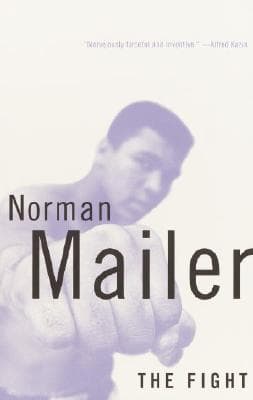
The Fight cover
Archivist's Choice

The Fight

Norman Mailer (1975)

Genre

Biography / History

Reading Time

240 min

Key Themes

See below

Track Your Reading

Sign in to track this book

In the heart of Zaïre, Norman Mailer writes about the 1974 'Rumble in the Jungle,' examining the fight between Muhammad Ali and George Foreman, the clash of their personalities, the meaning of a continent, and the nature of human struggle.

Core Idea

Norman Mailer's 'The Fight' explores the 1974 'Rumble in the Jungle' between Muhammad Ali and George Foreman. It is not just about a boxing match but a conflict between two famous people carrying the hopes of a global audience. Mailer, using his mix of reporting and personal thoughts, says the fight was a spiritual contest where Ali, the showman and mental fighter, created a story of winning against Foreman, who was a quiet, almost sad figure. The book says that boxing skill is not just about physical strength but also about mental toughness, controlling the story, and understanding one's role in a big event. All of this happens against the busy setting of Zaire and Mailer's own thoughts about writing the story.
Reading time
240 min
Difficulty
Medium
✓ Read this if...
You are fascinated by the psychology of sport, the myth-making process around iconic figures like Muhammad Ali, or enjoy immersive, subjective journalism with a literary flair.
✗ Skip this if...
You prefer straightforward sports reporting, dislike authorial self-insertion, or find Mailer's prose style overly verbose and philosophical.

Core idea

The central argument and framework that powers the entire book.

Norman Mailer's 'The Fight' explores the 1974 'Rumble in the Jungle' between Muhammad Ali and George Foreman. It is not just about a boxing match but a conflict between two famous people carrying the hopes of a global audience. Mailer, using his mix of reporting and personal thoughts, says the fight was a spiritual contest where Ali, the showman and mental fighter, created a story of winning against Foreman, who was a quiet, almost sad figure. The book says that boxing skill is not just about physical strength but also about mental toughness, controlling the story, and understanding one's role in a big event. All of this happens against the busy setting of Zaire and Mailer's own thoughts about writing the story.

At a glance

Reading time

240 min

Difficulty

Medium

Read this if...

You are fascinated by the psychology of sport, the myth-making process around iconic figures like Muhammad Ali, or enjoy immersive, subjective journalism with a literary flair.

Skip this if...

You prefer straightforward sports reporting, dislike authorial self-insertion, or find Mailer's prose style overly verbose and philosophical.

Key Takeaways

1

The Duality of the Pugilist

Boxing as a profound stage for the human spirit's contradictions.

Quote

The ring is a stage where the most profound and primitive aspects of human nature are laid bare, a crucible where character is not merely tested but forged anew in the heat of combat.

Mailer examines the mental aspects of boxing, showing it as more than a physical contest. He says that fighters, especially ones like Ali and Foreman, show complex differences: strength with smart thinking, public image versus private fear, and the animal need to survive against a spiritual search for control or victory. The book suggests that the sport, when it is most basic, removes social coverings, showing the main struggles inside everyone, made bigger and shown through violence and will. This look at boxing makes it more than a ...

Supporting evidence

Mailer's extensive internal monologues and observations about both Ali's cunning and Foreman's stoicism, alongside his own self-reflection as a writer observing the spectacle, serve as the primary evidence. He details Ali's 'rope-a-dope' strategy as a brilliant, almost spiritual, act of psychological warfare.

Apply this

Recognize the inherent dualities in your own pursuits – the blend of intellect and instinct, strategy and raw effort. Embrace the 'fight' in any challenging endeavor as an opportunity for profound self-discovery and character development, understanding that true strength often lies in navigating these internal contradictions.
psychological-combathuman-dualitysport-philosophy
2

Ali's Spiritual Warfare

Muhammad Ali's genius transcended physical prowess, employing psychological and spiritual tactics.

Quote

Ali's true genius lay not just in his fists or his footwork, but in his profound understanding of the psychological battlefield, a realm where he fought with words, will, and a nearly mystical belief in his own destiny.

Mailer's writing about Muhammad Ali goes past the idea of 'the greatest boxer.' He looks at Ali's ability to fight mentally and spiritually. Ali's verbal attacks, his confidence, and his strong belief in himself were as strong as his punches. He knew that a fight was won not just in the ring, but in the opponent's mind before the first bell. This spiritual side, from his faith and his larger-than-life image, let him change perceptions, create doubt, and finally break the will of his opponents, especially Foreman, who was clearly affec...

Supporting evidence

The detailed account of Ali's pre-fight taunts, his 'float like a butterfly, sting like a bee' mantra, and the 'rope-a-dope' strategy itself, where Ali absorbed punishment to exhaust Foreman, are all presented as evidence of his strategic genius. Mailer highlights Ali's ability to turn the crowd into an extension of his will.

Apply this

In any competitive or challenging situation, recognize the power of psychological advantage. Cultivate unwavering self-belief, use communication strategically, and understand that influencing the 'mind game' can be as crucial as technical skill. Don't just prepare physically; prepare mentally and emotionally to outmaneuver your opponents.

psychological-warfareali-legacymind-over-matter
3

Foreman's Silent Burden

George Foreman's quiet power masked a deeper vulnerability and inexperience in the psychological arena.

Quote

Foreman was a force of nature, a silent, implacable engine of destruction, yet his very quietude, his lack of verbal showmanship, left him exposed to the subtle, corrosive acid of Ali's psychological attacks.

Mailer describes George Foreman as a strong, almost natural force — powerful, quiet, and seemingly unbeatable. However, his quietness and lack of talking were his downfall against the talkative and mentally sharp Ali. Foreman's strength was in raw power and careful destruction, but he did not have the experience or desire for the 'talk game' that Ali mastered. This made him open to Ali's taunts, the crowd's changing support, and the long mental pressure of the 'Rumble in the Jungle.' Mailer suggests that Foreman's quiet manner, while ...

Supporting evidence

Mailer meticulously describes Foreman's silent, almost grim determination in training, contrasting it with Ali's flamboyant displays. The key evidence is Foreman's eventual exhaustion and loss of composure in the later rounds, attributed not just to physical fatigue but to the mental toll of Ali's taunts and the 'rope-a-dope' strategy.

Apply this

Understand that silence can be a strength, but in highly public or competitive environments, it can also be a vulnerability if not balanced with strategic communication. Develop self-awareness about your own communication style and its potential impact on others, especially in high-pressure situations. Learn to engage, even subtly, in the 'narrative' surrounding your efforts.

silent-strengthforeman-psychologyvulnerability
4

The African Backdrop

The fight's setting in Zaïre profoundly influenced its symbolism and emotional weight.

Quote

Kinshasa was not merely a location; it was a character in itself, a continent's soul made manifest, a crucible for the clashing narratives of black identity, power, and post-colonial aspiration.

The 'Rumble in the Jungle' was closely tied to its African location. Mailer notes that Zaïre, under Mobutu Sese Seko, gave a complex and active background, making the fight more than just a sports event; it became a cultural and political show. For Ali, it was going back to his family roots, a chance to take back a black identity on African land, which connected deeply with the local people. For Foreman, it was a less familiar, more foreign place. The atmosphere, the heat, the political situation, and the strong support of the Zaïrian...

Supporting evidence

Mailer's vivid descriptions of Kinshasa, the Zaïrian people's adoration for Ali ('Ali, boma ye!'), and the political maneuvering of Mobutu Sese Seko are central. He contrasts Ali's comfort and connection with the local populace against Foreman's more reserved and sometimes uncomfortable presence.

Apply this

Recognize how context and environment profoundly shape any significant event or project. Understand the cultural, historical, and emotional landscape in which you operate, as these factors can significantly impact outcomes, reception, and individual performance. Leverage positive environmental factors and mitigate negative ones.

rumba-in-the-jungleafrican-identitycultural-impact
5

Mailer's Self-Insertion

The author's presence is integral, transforming the narrative into a subjective, existential exploration.

Quote

The writer is not merely an observer but a participant, a consciousness through which the events are filtered, shaped, and ultimately imbued with meaning.

A main part of 'The Fight' is Norman Mailer's clear and detailed inclusion of himself in the story. He is not a separate observer but a main character, dealing with his own worries, ego, and intellectual thoughts about what happened. This personal way of writing, often criticized in regular journalism, is Mailer's strength. It lets him look at the big ideas of the fight, giving a raw, direct view of Ali and Foreman. His personal thoughts on bravery, fear, masculinity, and genius are woven into the boxing analysis, making for a richer,...

Supporting evidence

Mailer frequently shifts perspective, detailing his own thoughts, feelings, and physical sensations while observing the fighters. He recounts his conversations, his internal debates, and even his own physical training regimen in preparation for observing the fight, underscoring his deep personal investment.

Apply this

When undertaking any creative or analytical endeavor, consider the value of your unique perspective. Don't shy away from personal engagement or subjective interpretation if it enriches the narrative and adds depth, especially in fields where personal insight is valued. Authenticity can be a powerful tool for connection and understanding.

new-journalismauthor-as-charactersubjective-narration
6

The Art of the Punch

Mailer meticulously deconstructs the physical mechanics and psychological impact of boxing blows.

Quote

A punch is never just a punch; it is a declaration of will, a calculated risk, a testament to the body's exquisite violence and the mind's intent.

Mailer has a poetic way of describing boxing. He does not just report on punches; he examines their path, their strength, the small changes in balance, and the exact moment of impact. More importantly, he looks at the mental and physical results of each hit — the sudden shock, the loss of will, the small changes in how the fight is going. This detailed writing makes the violence of the sport into an art form, letting the reader understand the complex dance of attacking and defending, the hard math of risk and reward, and the deep phys...

Supporting evidence

His minute-by-minute, punch-by-punch breakdown of the fight itself, particularly the 'rope-a-dope' rounds and Ali's final flurry, showcases this. He describes the 'thud' of Foreman's punches on Ali's body and the precision of Ali's counter-punches with visceral detail.

Apply this

In any field, strive for a deep understanding of the fundamental mechanics and their cascading effects. Don't just observe outcomes; analyze the processes, the micro-interactions, and the precise moments of cause and effect. This granular understanding can lead to breakthroughs and deeper appreciation.

boxing-mechanicskinetic-artimpact-analysis
7

Masculinity and Myth-Making

The fight served as a canvas for exploring evolving ideals of masculinity and heroic mythologies.

Quote

In the ring, the ancient archetypes of man confront each other, the hero and the titan, forging new myths in the crucible of their struggle.

Mailer uses the Ali-Foreman fight to explore how masculinity changes and how heroic stories are made. Ali, with his charm, intelligence, and defiance, showed a new kind of black hero, challenging old ideas of quiet strength. Foreman, with his raw power and quietness, showed an older, more basic form of male dominance. The clash between these two styles and people was not just a boxing match but a symbolic battle between different ideas of what it meant to be a man, a champion, and a black figure in the world's eye. Mailer, always inte...

Supporting evidence

Mailer's extensive psychological profiles of both fighters, particularly his contrast between Ali's 'artful' masculinity and Foreman's 'brutal' masculinity, support this. He delves into their public personas and how they were perceived by different audiences.

Apply this

Reflect on the archetypes and narratives that shape your own understanding of success, leadership, or personal identity. Be aware of how cultural narratives influence perceptions of strength and weakness, and consciously choose to define your own path rather than conforming to outdated ideals.

masculine-idealsheroic-archetypemythology-in-sport
8

The Spectacle of Suffering

The book confronts the uncomfortable truth of human fascination with pain and endurance.

Quote

There is a primal, undeniable magnetism in witnessing the limits of human endurance, a dark beauty in the spectacle of suffering bravely borne.

Mailer directly talks about the human interest in violence and suffering, especially in boxing. He suggests that part of the sport's lasting appeal is how openly it shows pain, weakness, and the pure will to keep going. The 'Rumble in the Jungle' was a clear example, especially during the 'rope-a-dope' where Ali purposely took many hits. Mailer looks at the complex minds of both the fighters taking the blows and the audience watching them, exploring the line between feeling for others and a dark curiosity. This idea makes readers thin...

Supporting evidence

Mailer's detailed descriptions of the physical damage sustained by Ali during the 'rope-a-dope' rounds, and his own internal struggle as an observer to reconcile the brutality with the artistry, serve as evidence. He doesn't shy away from the blood and sweat.

Apply this

Acknowledge the uncomfortable aspects of any endeavor, especially those involving competition or risk. Understand the psychological dynamics of enduring hardship and observing others' struggles. Cultivate empathy while maintaining a critical perspective on why certain spectacles hold our attention.

spectacle-of-violencehuman-endurancemorbid-curiosity
9

The Weight of Expectation

Both fighters carried immense burdens of expectation, shaping their performance and legacy.

Quote

Every champion carries not just the weight of their own ambition, but the collective hopes and fears of a multitude, a burden that can either elevate or crush them.

Mailer shows the great pressure on both Muhammad Ali and George Foreman. Ali, the older famous boxer, carried the hopes of a generation and the symbolic weight of black pride. His fight was not just for a title but for his place in history and a sense of winning again. Foreman, the younger, seemingly unbeatable champion, carried the expectation of continuing to win and the pressure of keeping a strong, almost quiet, image. These outside pressures, made bigger by the world stage and the political situation, strongly affected their ment...

Supporting evidence

The narrative frequently references Ali's awareness of his status as a symbol and Foreman's almost oppressive sense of responsibility as the reigning, undefeated champion. The massive financial stakes ($5 million apiece) also underscore this burden.

Apply this

Be aware of the expectations placed upon you, both internal and external. Learn to differentiate between constructive pressure and overwhelming burden. Develop strategies to manage expectations, define your own goals, and perform under scrutiny without succumbing to external narratives.

pressure-performancelegacy-buildingpublic-scrutiny

Critical analysis

Notable Quotes

The fight was the first event in the history of the world to be seen more times than it actually happened.

Mailer's opening line, describing the global broadcast of the Ali-Foreman fight.

He was not only the greatest fighter of his time, but the greatest artist of his time.

Mailer's reflection on Muhammad Ali's unique blend of athleticism and performance.

The closer one gets to the fight, the more one realizes that it is not a fight at all, but a ceremony.

Describing the ritualistic and symbolic nature of the Ali-Foreman bout in Zaire.

Foreman was like a man who had been given a great gift and did not know what to do with it.

Mailer's observation of George Foreman's power and his struggle to wield it effectively.

In the ring, Ali was a philosopher of the body.

Highlighting Ali's strategic and intellectual approach to boxing.

The fight was a collision of two American myths: the myth of the invincible black athlete and the myth of the rebellious artist.

Analyzing the cultural significance of Ali and Foreman as symbols.

Zaire was not just a location; it was a character in the drama.

Emphasizing the importance of the African setting in shaping the fight's narrative.

To watch Ali was to watch a man who had mastered the art of making the impossible look easy.

Describing Ali's graceful and deceptive fighting style.

The crowd in Kinshasa was not just an audience; it was a force of nature.

Capturing the energy and influence of the African spectators.

Foreman's power was a fact; Ali's speed was a mystery.

Contrasting the tangible strength of Foreman with the elusive skill of Ali.

In the end, the fight was not about who won, but about what was revealed.

Mailer's conclusion on the deeper meanings uncovered by the bout.

Ali fought not just with his fists, but with his mind, his heart, and his soul.

Praising Ali's holistic and passionate approach to boxing.

The Rumble in the Jungle was a moment when history paused to watch two men redefine what it meant to be a champion.

Summarizing the historical impact of the Ali-Foreman fight.

Quiz

Test Your Knowledge

Ready to see how well you understood this book? Take our interactive quiz with 10 questions.

10
Questions
~5
Minutes
?
Best Score

Key Questions (FAQ)

'The Fight' is Norman Mailer's masterful account of the 1974 'Rumble in the Jungle' boxing match between Muhammad Ali and George Foreman in Kinshasa, Zaïre. It combines sports journalism with deep cultural analysis, exploring the fighters' personalities, the fight's strategies, and its symbolism for African and American identity.

About the author

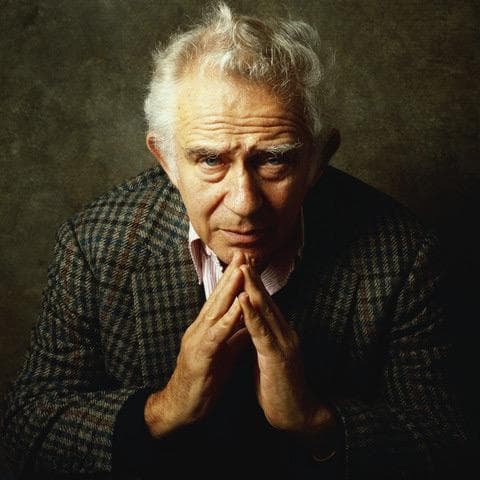
Norman Mailer

Nachem Malech Mailer, known by his pen name Norman Kingsley Mailer, was an American novelist, journalist, playwright, filmmaker and actor. In a career spanning over six decades, Mailer had 11 best-selling books, at least one in each of the seven decades after World War II.