BookBrief
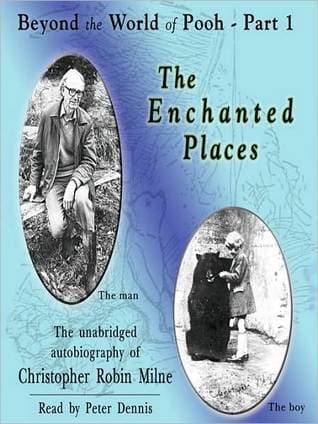
The Enchanted Places cover
Archivist's Choice

The Enchanted Places

Christopher Milne (1974)

Genre

Biography / Memoir

Reading Time

3-4 hours

Key Themes

See below

Track Your Reading

Sign in to track this book

Christopher Milne recounts his childhood as the real-life Robin to his father's Pooh, navigating fame's bittersweet embrace and the longing for an ordinary existence.

Core Idea

Christopher Milne's 'The Enchanted Places' is a memoir about the unique burden and privilege of being 'Christopher Robin,' the real-life inspiration for A.A. Milne's Winnie-the-Pooh stories. The book details the complex interplay between his childhood in the Sussex countryside, which later became the Hundred Acre Wood, and the public persona thrust upon him. Milne explores how his father's literary success affected his own identity, chronicling his struggle to forge an independent path beyond his fictional counterpart and the lasting legacy of childhood fame.
Reading time
3-4 hours
Difficulty
Medium
✓ Read this if...
You are a fan of Winnie-the-Pooh and want to understand the real-life origins and the human story behind the beloved tales, or if you're interested in the complexities of childhood celebrity and the search for identity.
✗ Skip this if...
You prefer a purely academic literary analysis of A.A. Milne's works, or if you are looking for a lighthearted, uncritical celebration of the Pooh stories without exploring their more complicated personal aftermath.

Core idea

The central argument and framework that powers the entire book.

Christopher Milne's 'The Enchanted Places' is a memoir about the unique burden and privilege of being 'Christopher Robin,' the real-life inspiration for A.A. Milne's Winnie-the-Pooh stories. The book details the complex interplay between his childhood in the Sussex countryside, which later became the Hundred Acre Wood, and the public persona thrust upon him. Milne explores how his father's literary success affected his own identity, chronicling his struggle to forge an independent path beyond his fictional counterpart and the lasting legacy of childhood fame.

At a glance

Reading time

3-4 hours

Difficulty

Medium

Read this if...

You are a fan of Winnie-the-Pooh and want to understand the real-life origins and the human story behind the beloved tales, or if you're interested in the complexities of childhood celebrity and the search for identity.

Skip this if...

You prefer a purely academic literary analysis of A.A. Milne's works, or if you are looking for a lighthearted, uncritical celebration of the Pooh stories without exploring their more complicated personal aftermath.

Key Takeaways

1

The Weight of Winnie-the-Pooh

Christopher Robin's struggle with his fictional alter ego.

Quote

For the most part, I am fond of Pooh and Piglet and Eeyore and the rest of them, but I don't much care for Christopher Robin.

Christopher Milne's memoir reveals the often burdensome impact of his childhood as the real-life Christopher Robin. The immense popularity of A.A. Milne's books cast a long shadow over his life, defining him in the public eye as an eternal child. This constant association overshadowed his own identity, aspirations, and achievements, leading to a complex relationship with the characters that brought his father fame. He felt his life was not his own, but a public spectacle, linked to the innocent boy of the Hundred Acre Wood. This explo...

Supporting evidence

Milne recounts how strangers would approach him, expecting him to be the 'real' Christopher Robin, often with a patronizing air, and how this made social interactions difficult throughout his schooling and early adult life. He describes the persistent feeling of being 'a celebrity's child' rather than an individual.

Apply this

When creating public-facing work inspired by real people, consider the long-term impact on those individuals, especially children. Protect their privacy and autonomy, and understand that fictionalization, no matter how loving, can have unintended consequences for their personal identity and development.
identity-crisischildhood-fameliterary-legacyparental-influence
2

The Hundred Acre Wood's Real Roots

How Ashdown Forest became the beloved literary landscape.

Quote

The Forest was the setting for the adventures, and it was the Forest as I knew it that was faithfully reproduced in the maps and the illustrations.

Christopher Milne details the direct inspiration for the setting of the Winnie-the-Pooh stories: Ashdown Forest in Sussex, England. He describes how his childhood playground, a wild and beautiful expanse, became the Hundred Acre Wood. Specific locations like the 'Poohsticks Bridge,' Galleons Lap, and the 'North Pole' correspond to real places where Christopher and his father, A.A. Milne, would explore and invent stories. This connection shows how environment influences creativity and how personal experiences become universal narrative...

Supporting evidence

Milne provides detailed descriptions and even maps, showing how E.H. Shepard's illustrations accurately depicted specific features of Ashdown Forest, such as groups of Scots pines, gorse bushes, and streams. He recounts actual walks and games played in these locations that later found their way into the books.

Apply this

Encourage observation and exploration of natural environments, especially for children. Recognize how everyday places can spark imagination and become the foundation for creative storytelling. Preserve and appreciate local landscapes, understanding their potential as cultural touchstones.

literary-inspirationashdown-forestchildhood-playsetting-development
3

A.A. Milne: Father and Author

Navigating the complexities of a celebrated literary parent.

Quote

He was a good father, but he was also a busy writer, and sometimes the two roles seemed to merge, or perhaps compete.

Christopher Milne offers a nuanced portrait of his father, A.A. Milne, moving beyond the public image of the doting author. He reveals a man who, while loving, was also deeply engrossed in his literary work, often detached or preoccupied. Christopher reflects on his father's personality—his wit, his shyness, his periods of intense focus—and how these traits shaped their relationship. The memoir does not avoid the complexities of growing up with a famous parent, where the line between personal affection and professional inspiration oft...

Supporting evidence

Milne describes his father as often being 'in his head,' thinking about his writing, even when physically present. He recounts how conversations and observations from his childhood were often meticulously noted down by A.A. Milne for future use in his stories, highlighting the author's professional lens on their shared life.

Apply this

Understand that creative genius often comes with its own set of personality traits and priorities. When examining biographical accounts of artists, look beyond surface-level narratives to appreciate the complex realities of their personal relationships, especially with their families. Foster open communication in creative households to balance personal connection with artistic pursuit.

author-biographyparent-child-relationshipcreative-processliterary-fame
4

The Pooh-Bear's Origin Story

From everyday toys to global literary icons.

Quote

The toys were just toys, until my father started to write about them. Then they became something else entirely.

Christopher Milne provides an account of the real-life origins of the beloved characters. He clarifies that the famous stuffed animals—Winnie-the-Pooh, Piglet, Eeyore, Kanga, Roo, and Tigger—were his actual childhood toys, given to him at different times. He details how each toy got its name and personality, often through playful interaction with his father. This insight demystifies the creation process, showing that literary works can come from ordinary and personal inspirations. It emphasizes the power of observation and imaginative...

Supporting evidence

Milne explicitly states that 'Pooh' was a swan he saw on holiday, while the bear was named 'Edward' before becoming 'Winnie' (after a bear at London Zoo) and then 'Winnie-the-Pooh.' He also details how Piglet was a gift, and Eeyore came later, each integrated into his playtime and subsequently, his father's narratives.

Apply this

Encourage imaginative play with everyday objects and toys, recognizing their potential as catalysts for storytelling. Observe and listen to children's interactions with their toys, as these can be rich sources of inspiration for creative projects. Appreciate the humble beginnings of great art.

toy-storycharacter-developmentchildhood-imaginationliterary-origins
5

The Burden of Celebrity

How public adoration can stifle personal growth.

Quote

It was as if I were a character in a play, and the play was always running, even when I wanted to be myself.

Christopher Milne’s experience is a cautionary tale about childhood celebrity and the public's desire to freeze individuals in time. He recounts the struggle to escape the 'Christopher Robin' persona, a struggle that affected his schooling, social life, and career choices. The public, enamored with the innocent boy of the books, found it difficult to accept him as an adult. This pressure to conform to a fictional ideal created psychological strain, making it challenging for him to forge his own path and find his own identity outside h...

Supporting evidence

Milne describes how his classmates would tease him with Pooh rhymes, and how job interviewers or acquaintances would inevitably bring up his connection to the books, often with an air of disbelief that he wasn't still a child. He specifically mentions his time at Cambridge and his military service, where his identity as 'Christopher Robin' often preceded any personal achievements.

Apply this

Be mindful of how we interact with public figures, especially those who gained fame as children. Respect their right to privacy and personal evolution. Avoid projecting fictional or nostalgic ideals onto real individuals, allowing them space to define themselves. Recognize the potential for public adoration to become a cage.

child-celebritypublic-perceptionidentity-formationpsychological-impact
6

A Mother's Role: Daphne Milne

The often-overlooked influence of Christopher's mother.

Quote

My mother was, in many ways, the unacknowledged co-creator of the Pooh stories, providing the toys, the inspiration, and the quiet encouragement.

Christopher Milne sheds light on the significant role of his mother, Daphne Milne, in the genesis and success of the Winnie-the-Pooh books. While A.A. Milne was the writer, Daphne often engaged Christopher in play with his toys, contributing to the imaginative world her husband would later capture. She bought many of the iconic stuffed animals and fostered imaginative play. Christopher's account suggests that Daphne was not just a supportive wife but an active participant in the creative 'research' for the books. This emphasizes the c...

Supporting evidence

Milne specifically mentions that it was his mother who gave him the original Winnie-the-Pooh bear and Piglet. He describes her as often being the primary playmate during his early years, facilitating the scenarios and conversations that A.A. Milne would later overhear and adapt for his stories.

Apply this

When studying creative works, look beyond the credited author to consider the ecosystem of support and inspiration that surrounded them. Acknowledge and appreciate the 'invisible labor' of partners and family members who contribute to creative endeavors. Recognize that inspiration often comes from shared experiences and collaborative play.

uncredited-contributionsfamily-dynamicscreative-supportmaternal-influence
7

Finding His Own Path

Christopher's journey to define himself beyond the books.

Quote

I had to find my own Hundred Acre Wood, a place where I was not Christopher Robin, but simply Christopher.

Despite the lifelong shadow of Christopher Robin, Christopher Milne found peace and identity by forging his own path, largely away from the literary world. His memoir details his struggles to establish a career and a life independent of his famous name, leading him to open a bookstore in Dartmouth with his wife, Lesley. This act, far removed from the literary spotlight, became a significant step in reclaiming his autonomy and building a life defined by his own efforts and passions. It illustrates the human need for self-determination ...

Supporting evidence

Milne recounts his various attempts at different careers, including farming and working in a bank, before finding fulfillment in running a small independent bookstore. He emphasizes the quiet satisfaction and sense of purpose he found in this work, which allowed him to be 'simply Christopher.'

Apply this

Encourage and support individuals in pursuing paths that resonate with their personal values and passions, even if those paths diverge from public or familial expectations. Recognize that true fulfillment often comes from self-created purpose, not inherited fame. Emphasize the importance of autonomy and agency in personal development.

self-discoverypersonal-autonomycareer-pathovercoming-legacy
8

The Enduring Power of Childhood

The bittersweet nature of revisiting one's past.

Quote

Childhood is a country from which we all emigrate, but to which we can never fully return.

Christopher Milne's memoir is a meditation on the enduring power and bittersweet nature of childhood. While he struggled with its public manifestation, he also cherished the private memories of innocent play, the magic of Ashdown Forest, and the special bond with his toys. He acknowledges the universal human experience of looking back at one's formative years with a mix of nostalgia, understanding, and melancholy for what is lost. The book suggests that while we can never truly recapture childhood, its influence shapes who we become, ...

Supporting evidence

Despite his frustrations, Milne often recalls specific moments of joy and wonder from his childhood, such as exploring the forest with his father, or the intimate play sessions with his mother and toys. He reflects on these moments with a sense of fondness, even while acknowledging the later difficulties they caused.

Apply this

Encourage reflection on one's own childhood, acknowledging both its joys and challenges, and understanding how these experiences shaped one's adult identity. Foster environments where children can experience unstructured play and connection with nature, recognizing their long-term impact on well-being and imagination. Appreciate the complex tapestry of memory.

childhood-memorynostalgiapersonal-reflectionformative-years
9

The Author's Intent vs. Public Reception

The unpredictable life of a book beyond its creator.

Quote

My father never intended for me to become a public figure, a character to be dissected and discussed. He just wrote stories for me.

Christopher Milne's memoir illustrates the unpredictable trajectory of a literary work once it enters the public domain. A.A. Milne, by all accounts, initially wrote the Pooh stories as private tales for his son, not anticipating their monumental global success or the profound impact they would have on his son's life. The book highlights the disconnect between an author's original intent and the often-uncontrollable public reception and interpretation of their work. It discusses the ethical considerations that arise when personal live...

Supporting evidence

Milne repeatedly emphasizes that his father was genuinely surprised by the scale of the Pooh books' success and the public's fascination with Christopher Robin. He suggests that had his father known the impact, he might have approached the writing differently, or at least been more protective of Christopher's anonymity.

Apply this

Authors and creators should consider the potential long-term impact of their work, especially when drawing from real-life subjects. Readers should be mindful of separating the fictional narrative from the real people who may have inspired it. Understand that artistic creation, once released, takes on a life of its own, with unforeseen implications.

authorial-intentpublic-receptionliterary-ethicsunintended-consequences

Critical analysis

Notable Quotes

It was in some ways a lonely childhood, but in other ways it was a very happy one.

Reflecting on his early life as the subject of the Winnie-the-Pooh books.

The feeling that I was a character in a book, and not a person in my own right, was a difficult one to escape.

Describing the struggle to establish his own identity separate from Christopher Robin.

Pooh and Piglet and Eeyore and all the rest were creations of my father's imagination, given life by my mother's voice, and inhabited by my own toys.

Explaining the collaborative nature of the Pooh stories' genesis.

I loved my father, but I did not always like him.

A candid reflection on his complex relationship with A.A. Milne.

The Enchanted Place was, of course, the Ashdown Forest.

Identifying the real-life inspiration for the Hundred Acre Wood.

It was not the fame itself that bothered me, but the way it was forced upon me.

Distinguishing between fame and the lack of agency in his early life.

I had to learn to live with Christopher Robin, and eventually, to make peace with him.

Describing his journey to reconcile with his literary alter ego.

The books were a blessing and a curse.

A concise summary of the dual impact of the Winnie-the-Pooh stories on his life.

My parents loved me, but they also loved the idea of me.

A poignant observation on his parents' perception of him versus his literary persona.

There was a time when I hated Christopher Robin. I hated him with a passion.

Recalling the intense resentment he felt towards his literary counterpart during adolescence.

The magic of childhood is not in the toys, but in the imagination that brings them to life.

Reflecting on the true essence of the Pooh stories and his own early experiences.

I never felt that I was a part of the literary world, even though I was at its very center.

Expressing his sense of detachment from the literary fame surrounding him.

It was a strange sort of fame, to be famous for something I hadn't done.

Pondering the unique nature of his celebrity as a character rather than an author.

The woods were my refuge, my playground, and my secret.

Describing the personal significance of Ashdown Forest in his childhood.

Quiz

Test Your Knowledge

Ready to see how well you understood this book? Take our interactive quiz with 10 questions.

10
Questions
~5
Minutes
?
Best Score

Key Questions (FAQ)

Christopher Milne was the son of A.A. Milne, the creator of Winnie-the-Pooh. He was the real-life inspiration for the character Christopher Robin in the beloved children's books.

About the author

Christopher Milne was an English author and the only child of A. A. Milne. He is best known for his autobiographical work, "The Enchanted Places," which explores his childhood and relationship with his father's famous "Winnie-the-Pooh" stories. Milne's writing often reflects on memory, place, and the lasting impact of childhood experiences.