BookBrief
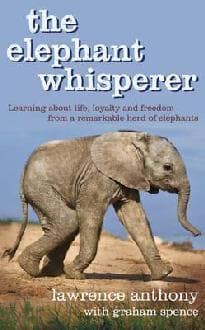
The Elephant Whisperer cover
Archivist's Choice

The Elephant Whisperer

Lawrence Anthony (2009)

Genre

Biography / Memoir

Reading Time

450 min

Key Themes

See below

Track Your Reading

Sign in to track this book

A conservationist's effort to save a herd of traumatized elephants on his South African reserve creates a strong bond built on trust and the elephants' natural intelligence.

Core Idea

Lawrence Anthony's "The Elephant Whisperer" shows that strong, empathetic relationships can form between humans and wild animals, even those with deep trauma. Through his experiences with a herd of elephants, Anthony explains that a consistent, respectful presence, a willingness to understand animal communication, and a commitment to their well-being builds trust and integration. The book suggests that conservation is not just about protecting species or land, but about understanding and honoring the intelligence, emotional complexity, and social structures of wild creatures. This reveals a reciprocal relationship where humans gain as much wisdom and healing as they offer.
Reading time
450 min
Difficulty
Easy
✓ Read this if...
You are interested in interspecies communication, conservation efforts, or stories of profound connection between humans and wild animals, especially elephants, and enjoy memoirs with a strong narrative arc.
✗ Skip this if...
You prefer purely scientific or academic texts on animal behavior, or find detailed accounts of animal welfare challenges and the emotional labor involved in conservation difficult to read.

Core idea

The central argument and framework that powers the entire book.

Lawrence Anthony's "The Elephant Whisperer" shows that strong, empathetic relationships can form between humans and wild animals, even those with deep trauma. Through his experiences with a herd of elephants, Anthony explains that a consistent, respectful presence, a willingness to understand animal communication, and a commitment to their well-being builds trust and integration. The book suggests that conservation is not just about protecting species or land, but about understanding and honoring the intelligence, emotional complexity, and social structures of wild creatures. This reveals a reciprocal relationship where humans gain as much wisdom and healing as they offer.

At a glance

Reading time

450 min

Difficulty

Easy

Read this if...

You are interested in interspecies communication, conservation efforts, or stories of profound connection between humans and wild animals, especially elephants, and enjoy memoirs with a strong narrative arc.

Skip this if...

You prefer purely scientific or academic texts on animal behavior, or find detailed accounts of animal welfare challenges and the emotional labor involved in conservation difficult to read.

Key Takeaways

1

Empathy Transcends Species

Understanding and connecting with animals requires genuine empathy, not just dominance.

Quote

I had always believed that animals, much like humans, possessed a soul and a spirit. This was not a belief born of religion, but of observation, of a deep sense of connection to the natural world.

Anthony's first approach to the elephant herd was not about force, but about patient observation and a desire to understand their trauma. He saw that these elephants, having suffered much loss and violence, were acting out of fear, not malice. By sitting with them, speaking calmly, and showing a consistent, non-threatening presence, he slowly built trust. This empathy, which went beyond typical human-animal interaction, was key to his success. It proved that emotional intelligence and respect work better than force in managing wild an...

Supporting evidence

Anthony spent days and nights in close proximity to the newly arrived, highly aggressive elephant herd, speaking softly to Nana, the matriarch, and showing no fear, even when they charged or displayed aggression. He allowed them to approach on their own terms, respecting their space and distress.

Apply this

When faced with difficult or aggressive individuals, human or animal, prioritize understanding their underlying pain or fear rather than immediately resorting to punitive or controlling measures. Practice active listening and demonstrate consistent, non-threatening presence.


interspecies-communicationemotional-intelligenceconservation-ethics
2

The Power of Presence

Consistent, calm presence can de-escalate conflict and build trust over time.

Quote

I decided that the only way forward was to be there, to let them know I was there, not as a threat, but as a constant presence.

Anthony's most effective strategy was simply being with the elephants. He knew that consistency and closeness, without intrusion, were important for animals traumatized by human interaction. His quiet, steady presence showed safety and reliability in a way that words alone could not. This long period of 'just being there' allowed the elephants to get used to his scent, voice, and peaceful intentions, slowly reducing their deep fear and aggression. It is a lesson in the subtle, yet strong impact of sustained, undemanding attention.

Supporting evidence

Anthony's routine involved spending hours, often days, sitting near the boma where the elephants were initially kept, and later in their presence within the reserve. He would talk to them, read, or simply be still, allowing them to observe him without feeling threatened.

Apply this

In situations requiring trust-building, whether with pets, children, or colleagues, prioritize consistent, non-judgmental presence over sporadic, high-intensity interactions. Be a reliable, calm anchor.

trust-buildinganimal-behaviornon-verbal-communication
3

Trauma's Lasting Impact

Animals, like humans, carry the scars of trauma, influencing their behavior profoundly.

Quote

The elephants were not just wild animals; they were individuals with histories, with memories of loss and violence that shaped their every move.

The elephants were not bad; they were deeply traumatized. The loss of their matriarch and baby, along with past human persecution, had caused deep fear and defensive aggression. Anthony saw that their escape attempts and hostility were direct results of this trauma, not malicious intent. This understanding was important, as it changed his approach from punishment to healing. It shows how important it is to look past behaviors to address the root causes, especially when dealing with beings who cannot speak about their pain.

Supporting evidence

The elephants' immediate reaction upon arrival at Thula Thula was to test the fences and attempt escape. Their initial charges and aggressive displays towards Anthony were rooted in their past experiences with humans, particularly the shooting of their matriarch and calf.

Apply this

When encountering difficult or seemingly irrational behavior in others, consider the possibility of underlying trauma or past negative experiences. Approach with compassion and seek to understand the history rather than just reacting to the present behavior.

animal-psychologyPTSD-animalsbehavioral-ecology
4

Nature's Reciprocity

When treated with respect, nature often reciprocates in unexpected and profound ways.

Quote

I had saved them, and in return, they saved me. It was a silent, unspoken pact.

Anthony's dedication to the elephants was repaid many times. They stopped trying to escape and joined the reserve, and they also formed a strong bond with him. This two-way relationship went beyond just living together; the elephants became a source of emotional support for Anthony, especially during hard times. Their loyalty, particularly their silent watches at his house after his death, shows the deep, two-way relationship that can form when humans approach nature with respect and compassion. It demonstrates that care is often retu...

Supporting evidence

The most striking evidence is the elephants' journey to Anthony's house after his death, standing vigil for two days, despite being miles away and having no human instruction. This act of mourning demonstrated an extraordinary depth of bond and reciprocity.

Apply this

Cultivate a respectful and caring relationship with the natural world around you, whether it's tending a garden, caring for a pet, or supporting conservation efforts. Expect that this investment will often yield unexpected emotional and spiritual returns.

human-animal-bondecological-spiritualityconservation-success
5

The Importance of Matriarchy

Elephant societies, led by wise matriarchs, offer a model of communal strength and wisdom.

Quote

Nana was the heart of the herd, their memory, their guide. Without her, they were lost.

The stability and well-being of the elephant herd depended on its matriarch, Nana. Her leadership was based on wisdom, experience, and emotional intelligence. When she was killed, the herd broke apart and became aggressive. This showed the important role of the matriarch in keeping the group together, passing on knowledge, and guiding them. Anthony's later efforts to connect with the remaining female elephants were an attempt to help them re-establish their natural social structure and find new leadership. This highlights the importan...

Supporting evidence

The herd's initial 'rogue' behavior and distress were largely attributed to the trauma of losing their matriarch and calf. Once a new, albeit younger, matriarch (Frankie) began to assert herself and bond with Anthony, the herd's behavior stabilized significantly.

Apply this

Recognize and value the importance of experienced, empathetic leadership, particularly in groups where wisdom and emotional guidance are crucial for stability and success. Support and empower natural leaders within your communities.

elephant-social-structurefemale-leadershipanimal-sociology
6

Conservation Beyond the Fence

True conservation requires understanding the interconnectedness of all life and fighting for it.

Quote

Conservation was not just about saving animals; it was about saving a piece of ourselves, a piece of the wild spirit that makes us human.

Anthony's work with the elephants at Thula Thula was part of a larger commitment to conservation. His later actions, like rescuing animals from the Baghdad Zoo during the Iraq War, show a belief that all life has value and deserves protection. He did not just manage a reserve; he actively intervened in crises, driven by a moral need to protect wildlife from human destruction. This shows that conservation is an active, often dangerous, and personal fight for biodiversity and the wild spirit.

Supporting evidence

Beyond his work with the elephants, Anthony's efforts to save animals from the Baghdad Zoo during the war, and his subsequent book 'Babylon's Ark,' exemplify his broader, courageous commitment to conservation in extreme circumstances.

Apply this

Expand your understanding of conservation beyond local efforts to global issues. Support organizations and individuals who are actively working to protect endangered species and ecosystems, even in challenging political climates.

wildlife-rescueglobal-conservationenvironmental-activism
7

The Language of the Heart

Communication with animals often occurs on a deeper, intuitive level beyond spoken words.

Quote

I spoke to them, not in words they understood, but in a language of intent, of calm, of respect.

Anthony often 'talked' to the elephants, even though they could not understand human language. This was not pointless; it was a way of showing his intentions, his calm manner, and his respect. The elephants, sensitive to non-verbal cues, tone of voice, and energy, responded to this 'language of the heart.' This shows that effective communication with animals, and often with humans, goes beyond words. It relies on authenticity, emotional connection, and consistent, clear intentions. It suggests a deep, often overlooked, intuitive conne...

Supporting evidence

Anthony describes speaking to Nana, the matriarch, during their first tense encounters, explaining his intentions and asking her to trust him. While she didn't understand the words, her eventual calming and acceptance suggested she registered his non-verbal communication of peace.

Apply this

When trying to connect with animals or even people across cultural or communication barriers, focus on conveying genuine emotions like calm, respect, and positive intent through your demeanor, tone, and actions, rather than solely relying on verbal communication.

intuitive-communicationanimal-cognitionempathetic-listening
8

Resilience in the Wild

Wild animals possess an incredible capacity for survival and adaptation, even after severe trauma.

Quote

They had survived so much, endured so much. Their spirit, though bruised, was unbroken.

Despite the suffering and loss they had experienced, the elephants of Thula Thula showed great resilience. Their initial aggression was a defense, but once a safe environment and a trustworthy human presence were established, their natural instincts for social cohesion, play, and even forgiveness began to return. This resilience shows the strength of wild animals and their ability to heal and adapt when given the chance. It highlights the importance of providing sanctuary and rehabilitation, instead of immediately condemning 'problem'...

Supporting evidence

After months of careful management and trust-building, the elephants not only stopped trying to escape but began to exhibit natural behaviors like playful interactions, dust bathing, and even a degree of trust towards Anthony and his team.

Apply this

When facing setbacks or observing others struggling, remember the inherent capacity for resilience. Focus on creating supportive environments that foster healing and adaptation, rather than giving up on challenging situations or individuals.

animal-resiliencewildlife-rehabilitationadaptive-behavior
9

The Call of the Wild

Connecting with nature fulfills a fundamental human need for meaning and belonging.

Quote

Living among these wild creatures, I felt more alive, more connected to something ancient and profound.

Anthony's life at Thula Thula was not just a job; it was a calling that brought him deep personal satisfaction. He found meaning and a sense of belonging in his daily interactions with the wild, especially the elephants. This suggests that humans need to connect with nature, a 'biophilia' that, when nurtured, provides emotional nourishment. His story is a strong argument for preserving wild spaces and fostering human-nature connections for our own well-being, not just for the animals.

Supporting evidence

Anthony repeatedly describes feeling 'more alive' and finding a sense of peace and purpose while working with the animals and living on the reserve, contrasting it with the complexities of human society.

Apply this

Actively seek opportunities to connect with nature, whether through wilderness excursions, gardening, or simply spending time in local parks. Recognize that these connections are vital for your mental and spiritual health.

biophiliaecotherapyspiritual-ecology
10

Respecting Wildness

True coexistence means understanding and honoring the inherent wildness of animals, not taming them.

Quote

I didn't want to domesticate them; I wanted to live alongside them, respecting their wildness.

Anthony's goal was never to 'tame' the elephants or turn them into pets. Instead, he sought a relationship built on mutual respect, letting them keep their natural instincts and wild behaviors within the reserve. This difference is important for ethical conservation: it is about protecting animals in their natural state, not changing them for human comfort. His success was in adapting his own behavior to fit their needs and wildness, rather than forcing human expectations on them. This offers a model for responsible human-wildlife int...

Supporting evidence

Anthony consistently describes allowing the elephants to make their own choices within the reserve, observing their social dynamics without overly interfering, and respecting their inherent instincts, even when challenging.

Apply this

When interacting with animals, especially wild ones, prioritize their well-being and natural behaviors over your own desire for control or affection. Learn about their needs and respect their space and autonomy.

wildlife-ethicsconservation-philosophyanimal-autonomy

Critical analysis

Notable Quotes

The greatest lesson I learned from elephants is that we are all connected.

Reflecting on the interconnectedness of all life through his experiences with elephants.

They were not just animals; they were individuals with distinct personalities, emotions, and memories.

Describing his realization about the complex inner lives of the elephants he protected.

If we don’t protect what we have, we will lose it forever.

A central theme of the book, highlighting the urgency of conservation.

Trust is a two-way street. You have to give it to get it.

Explaining the foundation of his relationship with the wild elephants, especially Nana.

Sometimes the most dangerous animal is man.

A stark observation on the threats posed by humans to wildlife and the environment.

You can’t force wild animals to do anything; you have to earn their respect.

Underlining the philosophy behind his successful interactions with the herd.

The magic of Africa is not just in its wildlife, but in its spirit.

Expressing his deep affection for the continent and its inherent mystique.

Every animal has a right to live, just as we do.

A fundamental belief that guided his conservation efforts.

Fear is a powerful emotion, but love is even more so.

Contrasting the initial fear he faced from the elephants with the eventual bond of love.

The greatest joy comes from giving, not taking.

Reflecting on the fulfillment he found in dedicating his life to protecting animals.

Patience is not simply the ability to wait, but how we behave while we're waiting.

A key virtue required when dealing with wild animals and the slow process of building trust.

They came for me, the elephants. They knew.

A famous and poignant moment where the elephants visit his home after his death, demonstrating their deep connection.

To truly understand an animal, you have to spend time in its world, on its terms.

Explaining his immersive approach to learning about and connecting with the elephant herd.

Hope is the last thing to die.

Maintaining optimism even in the face of significant challenges in conservation.

Quiz

Test Your Knowledge

Ready to see how well you understood this book? Take our interactive quiz with 10 questions.

10
Questions
~5
Minutes
?
Best Score

Key Questions (FAQ)

'The Elephant Whisperer' is a memoir by Lawrence Anthony, chronicling his extraordinary experience of accepting a herd of traumatized, 'rogue' elephants onto his Thula Thula game reserve in South Africa. It details his journey to bond with these dangerous animals and save them from being culled, discovering profound lessons about life and loyalty along the way.

About the author