BookBrief
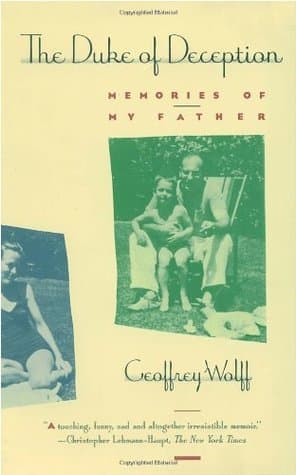
The Duke of Deception cover
Archivist's Choice

The Duke of Deception

Geoffrey Wolff (1979)

Genre

Biography / Memoir

Reading Time

8 hours

Key Themes

See below

Track Your Reading

Sign in to track this book

A son grapples with his con-man father, a Gatsby-like figure who created a life of privilege and success while being a devoted, if deceptive, dad.

Core Idea

Geoffrey Wolff's "The Duke of Deception" is a son's difficult investigation of his father, Arthur "Duke" Wolff, a charming, brilliant, and fraudulent con man. The book argues that Duke's life was an example of self-invention and the power of illusion, where reality was constantly reshaped to fit his grand, fabricated stories. Through extensive research, interviews, and personal memories, Wolff confronts the deception that defined his father's existence. He explores how Duke's charisma and intellect were linked to his dishonesty, leaving a legacy of both fascination and damage on those closest to him, especially his son. The book offers an understanding of the con man's psychology and the complex nature of love and identity when built on lies.
Reading time
8 hours
Difficulty
Medium
✓ Read this if...
You are fascinated by the psychology of con artists, the intricacies of family legacies built on lies, or the complex emotional journey of a son attempting to understand and reconcile with a larger-than-life, yet deeply flawed, parent.
✗ Skip this if...
You prefer straightforward narratives without ambiguity, are not interested in detailed biographical accounts, or find stories centered on deception and its consequences emotionally taxing.

Core idea

The central argument and framework that powers the entire book.

Geoffrey Wolff's "The Duke of Deception" is a son's difficult investigation of his father, Arthur "Duke" Wolff, a charming, brilliant, and fraudulent con man. The book argues that Duke's life was an example of self-invention and the power of illusion, where reality was constantly reshaped to fit his grand, fabricated stories. Through extensive research, interviews, and personal memories, Wolff confronts the deception that defined his father's existence. He explores how Duke's charisma and intellect were linked to his dishonesty, leaving a legacy of both fascination and damage on those closest to him, especially his son. The book offers an understanding of the con man's psychology and the complex nature of love and identity when built on lies.

At a glance

Reading time

8 hours

Difficulty

Medium

Read this if...

You are fascinated by the psychology of con artists, the intricacies of family legacies built on lies, or the complex emotional journey of a son attempting to understand and reconcile with a larger-than-life, yet deeply flawed, parent.

Skip this if...

You prefer straightforward narratives without ambiguity, are not interested in detailed biographical accounts, or find stories centered on deception and its consequences emotionally taxing.

Key Takeaways

1

The Art of Self-Invention

Truth is secondary to the narrative one constructs about oneself.

Quote

My father's life was a triumph of the will over the facts.

Duke Wolff embodies the American capacity for self-invention, where personal narrative is more important than objective reality. He was not just a liar but a performer, constantly creating a new persona, complete with fabricated backgrounds, careers, and social standing. This was less about malice and more about a desperate need to belong, to be seen as successful and important in a society that values external signs of achievement. His 'truth' was whatever fit his current version of himself, showing how deeply ingrained the desire fo...

Supporting evidence

Duke's claims of Yale and OSS credentials, his fabricated wartime heroics as a fighter pilot, and his ever-shifting professional identities (aviation engineer, entrepreneur) all served to construct a more impressive, albeit entirely false, self.

Apply this

Reflect on the stories you tell about yourself. Are there areas where you embellish or minimize to fit a desired perception? Challenge yourself to embrace authentic self-presentation, understanding that genuine connection often stems from vulnerability, not fabricated perfection.

self-inventionidentity-constructionnarrative-truthsocial-performance
2

Love Amidst Deception

Parental love can exist authentically, even when everything else is a lie.

Quote

He falsified everything but love.

A perplexing part of Duke Wolff is the deep, undeniable love he showed his son, Geoffrey, despite a life built on lies. This challenges common beliefs, suggesting that genuine affection can exist separately from moral failings and chronic dishonesty. For Geoffrey, this love was a constant amid the chaos of his father's schemes. It implies that human relationships are complex and not always simple good/bad. Duke's love, though perhaps imperfect and often given within a fantastical framework, provided an emotional anchor. This shows tha...

Supporting evidence

Geoffrey's recounting of his father's attentiveness, the imaginative games they played, the sense of security and adventure Duke instilled, and the palpable void left by his absence, all point to a genuine, if unconventional, paternal bond.

Apply this

Examine your own relationships. Can you identify individuals with significant flaws who nonetheless offer genuine love or support in specific areas? Practice accepting people for their complex totality rather than demanding perfect consistency.

unconditional-loveparental-bondsmoral-complexityrelational-paradox
3

The Son's Burden: Legacy and Forgiveness

Confronting a parent's legacy requires a delicate balance of investigation and empathy.

Quote

To write about my father was to invent him again, but this time with the facts.

Geoffrey Wolff's memoir is an act of understanding, a son's attempt to comprehend, rather than just judge, a father who was both a source of affection and disappointment. The process of uncovering the truth, removing layers of fabrication, is both freeing and painful. It shows the lasting impact of parents and the emotional work involved in processing their lives. This journey is not just about exposing lies; it is about making peace with a complicated legacy, finding a story that includes both the good and the bad, and perhaps findin...

Supporting evidence

Geoffrey's meticulous research into his father's past, contacting old acquaintances, verifying records, and juxtaposing these findings with his own childhood memories, forms the core of the book's narrative.

Apply this

If you have a complex parental relationship, consider journaling or discussing their life with trusted individuals. Focus on understanding their choices within their context, which can lead to greater empathy and resolution, rather than just judgment.

filial-pietylegacy-reckoningbiographical-truthintergenerational-trauma
4

The Allure of the Con Man

Charisma and charm can make even the most egregious lies seem palatable.

Quote

My father was a man who lived by his wits, and his wits were considerable.

Duke Wolff was not just a liar; he was a master manipulator with magnetic charm that allowed him to continually trick new victims—employers, wives, and even his own son, for a time. This shows the dangerous power of charisma, demonstrating how personality can override rational judgment. People wanted to believe Duke's stories because he presented them with conviction and style. His ability to project an image of success, sophistication, and capability, despite lacking substance, is a stark reminder of how easily appearances can deceiv...

Supporting evidence

Duke's repeated success in securing jobs for which he was unqualified, his ability to charm women and convince them of his fabricated past, and the way he could talk his way out of difficult situations are all testaments to his persuasive power.

Apply this

Be wary of individuals who rely solely on charm and big promises without providing concrete evidence or a track record. Develop critical thinking skills to evaluate claims and look beyond superficial attractiveness in both personal and professional interactions.

charismatic-deceptioncon-artistrysocial-manipulationcredibility-bias
5

The Shifting Sands of Identity

Without a stable identity, one is condemned to perpetually invent and reinvent.

Quote

He was always becoming someone else, and the someone else was always more interesting than the someone he had just been.

Duke Wolff's life was a continuous performance, a series of costume changes and script revisions. This constant state of 'becoming' suggests he lacked a real, stable core identity. He was not simply lying about who he was; he seemed to lack a consistent sense of self. This can be a symptom of deeper psychological issues, where the person cannot integrate their experiences into a coherent personal story. For Duke, each new persona was an attempt to escape past failures and present inadequacies, leading to a life that was excitingly unp...

Supporting evidence

Duke's numerous name changes, his shifting professional aspirations, his repeated geographical moves, and the abandonment of past lives all illustrate his inability to settle into a fixed identity.

Apply this

Engage in self-reflection and introspection to understand your core values and beliefs. Cultivate a strong sense of self-awareness to build a stable identity that isn't dependent on external validation or constant reinvention.

identity-crisisself-deceptionpsychological-fragmentationexistential-instability
6

The Pervasiveness of Illusion

Our desire for compelling narratives often makes us complicit in the illusions of others.

Quote

We wanted to believe him, because his stories were always better than the truth.

The book suggests that not just Duke, but also those around him, including his son, helped perpetuate his illusions. There is a human tendency to prefer an exciting, romantic, or impressive story over a mundane or painful truth. This desire for narrative pleasure can make people vulnerable to deception, even when subconscious doubts exist. Geoffrey, as a child, was drawn to his father's fantastical world, finding adventure and excitement there. This shows how our own needs and desires can create fertile ground for illusion, making us ...

Supporting evidence

Geoffrey's childhood memories of being captivated by his father's tales, even as an adult he admits to the allure of the fabricated grandeur, and the way others were drawn into Duke's orbit, suggests a shared complicity in the illusion.

Apply this

Cultivate a healthy skepticism, especially towards narratives that seem too good to be true. Question your own motivations for believing certain stories and seek out diverse perspectives to avoid being swayed by compelling but baseless claims.

cognitive-biasnarrative-seductiongroup-thinktruth-vs-fiction
7

The Cost of Perpetual Motion

A life built on evasion leads to a relentless, exhausting pursuit of the next escape.

Quote

He was always packing, always leaving, always reinventing the destination.

Duke Wolff's life involved constant movement—geographical, professional, and personal. This perpetual motion was less about seeking new opportunities and more about escaping the consequences of past deceptions. Each move, job, and relationship was an attempt to outrun the truth of his previous failures. This relentless evasion, while appearing adventurous, was exhausting and unsustainable. It illustrates the high personal cost of living a dishonest life; the mental and emotional toll of maintaining multiple false fronts, the constant ...

Supporting evidence

Duke's frequent relocations across the country, his multiple marriages, and his string of failed business ventures all demonstrate a pattern of fleeing rather than confronting problems.

Apply this

Address challenges and responsibilities directly rather than avoiding them. Recognize that true freedom comes from accountability and integrity, not from constantly escaping difficult situations or truths.

evasion-tacticsconsequences-of-deceitpsychological-burdenflight-response
8

The American Dream's Dark Side

The pressure to succeed can foster a culture of fabrication and pretense.

Quote

He was a monument to aspiration, even if the foundation was sand.

Duke Wolff reflects a twisted version of the American Dream—the belief that anyone can achieve success through hard work and self-reliance. For Duke, this ideal became a relentless pressure to appear successful, even when reality was different. The book critiques society's emphasis on outward achievement and status, which can encourage individuals to fabricate accomplishments rather than genuinely earn them. Duke's story is a cautionary tale about prioritizing image over substance, and how pursuing an idealized self, if unchecked by...

Supporting evidence

Duke's constant striving for impressive titles, his attempts to mingle with the elite, and his persistent efforts to project an image of wealth and influence, all speak to a deep-seated desire to embody the American ideal of success.

Apply this

Evaluate your own definition of success. Is it based on genuine achievement and personal fulfillment, or primarily on external validation and material possessions? Prioritize integrity and authenticity in your pursuits, rather than merely the appearance of success.

american-dream-critiquesocial-climbingstatus-anxietyperformative-success
9

The Nature of Truth

Truth is often subjective, fragmented, and elusive, especially in memory and biography.

Quote

The past is a foreign country; they do things differently there.

Geoffrey Wolff's journey to reconstruct his father's life shows the difficulties in finding 'truth,' especially with memory, personal stories, and time. Duke's life was a masterclass in hiding facts, leaving a trail of contradictory accounts and unreliable witnesses. The author's struggle to create a coherent story shows that truth is rarely simple. Instead, it is often a mosaic of perspectives, half-truths, and interpretations. This reminds us that even with good intentions, our understanding of past events and individuals is always ...

Supporting evidence

The discrepancies between Duke's stories, the varying accounts from people who knew him at different stages of his life, and Geoffrey's own shifting childhood perceptions of his father, all illustrate the fragmented nature of truth.

Apply this

Approach historical accounts and personal anecdotes with a critical, nuanced perspective. Recognize that multiple truths can exist simultaneously, and be open to revising your understanding as new information or perspectives emerge.

subjective-truthbiographical-challengememory-reliabilitypostmodern-truth

Critical analysis

Notable Quotes

He was a man who could not tell the truth because he did not know it.

Wolff's description of his father's fundamental dishonesty and self-deception.

He invented himself, and then he believed in the invention.

Reflecting on how his father created a false persona and lived within it.

The past is not what you remember, but what you choose to forget.

Commentary on selective memory and family narratives.

He wore his lies like a fine suit, tailored to fit every occasion.

Describing his father's skillful and adaptable deceptions.

In our family, the truth was always the guest who never arrived.

On the pervasive dishonesty that characterized his upbringing.

He taught me that reality is something you can negotiate.

Wolff reflecting on the dangerous lessons learned from his father.

The charm was genuine, even when the stories were not.

Acknowledging the paradoxical authenticity within his father's fraudulence.

We lived in the house that deception built.

Metaphor for the fragile foundation of their family life.

His greatest creation was the man he pretended to be.

On his father's lifelong performance of an idealized self.

The truth, when it finally came, was a wrecking ball.

Describing the devastating impact of confronting reality.

He could convince anyone of anything, except himself.

Highlighting the internal emptiness behind his father's persuasive abilities.

I learned to doubt everything, especially what I wanted to believe.

Wolff on the skeptical mindset forged by his father's deceptions.

The legacy he left me was a question: who was he, really?

On the enduring mystery at the heart of his father's identity.

In the end, the only person he truly deceived was himself.

Final assessment of his father's ultimate self-delusion.

Quiz

Test Your Knowledge

Ready to see how well you understood this book? Take our interactive quiz with 10 questions.

10
Questions
~5
Minutes
?
Best Score

Key Questions (FAQ)

'The Duke of Deception' is a biography and memoir by Geoffrey Wolff about his father, Duke Wolff, who presented himself as a Yale-educated OSS agent and aviation engineer but was actually a serial failure and con artist who fabricated his entire life story while maintaining a complex, loving relationship with his son.

About the author