BookBrief
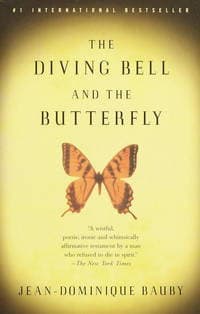
The Diving Bell and the Butterfly cover
Archivist's Choice

The Diving Bell and the Butterfly

Jean-Dominique Bauby (1997)

Genre

Biography / Memoir

Reading Time

90 min

Key Themes

See below

Track Your Reading

Sign in to track this book

Trapped in a paralyzed body and able to communicate only by blinking one eyelid, a magazine editor dictates his memoir, turning an impossible situation into a story about the strength of the human spirit.

Core Idea

Jean-Dominique Bauby's memoir, dictated by blinking his left eyelid, argues that the human mind and spirit can stay active, creative, and free even when the body has 'locked-in syndrome.' Through his internal world, Bauby shows how imagination, memory, and language can overcome extreme physical paralysis, allowing for rich internal experiences, communication, and art. The book questions common ideas about disability, freedom, and human dignity, stating that a person's core is in their consciousness and ability to connect with the world, no matter how little.
Reading time
90 min
Difficulty
Medium
✓ Read this if...
You are interested in the resilience of the human spirit, the power of communication against impossible odds, or a unique perspective on life, memory, and the human condition.
✗ Skip this if...
You are looking for an action-driven plot or find books about severe physical disability too challenging or emotionally intense.

Core idea

The central argument and framework that powers the entire book.

Jean-Dominique Bauby's memoir, dictated by blinking his left eyelid, argues that the human mind and spirit can stay active, creative, and free even when the body has 'locked-in syndrome.' Through his internal world, Bauby shows how imagination, memory, and language can overcome extreme physical paralysis, allowing for rich internal experiences, communication, and art. The book questions common ideas about disability, freedom, and human dignity, stating that a person's core is in their consciousness and ability to connect with the world, no matter how little.

At a glance

Reading time

90 min

Difficulty

Medium

Read this if...

You are interested in the resilience of the human spirit, the power of communication against impossible odds, or a unique perspective on life, memory, and the human condition.

Skip this if...

You are looking for an action-driven plot or find books about severe physical disability too challenging or emotionally intense.

Key Takeaways

1

The Unbreakable Mind's Eye

Despite total physical paralysis, the inner world of thought and imagination remains vibrant and free.

Quote

My diving bell contains only my body, never my mind. The mind can soar like a butterfly.

Bauby's memoir shows that the human mind, even when the body is completely unable to move, keeps its full ability for thought, memory, imagination, and emotion. His 'locked-in syndrome' made him a prisoner in his own body, unable to move or speak, but his consciousness stayed sharp and active. He shows that the 'self' is not just physical but an inner world, full of past experiences, future dreams, and an ongoing story. This difference between his physical reality and mental freedom is the main contradiction and success of his story, ...

Supporting evidence

Bauby's vivid internal monologues, his detailed recollections of past events, his imaginings of travel, and his creative process of dictating the book itself, all occur entirely within his mind.

Apply this

Cultivate a rich inner life through reading, reflection, and imagination, recognizing that mental agility and resilience are paramount, regardless of external circumstances. Understand that our true freedom often resides in our thoughts.


locked-in-syndromeresilienceconsciousness
2

The Power of a Single Eyelid

Even the most minimal means of communication can forge a bridge between an isolated mind and the outside world.

Quote

Blinking my left eyelid is my only means of communication.

Bauby's ability to dictate a whole book, letter by letter, using only the blink of his left eyelid, shows the power of even very limited communication. This single, small muscle became his way to connect, turning a seemingly impossible barrier into a working, though slow, way to express himself. It shows the human need to connect and be understood, and the amazing cleverness that can appear when that need is threatened. His method, based on an alphabet ordered by letter frequency, shows how structure and patience can create much from ...

Supporting evidence

The entire creation of 'The Diving Bell and the Butterfly' is the primary evidence, dictated word by word through Bauby's eyelid blinks to his transcriber, Claude Mendibil, using a special alphabet.

Apply this

Value and actively seek out diverse methods of communication, especially for those with severe disabilities. Be patient and creative in facilitating expression, recognizing that even subtle cues can convey profound messages. Never underestimate the impact of listening.

communicationdisabilityhuman-connection
3

The Tyranny of Memory

Memories can be both a refuge and a torment when one is trapped in an unyielding present.

Quote

My past life, a procession of images, flashes before my eyes, a constant reminder of what I have lost.

For Bauby, memories are both good and bad. On one hand, they are an escape, letting him relive moments of joy, love, and freedom, giving him comfort from his immediate, harsh reality. He remembers trips, talks, and the warmth of his children. On the other hand, these memories can cause great pain, sharply contrasting his active past with his current inability to move and his dependence. The vividness of what he lost—his independence, his role as a father, his career—is often a painful reminder of his current limits. This explores how ...

Supporting evidence

Bauby frequently recounts detailed memories: a trip to Lourdes, shaving his father, a past love affair, his children's voices. These interspersed recollections form a significant part of the book's narrative.

Apply this

Practice mindfulness to engage with the present, while also cherishing positive memories without letting them become a source of regret for what is lost. Understand that memory is a fluid, interpretive process.

memorygriefidentity
4

The Redefinition of Freedom

True freedom is not solely physical, but can be found in the boundless expanse of the mind and imagination.

Quote

I am probably the only man in the world to have traveled the world from his bed.

Bauby's experience makes us rethink what freedom means. Physically, he is the opposite of free, completely bound and dependent. Yet, through his imagination, he travels the world, revisits his past, and even creates new realities. This shows that while physical freedom is valued, a more basic freedom is in the human mind's ability to go beyond physical limits. He shows that mental and imaginative freedom can strongly counter physical imprisonment, suggesting that the most limiting cage is often the one we build in our minds, not the o...

Supporting evidence

Bauby's 'travels' to places like Lourdes, his detailed descriptions of imaginary meals, and his ability to mentally 'edit' his book before dictation, all illustrate his mental freedom.

Apply this

Actively cultivate and protect your mental and imaginative freedom. Engage in activities that stimulate your mind and allow it to wander, recognizing that these internal journeys are as vital as physical ones for well-being.

freedomimaginationinner-world
5

The Mundanity of the Extraordinary

Even in extreme circumstances, the everyday struggles and small indignities persist, shaping the experience.

Quote

Even though I am paralyzed, I am still the same man, with the same needs, the same desires, and the same irritations.

While Bauby's condition is unusual, he often describes the everyday realities and frustrations of his daily life. He is upset about an itchy nose he cannot scratch, the lack of dignity in being fed, or the annoyance of a fly near his face. These small details matter because they make his experience real, reminding us that even with great suffering, the small annoyances and basic physical discomforts of life continue and can become worse. This shows that the 'heroic' story of overcoming often hides the difficult, ordinary challenges th...

Supporting evidence

His descriptions of an unscratchable itch, the discomfort of his neck brace, the taste of hospital food, and the frustration with his caregivers' lack of understanding.

Apply this

Cultivate empathy by paying attention to the small, often overlooked daily struggles of others, especially those facing significant challenges. Recognize that human experience is a complex tapestry of both grand narratives and mundane realities.

empathydaily-lifehumanity
6

The Shifting Nature of Relationships

Severe illness fundamentally alters, but does not necessarily diminish, the dynamics of personal connections.

Quote

My children, my friends, my family... their love is my oxygen, even if I can no longer express my own.

Bauby's relationships with his children, his ex-partner, his friends, and his caregivers are important to his story. His illness changes these bonds deeply; he can no longer physically interact, speak, or show affection in usual ways. Yet, the love and presence of his children, his transcriber's dedication, and visits from friends become his lifelines. He sees how people adjust (or do not adjust) to his new state, showing how strong and delicate human connection is. The book shows that love and connection can last and even grow, findi...

Supporting evidence

His poignant descriptions of his children's visits, the tireless work of his speech therapist/transcriber, Claude Mendibil, and the emotional impact of friends' letters and presence.

Apply this

Invest deeply in relationships, understanding that their forms may change over time and through life's challenges. Practice active listening and seek to understand love and connection beyond conventional expressions.

relationshipslovefamilycaregiving
7

The Body as a Betrayer

The physical self, once a vessel of freedom, can become a cruel prison, fostering a profound sense of alienation.

Quote

I am a man with a head as heavy as a diving bell, and a body as delicate as a butterfly's wing, but I am trapped inside.

Bauby’s experience is one of being let down by his own body. Once an active man, his body becomes an unmoving shell, a 'diving bell' that separates him from the world. This creates a strong feeling of being apart—his body is no longer 'his' in a working sense, but a separate object that holds his conscious self. He often talks about his body in detached ways, showing the gap between his active mind and his still body. This explores the deep psychological pain of losing control over one's body and the struggle to match one's identity w...

Supporting evidence

His descriptions of his body as a 'thing,' his struggle with physical needs, and his feeling of being 'imprisoned' or 'entombed' within himself.

Apply this

Cultivate gratitude for bodily functions and physical health, and recognize the profound psychological impact of losing physical autonomy. Support individuals facing such challenges with dignity and respect for their inner person.

body-imagetraumaautonomyalienation
8

The Irony of Time

Time, once a fleeting commodity, slows to an agonizing crawl, yet life's urgency remains.

Quote

Time stretches out before me, an endless desert, yet I feel a desperate urgency to finish my story.

For Bauby, time is different. Communicating is very slow, making every minute feel like forever, yet he knows his time is limited, pushed by a strong need to finish his memoir. This contradiction shows how subjective our experience of time can be, especially under pressure. Each blink, each letter, is a huge effort, making moments last for hours. Yet, the coming threat of his condition and life's fragility give his project a strong sense of urgency, creating a tension between the slow, careful act of writing and the fast, unforgiving ...

Supporting evidence

The meticulous, slow process of dictating each letter, contrasted with his internal reflections on his health, the urgency of his project, and his eventual death shortly after the book's publication.

Apply this

Appreciate the value of time and use it intentionally. Practice patience in communication and creative endeavors, recognizing that profound output can emerge from slow, deliberate effort. Prioritize what truly matters.

timemortalitypatienceurgency
9

The Fragility of the Human Condition

Bauby's story serves as a stark reminder of life's precariousness and the randomness of fate.

Quote

One moment I was a vibrant man, the next, a prisoner in my own flesh. Life can change in an instant.

Bauby's sudden stroke, changing him from a successful editor to a 'locked-in' patient, clearly shows how fragile human life is. It is a reminder that life, as we know it, can change forever in one unexpected moment. His memoir does not avoid the randomness and harshness of fate, making readers face their own weakness. It shows how precious health, mobility, and the ability to communicate are, qualities often taken for granted until they are gone. This deep vulnerability is a universal truth, shown by Bauby's extreme situation.

Supporting evidence

The abrupt onset of his stroke, described early in the book, and the immediate, devastating consequences that stripped him of his former life.

Apply this

Cultivate gratitude for health and daily abilities. Live presently and intentionally, recognizing the preciousness and unpredictability of life. Support research and care for those affected by sudden, debilitating illnesses.

fragilityfatevulnerabilitylife-changes
10

Finding Beauty in the Abyss

Even in the darkest of circumstances, the human spirit can perceive and create moments of profound beauty.

Quote

My mind, like a butterfly, still flutters through the flowers, even if my body is a diving bell.

Despite his terrible condition, Bauby's story has moments of unexpected beauty. He finds comfort and wonder in small details: the changing light outside his window, the imagined taste of a good meal, the sound of his children's voices, or the warmth of human connection. His ability to write a poetic, often funny, and moving book from such bad circumstances is, itself, a beautiful act. This shows the human ability to seek, appreciate, and even create beauty, even when surrounded by suffering, showing how art and perspective can change ...

Supporting evidence

The poetic language and vivid imagery he employs throughout the book, his ability to find humor in his situation, and the profound emotional resonance of his narrative.

Apply this

Actively seek out moments of beauty and wonder in daily life, no matter how small. Cultivate an artistic or creative outlet as a means of processing experience and finding meaning, especially during challenging times.

beautyhopecreativityperspective

Critical analysis

Notable Quotes

I can attest that you are never alone when you are a quadriplegic. The phone rings at all hours. Visitors arrive at regular intervals. Someone is always there to help you swallow a bit of food or mop your brow.

Bauby reflects on the 'company' he keeps due to his condition.

My diving bell is not a prison, it is a launch pad for my imagination.

Bauby describes how his physical confinement frees his mind.

I had enough time, and enough solitude, to give free rein to my imagination.

Explaining the creative process despite his locked-in syndrome.

Every time I hear the word 'tomorrow,' I feel a pang of longing.

Bauby expresses his yearning for a future he might not experience.

The only thing that has not changed is the feeling in my heart.

Despite his physical transformation, his inner self remains.

You can always tell when someone is genuinely happy because they smile with their eyes.

Observing others, a detail he notices with his limited communication.

I am no longer the master of my body, but I am still the master of my thoughts.

A powerful statement about his mental autonomy.

My memory is like a film, constantly rewound and replayed.

Describing his vivid recollections of the past.

With my left eye sewn shut, I had a constant feeling of the world being off-kilter.

The physical reality of his condition and its sensory impact.

Each morning, I have to conquer the urge to give up.

The daily struggle and determination required to live.

I am trying to describe what it's like to be me, to be inside my head.

His core purpose in writing the memoir.

The alphabet is my oxygen.

Highlighting the critical role of language in his survival and communication.

I am a man who, until recently, lived at a hundred miles an hour, and now I have to learn to live at a snail's pace.

Contrasting his former life with his current existence.

The only thing that matters is to keep on breathing, to keep on blinking.

A raw statement about the fundamental act of existing.

Quiz

Test Your Knowledge

Ready to see how well you understood this book? Take our interactive quiz with 10 questions.

10
Questions
~5
Minutes
?
Best Score

Key Questions (FAQ)

The book is a memoir by Jean-Dominique Bauby, former editor of French 'Elle', who suffered a massive stroke and developed locked-in syndrome. It details his experience of being almost entirely paralyzed, yet fully conscious, and how he dictated his story letter by letter using only his left eyelid.

About the author