BookBrief
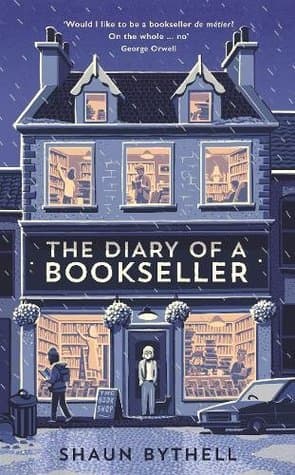
The Diary of a Bookseller cover
Archivist's Choice

The Diary of a Bookseller

Shaun Bythell (2017)

Genre

Biography / Memoir

Reading Time

6-8 hours

Key Themes

See below

Track Your Reading

Sign in to track this book

Follow a Scottish bookseller through a year of diary entries as he runs his sprawling second-hand shop, dealing with eccentric staff, bizarre customers, and the never-ending search for literary gems.

Core Idea

Shaun Bythell's "The Diary of a Bookseller" gives a frank, often grumpy, yet ultimately fond look at running an independent secondhand bookshop in Wigtown, Scotland. Over a year of diary entries, Bythell details the unique challenges, strange customer interactions, odd staff dynamics, and constant financial tightrope that define his life at The Bookshop. The book argues for the lasting, though increasingly difficult, value of physical books and the human connections found in physical stores, even as it honestly shows the frustrations and occasional despair of the trade.
Reading time
6-8 hours
Difficulty
Easy
✓ Read this if...
You are fascinated by the inner workings of independent bookshops, enjoy dry wit and observational humor, or appreciate a realistic, unsentimental portrayal of a romanticized profession.
✗ Skip this if...
You prefer fast-paced narratives, are easily offended by cynicism, or expect a purely idealistic view of bookselling and book-lovers.

Core idea

The central argument and framework that powers the entire book.

Shaun Bythell's "The Diary of a Bookseller" gives a frank, often grumpy, yet ultimately fond look at running an independent secondhand bookshop in Wigtown, Scotland. Over a year of diary entries, Bythell details the unique challenges, strange customer interactions, odd staff dynamics, and constant financial tightrope that define his life at The Bookshop. The book argues for the lasting, though increasingly difficult, value of physical books and the human connections found in physical stores, even as it honestly shows the frustrations and occasional despair of the trade.

At a glance

Reading time

6-8 hours

Difficulty

Easy

Read this if...

You are fascinated by the inner workings of independent bookshops, enjoy dry wit and observational humor, or appreciate a realistic, unsentimental portrayal of a romanticized profession.

Skip this if...

You prefer fast-paced narratives, are easily offended by cynicism, or expect a purely idealistic view of bookselling and book-lovers.

Key Takeaways

1

The Enduring Romance (and Reality) of Secondhand Bookselling

Beneath the idyllic facade lies a relentless, often absurd, commercial enterprise.

Quote

Most people imagine bookselling to be a rather genteel occupation, filled with quiet contemplation and stimulating intellectual discourse. They are, for the most part, wrong.

Bythell shatters the romantic image of bookselling while still showing its unique charm. He reveals that owning a large second-hand bookshop, even in a scenic Scottish town, is less about leisurely literary discussions and more about the tough realities of business: managing difficult staff, enduring confusing customers, and constantly looking for profitable books. The diary entries show the daily grind, from fixing leaky roofs to the endless search for valuable books among piles of junk. Yet, through his dry humor and genuine love fo...

Supporting evidence

Bythell frequently recounts interactions with customers who demand discounts on already cheap books, or try to sell him unsellable volumes. He also details the physical labor involved in moving and shelving tens of thousands of books, and the constant financial tightrope walk of running a small business.

Apply this

For aspiring entrepreneurs, especially in niche markets, understand that passion alone is insufficient. Be prepared for the unglamorous, often frustrating, practicalities of business operations, customer service, and inventory management. Embrace the absurdity, but never lose sight of the bottom line.


small-business-realityretail-challengesniche-market
2

The Baffling Species: The Bookshop Customer

Customers are the lifeblood, and often the bane, of a bookseller's existence.

Quote

I often wonder if some people come into bookshops purely to demonstrate their ignorance, or their eccentricities, or both.

Bythell's diary is a funny, sometimes exasperated, look at bookshop customers. From 'browsers' who spend hours without buying, to 'negotiators' who haggle over small amounts, and 'experts' who correct him on obscure facts, customers provide endless material. He details their strange requests, their firm resolve to find books that don't exist, and their occasional moments of real insight or charm. This creates a picture of humanity in all its quirky glory, seen through the eyes of a bookseller who, despite his cynicism, clearly has a s...

Supporting evidence

Specific anecdotes include the customer who insisted on a discount because a book was 'too heavy,' or the one who asked if he had any books that 'weren't books.' He also describes the 'one-star review' type who complains about the lack of specific genres or the shop's layout.

Apply this

In any customer-facing role, develop a thick skin and a keen sense of humor. Learn to manage expectations, anticipate common queries (and absurd ones), and recognize that every interaction, however frustrating, is part of the job. Empathy, even when stretched thin, is crucial.

customer-servicehuman-behaviorretail-anecdotes
3

The Perils and Pleasures of Inventory Acquisition

Buying books is a delicate dance between value, volume, and sheer physical effort.

Quote

The true art of bookselling lies not in selling, but in buying. You can't sell books you haven't got, and you can't make money from books you've bought badly.

Bythell often goes on buying trips, which are usually the most adventurous and revealing parts of his diary. He travels to dusty estates, overflowing attics, and remote cottages, meeting unusual sellers and navigating piles of books, many of which are worthless. The process is a gamble: finding a hidden treasure can make a trip worthwhile, while a truckload of unsellable books can be a financial drain. He highlights the physical demands of the job, the negotiation skills, and the excitement of discovery. This part of bookselling is le...

Supporting evidence

He describes a particularly arduous trip involving a 'death trap' staircase in a remote house, or the time he bought a massive collection only to find it riddled with mildew. Conversely, he recounts finding a rare first edition or a valuable antique map hidden within an otherwise unremarkable lot.

Apply this

For anyone in procurement or inventory management, Bythell's experiences underscore the importance of due diligence, market knowledge, and risk assessment. Be prepared for unexpected challenges, and understand that the true value of an item isn't always immediately apparent.

inventory-managementprocurement-strategyvalue-discovery
4

The Eccentricities of Staff and Small-Town Life

Your colleagues and community are a constant source of both support and exasperation.

Quote

Wigtown is a village full of characters, and I seem to employ most of them.

Bythell's staff, especially Nicky, who wears a ski suit and forages in bins, and the often-absent Manon, are central to the book's humor. Their quirks, inefficiencies, and occasional brilliance create a rich picture of workplace dynamics. Beyond the shop, Wigtown itself is a character, a close-knit community where everyone knows everyone else's business. Bythell's interactions with local residents, from the postman to other shopkeepers, paint a vivid picture of rural Scottish life. This shows how personal relationships within a small ...

Supporting evidence

Nicky's habit of bringing strange items from skips into the shop, or Manon's frequent trips and elaborate excuses, are recurring themes. He also details local festivals, gossip, and the general rhythm of Wigtown life, often involving the pub.

Apply this

In any leadership role, particularly in a small team, learn to manage diverse personalities and leverage individual strengths, even if they come with eccentricities. In a small community, understand the importance of local relationships and how they can impact your business and personal life.

workplace-dynamicssmall-town-lifestaff-management
5

The Digital Dilemma: Amazon vs. the Independent Bookshop

The internet is both a necessary evil and a constant threat to traditional bookselling.

Quote

Amazon is like a particularly persistent parasite. It feeds off the efforts of others, offering convenience at the expense of culture.

Bythell strongly criticizes Amazon, seeing it as a soulless entity that devalues books and harms independent sellers. He acknowledges its usefulness for finding obscure titles or selling unsellable stock but resents its aggressive business practices and how it removes the joy of browsing. His entries often compare the physical world of his shop with the cold, automated efficiency of online retail. This tension highlights a broader struggle faced by many traditional businesses in the digital age: how to adapt without losing core values...

Supporting evidence

He regularly details the low prices Amazon offers for books, making it impossible for independent shops to compete on price. He also describes the frustration of customers using his shop as a showroom before buying online, or the annoyance of having to use Amazon to sell books that won't move in his physical store.

Apply this

For any traditional business facing digital disruption, critically assess how technology impacts your market. While embracing digital tools for efficiency, actively cultivate unique selling propositions (USPs) that online giants cannot replicate, such as personalized service, community engagement, and a unique atmosphere.

digital-disruptionindependent-retaile-commerce-impact
6

The Unsung Value of Physical Books and Browsing

Beyond content, books offer a tactile, sensory experience that digital alternatives cannot replicate.

Quote

There's a fundamental difference between finding a book and being shown a book. One is a discovery, the other a transaction.

Bythell, despite his complaints, is a true book lover. His entries include recommendations, thoughts on book design, and the pure joy of holding old books. He champions the chance encounters of browsing, where unexpected treasures are found, and the sensory pleasure of paper, ink, and binding. This shows that a physical bookshop offers more than just books; it provides a place for exploration, discovery, and a connection to the material side of literature. It's a strong argument for the continued importance of physical spaces in an in...

Supporting evidence

He often describes the satisfaction of finding a beautifully bound edition, or the pleasure of a customer discovering a book they didn't know they needed. His own reading habits and book recommendations underscore his deep appreciation for the physical object.

Apply this

For businesses, focus on creating rich, immersive experiences that engage multiple senses. For individuals, make time for 'offline' activities that encourage serendipitous discovery, whether it's browsing a physical store, exploring a new neighborhood, or simply disconnecting from screens.

bibliophiliasensory-experienceoffline-discovery
7

The Art of the Review and the Burden of Opinion

A bookseller's opinion is a double-edged sword: a selling tool and a potential source of conflict.

Quote

I try to be honest in my reviews, which is often a mistake when dealing with people's deeply held literary affections.

Bythell's diary entries often include his own blunt, often harsh, reviews of books he's read or found. While these offer entertaining insights into his literary tastes, they also show the delicate balance a bookseller must maintain. Giving an honest opinion can guide customers, but it can also offend those with different preferences or challenge deeply held beliefs. This explores the power and risks of expressing strong opinions in a professional setting, especially with subjective matters like art and literature. It's a reminder that...

Supporting evidence

He frequently gives one-sentence, often scathing, reviews of popular novels or 'literary darlings.' He also recounts instances where his recommendations were either enthusiastically received or met with disdain by customers.

Apply this

When offering advice or reviews in a professional capacity, cultivate a clear, concise, and defensible rationale for your opinions. Understand your audience and tailor your communication to be persuasive rather than merely provocative. Recognize that not all opinions need to be shared publicly.

literary-criticismcustomer-interactionprofessional-opinion
8

The Cycle of Books: From Acquisition to Departure

Books have a life cycle, and not all of them find a forever home.

Quote

A book's journey doesn't end when it leaves the publisher; it's merely beginning another chapter.

Bythell's story implicitly details the entire life cycle of a second-hand book. From being bought (often from estates or dusty attics), cleaned, priced, shelved, and hopefully sold, to the eventual fate of unsellable stock. Many books end up in the 'skip' (dumpster) or are donated, a harsh reality of the trade. This constant movement highlights how temporary many physical objects are and the practicalities of managing a large, ever-changing inventory. It's a thoughtful reflection on the value we give to objects and what happens to thi...

Supporting evidence

He regularly mentions taking trips to the local recycling center with carloads of unsellable books. He also details the process of sorting through new acquisitions, deciding what to keep, what to sell online, and what to discard.

Apply this

For those managing physical inventory or collections, understand the importance of efficient disposal and recycling. For consumers, reflect on the life cycle of your possessions and consider the environmental impact of consumption and disposal. Embrace decluttering, but do so thoughtfully.

resource-managementwaste-reductionbook-lifecycle
9

The Enduring Allure of the Independent Shop

Despite challenges, independent shops offer a unique haven and a vital community hub.

Quote

There's something deeply comforting about a place where real books are still sold by real people.

Despite his frequent grumbling and cynical remarks, Bythell's underlying affection for his bookshop and the independent retail experience is clear. The Bookshop is not just a place to buy books; it's a social space, a local landmark, and a reflection of its owner's personality. It provides a sense of community for both staff and customers, a refuge from the sterile efficiency of online commerce. This shows that independent businesses, despite their challenges, contribute significantly to local culture and human connection, creating a ...

Supporting evidence

He details the regular customers who become friends, the local events hosted or participated in by the shop, and the general atmosphere of warmth and camaraderie that persists despite the daily frustrations.

Apply this

Actively support local, independent businesses. Recognize their value beyond mere transactions; they are often the heart of a community. For entrepreneurs, cultivate a strong brand identity and foster genuine connections with your customers and community to create a loyal following.

community-buildinglocal-businessexperiential-retail

Critical analysis

Notable Quotes

It’s a peculiar trade, bookselling. One minute you’re having a fascinating conversation about the nature of time with a theoretical physicist, the next you’re explaining to a woman why she can’t buy a book for her husband that she’s already bought him.

Reflecting on the varied and sometimes absurd daily interactions in the bookshop.

The price of a book is not just the paper and ink, but the ideas within, the time spent writing, editing, designing, printing, and distributing. And, crucially, the bookseller’s ability to pay his rent.

Justifying book prices against a customer's complaint.

I often wonder if people who buy self-help books ever actually help themselves, or if they just buy more self-help books.

Observing customer buying habits for a specific genre.

There are two types of booksellers: those who love books and those who love selling books. I fall into the former category, which often makes the latter rather difficult.

Distinguishing between different approaches to bookselling.

The internet is a wonderful tool for finding books, but a terrible place for discovering them.

Contrasting online and in-store book discovery experiences.

Customers are not always right, but they are always customers.

A pragmatic observation on dealing with difficult customers.

The smell of old books is the smell of history, of forgotten lives, of countless journeys taken without moving an inch.

Meditating on the sensory experience of being surrounded by old books.

Running a bookshop is a constant battle against entropy, against the slow but inevitable decline into chaos.

Describing the never-ending organizational tasks in the shop.

Every book has a story, not just the one printed on its pages, but the story of how it came to be here, in my shop, waiting for its next reader.

Reflecting on the journey of individual books.

I’ve often thought that booksellers are like literary archaeologists, digging through the detritus of human thought, hoping to unearth something precious.

Considering the role of a bookseller.

It’s not just about selling books; it’s about creating a space where books can be found, where conversations can happen, where people can escape for a while.

Describing the broader purpose and atmosphere of the bookshop.

Sometimes I think the only thing more unpredictable than the weather in Scotland is the taste of my customers.

A humorous observation on the varied preferences of his clientele.

The joy of bookselling is not in the grand transactions, but in the small, everyday moments: a perfect recommendation, a satisfied customer, the discovery of a forgotten gem.

Highlighting the subtle rewards of his profession.

A bookshop is a place where you can travel the world without moving your feet, and explore the universe without leaving your chair.

Pondering the immersive nature of reading and bookshops.

Quiz

Test Your Knowledge

Ready to see how well you understood this book? Take our interactive quiz with 10 questions.

10
Questions
~5
Minutes
?
Best Score

Key Questions (FAQ)

'The Diary of a Bookseller' offers a humorous and insightful look into the daily life of Shaun Bythell, owner of Scotland's largest second-hand bookshop in Wigtown. Through his diary entries, he chronicles the challenges and joys of the book trade, from eccentric customers to staff antics and the search for literary treasures.

About the author