“Ivan Ilych's life had been most simple and ordinary and therefore most terrible.”
— Opening line setting the tone for Ivan's unremarkable yet tragic existence.

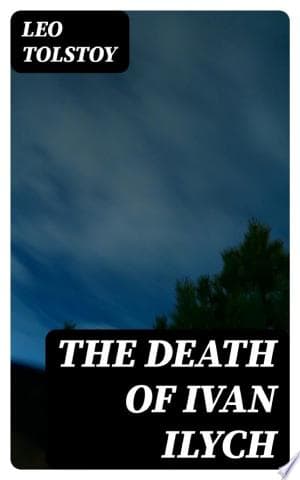
Leo Tolstoy (2022)
Genre
Creativity / Philosophy
Reading Time
70 min
Key Themes
See below
Sign in to track this book
A judge with a mysterious illness faces the emptiness of his life, finding truth only as he nears death.
“Ivan Ilych's life had been most simple and ordinary and therefore most terrible.”
— Opening line setting the tone for Ivan's unremarkable yet tragic existence.
“The terrible, horrible, and to him incomprehensible fact of his death was a universal truth and must be acknowledged.”
— Ivan's internal struggle to accept his own mortality.
“What if my whole life has been wrong?”
— Ivan's agonizing realization towards the end of his life, questioning his past choices.
“Gerasim was the only one not to lie; everything showed that he alone understood what was happening and did not consider it necessary to conceal it.”
— Ivan's observation of his servant Gerasim's honest and compassionate approach to his illness.
“He saw that he was dying, and he was in continual despair.”
— Ivan's initial reaction to his terminal illness, consumed by fear and hopelessness.
“All he had lived for, and that had seemed so good to him, was now suddenly depreciating before his eyes.”
— Ivan's re-evaluation of his materialistic and superficial life as death approaches.
“He suffered from the consciousness of the cruelty, the heartlessness, and the falsity of people, of his wife and daughter and son, and of his acquaintances and friends.”
— Ivan's growing awareness of the superficiality and lack of genuine care from those around him.
“It is as if I had been going downhill while I imagined I was going uphill. That is how it was. I was going uphill in public opinion, but all the while life was ebbing away from me.”
— Ivan's profound insight into the inverse relationship between societal success and true fulfillment.
“He wept over his helplessness, his terrible loneliness, the cruelty of God and the cruelty of men.”
— Ivan's feeling of utter abandonment and suffering.
“And suddenly it grew clear to him that what had been torturing him and would not leave him was all hiding in him, was in his very being.”
— Ivan's realization that the source of his suffering was internal, not external.
“He felt that his end was near and yet there was something else to be done.”
— Ivan's final moments, searching for meaning or resolution.
“In place of death there was light.”
— Ivan's ultimate epiphany and sense of peace at the moment of death.
“He sought his former accustomed fear of death and did not find it. Where was it? What death? There was no fear because there was no death.”
— Ivan's final release from the fear of death as he embraces a different understanding.
“The most terrible thing was the deception, the lie, which for some reason they all accepted. It was the lie that his illness was not unto death.”
— Ivan's frustration with the conspiracy of silence and denial surrounding his impending death.
Ready to see how well you understood this book? Take our interactive quiz with 10 questions.

Count Lev Nikolayevich Tolstoy, usually referred to in English as Leo Tolstoy, was a Russian writer who is regarded as one of the greatest authors of all time. He received nominations for the Nobel Prize in Literature every year from 1902 to 1906 and for the Nobel Peace Prize in 1901, 1902, and 1909; the fact that he never won is a major controversy.