BookBrief
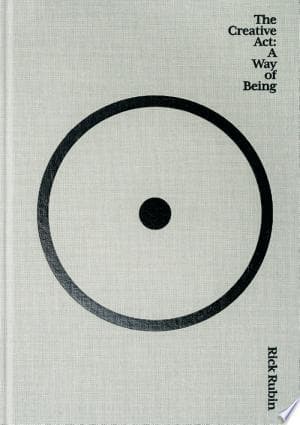
The Creative Act cover
Archivist's Choice

The Creative Act

Rick Rubin (2023)

Genre

Creativity / Self-Help

Reading Time

240 min

Key Themes

See below

Track Your Reading

Sign in to track this book

Rick Rubin, the renowned music producer, shares his insights on creativity, defining artistry not by its output but as a way of relating to the world and a cultivated state of being, accessible to everyone.

Core Idea

Rick Rubin's "The Creative Act" argues that creativity is not a skill but a basic state of being, a connection to a universal source that anyone can access. The book suggests that an artist's main role is to create an internal and external environment where this creative energy can flow freely. This means letting go of ego, listening and observing deeply, accepting the unknown, and not focusing on the outcome. This transforms creation into a spiritual practice of serving the work itself. The central idea is that the creative process is more about receiving and carefully managing existing ideas than about forceful invention. It offers a philosophical guide for artists in all fields to overcome self-doubt and outside pressures, encouraging strong trust in one's inner voice and a firm commitment to the work's integrity, regardless of commercial or critical success.
Reading time
240 min
Difficulty
Medium
✓ Read this if...
You are an artist or creator in any field (music, writing, visual arts, business, etc.) seeking a profound, spiritual, and philosophical perspective on the creative process, and are willing to embrace a less prescriptive, more meditative approach to your work. Also recommended if you feel blocked or overwhelmed by the pressures of outcome.
✗ Skip this if...
You are looking for concrete, step-by-step instructions, practical techniques, or a strictly scientific approach to boosting productivity and creativity. This book is not a 'how-to' guide for specific creative tasks.

Core idea

The central argument and framework that powers the entire book.

Rick Rubin's "The Creative Act" argues that creativity is not a skill but a basic state of being, a connection to a universal source that anyone can access. The book suggests that an artist's main role is to create an internal and external environment where this creative energy can flow freely. This means letting go of ego, listening and observing deeply, accepting the unknown, and not focusing on the outcome. This transforms creation into a spiritual practice of serving the work itself.

The central idea is that the creative process is more about receiving and carefully managing existing ideas than about forceful invention. It offers a philosophical guide for artists in all fields to overcome self-doubt and outside pressures, encouraging strong trust in one's inner voice and a firm commitment to the work's integrity, regardless of commercial or critical success.

At a glance

Reading time

240 min

Difficulty

Medium

Read this if...

You are an artist or creator in any field (music, writing, visual arts, business, etc.) seeking a profound, spiritual, and philosophical perspective on the creative process, and are willing to embrace a less prescriptive, more meditative approach to your work. Also recommended if you feel blocked or overwhelmed by the pressures of outcome.

Skip this if...

You are looking for concrete, step-by-step instructions, practical techniques, or a strictly scientific approach to boosting productivity and creativity. This book is not a 'how-to' guide for specific creative tasks.

Key Takeaways

1

The Artist's Relationship with the World

Creativity is not merely an output; it's a way of being and perceiving.

Quote

I set out to write a book about what to do to make a great work of art. Instead, it revealed itself to be a book on how to be.

Rubin states that true artistry comes from a cultivated relationship with the world, not just from the final product. He challenges the common idea of creativity as a skill set for making specific works, instead defining it as an inherent state of being—a way of observing, engaging with, and processing reality. This view frees creativity from being only for professional artists, making it accessible and important for everyone. The 'creative act' is less about a specific outcome and more about the internal process of connecting with an...

Supporting evidence

Rubin's entire career as a producer, working across diverse genres, exemplifies this. He doesn't impose a 'sound' but rather helps artists uncover their authentic voice, suggesting that the 'sound' emerges from the artist's unique relationship to their craft and the world.

Apply this

Cultivate a beginner's mind. Practice active observation in daily life—notice details, sounds, emotions without immediate judgment. Engage with different forms of art, nature, and people, not just for consumption but for understanding and inspiration. Journal your observations to deepen your connection to your inner world and its interaction with the outer.

beginner-mindauthentic-expressionpresence
2

The Source: Tapping into Universal Creativity

Art originates from a wellspring beyond the individual ego.

Quote

The artist is a vessel. The work comes through them, not from them.

Rubin emphasizes that creativity is not solely a personal invention but a channel for a universal, unseen force. He portrays the artist as a conduit, a receiver tuning into a larger creative frequency, rather than the sole originator. This reduces the pressure of individual genius and self-doubt, encouraging artists to surrender to the flow of inspiration. It suggests that ideas already exist, waiting for a receptive mind to capture and express them. The artist's role becomes one of sensitivity, openness, and careful translation, rath...

Supporting evidence

Rubin often describes his role as a producer as helping artists get out of their own way to allow the 'music' to emerge, implying a source beyond their conscious effort. Many artists, across disciplines, speak of ideas 'coming to them' rather than being 'forced'.

Apply this

Practice meditation or mindfulness to quiet the analytical mind and open yourself to intuitive insights. When stuck, step away from the work and engage in activities that foster a state of flow (walking, showering, listening to music) to allow ideas to surface naturally. Trust your instincts and the 'nudges' of inspiration, rather than overthinking or over-controlling the initial spark.

flow-stateintuitiondivine-inspiration
3

The Art of Listening and Observation

Deep listening is the foundational skill for all creative acts.

Quote

The world is speaking to us all the time. The work of the artist is to listen.

Before creating anything, one must first listen and observe deeply. Rubin argues that artists are highly attuned receivers, constantly absorbing information, nuances, and energies from their surroundings. This goes beyond hearing sounds or seeing sights; it involves sensing underlying currents, unspoken truths, and subtle vibrations of existence. This deep engagement allows artists to notice patterns, contradictions, and beauty that others might miss, which then become the raw material for their work. It is a practice of presence and ...

Supporting evidence

Rubin's legendary ability to draw out the best from artists often comes from his patient, non-judgmental presence and his capacity to truly hear what an artist is trying to express, even when they can't articulate it themselves. He listens not just to the notes, but to the intent and emotion behind them.

Apply this

Dedicate time each day to focused listening—to music, to nature, to conversations, without distraction or judgment. Practice 'seeing' beyond the obvious, looking for underlying structures, emotions, or narratives in everyday scenes. Keep a journal of your observations, noting sensory details, feelings, and unexpected connections. This trains your perception.

mindfulnesssensory-perceptionempathy
4

The Ego as an Obstacle

Self-importance and expectation hinder the creative flow.

Quote

The ego is a filter that distorts the pure signal of inspiration.

Rubin identifies the ego as a main obstacle to genuine creative expression. The ego, with its concerns about validation, success, failure, and public perception, creates a barrier between the artist and the pure, unfiltered source of inspiration. When artists focus too much on how their work will be received or on maintaining a certain image, they lose touch with the innocent, playful, and experimental spirit needed for groundbreaking work. Releasing ego attachments allows for more fearless exploration, where mistakes are seen as lear...

Supporting evidence

Rubin recounts instances where artists, burdened by past success or fear of judgment, struggle to create. His role often involves creating a safe space where artists can shed these expectations and reconnect with their uninhibited selves.

Apply this

Before starting a creative session, consciously acknowledge and set aside concerns about outcome, judgment, or success. Focus purely on the process and the intrinsic joy of making. Practice detachment from the final product; once it's created, release it without clinging to its reception. Embrace 'bad' ideas as part of the exploration process, reducing the pressure to be perfect.

imposter-syndromeperfectionismfear-of-failure
5

Crafting the Environment for Creation

The physical and mental space profoundly impacts creative output.

Quote

The environment you create for your work profoundly affects the work itself.

Rubin carefully designs the physical and energetic environment where artists work, understanding that surroundings are not just background but active participants in the creative process. This includes not only aesthetics but also the emotional and psychological atmosphere. A space free from distractions, judgments, and external pressures allows for deeper focus, greater vulnerability, and more uninhibited exploration of ideas. It is about creating a sanctuary where artists feel safe to experiment, fail, and discover. This principle a...

Supporting evidence

Rubin's legendary Shangri-La studio, with its unique atmosphere and spiritual elements, is a prime example of intentionally designing a space to foster creativity and comfort, encouraging artists to relax and be themselves.

Apply this

Designate a specific, clutter-free space for your creative work, even if it's just a corner. Minimize distractions (turn off notifications, inform others). Incorporate elements that inspire you (art, plants, specific lighting). Before starting, take a few deep breaths to clear your mind and set an intention for openness and presence in your chosen space.

sacred-spacefocusmindset
6

The Importance of Self-Care and Rest

Rest and replenishment are vital for sustaining creative energy.

Quote

The well needs to be refilled. Rest is not a luxury; it's a necessity for the creative.

Unlike the 'hustle culture' mindset, Rubin champions self-care and rest as essential parts of a sustainable creative practice. He argues that constant output without replenishment leads to burnout, less inspiration, and unoriginal work. The subconscious mind continues to process and connect ideas even during rest, making breaks an integral part of the creative cycle. Taking time for walks, meditation, spending time in nature, or simply disengaging allows the creative well to refill, bringing fresh perspectives and renewed energy. This...

Supporting evidence

Rubin often advises artists to step away from a project when they hit a wall, allowing the subconscious to work. Many artists report breakthroughs occurring during periods of rest or distraction, like showering or walking.

Apply this

Schedule regular breaks during your creative work, even short ones. Prioritize adequate sleep. Engage in activities unrelated to your creative project that bring you joy and relaxation. Spend time in nature to clear your head and gain perspective. Treat rest as an essential part of your creative process, not a reward for completing work.

burnout-preventionsubconscious-processingrejuvenation
7

Detachment from Outcome

Focus on the process, not the results, to maintain purity of vision.

Quote

Make the art for the art itself. The rest is beyond your control.

Rubin advocates for a deep detachment from the outcome of one's creative work. He believes that focusing on external validation, financial success, or critical acclaim contaminates the creative process, shifting the artist's attention from intrinsic joy and genuine expression to external rewards. True creative freedom comes from making work for its own sake, for the sheer pleasure of bringing something new into existence. Once the work is released, its reception is largely beyond the artist's control. By letting go of expectations, ar...

Supporting evidence

Rubin's own approach as a producer is to support the artist's vision, not to steer it towards commercial trends. He prioritizes artistic integrity over marketability, believing that authentic work will find its audience.

Apply this

Before starting a project, define your intrinsic motivations for creating it. During the process, regularly check in with yourself: 'Am I making this for me, or for someone else's approval?' After completion, release the work with an intention of offering it, then shift your focus to the next creative endeavor without dwelling on its reception. Celebrate the completion, not just the success.

intrinsic-motivationartistic-integritynon-attachment
8

The Power of Collaboration (Producer's Role)

A good collaborator illuminates the artist's true essence.

Quote

My job is to help the artist hear themselves, to remove the layers that obscure their unique voice.

While often seen as a solo activity, creativity can be greatly improved by the right collaboration. Rubin, as a producer, shows the power of an objective, supportive guide. A good collaborator does not impose their vision but helps the artist clarify and strengthen their own. They act as a mirror, reflecting insights, asking probing questions, and creating a safe space for vulnerability and experimentation. This outside perspective can help artists overcome blind spots, push past self-imposed limits, and refine their work to its pures...

Supporting evidence

Rubin's legendary work with diverse artists like Johnny Cash, Adele, Red Hot Chili Peppers, and Beastie Boys highlights his ability to adapt to each artist's unique needs, helping them distill their essence rather than imposing a signature 'Rubin sound'.

Apply this

Seek out trusted peers, mentors, or even a 'producer' figure (someone with an objective eye and ear) to share your work with. Ask for honest, constructive feedback that focuses on clarity of intention and impact, not just superficial critiques. Be open to different perspectives, but always filter them through your own artistic vision. Choose collaborators who empower your voice, rather than overshadowing it.

mentorshipconstructive-feedbackcreative-partnership
9

The Art of Editing and Refinement

True creation involves ruthless removal and precise shaping.

Quote

The greatest art is often the result of subtraction, not addition.

Rubin stresses that the creative act does not end with the initial outpouring; it extends significantly into editing and refinement. This stage is less about adding more elements and more about removing anything that does not serve the core essence of the work. It requires courage to remove beloved but ultimately unnecessary components, a keen eye for what truly matters, and a willingness to simplify. The goal is to distill the work to its purest, most impactful form, ensuring every element has a purpose and contributes to the overall...

Supporting evidence

Rubin is famous for his minimalist production style, often stripping away layers of instrumentation to reveal the raw emotion and core message of a song. He once told a band to remove all instruments except for the vocals, leading to a profound revelation about the song's true power.

Apply this

After a period of initial creation, step away from your work. Return with fresh eyes, asking: 'What can be removed without losing the essence?' Be ruthless in cutting redundant words, unnecessary notes, or extraneous details. Focus on clarity, impact, and economy of expression. Test different versions by removing elements to see if the work becomes stronger.

minimalismclaritydistillation
10

Trusting the Inner Voice

Authenticity arises from listening to and honoring internal guidance.

Quote

Your inner voice is your greatest guide. Learn to hear it and trust it.

At the heart of Rubin's philosophy is the firm belief in trusting one's inner voice, or intuition. He suggests that this internal guidance system is the most reliable compass for an artist, leading them toward their most authentic and impactful work. Outside opinions, market trends, or self-doubt can easily drown out this delicate internal signal. Developing the ability to recognize and act on this inner wisdom requires practice, courage, and a deep sense of self-awareness. It is about building an intimate relationship with one's own ...

Supporting evidence

Rubin consistently encourages artists to follow their gut feelings, even when an idea seems unconventional or difficult. Many of the groundbreaking albums he produced were born from artists trusting their unique, often unusual, internal impulses.

Apply this

Regularly check in with your gut feelings about your creative choices. Before making a decision, pause and ask yourself, 'What does my intuition tell me?' Practice journaling to uncover your true desires and concerns without external influence. Take small, brave steps to act on your intuitive nudges, gradually building trust in your inner wisdom over time. Differentiate between fear-based thoughts and genuine intuitive guidance.

intuitionself-awarenessauthenticity

Critical analysis

Notable Quotes

The artist's work is to perceive the nature of reality, and then to share that perception with the world.

Defining the core role of an artist.

The world doesn't need more of what already exists. It needs more of what doesn't.

Emphasizing originality and the creation of newness.

The goal is not to 'make a hit.' The goal is to make something you love.

Shifting focus from commercial success to personal passion and integrity.

The work is never finished, only abandoned.

Acknowledging the continuous nature of creative work and the decision to release it.

We are all creators. It's not a special gift bestowed upon a select few.

Democratizing creativity, stating its universal availability.

The truest expression comes when you are not trying to be anything.

Advocating for authenticity and shedding external pressures or personas.

The more you listen, the more you hear.

Highlighting the importance of deep listening and observation in the creative process.

Your taste is your greatest tool. Trust it.

Encouraging artists to rely on their inner compass and aesthetic judgment.

The act of creating is a sacred act.

Elevating the creative process to a spiritual or deeply meaningful experience.

Don't try to force inspiration. Create the conditions for it to arrive.

Suggesting an indirect approach to inspiration, focusing on environment and mindset.

Every day is an opportunity to tune in to the universe and bring something new into existence.

Emphasizing daily practice and connection to a larger creative source.

The limitations we perceive are often self-imposed.

Challenging artists to break free from mental barriers and perceived constraints.

The greatest art makes you feel more like yourself.

Describing the profound impact of art on the viewer, fostering self-recognition.

The art is not in the object itself, but in the connection it creates.

Focusing on the relational aspect of art and its ability to bridge creator and audience.

The creative process is a journey of discovery, not a manufacturing line.

Distinguishing creativity from industrial production, highlighting exploration.

Quiz

Test Your Knowledge

Ready to see how well you understood this book? Take our interactive quiz with 10 questions.

10
Questions
~5
Minutes
?
Best Score

Key Questions (FAQ)

'The Creative Act' is a book by legendary music producer Rick Rubin that explores the nature of creativity. It's less about specific techniques and more about cultivating a mindset and a relationship with the world that fosters artistic expression in anyone, regardless of their chosen medium.

About the author