BookBrief
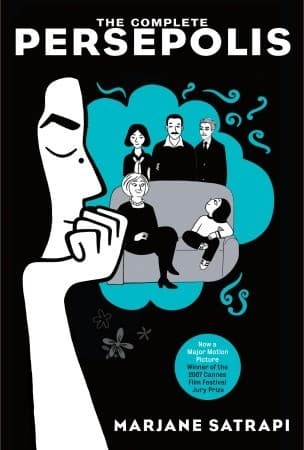
The Complete Persepolis cover
Archivist's Choice

The Complete Persepolis

Marjane Satrapi (2023)

Genre

Biography / Memoir / History

Reading Time

240 min

Key Themes

See below

Track Your Reading

Sign in to track this book

Through black-and-white graphic panels, Marjane Satrapi tells about her childhood in revolutionary Iran, her adolescence in Vienna, and her return, showing a nation's trouble through one girl's coming-of-age.

Core Idea

Marjane Satrapi's 'The Complete Persepolis' is a graphic memoir that shows her childhood in Tehran during the Islamic Revolution and the Iran-Iraq War, her adolescence in Vienna, and her eventual return to and disappointment with Iran before she leaves for good. Through her story, Satrapi shows how political change, religious extremism, and war affect individual lives, especially a young girl finding her identity. The book shows how people endure oppression, exploring freedom, exile, cultural identity, and growing up during big societal change. Satrapi says that while political and religious ideas can shape societies, they often do not account for the complex human experience and the desire for personal freedom and self-expression. She uses her story, which has both humor and sadness, to challenge Western ideas about Iran and Iranians, presenting a varied view of a nation and its people dealing with big changes. Readers should learn about the personal cost of revolution and war, the difficulties of forming an identity in exile, and the lasting power of family, culture, and memory.
Reading time
240 min
Difficulty
Easy
✓ Read this if...
You want to understand the human experience of the Iranian Revolution and war through a deeply personal, accessible, and often humorous lens; you appreciate graphic novels as a powerful medium for serious topics; you're interested in themes of identity, exile, and resilience.
✗ Skip this if...
You prefer traditional prose memoirs and dislike the graphic novel format; you are looking for a purely objective historical account rather than a personal narrative.

Core idea

The central argument and framework that powers the entire book.

Marjane Satrapi's 'The Complete Persepolis' is a graphic memoir that shows her childhood in Tehran during the Islamic Revolution and the Iran-Iraq War, her adolescence in Vienna, and her eventual return to and disappointment with Iran before she leaves for good. Through her story, Satrapi shows how political change, religious extremism, and war affect individual lives, especially a young girl finding her identity. The book shows how people endure oppression, exploring freedom, exile, cultural identity, and growing up during big societal change.

Satrapi says that while political and religious ideas can shape societies, they often do not account for the complex human experience and the desire for personal freedom and self-expression. She uses her story, which has both humor and sadness, to challenge Western ideas about Iran and Iranians, presenting a varied view of a nation and its people dealing with big changes. Readers should learn about the personal cost of revolution and war, the difficulties of forming an identity in exile, and the lasting power of family, culture, and memory.

At a glance

Reading time

240 min

Difficulty

Easy

Read this if...

You want to understand the human experience of the Iranian Revolution and war through a deeply personal, accessible, and often humorous lens; you appreciate graphic novels as a powerful medium for serious topics; you're interested in themes of identity, exile, and resilience.

Skip this if...

You prefer traditional prose memoirs and dislike the graphic novel format; you are looking for a purely objective historical account rather than a personal narrative.

Key Takeaways

1

Childhood in Revolution

Political upheaval profoundly shapes personal identity, even from a young age.

Quote

In life you'll meet a lot of jerks. If they hurt you, it's because they're stupid. Don't react to them. There are two things in life for which you may fight: independence and justice.

Satrapi's early life in Tehran connects to the big changes of the Islamic Revolution. From daily life to school, the revolution controls everything, making children face political realities beyond their years. Marjane's early idea of God and her role as a prophet quickly changes to a growing political awareness, helped by her intellectual, Marxist-leaning family. This period shows how early years, especially during big societal change, can create a strong sense of justice, rebellion, and an understanding of power, even as innocence is...

Supporting evidence

Marjane's early desire to be a prophet, her participation in street protests with her maid, Mehri, and the execution of family friends like Anoosh, all demonstrate how political events directly impacted her childhood worldview and emotional development.

Apply this

Reflect on how your own early environment, particularly any societal or political shifts, shaped your core values and understanding of the world. Engage children in age-appropriate discussions about current events to foster critical thinking and empathy.


political-identitychildhood-traumaislamic-revolution
2

The Hypocrisy of Theocracy

The stark contrast between public religious dogma and private life reveals systemic hypocrisy.

Quote

The regime became more and more repressive. As in any country, when the population is afraid, it makes a pact with the devil.

Satrapi shows the widespread hypocrisy of the Islamic regime, where public religious displays and strict adherence to laws often hid a rebellious private life. Women had to wear veils and follow dress codes, yet privately, parties, alcohol, and forbidden music happened. This created a society living a double life, where fear of the Guardians of the Revolution controlled public behavior, while a defiant spirit grew in secret. This duality is not just a way to cope but a form of subtle resistance, showing the human need for freedom and ...

Supporting evidence

The Satrapi family's secret parties, complete with homemade alcohol and forbidden Western music, directly contradict the public image the regime tried to enforce. The scene where Marjane's parents risk their lives to bring back posters of Iron Maiden and a denim jacket for her exemplifies this private defiance.

Apply this

Identify areas in your life where you might be conforming outwardly while holding different beliefs internally. Consider how to align your public actions more closely with your private values, or how to safely challenge hypocritical systems.

theocratic-regimesocial-hypocrisycultural-resistance
3

Exile and Identity Crisis

Leaving one's homeland can lead to a profound struggle with self-definition and belonging.

Quote

I was a Westerner in Iran, an Iranian in the West. I had lost my identity. There was nothing to do: I was a monster of the East and West.

Marjane's move to Vienna as a teenager, meant for her safety and education, causes a deep identity crisis. Away from her family and culture, she struggles to fit into a new society that often misunderstands her Iranian background. She tries to fit in, sometimes denying her heritage, only to feel alone. This time includes loneliness, drug use, homelessness, and a strong feeling of not belonging anywhere. It shows the psychological cost of exile, where finding oneself mixes with finding a true home, often leading to feeling like a const...

Supporting evidence

Marjane's attempts to blend in with Austrian youth, her lying about her origins, and her eventual period of homelessness and depression in Vienna all exemplify her struggle with identity and belonging.

Apply this

If you're an immigrant or expatriate, acknowledge and process the complexities of your dual identity. For others, cultivate empathy for those navigating cultural transitions by learning about their experiences and challenges.

exile-experiencecultural-assimilationidentity-formation
4

The Burden of Freedom

Unrestricted freedom can be overwhelming without a strong sense of self and purpose.

Quote

I really didn't know what to do with myself anymore. I was a Westerner in Iran, an Iranian in the West. I had lost my identity.

When Marjane returns to Iran after her difficult years in Vienna, she feels a different kind of burden: the weight of perceived freedom. While she wanted the freedom of the West, the complete lack of external limits in Vienna, combined with her internal struggles, led to self-destruction and aimlessness. This suggests that true freedom is not just the absence of oppression, but requires an internal guide, resilience, and a sense of belonging. Without these, too much choice can be paralyzing, leading to alienation and despair instead o...

Supporting evidence

Marjane's descent into drug addiction, homelessness, and depression during her time in Vienna, despite the 'freedom' from the Iranian regime's strictures, illustrates how external freedom without internal stability can be destructive.

Apply this

Understand that true freedom involves self-discipline and purpose, not just the absence of external rules. Cultivate internal resilience and a strong sense of self before seeking drastic external changes in your life.

personal-freedomexistential-crisisself-destruction
5

The Power of Family Roots

Family provides an anchor and moral compass amidst personal and political storms.

Quote

My grandmother was my only comfort. She was always there for me, always understood me.

Throughout Marjane's chaotic life, her family — especially her parents and grandmother — is a constant source of love, intellectual stimulation, and moral guidance. They are her first teachers of justice and defiance, her confidantes during adolescence, and her safe place during despair. Their progressive values and willingness to defy the regime, even risking themselves, give Marjane a strong sense of integrity and resilience. The unconditional love and support from her family, especially her grandmother's wisdom, help her navigate h...

Supporting evidence

Her grandmother's pearls of wisdom, her parents' consistent support and sacrifices (like sending her to Vienna and risking their lives for her posters), and their unwavering belief in justice are constant threads throughout the narrative.

Apply this

Prioritize and nurture your family relationships. Recognize the valuable role family can play in shaping your moral compass and providing emotional support during challenging times.

family-bondsmoral-guidanceresilience
6

Trauma and Humor

Humor serves as a vital coping mechanism for processing trauma and maintaining humanity.

Quote

Laughter is the only way to bear the pain.

Despite war, repression, and personal sadness, Satrapi fills Persepolis with humor. This is not just for laughs; it is a way to cope. The dark humor her family uses, the ironic comments about the regime's absurdities, and Marjane's youthful irreverence allow them to process trauma, stay sane, and assert their humanity in the face of dehumanizing forces. Humor becomes a form of resistance, a way to regain control and perspective when so much is out of control, showing its important role in psychological survival.

Supporting evidence

The darkly humorous anecdotes about the 'Keys to Paradise' given to child soldiers, Marjane's sarcastic comments about her teachers, and the family's ability to joke even amidst bombings and political arrests all highlight the role of humor.

Apply this

Cultivate a sense of humor, especially during difficult times. Find ways to laugh at absurdities or use dark humor as a healthy coping mechanism to process stress and maintain perspective.

coping-mechanismsgallows-humorpsychological-resilience
7

The Universality of Coming of Age

Despite unique circumstances, the struggles of adolescence are universally relatable.

Quote

My story is not so different from yours. It is merely set in a different time and place.

While set against the Iranian Revolution and a difficult exile, Marjane's coming-of-age story connects with common adolescent experiences. Her struggles with fitting in, first crushes, rebellion against authority (parents or government), body image issues, and finding identity are familiar to anyone who has been a teenager. This commonality shows Satrapi's storytelling, proving that even extreme personal circumstances cannot erase the basic human experiences of growing up, learning who you are, and finding your place in the world.

Supporting evidence

Marjane's first love interest (Enrique), her experiments with fashion and makeup, her defiance of school rules, and her anxieties about her appearance are all classic adolescent struggles, albeit magnified by her unique environment.

Apply this

Recognize the shared human experience in others' stories, even those from vastly different backgrounds. This fosters empathy and connection, reminding us of our common humanity.

adolescent-developmentuniversal-experienceidentity-search
8

The Personal is Political

Individual lives are inherently shaped by the political landscape, making personal choices political acts.

Quote

Everywhere in the world, people are oppressed, and it's up to us to fight for our freedom.

Satrapi shows how the political situation affects every part of personal life. From the clothes Marjane wears, to the music she listens to, to her friends, every choice is a potential act of defiance or conformity. Her family's intellectual discussions, their protests, and their existence as educated, secular individuals are political statements. The book shows that in oppressive regimes, there is no real separation between the personal and the political; simply living an authentic life can be a radical act, forcing individuals to con...

Supporting evidence

The regime's control over dress codes, the banning of Western music, the execution of political prisoners, and Marjane's own decision to speak out against injustice illustrate how personal freedoms are constantly under political threat.

Apply this

Consider how broader political decisions impact your daily life and personal choices. Engage in informed civic participation to advocate for policies that align with your values and protect individual freedoms.

political-activismpersonal-autonomysocial-justice
9

The Weight of Witnessing

Bearing witness to injustice carries a profound responsibility to share one's truth.

Quote

I told myself that I had to tell my story, for all the people who couldn't tell theirs.

Satrapi's decision to write Persepolis is an act of witnessing. She carries the experiences of her family, the suffering of her people, and her own difficult journey, knowing that her view offers a counter-narrative to official histories. By sharing her story, she processes her own trauma and gives a voice to those silenced by the regime. This highlights the need to witness injustice and to use one's platform, however personal, to show difficult truths, making sure history is remembered from different perspectives and that suffering...

Supporting evidence

Satrapi explicitly states her motivation for creating the graphic novel: to combat Western stereotypes of Iran and to honor the sacrifices and struggles of her people, particularly those who were oppressed or killed.

Apply this

Consider what truths you have witnessed in your own life or community that deserve to be shared. Find appropriate and impactful ways to tell those stories, whether through personal narrative, art, or advocacy.

historical-memorytruth-tellingnarrative-power
10

The Cost of Survival

Survival in oppressive environments often necessitates difficult compromises and sacrifices.

Quote

Life is a series of blows. You're going to get hit a lot. But you have to keep getting up.

Marjane's journey through revolution, war, and exile shows the will to survive, but it also reveals the costs. She makes compromises, sometimes denies her identity, and endures personal suffering. Her family's sacrifices, who eventually send her away for her safety, show the painful choices people make to protect loved ones. Survival is not always heroic; it is often messy, full of moral dilemmas, and leaves lasting scars. This takeaway emphasizes the realities of living under pressure and the complex, often sad, decisions needed to k...

Supporting evidence

Her parents sending her to Vienna alone, Marjane's own period of homelessness and drug use, and her ultimate self-imposed exile from Iran, all represent significant sacrifices and difficult compromises made for survival.

Apply this

Reflect on the compromises you've made for survival or security. Acknowledge the emotional toll of such decisions and practice self-compassion for the difficult paths you've had to navigate.

survival-guiltmoral-dilemmaspersonal-sacrifice

Critical analysis

Notable Quotes

I wanted to be a prophet because our maid did not eat with us. Because my father had a Cadillac. And, above all, because my grandmother's knees always ached.

Marjane explains her childhood desire to become a prophet to address social injustices she observed.

In a country where half the population is illiterate, you cannot unite the people around Marx. The only thing that can really unite them is nationalism or a religious ethic.

Marjane's father discusses the political landscape in Iran during the revolution.

The revolution is like a bicycle. When the wheels don't turn, it falls.

Marjane's uncle Anoosh uses this metaphor to explain the necessity of continuous action in revolutions.

I was born with religion. At the age of six I was already sure I was the last prophet.

Marjane reflects on her early, confident religious beliefs as a child.

Freedom always has a price.

Marjane's mother warns her about the dangers of protesting against the regime.

One can forgive but one should never forget.

Marjane's grandmother advises her after she experiences betrayal and hardship.

The regime had understood that one person leaving her house while asking herself: 'Are my trousers long enough? Is my veil in place? Can my makeup be seen? Are they going to whip me?' no longer asks herself: 'Where is my freedom of thought? Where is my freedom of speech? My life, is it livable?'

Marjane critiques how the regime uses strict dress codes to control and distract women from larger issues.

I finally understood what my grandmother meant. She had said that in life you'll meet a lot of jerks. If they hurt you, tell yourself that it's because they're stupid. That will help keep you from reacting to their cruelty. Because there is nothing worse than bitterness and vengeance... Always keep your dignity and be true to yourself.

Marjane recalls her grandmother's wisdom after facing difficulties in Europe.

To die a martyr is to inject blood into the veins of society.

Marjane hears this slogan during the Iran-Iraq War, reflecting the regime's propaganda.

I was a Westerner in Iran, an Iranian in the West. I had no identity.

Marjane describes her sense of cultural displacement after returning to Iran from Europe.

The only way I can describe the feeling is that it was like being in a bubble. You could see everything, but you couldn't touch anything.

Marjane explains her sense of isolation and observation while living under the repressive regime.

We found ourselves veiled and separated from our friends.

Marjane describes the immediate changes after the 1979 Islamic Revolution, particularly for women.

You have to learn to defend your rights as a woman from now on.

Marjane's mother encourages her to be strong and assertive in the face of new restrictions.

I realized then that I didn't understand anything. I read all the books I could.

Marjane turns to education and reading to make sense of the complex political situation around her.

Quiz

Test Your Knowledge

Ready to see how well you understood this book? Take our interactive quiz with 10 questions.

10
Questions
~5
Minutes
?
Best Score

Key Questions (FAQ)

'The Complete Persepolis' is Marjane Satrapi's acclaimed graphic memoir that chronicles her childhood and adolescence in Tehran during the Islamic Revolution, her teenage years in Vienna, and her eventual return to Iran and self-imposed exile. It explores the intersection of personal life with political upheaval, blending history with universal coming-of-age experiences.

About the author