BookBrief
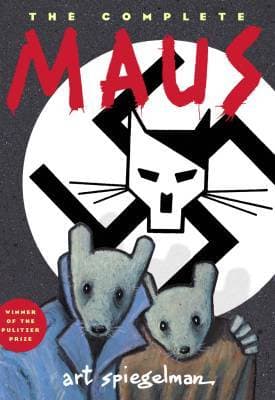
The Complete Maus cover
Archivist's Choice

The Complete Maus

Art Spiegelman (1991)

Genre

Biography / Memoir / History

Reading Time

240 min

Key Themes

See below

Track Your Reading

Sign in to track this book

Through the stark, unforgettable allegory of mice and cats, 'The Complete Maus' unflinchingly chronicles one family's harrowing survival of the Holocaust, exposing the deep, generational scars etched by unspeakable history.

Core Idea

Art Spiegelman's "The Complete Maus" explores the Holocaust as a graphic novel, showing Jews as mice, Germans as cats, and Poles as pigs. The book argues that the trauma of the Holocaust affects not just survivors but also their descendants. Spiegelman documents his father Vladek's experiences in Auschwitz and his later difficulties, while also showing his own difficult relationship with Vladek and the challenge of representing such history. The story shows how memory is broken, unreliable, and always changing, and it reveals the subtle ways prejudice works and how everyday cruelties allow large atrocities.
Reading time
240 min
Difficulty
Medium
✓ Read this if...
You want to understand the Holocaust through a deeply personal, innovative, and emotionally resonant narrative, exploring themes of memory, intergenerational trauma, and the challenges of historical representation.
✗ Skip this if...
You prefer traditional prose non-fiction or are not comfortable with anthropomorphic representations of human tragedy, despite its critical acclaim.

Core idea

The central argument and framework that powers the entire book.

Art Spiegelman's "The Complete Maus" explores the Holocaust as a graphic novel, showing Jews as mice, Germans as cats, and Poles as pigs. The book argues that the trauma of the Holocaust affects not just survivors but also their descendants. Spiegelman documents his father Vladek's experiences in Auschwitz and his later difficulties, while also showing his own difficult relationship with Vladek and the challenge of representing such history. The story shows how memory is broken, unreliable, and always changing, and it reveals the subtle ways prejudice works and how everyday cruelties allow large atrocities.

At a glance

Reading time

240 min

Difficulty

Medium

Read this if...

You want to understand the Holocaust through a deeply personal, innovative, and emotionally resonant narrative, exploring themes of memory, intergenerational trauma, and the challenges of historical representation.

Skip this if...

You prefer traditional prose non-fiction or are not comfortable with anthropomorphic representations of human tragedy, despite its critical acclaim.

Key Takeaways

1

The Unspeakable in Animal Fable

Using anthropomorphic animals allows for a unique lens into the Holocaust's horror.

Quote

To my father, and to his story.

Spiegelman's choice to show Jews as mice, Nazis as cats, and Poles as pigs is a significant narrative strategy. This animal fable lets the reader engage with the Holocaust's atrocities without being overwhelmed by explicit human suffering, creating a necessary distance. This distance also increases the allegorical power, making the dehumanization of the genocide clear. The animal portrayal emphasizes the Nazi idea that stripped Jews of their humanity, while making their struggle for survival universally relatable. It is a brilliant ba...

Supporting evidence

The consistent visual metaphor throughout the entire graphic novel, where characters' species directly corresponds to their ethnicity/nationality, e.e., 'Maus' (mouse) for Jew, 'Katze' (cat) for German.

Apply this

When dealing with complex or traumatic historical events, consider how abstract or allegorical frameworks can create pathways for understanding and empathy without trivializing the subject matter.

graphic-novel-as-historyallegory-and-traumadehumanization-in-art
2

Survival's Double-Edged Sword

Surviving the Holocaust left indelible psychological scars, even for the 'lucky' ones.

Quote

I can't even make any comments. It's too scary for me.

Vladek Spiegelman's survival shows incredible resourcefulness, luck, and a strong will to live. However, the story shows that survival did not end suffering; it changed it. His life after the Holocaust is marked by deep paranoia, extreme frugality, and a demanding personality shaped by constant threat and deprivation. These traits, while understandable, cause problems in his relationships, especially with his son, Art. The book shows the long-term psychological damage and 'survivor's guilt' that haunted Vladek, proving that the war ne...

Supporting evidence

Vladek's hoarding of everyday items, his constant complaints about money, his strained relationship with Mala, and his emotionally distant interactions with Art, all stemming from his wartime experiences.

Apply this

Recognize that trauma's impact extends far beyond the event itself, influencing behavior, relationships, and mental health for decades. Approach survivors of extreme events with empathy and an understanding of their unique coping mechanisms.

survivor-guiltintergenerational-traumapost-traumatic-stress
3

The Weight of Inheritance

Children of survivors carry their parents' trauma, even without direct experience.

Quote

I know this is insane, but I somehow wish I had been in Auschwitz with my parents so I could really know what it was like.

Art Spiegelman's own struggles form a secondary story, showing the impact of intergenerational trauma. He deals with his father's demanding nature, his mother Anja's suicide (a result of her wartime experiences), and the Holocaust's large shadow on his own identity. Art feels a strong need to tell his father's story, but also resentment and inadequacy. He struggles to compare himself to his 'perfect' brother, Richieu, who died in the war. This emotional situation shows how one generation's trauma can be inherited and processed, often ...

Supporting evidence

Art's therapy sessions, his internal monologues about his mother's suicide, his feelings of inadequacy compared to his deceased brother Richieu, and his visible frustration with Vladek's difficult personality.

Apply this

Understand that traumatic family histories can profoundly shape individual identities and family dynamics. Seek to understand the root causes of inherited emotional burdens and facilitate open communication about past events.

intergenerational-traumamemory-and-identityartist-as-historian
4

The Elusiveness of Memory

Memory is subjective, fragmented, and often shaped by the present, not just the past.

Quote

It's impossible to get across the reality of it. Even to me it's impossible now to believe I was in Auschwitz.

Maus explores memory itself, not just recounting events. Vladek's story is told through his older self, colored by age, bitterness, and ongoing trauma. He sometimes forgets details, mixes up timelines, or focuses on practical parts of his survival. Art, as the interviewer and artist, constantly deals with how reliable and complete his father's memories are. This highlights the challenges in reconstructing history, especially personal history. This meta-narrative about remembering shows that historical truth is often a mosaic of imperf...

Supporting evidence

Art's frequent interruptions to clarify Vladek's timeline or details, Vladek's occasional forgetting of names or specific events, and the devastating revelation that Anja's diaries were destroyed by Vladek.

Apply this

Approach historical accounts, especially personal ones, with an understanding that memory is fallible and subjective. Encourage multiple perspectives and sources to build a more comprehensive, though never fully complete, picture.

oral-historysubjectivity-of-memoryhistorical-reconstruction
5

The Banality of Evil and Everyday Cruelty

The Holocaust wasn't just grand evil, but a pervasive tapestry of small, dehumanizing acts.

Quote

And we were so afraid to go out from the bunker, so we stayed there, not moving. And we heard the Germans looking, 'Jews! Jews!'

While gas chambers represent the ultimate horror, Maus also details the 'everyday' cruelty and dehumanization that came before and during the mass murder. This includes forced wearing of Stars of David, constant fear of violence, starvation, forced labor, family separation, and betrayal by neighbors and former friends. Spiegelman shows how the system slowly took away human dignity and resilience through countless small acts of oppression, making the eventual atrocities seem like a 'logical' (though horrifying) progression. It is a str...

Supporting evidence

Vladek's experiences hiding in bunkers, the crowded and unsanitary conditions in the ghettos, the brutal selections in Auschwitz, and the constant struggle for food and warmth.

Apply this

Be vigilant against seemingly minor acts of discrimination or prejudice, as they can be precursors to larger systemic injustices. Understand that complicity and indifference enable the escalation of cruelty.

banality-of-evildehumanizationsystemic-oppression
6

The Artist's Burden and Responsibility

Creating art from personal and historical trauma carries immense ethical and emotional weight.

Quote

I want to be famous. I want people to know my story.

Art Spiegelman's self-portrait as a mouse wearing a human mask, and later as a small, mouse-headed figure on a pile of corpses, shows the pressure and ethical problems he faced in creating 'Maus.' He deals with the commercial side of his father's suffering, the chance of misinterpretation, and art's inability to fully capture the Holocaust's horror. He worries about exploiting his father, making the event seem less serious, or misrepresenting the Jewish experience. This commentary on the artistic process makes 'Maus' a profound reflec...

Supporting evidence

The scenes where Art is depicted as a mouse in a human mask, the 'Prisoner on the Hell Planet' comic, and his conversations with his therapist about his guilt and anxiety over writing the book.

Apply this

When interpreting or creating art from traumatic events, consider the artist's ethical responsibilities, potential for exploitation, and the inherent limitations of representation. Engage critically with the choices made.

metafictionart-and-traumaethical-representation
7

Love and Resilience Amidst Despair

Even in the darkest times, human connection and ingenuity offered glimmers of hope.

Quote

More I don't need to tell you. We were together. Always.

Despite the brutality, 'Maus' includes acts of love, resilience, and human ingenuity. Vladek's devotion to Anja, his efforts to protect her, and their attempts to stay together are central to the story. His resourcefulness—from trading goods in the ghetto to finding hidden bunkers and learning trades—shows the human spirit's ability to adapt under pressure. These moments, though often overshadowed by the larger tragedy, are important. They show that even in a world designed to strip away humanity, individuals could still connect, show...

Supporting evidence

Vladek's efforts to smuggle Anja out of the ghetto, his sharing of meager rations, their clandestine meetings, and his various schemes to acquire food and safe passage.

Apply this

In times of crisis, seek and foster human connection and mutual aid. Recognize that resilience is often found not in individual strength alone, but in collective effort and acts of compassion.

human-resiliencelove-in-adversityagency-in-oppression
8

The Incompleteness of Narrative

No single story, even a meticulously documented one, can fully encompass the Holocaust.

Quote

So, how do you feel about writing this book? I mean, it's pretty heavy stuff.

Art Spiegelman acknowledges the limits of his project. He does not try to write the definitive history of the Holocaust, but rather a history, specifically his father's and his family's. The book's strength is its personal focus, which means it offers one perspective, one piece of a large and incomprehensible tragedy. The 'incompleteness' is part of its honesty; Art does not pretend to speak for all survivors or to fully understand the genocide. This self-awareness makes the work more powerful, reminding readers that the Holocaust...

Supporting evidence

Art's frequent self-doubt and discussions with his therapist about the enormity of the task, and the focus almost entirely on Vladek and Anja's specific experiences, rather than a broad historical overview.

Apply this

Approach historical narratives with an understanding of their specific scope and perspective. Recognize that historical understanding is an ongoing process of piecing together multiple individual stories and perspectives.

historical-narrativelimited-perspectiveholocaust-representation
9

The Enduring Power of Prejudice

Even after liberation, prejudice and stereotypes lingered, impacting survivors and their children.

Quote

He's just like the German dogs!

A jarring moment in 'Maus' is Vladek's casual racism towards a Black hitchhiker, calling him a 'shvartser.' This incident is important because it breaks any simple idea that suffering automatically makes someone morally superior or removes prejudice. It makes the reader confront the truth that even victims of extreme prejudice can have their own biases. Art, as the author, includes this detail directly, showing how pervasive prejudice is and how it can be internalized or redirected, even by those who have experienced its brutal forms....

Supporting evidence

Vladek's derogatory comments about a Black hitchhiker, despite his own experiences as a victim of extreme racial hatred.

Apply this

Actively challenge all forms of prejudice, recognizing that it can exist even in unexpected places. Understand that personal suffering does not automatically inoculate individuals against holding biases.

prejudice-after-traumacomplex-victimhoodsocial-bias
10

The Intimacy of the Graphic Novel

The unique format of the graphic novel deepens reader engagement with a difficult subject.

Quote

So, it was a miracle that I survived. Nobody from my family, from my father's side, survived. Only me and my brother. And from my mother's side, only me.

Spiegelman's use of the graphic novel format is not just stylistic; it is key to the book's impact. The combination of image and text creates a unique intimacy, letting readers process Vladek's words and Art's visual interpretations. The raw, often sketchy artwork conveys emotion and atmosphere in ways prose alone cannot, making the historical events feel immediate and real. The panels control the pacing, guiding the reader through moments of despair, tension, and brief rest. This visual storytelling connects the historical distance o...

Supporting evidence

The detailed visual depiction of Vladek's experiences, the use of varying panel layouts to convey emotion or time, and Art's own visual presence within the narrative.

Apply this

Consider how different media formats can uniquely convey complex narratives. Explore graphic novels as powerful tools for historical education and emotional engagement, especially with sensitive topics.

graphic-novel-narrativevisual-storytellingmedium-and-message

Critical analysis

Notable Quotes

To my father, from his son. The one who survived.

The dedication page of 'Maus II', highlighting the intergenerational impact of the Holocaust.

And I started to cry. And I felt a little better. I cried for Anja, I cried for myself, I cried for my people.

Vladek recounts a moment of emotional release during his harrowing experiences.

It's impossible to do it. I mean, life in a concentration camp. He was in Auschwitz, you know. I can't even imagine.

Artie expresses his struggle to comprehend Vladek's experiences, emphasizing the unimaginable nature of the Holocaust.

He got very angry, Artie, and he said, 'No! I want to tell you my story!'

Vladek insists on sharing his story despite Artie's initial reluctance or difficulty in hearing it.

But at least I don't have to feel guilty anymore.

Artie reflects on his complex relationship with his father and the burden of guilt.

I just don't want to hear about it anymore.

Artie's frustration and emotional exhaustion from hearing his father's traumatic stories.

So… I started to laugh. And then I started to cry.

Vladek describes a moment of mixed emotions, a common reaction to extreme stress and relief.

He was a very kind and understanding man, always.

Vladek describes a positive memory of his father, contrasting with some of his later behaviors.

I want to be like him. He's so strong.

Artie's early admiration for his father, before fully understanding the complexities of his trauma.

You know, Artie, I am a survivor.

Vladek's self-identification, emphasizing his enduring strength and will to live.

More I don't want to tell. This I want to keep for my grave.

Vladek's reluctance to share certain painful details, highlighting the limits of his testimony.

He always kept his money very close.

Artie's observation about Vladek's post-Holocaust frugality and paranoia about money.

The past still haunts him. And it haunts me.

Artie reflects on the enduring impact of the Holocaust on both his father and himself.

No, darling! To die, it's easy… But you have to struggle for life!

Vladek's philosophy on survival, emphasizing the active effort required to live.

Quiz

Test Your Knowledge

Ready to see how well you understood this book? Take our interactive quiz with 10 questions.

10
Questions
~5
Minutes
?
Best Score

Key Questions (FAQ)

'The Complete Maus' combines 'Maus I: A Survivor's Tale' and 'Maus II' to tell the full story of Vladek Spiegelman, the author's father, and his wife's experiences surviving the Holocaust in Hitler's Europe. It's a poignant graphic novel that explores the atrocities of the Holocaust through the unique lens of anthropomorphic animals.

About the author

Art Spiegelman

Art Spiegelman is a Pulitzer Prize-winning artist and writer, best known for his graphic novel "Maus." This monumental work, which includes "Maus II: A Survivor's Tale: And Here My Troubles Began," chronicles the experiences of his father during the Holocaust, depicting Jewish people as mice and Nazis as cats. Spiegelman's innovative use of the graphic novel format to explore profound historical and personal themes has cemented his legacy as a significant figure in contemporary literature and art.