BookBrief
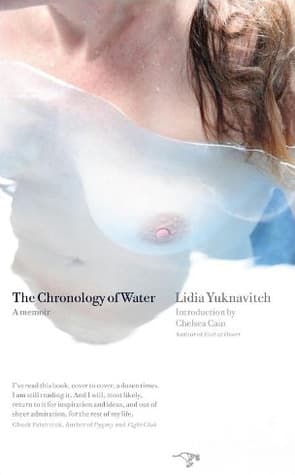
The Chronology of Water cover
Archivist's Choice

The Chronology of Water

Lidia Yuknavitch (2011)

Genre

Biography / Memoir / Creativity

Reading Time

6-8 hours

Key Themes

See below

Track Your Reading

Sign in to track this book

From addiction and unconventional desire, a swimmer-turned-writer navigates grief, sexuality, and self-destruction, finding redemption in art, love, and motherhood.

Core Idea

Lidia Yuknavitch's "The Chronology of Water" is a raw memoir that redefines the genre. It explores the author's difficult life using water as a metaphor for its fluid, destructive, and regenerative qualities. The book argues that the body holds a primal language of memory and trauma, and that an artist's voice often emerges from experiences of self-destruction, addiction, and deep grief. It suggests that true love and redemption can be found outside conventional societal rules, especially through motherhood and the act of witnessing one's own imperfect, fragmented history. The memoir states that understanding one's personal story means accepting its messiness, acknowledging grief's power, and seeing sexuality as a strong language of self-discovery. Ultimately, it champions speaking one's truth, however uncomfortable, as a way to reclaim control and build a new, strong self.
Reading time
6-8 hours
Difficulty
Medium
✓ Read this if...
You are looking for a raw, experimental memoir that delves into trauma, addiction, sexuality, and the creative process with brutal honesty and lyrical prose. You appreciate narratives that challenge conventional forms and explore the body as a site of memory.
✗ Skip this if...
You prefer traditional, linear memoirs, are uncomfortable with graphic descriptions of drug use, sexual encounters, and mental health struggles, or seek a light, uplifting read.

Core idea

The central argument and framework that powers the entire book.

Lidia Yuknavitch's "The Chronology of Water" is a raw memoir that redefines the genre. It explores the author's difficult life using water as a metaphor for its fluid, destructive, and regenerative qualities. The book argues that the body holds a primal language of memory and trauma, and that an artist's voice often emerges from experiences of self-destruction, addiction, and deep grief. It suggests that true love and redemption can be found outside conventional societal rules, especially through motherhood and the act of witnessing one's own imperfect, fragmented history.

The memoir states that understanding one's personal story means accepting its messiness, acknowledging grief's power, and seeing sexuality as a strong language of self-discovery. Ultimately, it champions speaking one's truth, however uncomfortable, as a way to reclaim control and build a new, strong self.

At a glance

Reading time

6-8 hours

Difficulty

Medium

Read this if...

You are looking for a raw, experimental memoir that delves into trauma, addiction, sexuality, and the creative process with brutal honesty and lyrical prose. You appreciate narratives that challenge conventional forms and explore the body as a site of memory.

Skip this if...

You prefer traditional, linear memoirs, are uncomfortable with graphic descriptions of drug use, sexual encounters, and mental health struggles, or seek a light, uplifting read.

Key Takeaways

1

Water as a Primal Language

The fluidity of water mirrors the narrator's identity and narrative structure.

Quote

My body is a chronology of water. The story of my body is the story of water.

Yuknavitch uses water as a central metaphor for her life's changes, trauma, and strength. Her identity, sexuality, and writing are linked to water's qualities: its formlessness, its power to erode and create, and its ability to hold memory. The story itself flows and shifts, not following a straight path, like water finding its way. This deep connection to water shows a primal understanding of self, where the body's experiences are recorded in its very substance, defying conventional storytelling. It rejects rigid categories, embracin...

Supporting evidence

Her experiences as a competitive swimmer, a lifeguard, and her fascination with the ocean and its creatures are woven throughout, often appearing as moments of solace or clarity amidst chaos. The structure of the book itself, with its non-linear flow and recurring motifs, mimics the movement of water.

Apply this

Embrace non-linear thinking and storytelling in your own life. Recognize that identity is fluid and multifaceted, not fixed. Allow for periods of 'flow' and 'drift' in creative or personal development, trusting that meaning will emerge even without a strict chronological path.


fluid-identitymetaphorical-narrativetrauma-and-body
2

The Body as a Site of Memory and Resistance

Trauma and desire are etched into the physical self, demanding recognition beyond words.

Quote

The body remembers what the mind forgets. My body is a book where everything is written.

Yuknavitch argues that the body is not just a container but an active part in life's stories, especially those marked by trauma, violence, and intense desire. Her experiences, from abuse to the deep grief of losing a child, are physically embodied, appearing as addiction, self-destruction, and eventually, a strong will to survive. This view challenges the idea that verbal memory is most important, suggesting that physical experiences hold a truth that language often struggles to express. It is a powerful statement about the body's con...

Supporting evidence

Her detailed descriptions of physical sensations, her journey through addiction and recovery, and her explicit exploration of sexuality are all presented as deeply embodied experiences. The repeated return to swimming as a form of coping or escape reinforces the body's central role.

Apply this

Pay attention to your body's signals and memories, especially when processing difficult experiences. Engage in physical activities that help you connect with your body and process emotions. Recognize the body's role in trauma and healing beyond intellectual understanding.

somatic-memorytrauma-embodimentbody-narrative
3

Grief's Erosive Power and Transformative Potential

Profound loss shatters identity, but also forges new paths of being and expression.

Quote

Grief is a tsunami. It takes everything and then leaves behind a new landscape.

The death of her infant daughter is the catastrophic event that changes Yuknavitch's world. This grief is not shown as a neat, linear process, but as a destructive force that destroys her old self, leading her into addiction and self-harm. Yet, it is also the source of her artistic voice. The intensity of her sorrow forces a re-evaluation of life, love, and purpose, leading to an honest voice in her writing. This highlights how devastating experiences, while tearing us apart, can also spark deep personal and creative transformation, r...

Supporting evidence

The narrative explicitly links her descent into addiction and her eventual turn to writing to the immediate aftermath of her daughter's death. Her later creative output is presented as a direct response to this unprocessable grief.

Apply this

Acknowledge the transformative, albeit painful, power of grief. Understand that healing doesn't mean forgetting, but integrating loss into a new identity. Seek creative outlets or new forms of expression during periods of intense sorrow to channel the emotional energy.

grief-and-creativitypost-traumatic-growthloss-and-identity
4

Redefining Love Beyond Conventional Scripts

Love manifests in diverse forms, often found in unexpected and unconventional connections.

Quote

Love is not a single story. It is a language of many tongues and many bodies.

Yuknavitch's memoir challenges traditional ideas of love and relationships. Her attractions to both men and women, her complex sexual history, and her eventual finding of love and motherhood with her husband and stepchildren are all presented with an honesty that defies societal expectations. Love is not confined to romantic pairings or blood ties; it appears in moments of human connection, vulnerability, and understanding, often with people who also live on the fringes. This suggests that true love is in acceptance and shared humanit...

Supporting evidence

Her relationships with various partners, both male and female, are explored with candidness. The eventual formation of her family unit, including her husband and his children, is depicted as a form of unconventional, yet deeply meaningful, love and belonging.

Apply this

Challenge your own preconceived notions of what love and family 'should' look like. Be open to finding connection and support in unexpected places and with diverse individuals. Prioritize genuine human connection over societal norms in your relationships.

queer-loveunconventional-relationshipsexpansive-love
5

The Artist's Emergence Through Self-Destruction

Creativity can be born from the ashes of chaos and a fierce refusal to conform.

Quote

I wrote to save my life. I wrote to make sense of the chaos that was my body and my history.

Yuknavitch's journey as a writer is not a steady climb but a messy, often self-destructive path. Her experiences with addiction, institutionalization, and deep alienation are not hindrances to her art, but the very material from which it is made. Her writing emerges as an act of survival, a way to make sense of an otherwise unbearable existence. This suggests that for some artists, especially those who have lived on the margins, creativity is linked to their struggles, turning pain into powerful expression. It shows that authenticity ...

Supporting evidence

Her descriptions of writing in journals during periods of intense personal struggle, and her later academic pursuits, are depicted as crucial steps in her artistic development, directly stemming from her chaotic life experiences.

Apply this

Don't shy away from using your personal struggles and vulnerabilities as material for your creative work. Recognize that the path to creative expression is rarely linear or easy. Find your unique voice by being brutally honest about your experiences, however difficult.

art-as-survivaltrauma-and-artautofiction
6

Challenging Memoir's Boundaries

The act of remembering is inherently subjective and non-linear, defying rigid narrative forms.

Quote

This is not a memoir. This is a swimming pool, a chronology of water.

Yuknavitch questions the nature of memoir throughout her book, rejecting the idea of a neatly packaged, chronological life story. She understands memory as fragmented, fluid, and influenced by emotion and perspective, rather than a factual account. Her story jumps between time periods, uses recurring themes, and embraces a stream-of-consciousness style, blurring the lines between autobiography and poetic reflection. This encourages readers to engage with her story on a more intuitive level, rather than seeking a straightforward accoun...

Supporting evidence

The book's non-linear structure, its use of recurring images and themes (like water, swimming, grief), and her direct addresses to the reader about the act of writing and remembering, all serve to deconstruct traditional memoir.

Apply this

When reflecting on your own life or experiences, allow for non-linear and fragmented memories. Recognize that your personal narrative is not a fixed historical record but a dynamic, evolving story. Embrace creativity and unconventional forms when sharing your own story.

meta-memoirnon-linear-narrativesubjective-memory
7

Motherhood as Redemption and Rebirth

After profound loss, the capacity for mothering offers a path to healing and self-acceptance.

Quote

The children saved me. They were the anchors that pulled me back to the surface.

Following the loss of her own child and years of self-destruction, Yuknavitch finds purpose and healing through motherhood, specifically with her stepchildren. This is not a miraculous cure for her past trauma, but a grounding force that demands presence, responsibility, and unconditional love. Nurturing others, even after failing to protect her own child, allows her to reconnect with a basic part of herself and build a future. It shows how the capacity for care and connection, especially with children, can offer redemption and a path...

Supporting evidence

Her detailed and tender descriptions of her interactions with her stepchildren, and the solace she finds in their presence, are a recurring theme in the latter part of the book, contrasting sharply with her earlier struggles.

Apply this

Seek out opportunities for nurturing and care, whether for children, pets, or community, as a path to healing and purpose. Recognize that 'motherhood' can manifest in many forms beyond biological ties. Embrace the responsibility and love that comes with caring for others as a grounding force.

motherhood-healingredemption-narrativechosen-family
8

The Power of Voice and Witnessing

Speaking one's truth, however raw, creates connection and validates lived experience.

Quote

I am here. I am writing. This is my body, my story, my water.

Yuknavitch's memoir shows the power of finding one's voice, especially for those whose experiences have been ignored or silenced. By sharing her story with honesty – detailing trauma, addiction, and unconventional sexuality – she creates a space for others to feel seen. Her willingness to be vulnerable, to expose the 'mess' of her life, is an act of courage that validates the complex realities of human existence. This highlights the importance of authentic self-expression not just for personal healing, but also for building community ...

Supporting evidence

The very act of writing and publishing this memoir is evidence of her commitment to voice. Her direct, confessional tone throughout the book invites the reader into her experience, fostering a sense of shared vulnerability.

Apply this

Find ways to articulate your own truth, even if it feels uncomfortable or unconventional. Seek out and support voices that challenge dominant narratives. Understand that your story, in its rawest form, has the power to connect and heal.

authentic-voicevulnerability-as-strengthnarrative-therapy
9

Sexuality as a Language of Self-Discovery

Exploring desire, in all its forms, is integral to understanding one's identity and agency.

Quote

My sexuality was not a choice, but a current, a deep river in my body.

Yuknavitch approaches sexuality not as a moral issue, but as a basic part of her being, a 'current' that shapes her understanding of self, connection, and power. Her exploration of both heterosexual and homosexual relationships, often explicit, is presented as a path to self-discovery and a way to regain control in a life marked by trauma. It challenges the reader to see sexuality as a complex, fluid, and personal language through which individuals navigate intimacy, vulnerability, and their desires. This view validates diverse sexual...

Supporting evidence

Her candid accounts of sexual encounters, her attraction to both men and women, and her reflections on the role of sex in her personal development and relationships are central to the narrative.

Apply this

Approach your own sexuality with curiosity and self-acceptance, recognizing it as a valid part of your identity. Challenge societal judgments about sexual expression and desire. Understand that sexual exploration can be a powerful tool for self-discovery and agency.

sexual-fluiditydesire-and-identitysexual-agency
10

The Imperfection of Memory and Narrative

Authenticity in storytelling lies in embracing gaps, contradictions, and the subjective nature of truth.

Quote

I can't remember everything. Some things are lost to the water, or to the fire.

A main idea in Yuknavitch's approach is that memory is imperfect and incomplete. She does not pretend to offer a perfectly recalled, seamless story. Instead, she accepts the gaps, uncertainties, and contradictions in recounting a life. This refusal to present a polished story is what makes her memoir authentic. It speaks to the human experience of remembering, where some moments are clear while others fade. This encourages readers to value honesty about memory's limits, rather than seeking an impossible, objective truth, especially in...

Supporting evidence

Throughout the book, Yuknavitch often states when her memory is hazy, or when she is constructing a scene based on fragmented recollections rather than perfect recall. The non-linear structure itself implies this imperfection.

Apply this

When sharing your own stories, be honest about what you remember clearly and what remains hazy. Don't feel pressured to create a perfectly coherent narrative if it doesn't reflect your experience. Embrace the 'messiness' of memory as part of your authentic truth.

unreliable-narratormemory-and-truthnarrative-gaps

Critical analysis

Notable Quotes

I am not a woman. I am a monster. I am a monster who has children. I am a monster who writes. I am a monster who loves. I am a monster who is loved.

Reflecting on her identity and struggles, embracing a powerful, unconventional self-definition.

Tell me a story. That is what I want most of all. A story. It means I am not alone.

Expressing a deep human need for connection and shared experience through narrative.

The body is not a temple. It's a playground. Or a battlefield. Or a canvas. Or a river.

Challenging conventional views of the body, emphasizing its mutable and experiential nature.

I write because I have to. Because if I don't, the monsters inside me will eat me alive.

Describing the urgent, cathartic impulse behind her writing, as a means of survival.

The only way out is through. The only way to heal is to feel.

A concise statement on processing pain and trauma, advocating for confronting difficult emotions.

Water is memory. Water is grief. Water is birth. Water is death. Water is everything.

Exploring the multifaceted symbolism of water throughout her life and experiences.

I am a swimmer. I have always been a swimmer. It is the only place where I feel completely free.

Highlighting swimming as a central metaphor and a source of solace and liberation.

My body is a story. My scars are chapters. My skin is the cover.

Viewing her physical self as a narrative, marked by experiences and resilience.

There are no good mothers or bad mothers. There are just mothers. And they are all doing the best they can.

Offering a compassionate and nuanced perspective on motherhood, free from judgment.

Art is not a luxury. It is a necessity. It is how we make sense of the world. It is how we survive.

Emphasizing the vital role of art and creativity in human existence and coping.

To be seen, truly seen, is a kind of love.

Reflecting on the profound human desire for recognition and understanding.

I had to fall apart to put myself back together in a way that was true to me.

Describing a process of breakdown and reconstruction, leading to authentic selfhood.

We are all made of water. We are all made of stories.

A poetic summation of human composition, linking physical being with narrative identity.

Quiz

Test Your Knowledge

Ready to see how well you understood this book? Take our interactive quiz with 10 questions.

10
Questions
~5
Minutes
?
Best Score

Key Questions (FAQ)

'The Chronology of Water' is a raw and unconventional memoir by Lidia Yuknavitch, exploring her life through themes of grief, sexuality, addiction, and the transformative power of art and motherhood. It delves into her experiences as a swimmer, artist, and writer, challenging traditional notions of memoir itself.

About the author