“Sometimes the things we want most are the things that will kill us.”
— Mary's wisdom to Richard about desires.

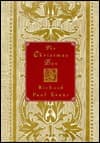
Richard Paul Evans (1993)
Genre
Spirituality
Reading Time
125 min
Key Themes
See below
Sign in to track this book
A grieving young family discovers the forgotten meaning of Christmas through an eccentric widow and an antique box, revealing a message of love and remembrance.
Richard and Keri Evans, struggling financially with their small business, move their two young daughters, Andrea and Jenna, to a large, historic mansion in Salt Lake City. They will live there as caretakers for the elderly widow who owns it, Mary Parkin. This arrangement offers free housing and a chance for a fresh start. Upon arrival, they find Mary reclusive and peculiar, often going to her private room upstairs. Richard, a sculptor, is struck by the house's history and Mary's quiet dignity, though he senses a deep sadness in her.
Mary Parkin keeps to herself, spending most of her days in her room, especially in the mornings. Richard and Keri respect her privacy but are curious about her habits. Richard sometimes hears faint music or weeping from her room. One morning, he sees Mary go to a specific spot in the living room where she gently touches a small, ornate wooden box on a mantelpiece. This 'Christmas box' becomes a focus of his curiosity, a silent witness to Mary's hidden grief. He notices the respect with which she handles it, suggesting it holds deep personal meaning.
As Christmas approaches, Richard tries to talk to Mary, hoping to understand her sadness. During one conversation, Mary briefly mentions her late daughter, who died young. She speaks of her daughter with a deep love, hinting at a loss that shaped her life. This revelation moves Richard, who, as a father, understands the pain of losing a child. He begins to see Mary not just as a reclusive old woman, but as a mother with immense, decades-old grief, and his desire to help her grows.
Richard's curiosity about the Christmas box becomes strong. He often watches Mary interact with it, noting her tender touch and distant look. He starts to believe the box holds the key to Mary's past and sorrow. He feels a pull towards it, a sense that understanding its contents will unlock the mystery of Mary's life and perhaps offer her comfort. He begins to ask about it subtly, though Mary remains private, guarding her secrets, which only increases Richard's determination to uncover them.
As winter deepens, Mary's health gets worse. Her movements slow, and her clear moments are mixed with confusion. Seeing her fragile state, Richard spends more time with her, offering company and help. During these times, Mary begins to share parts of her past, especially memories of her daughter. These stories are often bittersweet, filled with both love and pain. Richard listens closely, piecing together a life marked by joy and sorrow, feeling a deeper connection to her with each shared memory.
Mary finally tells Richard the heartbreaking story of her daughter, Andrea. Andrea, a loving child, died prematurely on Christmas Eve many years ago. Mary explains that the Christmas box was a gift from Andrea, a small, handmade wooden box Andrea had filled with loving notes and tokens for her mother. After Andrea's death, Mary continued the tradition, adding a new note or memento to the box each Christmas, making it a sacred place for her grief and enduring love. The box became her private sanctuary, a way to keep Andrea's memory alive.
Hearing Mary's story deeply affects Richard. He realizes the Christmas box is not just an object, but a physical sign of a mother's unending love and grief. He understands the depth of her sorrow and the sacred ritual she maintained for decades. His initial curiosity turns into deep empathy and respect. He sees the box as a symbol of how love goes beyond death and how memories can be cherished, even through decades of pain. This realization changes his view on life, loss, and the true meaning of family love.
As Christmas Eve approaches and Mary's health continues to fail, she tells Richard her final wish. She asks him to continue the tradition of the Christmas box, to add a note to it each year, and to ensure her daughter's memory lives on. She also implies the box contains a message for him, a final gift of wisdom. Mary's words are spoken with quiet dignity, a mix of acceptance and enduring love. Richard, deeply moved, promises to honor her wishes, recognizing the trust she has placed in him and the responsibility he is taking on.
On Christmas Eve, the anniversary of her daughter Andrea's death, Mary Parkin peacefully dies. Richard and Keri mourn her loss, feeling a deep connection to the woman who became part of their lives. After Mary's death, Richard, with a heavy heart, opens the Christmas box. Inside, among years of cherished mementos and notes, he finds a final message from Mary. It is a letter, written by Mary, filled with her wisdom about life, love, forgiveness, and the enduring spirit of Christmas, meant for him and future generations.
Mary's letter in the Christmas box is a story of a life lived with joy and sorrow, yet filled with enduring love. She writes about the importance of cherishing loved ones, the pain and necessity of grief, and love's triumph over loss. Her words stress that the true spirit of Christmas is not in material things, but in kindness, forgiveness, and the lasting bonds of family. Richard reads the letter with tears, realizing Mary's final gift is a lesson in living a meaningful life, a legacy of love and wisdom.
Inspired by Mary's legacy and the wisdom in the Christmas box, Richard and Keri decide to adopt the tradition for their own family. They begin to add notes and mementos to the box each Christmas, sharing their experiences, hopes, and love. Their daughters, Andrea and Jenna, are encouraged to participate, creating a new family ritual that honors Mary's memory and teaches them the values of love, remembrance, and the true meaning of the holiday season. The box changes from a symbol of grief to a vessel of shared family history and lasting affection.
Richard reflects on how Mary Parkin and her Christmas box affected his life and family. He understands that the greatest gifts are not material, but the intangible treasures of love, memory, and spiritual connection. The story of Mary and her daughter, Andrea, becomes a guide, reminding him and his family to cherish every moment and to find joy and meaning beyond superficial concerns. The Christmas box is a powerful symbol of enduring love, grief, and the spiritual essence of Christmas, a legacy passed down through generations.
The Protagonist
Richard evolves from a man focused on material struggles to one who deeply understands and values intangible love, memory, and spiritual connection.
The Supporting/Mentor
Mary's arc is largely revealed through flashbacks and her gradual opening up, showing her transition from profound grief to a state of peaceful acceptance and wisdom.
The Supporting
Keri's arc involves her growing understanding and acceptance of Mary's legacy and the spiritual lessons it offers, leading her to embrace a new family tradition.
The Supporting
Andrea's arc is less about personal development and more about her role in the family's journey to embrace Mary's legacy.
The Supporting
Jenna's arc, similar to Andrea's, is about her participation in a new family tradition that underscores the book's themes.
The Mentioned
Andrea's arc is entirely in the past, her story serving as the catalyst for the present-day events and Mary's wisdom.
The main theme is how love goes beyond death and how memories keep loved ones alive. Mary Parkin's lifelong ritual with the Christmas box, adding notes and mementos for her deceased daughter Andrea, clearly shows this. Her grief is deep, but it is tied to a strong love expressed in this daily act of remembrance. Richard's journey to understand Mary's story highlights how cherishing memories can offer comfort and connection, turning loss into a source of lasting affection and wisdom. The box itself is a physical sign of this theme, holding a mother's unending love.
“For some reason, I had always thought of grief as a burden, a weight that only time could lighten. But I was learning that grief can also be a gift. I was learning that it is the price of love.”
The novel redefines Christmas beyond shopping, focusing on its spiritual and family essence. Through Mary's story, Richard learns that the greatest gifts are not material but are found in love, forgiveness, and selfless giving. Mary's final letter clearly states this, speaking of the importance of cherishing loved ones and finding joy in simple, meaningful connections. The Christmas box, initially a symbol of grief, becomes a symbol of this deeper understanding, reminding the Evans family to focus on intangible treasures during the holiday season and throughout life.
“The greatest gifts are not found in stores, but in the hearts of those who love us.”
The book explores the journey of grief, its long-term impact, and how to find acceptance. Mary Parkin represents decades of unresolved grief, yet her ritual with the Christmas box also helps her cope and heal. Richard at first struggles to understand her sorrow but comes to see it as a natural, though painful, part of her love. By sharing her story, Mary finds peace and helps Richard understand that grief, while painful, is a part of love. Her death on Christmas Eve, the anniversary of her daughter's death, suggests a final acceptance.
“Grief is the price we pay for love.”
A key theme is how wisdom and life lessons are passed down through generations. Mary Parkin, through her story and the Christmas box, mentors Richard. She shares truths about life, love, and loss, which Richard then uses in his own family's life. The Evans family's adoption of the Christmas box tradition ensures that Mary's legacy and wisdom will continue to influence future generations, showing how personal experiences can become universal lessons when shared openly.
“My greatest gift to you is not in what I leave behind, but in what I have taught you to carry forward.”
A physical object symbolizing love, grief, and memory
The Christmas box serves as the central symbolic object and a powerful plot device. Initially, it's a mysterious item that piques Richard's curiosity, driving the narrative forward as he seeks to uncover its meaning. It functions as a tangible representation of Mary Parkin's enduring love for her deceased daughter, Andrea, and her decades-long grief. As its history is revealed, the box transforms into a vessel for Mary's wisdom and a catalyst for Richard's spiritual growth. Ultimately, it becomes a new family tradition for the Evans, symbolizing the intergenerational transfer of love and lessons.
The story is told retrospectively by Richard, emphasizing its lasting impact
The novel is narrated by Richard Evans in the first person, looking back at the events from a future perspective. This framing device immediately establishes the profound significance of the story, as Richard explicitly states he is recording it for 'all future generations.' It imbues the narrative with a sense of wisdom and reflection, letting the reader know that the events they are about to read had a lasting, transformative effect on the narrator. This perspective allows Richard to offer insights and emotional depth that might not be possible in a real-time narration, emphasizing the enduring lessons learned.
A recurring date signifying both loss and spiritual revelation
Christmas Eve serves as a powerful symbolic plot device, marking both profound loss and spiritual revelation. It is the date of Mary's daughter Andrea's death, making it a day of deep sorrow and remembrance for Mary. The fact that Mary herself passes away on Christmas Eve underscores the cyclical nature of life and death, and suggests a peaceful reunion with her daughter. For Richard, this date becomes the moment of ultimate discovery, when he fully comprehends the depth of Mary's story and receives her final, life-altering wisdom. It ties the themes of grief, love, and the true meaning of Christmas together.
“Sometimes the things we want most are the things that will kill us.”
— Mary's wisdom to Richard about desires.
“The greatest gift, and the greatest curse, is to be perfectly ourselves.”
— A profound thought from Mary about individuality.
“Love is not a feeling, it's a choice.”
— Mary teaches Richard about the nature of enduring love.
“The past is a memory, the future is a dream, but the present is a gift. That's why they call it the present.”
— Mary's lesson on living in the moment.
“There are no ordinary moments.”
— A reminder from Mary to appreciate every part of life.
“We are all children, desperately trying to find our way home.”
— Mary reflecting on the universal human search for belonging.
“Forgiveness is giving up the hope that the past could have been any different.”
— Mary's definition of forgiveness to Richard.
“It is not what we have, but what we do with what we have, that defines us.”
— Mary's perspective on true wealth and character.
“Children are not a distraction from more important work. They are the most important work.”
— Mary's profound statement on the value of raising children.
“Sometimes the greatest miracles are simply the ones we're too busy to notice.”
— Mary encouraging Richard to see the wonder in everyday life.
“Grief is love's souvenir.”
— Mary's tender explanation of grief after loss.
“The purpose of life is to be useful, to be honorable, to be compassionate, to have it make some difference that you have lived and lived well.”
— Mary's thoughts on the meaning and purpose of life.
“A life lived for others is a life worthwhile.”
— Mary's advice on finding fulfillment through service.
“The light always shines through, even in the darkest of places.”
— Mary's message of hope and resilience.
Ready to see how well you understood this book? Take our interactive quiz with 10 questions.

Biography coming soon.
Kay Lynn Mangum
4.3
Stormie Omartian
4.3
Jerry Bridges
4.3
Walter Brueggemann
4.3
Rhonda Byrne
4.3
Brother Lawrence
4.3
Joseph Campbell
4.3

Unknown
4.3