“The most pitiful among men is he who turns his dreams into silver and gold.”
— Selma's father, Farris Effandi, reflects on worldly possessions.

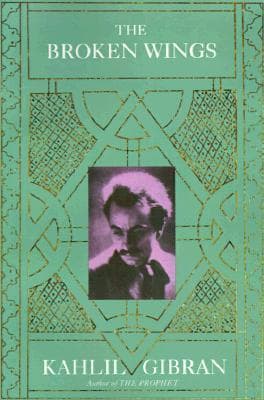
Genre
Spirituality / Philosophy / Romance
Reading Time
90 min
Key Themes
See below
Sign in to track this book
In Beirut, a young poet's first love for Selma Karamy is tragically crushed by tradition and forced marriage, leaving a poignant echo of what could have been and a meditation on human suffering.
The story begins with the narrator, Kahlil, thinking about a love that shaped his youth. He tells of the day he first met Selma Karamy at the home of his uncle, Farris Effandi, a respected and wealthy man in Beirut. Selma, the daughter of Farris Effandi's close friend Prince Karim, is visiting with her father. Kahlil is immediately drawn to Selma's beauty, grace, and the depth in her eyes. Their first conversation is brief but impactful, leaving Kahlil with a sense of wonder and a new affection. He feels an inexplicable connection, as if their souls recognized each other.
After their first meeting, Kahlil and Selma find ways to be together. They often meet in secluded spots, like a garden or by a stream, away from society's view. During these secret meetings, they share their deepest thoughts, aspirations, and views on life, love, and the divine. Selma shows her poetic soul and her desire for a love that goes beyond earthly limits, mirroring Kahlil's own spiritual leanings. Their bond grows with each encounter, becoming a deep and pure love that feels sacred and destined. They find comfort and understanding in each other, a rare connection in their traditional world.
Their idyllic romance is suddenly threatened by society's strict rules. Bishop Bulos Galib, an influential and greedy religious leader, wants Prince Karim's wealth and prestige. To gain power and enrich his family, he arranges a marriage between Selma and his nephew, Mansour Bey. Mansour is described as a man without real affection or intellect, interested only in social standing and money. Despite Selma's and Prince Karim's unspoken reluctance, the Bishop's influence and societal pressure make it almost impossible to refuse such a 'distinguished' match, trapping Selma in a web of obligation.
The news of Selma's upcoming engagement to Mansour Bey devastates both Selma and Kahlil. Selma confides in Kahlil, expressing her despair at being forced into a loveless union. She feels like a bird with broken wings, unable to fly towards her true love. Kahlil, equally heartbroken, struggles with their helplessness, knowing that challenging the Bishop's will and societal norms would be pointless and potentially ruinous for Selma and her father. Their dreams of a shared future are cruelly taken away, replaced by the harsh reality of a forced marriage that will bind Selma to a man she does not love.
Despite her marriage to Mansour Bey, Selma and Kahlil cannot break their emotional bond. They continue to meet in secret, usually in the secluded garden they once frequented. These clandestine encounters become their only source of true happiness and spiritual connection. Selma, now living a life of quiet desperation and emotional neglect with Mansour, finds temporary comfort and validation in Kahlil's presence. Kahlil, seeing her suffering, feels a deep pity and an even deeper love for her. Their meetings are bittersweet, filled with the joy of their shared affection but also the pain of their impossible situation and the constant fear of discovery.
Selma's life as Mansour Bey's wife is deeply unhappy. She is treated as a possession, her spiritual and emotional needs ignored. Mansour is often absent, indulging in his own pleasures, and when present, he is cold and indifferent. Selma finds no intellectual companionship or emotional warmth in her marriage. The vibrant spirit Kahlil once knew begins to fade, replaced by sadness and a sense of entrapment. Her health, both physical and emotional, starts to worsen under the weight of her sorrow and the suffocating environment of her gilded cage. She longs for freedom and genuine connection but sees no escape.
Further tragedy strikes when Prince Karim, Selma's loving father, dies. His death is a devastating blow to Selma; he was her only remaining source of family affection and protection. With his passing, Selma is left alone and completely at the mercy of Mansour Bey and Bishop Bulos Galib. Her father's wealth and property, meant for her, are now largely controlled by the Bishop and his nephew, further cementing their hold over her life. This loss deepens Selma's despair, severing her last ties to a life of love and care, and intensifying her isolation.
Unexpectedly, Selma becomes pregnant. This news brings a momentary flicker of hope into her desolate life, a potential new purpose and a reason to endure. She cherishes the thought of motherhood, imagining a child who might bring her some joy and love. However, this hope is brief. During childbirth, Selma experiences severe complications. She gives birth to a frail baby boy, but both she and the infant are gravely weakened. The medical practices of the time are insufficient, and their conditions rapidly worsen, signaling a heartbreaking end.
Kahlil learns of Selma's critical condition and rushes to her side, managing to enter her room despite the family's presence. He finds her on her deathbed, holding her newborn son, who is also dying. In her final moments, Selma recognizes Kahlil. With her last breaths, she expresses her eternal love for him, lamenting their broken wings but finding peace in their shared spiritual bond. Kahlil, overwhelmed with grief, holds her hand as she and her infant son die. He witnesses the extinguishing of her beautiful spirit, a moment that forever scars his heart and shapes his understanding of love, loss, and the human condition.
After Selma's death, Kahlil is left with a huge void and deep sorrow. He attends her funeral, observing the hypocrisy of society and the superficial grief of those who had condemned her to an unhappy life. He reflects on Selma's pure spirit, her unfulfilled potential, and the injustice of her fate. Her love, though tragic, becomes a foundational experience for him, deepening his spiritual insights and shaping his philosophical outlook. He realizes that true love transcends physical presence and societal constraints, existing eternally in the soul. Selma's memory becomes a guiding light, inspiring his future works and his understanding of human suffering and divine love.
The Protagonist
Kahlil transforms from an innocent youth experiencing first love to a man deeply marked by loss, gaining profound spiritual insight and a deeper understanding of human suffering and transcendent love.
The Love Interest / Tragic Heroine
Selma begins as a vibrant young woman full of potential and love, but her spirit is gradually broken by forced marriage and societal oppression, leading to a tragic end that solidifies her role as a martyr for true love.
The Antagonist
The Bishop remains a static character, consistently embodying corruption and hypocrisy, serving as the immovable obstacle to Selma and Kahlil's love.
The Supporting / Antagonistic
Mansour Bey remains a static character, serving as an embodiment of societal superficiality and the lack of genuine love that Selma is forced to endure.
The Supporting
Prince Karim's arc is one of decline, from a respected father to a man unable to protect his daughter, whose death marks a turning point in Selma's increasing isolation.
The Supporting / Mentioned
Farris Effandi's role is primarily to facilitate the initial meeting; he remains a static background character.
This is the main theme, exploring how genuine, spiritual love is often crushed by rigid societal norms, religious hypocrisy, and materialistic desires. Kahlil and Selma's pure love is the opposite of the arranged marriage dictated by Bishop Bulos Galib for financial gain. Selma is a victim of a society that values status and wealth over individual happiness. Her 'broken wings' symbolize her love's inability to thrive due to the chains of tradition and duty, as seen when she is forced to marry Mansour Bey despite her heart belonging to Kahlil.
“Love is the only freedom in the world because it so elevates the spirit that the laws of humanity and the phenomena of nature do not alter its course.”
The novel contrasts the spiritual, idealized love of Kahlil and Selma with the materialistic desires of figures like Bishop Bulos Galib and Mansour Bey. Kahlil and Selma's connection is based on shared souls, poetic understanding, and a deep appreciation for beauty and truth. In contrast, the Bishop's motives are purely financial and power-driven, viewing marriage as a transaction. Mansour Bey represents the emptiness of a life without spiritual connection, interested only in appearances. This theme highlights Gibran's belief that true love transcends the physical and material world.
“And the love that is not all-encompassing is but a portion of the heart, and not the heart itself.”
Bishop Bulos Galib represents the criticism of corrupt religious institutions Gibran often expressed. The Bishop uses his sacred office not for spiritual guidance, but for personal enrichment and worldly power. He manipulates Prince Karim and forces Selma into a tragic marriage, showing how religious authority, when separated from genuine spirituality, can become a tool of oppression. His actions directly lead to Selma's suffering and death, exposing the moral bankruptcy hidden beneath a facade of piety.
“The greatest evil in the world is not sin itself, but the hypocrisy that covers it.”
The entire story is filled with the theme of suffering and loss, especially through Selma's tragic fate and Kahlil's grief. Selma's life is a journey from joy to deep despair, marked by the loss of her true love, her freedom, her father, and ultimately, her life and child. Kahlil's suffering is the pain of witnessing his beloved's destruction and the helplessness of being unable to save her. However, the novel suggests that suffering, while agonizing, can also lead to spiritual growth and deeper understanding, creating a more profound appreciation of life and love's eternal nature.
“Sorrow is but a wall between two gardens.”
Metaphor for unfulfilled love and crushed aspirations.
The 'broken wings' in the title and throughout the narrative symbolize the inability of Kahlil and Selma's love to fully take flight due to societal constraints and tragic circumstances. Selma, in particular, feels like a bird whose wings have been clipped, unable to soar towards her destined love and freedom. It represents the crushing of spirit, hope, and potential when pure intentions and natural desires are thwarted by external forces, particularly rigid traditions and corrupt authority. This device powerfully conveys the sense of loss and entrapment experienced by the lovers.
The story is told by an older, wiser Kahlil looking back on his youth.
The novel is narrated in the first person by Kahlil, who recounts his youthful romance with Selma Karamy from a later, more mature perspective. This retrospective viewpoint allows the narrator to imbue the events with philosophical reflections, spiritual insights, and a profound sense of melancholy and wisdom gained through the passage of time and the experience of loss. It adds a layer of poetic depth and emotional resonance, as the events are not merely described but are also analyzed and understood through the lens of a transformed soul. This device allows for commentary on the broader human condition.
Characters who highlight the protagonist's qualities through contrast.
Mansour Bey and Bishop Bulos Galib serve as foil characters to Kahlil and Selma. Mansour Bey's superficiality, indifference, and materialistic nature highlight Kahlil's spiritual depth, passionate devotion, and sensitivity. Bishop Bulos Galib's corruption, greed, and hypocrisy starkly contrast with the purity, innocence, and genuine spirituality of Selma. These foils emphasize the central conflict between true love and societal corruption, making the tragic fate of Selma even more poignant and highlighting the values that Kahlil and Selma represent.
Use of natural settings to reflect emotional states and spiritual connection.
Gibran frequently uses vivid descriptions of nature—gardens, streams, trees, and the changing seasons—to mirror the emotional states of the characters and to symbolize the purity and naturalness of Kahlil and Selma's love. Their secret meetings often take place in idyllic natural settings, which serve as a sanctuary from the artificial and corrupt human world. This imagery imbues their love with a sense of the divine and the eternal, suggesting that their bond is as fundamental and beautiful as nature itself, contrasting with the man-made societal structures that ultimately destroy it.
“The most pitiful among men is he who turns his dreams into silver and gold.”
— Selma's father, Farris Effandi, reflects on worldly possessions.
“Love is the only freedom in the world because it so elevates the spirit that the laws of humanity and the phenomena of nature do not alter its course.”
— The narrator muses on the transcendent power of love.
“Our life is but a heart-beat in the life of the universe, a fleeting moment in the stream of time.”
— A reflection on the brevity of human life.
“For in truth, what is life but a dream, and what is love but a phantom of that dream?”
— The narrator ponders the ephemeral nature of life and love.
“We are all prisoners, but some of us are in cells with windows and some without.”
— A metaphor for different levels of awareness or experience.
“The earth is a living body, and we are its cells.”
— A philosophical view of humanity's connection to nature.
“Sadness is but a wall between two gardens.”
— A poetic description of the nature of sorrow.
“There is a space in the soul that has never been touched by the world, and it is in this space that we are truly free.”
— Exploring the inner sanctuary of the self.
“The human heart is like a tree that has been planted in the earth, and its roots are in the hidden depths of the soul.”
— A metaphor for the profound connection between the heart and soul.
“And when love beckons to you, follow him, though his ways are hard and steep.”
— A general exhortation about the pursuit of love, even in difficulty.
“Beauty is eternity gazing at itself in a mirror. But you are eternity and you are the mirror.”
— A profound statement on the nature of beauty and self-perception.
“The world is but a bridge, pass over it, but build no house upon it.”
— A reminder of the transient nature of worldly existence.
“The soul is a garden where thoughts grow.”
— A simple yet profound metaphor for the mind and consciousness.
“We are what we think. All that we are arises with our thoughts. With our thoughts, we make the world.”
— A powerful statement on the creative power of thought.
Ready to see how well you understood this book? Take our interactive quiz with 10 questions.
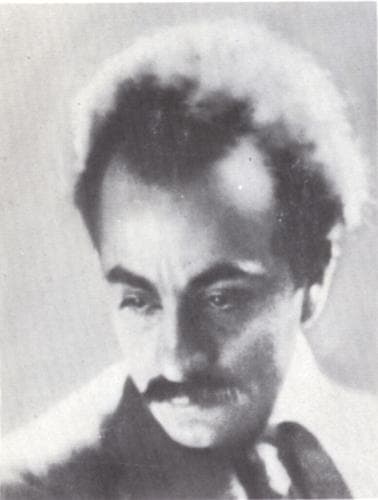
Biography coming soon.

Kay Lynn Mangum
4.3
Stormie Omartian
4.3
Jerry Bridges
4.3
Walter Brueggemann
4.3

Rhonda Byrne
4.3
Brother Lawrence
4.3
Joseph Campbell
4.3

Unknown
4.3