“It was not that Adam felt any particular aversion to the truth, merely that he had a professional interest in the preservation of appearances.”
— Describing Adam's professional inclination as a university lecturer.

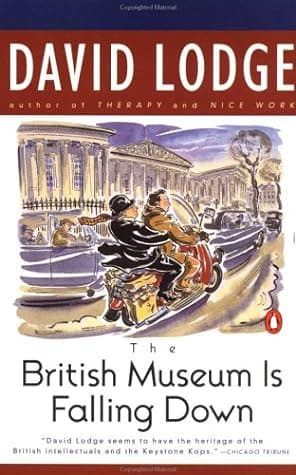
David Lodge (1965)
Genre
Spirituality
Reading Time
240 min
Key Themes
See below
Sign in to track this book
A Catholic literature graduate student struggles with the gap between academic theory and his growing family in pre-Pill London.
The novel opens with Adam Appleby, a Catholic graduate student, waking up to a foggy London morning in his cramped apartment. His wife, Barbara, is pregnant with their fourth child, a prospect that fills Adam with dread because of their strained finances and living conditions. He is supposed to be working on his Ph.D. thesis on the use of 'stream of consciousness' in modern fiction, focusing on the British Museum Reading Room as a setting. Today, however, he has a deadline: he must deliver a paper on his research to Professor Swinburne, his supervisor, by 5 PM. The pressure of his academic work, combined with his expanding family, creates immediate anxiety that defines his day.
Adam's journey from home to the British Museum is a series of minor misfortunes. He struggles with his noisy, demanding children, and then faces the dreary realities of public transport. On the bus, he becomes aware of his disheveled appearance and the general squalor of his life. His mind drifts, connecting his personal worries to the literary figures he studies, particularly those who show characters trapped in mundane routines. The fog outside only increases his internal gloom, making the city feel oppressive and his destination seem far away. He arrives at the museum feeling already exhausted and behind schedule.
Upon entering the Reading Room, Adam tries to settle down to work. However, his mind, busy with his domestic situation and the deadline, refuses to cooperate. He finds himself constantly distracted by other researchers, the room's architecture, and the presence of literary giants who once worked there, particularly James Joyce. Lodge uses a pastiche of various literary styles, mirroring Adam's academic focus, as Adam's internal monologue shifts between stylized prose and his mundane worries. He tries to outline his paper, but his thoughts keep returning to Barbara's pregnancy and their financial problems, making sustained concentration impossible.
Adam's day in the Reading Room has several awkward encounters. He sees a fellow student, Hugh, who seems productive, further highlighting Adam's own struggles. He also has a brief, uninspiring conversation with another acquaintance, which does little to lessen his stress. Each interaction pulls him further from his work, reminding him of his social awkwardness and academic insecurities. The pressure of his paper weighs heavily, and he feels a growing sense of inadequacy compared to his peers, who seem to manage their academic lives with more ease and less personal turmoil.
During his lunch break in the museum cafeteria, Adam's internal thoughts intensify, focusing on his Catholic faith and its rules against contraception. He reflects on the Church's teachings, particularly 'Casti Connubii,' which condemns artificial birth control. This theological debate is deeply personal for Adam, as it directly affects his and Barbara's ability to manage their family size and financial stability. He feels trapped between his religious convictions and the practical realities of his life, leading to a profound crisis of conscience. He observes other people, projecting his anxieties onto them, imagining their lives as either more liberated or equally burdened.
The afternoon in the Reading Room is no more productive than the morning. Adam continues to procrastinate, his mind wandering between his thesis, his family, and various literary allusions. He tries to structure his arguments, but his thoughts are fragmented and chaotic. The ticking clock becomes an almost physical presence, increasing his agitation. He grows frustrated with his inability to concentrate, feeling the weight of his academic responsibilities, yet unable to break free from his mental paralysis. The paper remains largely unwritten, and the 5 PM deadline approaches.
As the afternoon goes on, Adam receives a phone call from Barbara. The conversation is brief but upsetting: Barbara tells him she is pregnant again. This news, which Adam had been dreading all day, shatters any remaining composure he had. It confirms his deepest fears about their financial future and the increasing strain on their family. The prospect of a fourth child, in their already overcrowded and under-resourced lives, feels like an overwhelming burden. The call leaves him reeling, making his academic deadline seem trivial compared to this new, overwhelming reality.
Despite the crushing news of Barbara's pregnancy, Adam tries to compose himself and make a final push to finish his paper. He goes to a quieter part of the museum, trying to force his mind to focus. He scribbles frantically, trying to combine his scattered thoughts into something coherent. His writing is a desperate mix of academic jargon, personal anxieties, and literary pastiche, reflecting his mental state. He knows the paper is far from his best work, but he is determined to present something to Professor Swinburne, even if it shows his utter disarray.
At 5 PM, Adam meets Professor Swinburne to present his paper. What he delivers is a rambling, disjointed monologue that barely meets academic standards. It is a confessional stream of consciousness, blending his literary analysis with his personal anxieties about his wife's pregnancy, his financial struggles, and his crisis of faith regarding Catholic doctrine on contraception. Professor Swinburne listens patiently, perhaps sensing the underlying distress. The presentation is less an academic discourse and more a cry for help, an unfiltered outpouring of Adam's overwhelming predicament, showing the interconnectedness of his academic and personal lives.
After the disastrous presentation, Adam begins his walk home through the still-foggy London streets. He reflects on the day's events, the academic failure, and the overwhelming news of the impending fourth child. His mind is a chaotic mess of self-pity and despair. However, as he nears his apartment, he experiences a fleeting moment of clarity or perhaps a strange sense of peace. He encounters a woman with a pram, and for a brief instant, he connects with the universal experience of parenthood, finding a small, unexpected sign of human connection amidst his personal turmoil, suggesting that despite everything, life, in all its messy reality, continues.
The Protagonist
Adam begins the day dreading his circumstances and ends it having confronted his worst fears, yet finding a subtle, perhaps ironic, acceptance of his fate.
The Supporting
Her character remains largely static, serving as a constant in Adam's internal turmoil.
The Supporting
Swinburne's role is primarily static, serving as the academic destination for Adam's journey.
The Supporting
Hugh's character is static, serving as a point of contrast for Adam.
The Mentioned
Their role is static, representing the ongoing demands of family life.
Adam struggles to balance his Catholic faith, particularly its ban on artificial contraception, with the realities of his overcrowded, financially strained life. His internal thoughts are filled with theological debates and guilt over his desire to limit his family size. This conflict shows the tension between strict religious doctrine and the practical demands of modern life, forcing Adam into a moral and existential dilemma that affects his entire day.
“Literature is mostly about having sex and not having children. Life is the other way around.”
The novel shows Adam's fragmented mental state. His 'stream of consciousness' is not a coherent flow but a chaotic mix of academic jargon, personal worries, literary allusions, and mundane observations. This reflects the pressure of his life, where academic ambition clashes with overwhelming domestic responsibilities. His inability to focus, his constant digressions, and his eventual confessional paper all show a mind struggling to stay coherent under immense stress.
“His mind, like a badly tuned wireless set, picked up snatches of other people's thoughts, other people's words, other people's lives.”
Lodge critiques the isolating and impractical nature of academic life, especially for those with real-world responsibilities. Adam's Ph.D. research, while intellectually stimulating, feels increasingly irrelevant and burdensome given his family's needs. The British Museum, a symbol of intellectual pursuit, becomes a place of anxiety and distraction rather than enlightenment. The theme questions the value of abstract intellectual work when compared to the concrete demands of existence, showing the struggle of balancing academic ambition with personal life.
“He felt that he was drowning in a sea of words, and that the words were not even his own.”
The novel paints a bleak picture of urban life in mid-20th century London, with fog, cramped living spaces, and tedious commutes. Adam's day has many minor misfortunes and frustrations, from struggles with public transport to the general disarray of his home. This pervasive dreariness increases Adam's internal worries, making his personal struggles seem part of a broader societal problem. The humor often comes from the contrast between Adam's intellectual aspirations and the inescapable everydayness of his life.
“The fog was a kind of metaphor for his own mind, a dense, impenetrable cloud.”
The primary narrative technique, mirroring Adam's academic research and mental state.
The entire novel is presented as Adam Appleby's internal monologue over a single day. This technique directly reflects Adam's Ph.D. research topic, creating a meta-fictional layer. His thoughts are fragmented, jumping between his academic work, his personal anxieties, literary allusions, and observations of his surroundings. This allows the reader direct access to his chaotic mind, conveying his overwhelming sense of dread and his struggle for coherence, making the form itself a key part of the thematic content.
Lodge imitates various literary styles to humorous and thematic effect.
David Lodge frequently employs pastiche and parody, mimicking the styles of renowned authors like James Joyce, Virginia Woolf, Franz Kafka, and others. This device is not merely for comedic effect; it serves to illustrate Adam's immersion in literary studies, his internal intellectual landscape, and his struggle to find his own voice amidst the 'voices' of his academic subjects. It also highlights the way literature can both illuminate and complicate one's understanding of reality, as Adam's life often feels like a literary text itself.
A symbolic setting for intellectual pursuit and personal crisis.
The Reading Room functions as a central symbol and a contained setting for much of Adam's internal drama. It represents the pinnacle of intellectual endeavor and tradition, a place where great minds have worked. However, for Adam, it becomes a site of intense personal anxiety, distraction, and academic paralysis. The contrast between the grand, ordered architecture of the room and the chaos of Adam's mind underscores his internal conflict, making the external setting a mirror for his internal state.
A recurring atmospheric motif symbolizing Adam's mental and emotional state.
The pervasive London fog throughout the novel acts as a powerful atmospheric motif. It mirrors Adam's mental confusion, his inability to see clearly, and the general sense of gloom and uncertainty that surrounds his life. The fog obscures vision, creates a sense of isolation, and makes navigation difficult, all reflecting Adam's internal struggles with his faith, his future, and his academic path. It's a classic pathetic fallacy, externalizing Adam's internal state of mind.
“It was not that Adam felt any particular aversion to the truth, merely that he had a professional interest in the preservation of appearances.”
— Describing Adam's professional inclination as a university lecturer.
“Theology was, for Adam, a kind of intellectual game, a sophisticated puzzle with a divine referee who never actually blew the whistle.”
— Adam's view on the academic pursuit of theology.
“Faith, he had always understood, was a gift, but it was a gift that required constant unwrapping, and he felt he was running out of wrapping paper.”
— Adam's struggle with maintaining his faith.
“The British Museum, Adam reflected, was a monument to man's insatiable curiosity, and his equally insatiable capacity for making a mess.”
— Adam's thoughts while at the British Museum.
“He often felt that he was living in a perpetual footnote, always referring to something more substantial, but never quite being it.”
— Adam's sense of his own academic and personal significance.
“The problem with believing in God, Adam thought, was that it made you responsible for everything that happened, including the things you couldn't explain.”
— Adam pondering the implications of divine belief.
“A university, Adam had once heard it said, was a collection of buildings around a library; a theologian's mind, he sometimes felt, was a collection of doubts around a prayer.”
— Adam comparing academic and spiritual structures.
“He was a man who tried to keep his intellectual and spiritual lives in separate compartments, like clean and dirty laundry, but they kept getting mixed up in the wash.”
— Describing Adam's difficulty in compartmentalizing his beliefs.
“Theology, Adam had concluded, was the art of answering unanswerable questions in language that was comprehensible to nobody but other theologians.”
— Adam's cynical view of theological discourse.
“He had always assumed that faith was a destination, a place you arrived at, not a journey you perpetually undertook.”
— Adam's evolving understanding of faith.
“The silence of God, Adam found, was often more eloquent than any sermon.”
— Adam reflecting on divine silence.
“The modern world, Adam often felt, was a vast, sprawling text, full of fascinating but ultimately meaningless footnotes.”
— Adam's perception of contemporary society.
“He was a pilgrim in search of a path, but all the signposts seemed to be pointing in different directions, or else had fallen down.”
— Adam's sense of spiritual disorientation.
“To be a theologian in the twentieth century, Adam thought, was like being an archaeologist in a world that had forgotten what ruins were for.”
— Adam's analogy for the role of a modern theologian.
Ready to see how well you understood this book? Take our interactive quiz with 10 questions.
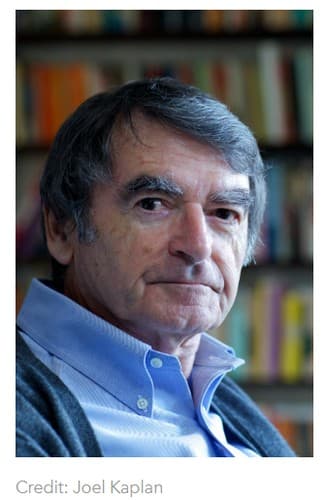
David Lodge is a celebrated British novelist and critic known for his satirical explorations of academic life. His acclaimed works, including "Small World," "Nice Work," and "Changing Places," humorously dissect the absurdities of university culture and the literary world. Lodge's sharp wit and intellectual depth have earned him a significant place in contemporary British fiction.
Kay Lynn Mangum
4.3
Stormie Omartian
4.3
Jerry Bridges
4.3
Walter Brueggemann
4.3

Rhonda Byrne
4.3
Brother Lawrence
4.3
Joseph Campbell
4.3
Unknown
4.3