BookBrief
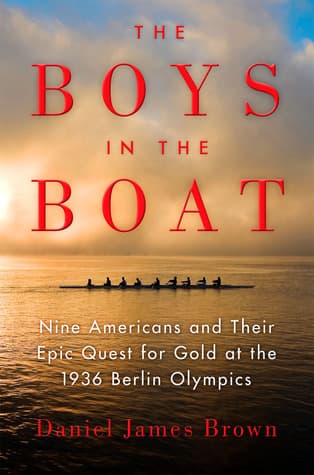
The Boys in the Boat: Nine Americans and Their Epic Quest for Gold at the 1936 Berlin Olympics cover
Archivist's Choice

The Boys in the Boat: Nine Americans and Their Epic Quest for Gold at the 1936 Berlin Olympics

Daniel James Brown (2013)

Genre

Biography / Memoir / History

Reading Time

540 min

Key Themes

See below

Track Your Reading

Sign in to track this book

During the Great Depression and rise of Nazism, nine working-class American rowers form a strong bond, pursue Olympic gold, and show the power of unity and determination.

Core Idea

This book tells the true story of the University of Washington's rowing team, an underdog crew of working-class young men who overcame privilege and hardship to win the gold medal at the 1936 Berlin Olympics. It argues that true teamwork, born from individual effort, trust in teammates, and skill, can overcome social, economic, and political obstacles. The story shows how hardship built character, helping these athletes achieve perfect synchronicity in their boat, becoming a unified force against rising global tensions.
Reading time
540 min
Difficulty
Medium
✓ Read this if...
You enjoy inspiring true stories of teamwork, resilience, and triumph against the odds, especially within a historical sports context.
✗ Skip this if...
You dislike detailed descriptions of sports (rowing in particular) or historical narratives that focus on individual struggles within a team.

Core idea

The central argument and framework that powers the entire book.

This book tells the true story of the University of Washington's rowing team, an underdog crew of working-class young men who overcame privilege and hardship to win the gold medal at the 1936 Berlin Olympics. It argues that true teamwork, born from individual effort, trust in teammates, and skill, can overcome social, economic, and political obstacles. The story shows how hardship built character, helping these athletes achieve perfect synchronicity in their boat, becoming a unified force against rising global tensions.

At a glance

Reading time

540 min

Difficulty

Medium

Read this if...

You enjoy inspiring true stories of teamwork, resilience, and triumph against the odds, especially within a historical sports context.

Skip this if...

You dislike detailed descriptions of sports (rowing in particular) or historical narratives that focus on individual struggles within a team.

Key Takeaways

1

The Indispensable Power of Synergy

Beyond individual talent, true greatness emerges when a group moves as one, achieving a state of 'swing'.

Quote

There are times when all nine men are so perfectly in tune that the boat seems to have a life of its own, to be flying on the water. It is a feeling of euphoria that one cannot describe.

The book shows that individual skill is secondary to a team's collective harmony. 'Swing' in rowing, where all nine oarsmen move in synchronization, allows the boat to glide effortlessly. This synergy isn't accidental; it comes from practice, mutual trust, and a shared goal. The Washington crew's success was not just about strength, but their ability to achieve this state of flow, showing that teamwork can elevate performance.

Supporting evidence

The author details how Coach Al Ulbrickson and boat builder George Pocock consistently emphasized the importance of teamwork and 'swing' over individual star power. Pocock's philosophical musings on the boat as a 'living thing' and the crew as its 'heart' underscored this belief. The crew's training focused heavily on finding this rhythm, often through grueling, repetitive drills designed to perfect their collective timing.

Apply this

In any collaborative endeavor, prioritize building a cohesive unit over solely recruiting individual 'geniuses.' Foster an environment of trust, clear communication, and shared purpose. Encourage team members to anticipate each other's needs and movements, striving for a collective rhythm rather than individual heroics. Invest in practices that build synergy, not just individual skill.


teamworksynergyflow-statecollective-intelligence
2

Grit Forged in Adversity

The Great Depression wasn't just a backdrop; it was the crucible that shaped the crew's unyielding resilience.

Quote

The boys who rowed for Washington in 1936 were not only rowing against the best crews in the world. They were rowing against the ghosts of their own pasts, against the privations of the Depression.

The story connects the crew's resilience to the Great Depression. These were not privileged athletes; they were sons of loggers, farmers, and shipyard workers, many facing poverty and hunger. Joe Rantz's personal story of neglect and self-reliance embodies the grit of the team. Their drive to win was for survival, scholarships, belonging, and to prove their worth. This adversity gave them mental toughness, making their Olympic victory a testament to endurance.

Supporting evidence

Joe Rantz's traumatic childhood, including being abandoned multiple times, is a central thread illustrating this point. The constant struggle for money, food, and tuition among all the crew members, and their willingness to take on grueling manual labor (like logging) to support themselves, highlights their desperate circumstances and the work ethic it instilled.

Apply this

Recognize that hardship, while difficult, can be a powerful catalyst for developing resilience and determination. When faced with challenges, frame them not as insurmountable obstacles, but as opportunities to cultivate mental fortitude. Draw strength from past struggles, understanding that overcoming them has equipped you with unique capabilities.

resilienceadversitygritperseverancegreat-depression
3

The Quiet Wisdom of Mentors

Visionary coaches and craftsmen, often working behind the scenes, provide the foundational guidance for greatness.

Quote

A boat, like a career, is a living thing. You have to care for it, respect it, and understand its nuances.

The book highlights the impact of two mentors: Coach Al Ulbrickson and boat builder George Pocock. Ulbrickson, the demanding coach, pushed the crew to their limits, building discipline and a competitive spirit. Pocock, the philosophical craftsman, provided not only boats but also a deeper understanding of the sport and life. His quiet wisdom helped the boys understand 'swing' and harmony. These mentors taught skills and instilled values, shaping the team's character.

Supporting evidence

Pocock's regular conversations with the boys, particularly Joe Rantz, where he shared his insights on rowing, life, and the construction of the boats, are key. Ulbrickson's strategic decisions, his intense training regimen, and his unwavering belief in his crew, despite external pressures, also exemplify this mentorship.

Apply this

Actively seek out mentors whose wisdom extends beyond technical skills to encompass life lessons and philosophical insights. Be open to receiving guidance, even if it's delivered in a quiet or unconventional manner. As a leader, recognize the importance of both direct instruction and subtle, philosophical guidance in shaping your team.

mentorshipcoachingcraftsmanshipwisdomleadership
4

Overcoming External Skepticism

Against established East Coast dominance and national indifference, the Western underdogs forged their own path to victory.

Quote

The East Coast rowing establishment viewed the Western upstarts with a mixture of amusement and disdain. They were not 'gentlemen oarsmen.'

The University of Washington crew faced opponents on the water and skepticism from the East Coast rowing establishment. Collegiate rowing was dominated by Ivy League schools, who saw themselves as the sport's custodians. The 'boys in the boat,' with their working-class backgrounds, were outsiders. Their journey to the Olympics was a battle against preconceived notions and a lack of resources. Their triumph was a rebuke to elitism and showed that talent, dedication, and heart can overcome bias, inspiring a nation that wanted an underdo...

Supporting evidence

The repeated descriptions of the East Coast's disdain for the Western crews, particularly during the Poughkeepsie Regatta, and the financial struggles of the Washington team compared to well-funded Eastern universities. The press often favored the Eastern teams, initially giving little attention to Washington.

Apply this

Don't let external skepticism or established hierarchies deter you from pursuing your goals. Believe in your own capabilities and the strength of your team, even when others doubt you. Use underestimation as fuel to prove your worth, focusing on performance rather than seeking external validation from entrenched systems.

underdogbiaselitismperseverancesocial-mobility
5

The Personal Quest for Belonging

For some, the team isn't just about winning; it's about finding a family and a place in the world.

Quote

Joe had spent his life looking for a place to belong. He found it in the boat, with these boys.

While the team sought Olympic glory, the book's emotional core is Joe Rantz's journey to find belonging. Abandoned as a child and struggling with isolation, Joe initially kept his teammates at a distance. However, the demands of rowing, the reliance on one another, and shared adversity slowly broke down his walls. He found that in the crew's synchronized effort, he was accepted and essential. The boat became his sanctuary, and his teammates, the family he never had. This shows that for many, especially those who have faced hardship, a...

Supporting evidence

Joe Rantz's detailed backstory of abandonment and the gradual opening up to his teammates, particularly his eventual close bond with Roger Morris and the other boys. His initial reluctance to trust others and his eventual reliance on the crew are pivotal to his character arc.

Apply this

Recognize that individual motivations within a team can be deeply personal and extend beyond the stated goal. Foster an inclusive environment where individuals feel valued and accepted, understanding that this sense of belonging can be a powerful motivator. If you've felt isolated, actively seek out communities or teams where your contributions are essential and you feel truly connected.

belongingcommunityidentityhuman-connectionabandonment
6

The Weight of History and Ideology

The 1936 Olympics were a stark stage where sportsmanship clashed with the chilling rise of Nazism.

Quote

The Berlin Olympics were not just a sporting event; they were a meticulously orchestrated propaganda spectacle designed to showcase the might and superiority of the Third Reich.

The book places the crew's athletic quest within the historical context of the 1936 Berlin Olympics, which Adolf Hitler used for Nazi propaganda. The boys competed in a global ideological battle. The contrast between American ideals of democracy and the Nazi regime's oppressive ideology gives their victory added significance. Their triumph, especially over the German crew, became a symbolic victory for democratic values and human perseverance against rising fascism, showing that sports can carry weight beyond medals.

Supporting evidence

Extensive descriptions of the Nazi propaganda efforts surrounding the games, the architectural grandeur designed to impress, and the political tensions between nations. The author details the meticulous planning by Joseph Goebbels and Hitler's personal interest in the games as a display of Aryan supremacy.

Apply this

Be aware of the broader historical and political contexts in which events unfold, as they can significantly impact meaning and outcomes. Recognize that even seemingly apolitical activities can become symbolic battlegrounds for competing ideologies. Support democratic values and human rights, even in seemingly small ways, as they can collectively push back against oppressive forces.

nazismpropaganda1936-berlin-olympicsideologydemocracy
7

The Unseen Work Behind the Scenes

Success is built on countless hours of unseen practice, sacrifice, and meticulous preparation.

Quote

Gold medals aren't really made of gold. They're made of sweat, determination, and a hard-to-find alloy called guts.

The glamour of an Olympic gold medal often hides the grueling work that precedes it. The book details the Washington crew's training: early morning practices in freezing conditions, blisters, injury threats, and exhaustion. Their days were a cycle of rowing, studying, and working. This unseen dedication allowed them to perform at their peak. It is a reminder that achievements are the result of consistent, disciplined effort.

Supporting evidence

Detailed descriptions of the crew's daily routine, including waking before dawn, practicing in icy waters, and then attending classes or working manual labor jobs. The physical toll on their bodies, including injuries and sheer fatigue, is frequently mentioned.

Apply this

Embrace the process of consistent, disciplined effort, understanding that visible success is the tip of an iceberg of unseen work. Don't shy away from the monotonous or difficult aspects of practice; these are often where true mastery is forged. Celebrate small, consistent efforts as much as grand outcomes.

disciplinehard-workpracticededicationsacrifice
8

The Fragility and Beauty of Wooden Boats

The craft of wooden boat building mirrors the delicate balance and strength required of the crew within.

Quote

A good shell is a thing of exquisite beauty and frightening fragility. It can slice through water like a whisper, or splinter into kindling in an heartbeat.

George Pocock's artistry in crafting wooden shells is a metaphor for the entire endeavor. His boats, made of cedar, were beautiful and fragile. This reflects the crew itself: strong, yet needing balance and harmony. Pocock's respect for the wood and his understanding of how to get the best performance from it mirrors the coaches' efforts to get the best from their oarsmen. The relationship between the crew and their vessel is symbiotic, showing that achievements depend on the interplay between human effort and the tools they master.

Supporting evidence

Detailed explanations of Pocock's boat-building process, his choice of materials, and his almost spiritual connection to the wood. The descriptions of the boats' lightness and vulnerability, especially in rough water, reinforce their fragility.

Apply this

Appreciate the tools and environment you work with, understanding their nuances and limitations. Recognize that mastery often involves a deep, almost intuitive connection to one's craft and the instruments used. Seek quality in your tools and your surroundings, as they can significantly impact your performance and experience.

craftsmanshipartistrymetaphorfragilitymastery
9

Finding 'The Catch'

Mastery in any endeavor comes from understanding the crucial initial moment of engagement and leveraging it effectively.

Quote

The Catch. It's that moment when the blade first enters the water. If you get it right, the boat sings. If you don't, you're just dragging wood.

George Pocock's concept of 'The Catch' in rowing is a metaphor for starting any task with precision. It refers to the moment the oar blade enters the water and the rower applies power. A perfect catch means the boat moves efficiently; a poor one wastes energy. This is about mental focus, timing, and understanding mechanics. The Washington crew's ability to consistently achieve a strong 'catch' was key to their speed. This principle extends beyond rowing: mastering the initial point of engagement can define the success of an effort, en...

Supporting evidence

Pocock's repeated emphasis on 'the catch' during training, and the detailed descriptions of the rowers practicing this specific technique to perfect their timing and power application. The difference between a 'clean' catch and a 'splashy' one is highlighted through the narrative.

Apply this

Identify the 'catch' in your own work or projects – the critical initial step or point of engagement. Focus on mastering this 'catch' with precision and full intent. Ensure your initial efforts are efficient and powerful, setting a strong foundation for everything that follows, rather than rushing into action without proper preparation.

precisiontechniqueefficiencyinitiationmastery

Critical analysis

Notable Quotes

The sport of rowing, as an art, is a matter of harmony, and of the rhythmic, precise, and powerful application of force.

Describing the essence of rowing as a sport.

The boys had to learn, in effect, to read each other's minds, to anticipate each other's moves, to row as if one man.

Discussing the synchronicity required for a successful crew.

For the boys in the boat, it was a dream that had been forged in the crucible of the Great Depression.

Highlighting the difficult origins of their Olympic aspirations.

Joe Rantz knew what it was to be left behind, to be cast adrift. He would not allow himself to be left behind again.

Referring to Joe Rantz's traumatic childhood experiences.

There are some things you learn best in calm, and some in storm.

A philosophical reflection on learning and adversity.

It was as if the boat itself had become an extension of their wills, a living, breathing entity.

Describing the profound connection between the crew and their shell.

The boys didn't just row; they became the boat.

Emphasizing the ultimate level of unity achieved by the crew.

The ultimate test of a crew is not in how fast they can row, but in how well they can respond to adversity.

Reflecting on the challenges faced during races and training.

To be truly good, a crew must be greater than the sum of its individual parts.

Explaining the synergistic nature of an effective rowing team.

In rowing, as in life, it is not enough to simply pull hard. You must pull together.

A metaphor for life's challenges, drawn from rowing principles.

They were nine young men, each with his own hopes and fears, but in the boat, they were one.

Highlighting the individual struggles and collective strength of the crew.

The weight of the world, it seemed, was on their shoulders, but they carried it together.

Referring to the immense pressure of representing their country and their past.

It wasn't just about winning; it was about proving something to themselves, and to the world.

Explaining the deeper motivation behind their Olympic quest.

Every stroke was a testament to their grit, their determination, and their unwavering belief in each other.

Describing the effort and trust within the crew during a race.

In that boat, with those boys, Joe Rantz finally found a home.

Concluding thought on the profound personal significance of the crew for Joe Rantz.

Quiz

Test Your Knowledge

Ready to see how well you understood this book? Take our interactive quiz with 10 questions.

10
Questions
~5
Minutes
?
Best Score

Key Questions (FAQ)

The Boys in the Boat tells the inspiring true story of the University of Washington's eight-oar crew team and their unlikely journey to win a gold medal at the 1936 Berlin Olympics, overcoming personal struggles and national challenges during the Great Depression.

About the author

Daniel James Brown

Daniel James Brown is a renowned nonfiction author celebrated for his captivating storytelling. His most notable work, 'The Boys in the Boat,' became a national bestseller, chronicling the inspiring true story of the 1936 U.S. Olympic rowing team. Brown's meticulous research and engaging prose bring historical events to vivid life for readers.