BookBrief
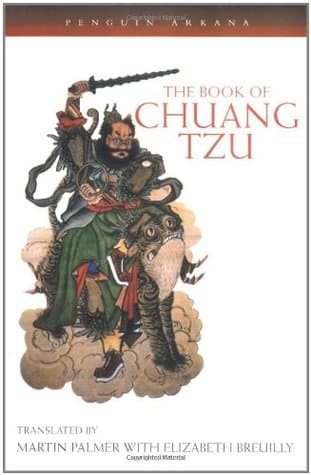
The Book of Chuang Tzu cover
Archivist's Choice

The Book of Chuang Tzu

Zhuangzi (1996)

Genre

Spirituality / Philosophy

Reading Time

320 min

Key Themes

See below

Track Your Reading

Sign in to track this book

Explore the world of an ancient Chinese sage who questions traditional ideas with paradoxes, stories, and humor, helping readers find a spontaneous and free existence.

Core Idea

Zhuangzi's philosophy is that human suffering comes from strictly following common ideas, social rules, and the differences we create. He suggests changing how we value things, encouraging readers to see the 'usefulness of uselessness,' understand that all views are relative, and develop spontaneity and 'wu wei' (action without effort). Through stories, anecdotes, and often funny conversations, Zhuangzi asks readers to let go of ego, find freedom in accepting life's natural flow, and discover joy and freedom by living in line with the Dao, even with life's changes and contradictions. His work asks us to drop old ideas and live authentically with the world.
Reading time
320 min
Difficulty
Medium
✓ Read this if...
You are interested in ancient Eastern philosophy, seeking a more fluid and less dogmatic approach to spirituality, or looking for a transformative perspective on living in harmony with the natural world and accepting life's paradoxes.
✗ Skip this if...
You prefer highly structured, systematic philosophical arguments, are looking for a practical self-help guide with concrete steps, or dislike allegorical and metaphorical writing.

Core idea

The central argument and framework that powers the entire book.

Zhuangzi's philosophy is that human suffering comes from strictly following common ideas, social rules, and the differences we create. He suggests changing how we value things, encouraging readers to see the 'usefulness of uselessness,' understand that all views are relative, and develop spontaneity and 'wu wei' (action without effort). Through stories, anecdotes, and often funny conversations, Zhuangzi asks readers to let go of ego, find freedom in accepting life's natural flow, and discover joy and freedom by living in line with the Dao, even with life's changes and contradictions. His work asks us to drop old ideas and live authentically with the world.

At a glance

Reading time

320 min

Difficulty

Medium

Read this if...

You are interested in ancient Eastern philosophy, seeking a more fluid and less dogmatic approach to spirituality, or looking for a transformative perspective on living in harmony with the natural world and accepting life's paradoxes.

Skip this if...

You prefer highly structured, systematic philosophical arguments, are looking for a practical self-help guide with concrete steps, or dislike allegorical and metaphorical writing.

Key Takeaways

1

The Utility of Uselessness

Embrace the seemingly impractical to find true freedom and value.

Quote

Everyone knows the utility of the useful, but no one knows the utility of the useless.

Zhuangzi questions common ideas of value, saying that what society considers 'useless' or 'unfit' often has a deep, unnoticed use. By not fitting into societal ideas of being productive or having a purpose, one can avoid the problems and risks that come with being used or limited. This 'uselessness' gives freedom from others' demands, allowing for an authentic life. It means recognizing that true worth is not always measured by immediate practical use or outside approval, but by the space it creates for an unburdened existence. This v...

Supporting evidence

The story of the gnarled oak tree that is spared the axe because its wood is too twisted and useless for timber. It lives a long, full life, providing shade and shelter, precisely because it is 'useless' to the loggers.

Apply this

Identify areas in your life where you feel pressured to be 'useful' or 'productive' in a way that doesn't align with your inner self. Explore hobbies or pursuits that have no immediate practical outcome but bring you joy and a sense of freedom. Reframe 'failure' or 'lack of ambition' as potential pathways to greater personal autonomy and peace.
wu-weifreedomnon-conformity
2

The Relativity of Perspectives

Understand that truth is not absolute but depends entirely on one's viewpoint.

Quote

How do I know that loving life is not a delusion? How do I know that hating death is not like a man who, having left home in his youth, has forgotten the way back?

Zhuangzi shows that our understanding of the world, our values, and even our most deeply held beliefs depend entirely on our individual viewpoint. What one person finds beautiful, another might find ugly; what is long to a short person is short to a tall person. This relativity is not meant to cause hopelessness but to encourage humility, open-mindedness, and wonder. By admitting that our judgments are not fixed, we can go beyond strict categories and accept life's changing nature. It encourages letting go of fixed ideas and being wil...

Supporting evidence

The famous parable of the 'Zhuangzi and the Butterfly Dream,' where Zhuangzi dreams he is a butterfly, and upon waking, is unsure if he is Zhuangzi who dreamt he was a butterfly, or a butterfly dreaming he is Zhuangzi. This blurs the lines between self and other, reality and illusion.

Apply this

When faced with a conflict or a strong opinion, consciously try to articulate the opposing viewpoint from the perspective of someone who genuinely holds it. Practice 'thought experiments' where you imagine yourself as a different creature or entity to understand its unique perception of the world. Challenge your own assumptions by considering how your current beliefs might appear absurd from an alien perspective.

relativismperspectiveepistemology
3

Embracing Spontaneity and Wu Wei

Act without conscious effort or premeditation, flowing with the natural order.

Quote

The perfect man uses his mind like a mirror – going after nothing, welcoming nothing, responding but not storing. Therefore he can triumph over things and not suffer injury.

Wu Wei, often called 'non-action' or 'effortless action,' is key to Zhuangzi's philosophy. It is not about doing nothing, but about acting in line with the natural flow of the Tao, without forcing or planning outcomes. This means developing an intuitive response, where one acts spontaneously and correctly based on circumstances, like water flowing around things. When one practices Wu Wei, actions become effective, balanced, and free from the worry of striving. It is a state of being fully present and involved, yet separate from the eg...

Supporting evidence

The story of Cook Ding, who effortlessly carves an ox for 19 years without dulling his knife, because he understands the natural structure of the ox and moves along its natural lines, rather than forcing his way through. His skill is not in technique, but in intuitive attunement.

Apply this

In tasks you find challenging, try to relax your conscious effort and allow your body and intuition to guide you, rather than overthinking each step. Practice mindfulness to become more attuned to the subtle cues in your environment. When faced with a decision, instead of agonizing, consider what feels most natural and unforced. Let go of the need to control every outcome and trust in the process.

wu-weispontaneityflow-statetao
4

The Harmony of Opposites

Recognize that seemingly contradictory concepts are interdependent and inseparable.

Quote

The Way makes no distinctions. Distinctions create either/or. An either/or implies opposition. What is a 'this' is also a 'that.' What is a 'that' is also a 'this.'

Zhuangzi constantly blurs the lines between common opposites like life and death, good and bad, beauty and ugliness, success and failure. He says these are not separate things but two sides of the same coin, defining each other and depending on each other. To understand one, you must understand its opposite; they appear together. This view encourages seeing existence as a whole, where apparent differences are part of a larger, more complex unity. By going beyond thinking in terms of opposites, one can find peace and acceptance, realiz...

Supporting evidence

The discussion of the 'Heavenly Music' and 'Earthly Music,' where all sounds, whether beautiful or harsh, are part of the same natural symphony. Or the idea that 'life is the companion of death, and death is the beginning of life.'

Apply this

When you encounter something you label 'bad' or 'undesirable,' challenge yourself to find its inherent 'good' or 'useful' aspect, or to understand how it contributes to a larger balance. Consider how your perceived 'weaknesses' might also be sources of strength in different contexts. Practice seeing the interconnectedness of seemingly disparate elements in your daily life.

dualityyin-yangholismparadox
5

Transcending the Self and Ego

Let go of the rigid sense of individual self to merge with the larger reality.

Quote

The true man of old did not know how to love life, did not know how to hate death. He went forth without delight and came back without resistance. He was just there, just gone.

Zhuangzi's philosophy encourages letting go of the ego and the made-up 'self' that often causes suffering through its desires, fears, and judgments. The 'perfect man' or 'true man' is someone who has removed the divisions between self and world, becoming one with the Tao. This is not about getting rid of oneself but about expanding one's identity beyond the individual personality. When the ego's hold lessens, one feels a deep sense of freedom, becoming like an empty container that can be filled and emptied without resistance. This sta...

Supporting evidence

The story of the man who lost his shadow and tried to run away from it, only to realize he was running from himself. Or the description of the 'true man' who is unaffected by external circumstances, whether praise or blame, life or death.

Apply this

Practice meditation or mindfulness to observe your thoughts and emotions without identifying with them. Engage in activities that help you lose yourself, like deep creative work or spending time in nature, where the sense of individual self fades. Consider how your actions might be driven by egoic desires (e.g., needing approval) versus a more selfless or natural impulse, and consciously choose the latter.

ego-deathnon-selfonenessenlightenment
6

The Wisdom of Ignorance

True understanding often comes from acknowledging what we don't know.

Quote

Life is finite, but knowledge is infinite. To use the finite to pursue the infinite is madness.

Zhuangzi questions the human search for knowledge and certainty. He suggests that our limited human mind can never fully grasp the endless and ever-changing nature of the Tao. Trying to categorize, define, and control everything through rational thought is a pointless and tiring effort. Instead, true wisdom is in recognizing the limits of our understanding and accepting a state of 'not-knowing.' This is not about being intellectually lazy but a call for humility and an openness to mystery. By letting go of the need to have all the ans...

Supporting evidence

The story of the frog in the shallow well, who cannot conceive of the vastness of the ocean. Its limited experience dictates its limited understanding. Or the anecdote of the 'Knowledge' character who is constantly seeking answers but never finds true peace.

Apply this

When confronted with complex issues, resist the urge to immediately jump to conclusions or seek definitive answers. Allow for ambiguity and paradox. Practice saying 'I don't know' more often, genuinely reflecting on the limits of your knowledge. Engage in activities that cultivate wonder and mystery, rather than demanding immediate logical explanations.

agnosticismhumilitymysteryintuition
7

Finding Joy in the Ordinary

Happiness isn't found in grand achievements, but in simple, unburdened existence.

Quote

To be happy is to do nothing, to be nothing, to be free.

Unlike many philosophies that link happiness to goodness, wisdom, or material gain, Zhuangzi suggests a simple approach. Joy, for him, is not something to be sought or earned, but a natural state that appears when one sheds the burdens of ambition, social expectations, and the constant pursuit of more. It is about finding satisfaction in the present moment, in the simple acts of living, breathing, and experiencing the world without attachment or judgment. This view frees one from the endless cycle of desire and disappointment, allowin...

Supporting evidence

The image of the fish happily swimming in the stream, unconcerned with human worries or ambitions. Or the story of the butcher who finds joy and mastery in his simple trade, focusing on the act itself rather than external rewards.

Apply this

Take time each day to consciously appreciate a simple sensory experience – the taste of food, the warmth of the sun, the sound of birds. Reduce your focus on future goals and instead immerse yourself in the present task, no matter how mundane. Practice 'doing nothing' intentionally, allowing yourself to simply 'be' without purpose or agenda.

mindfulnesssimplicitycontentmentpresent-moment
8

The Transformative Power of Death

View death not as an end, but as a natural, liberating transformation.

Quote

Life and death are but phases of the Great Change. The Great Change is the Great Transformation.

Zhuangzi offers a comforting and freeing view of death, seeing it not as a scary end but as a natural, unavoidable part of the world's cycle of change. He encourages us to accept death with the same calm as we accept life, recognizing that both are simply different forms of the same underlying Tao. Fear of death, he suggests, comes from our attachment to our limited individual form and our inability to see the larger process. By accepting death as a release from the burdens of the body and the ego, one can live more fully and without ...

Supporting evidence

Zhuangzi's own reaction to his wife's death: instead of mourning, he sat singing, explaining that her death was simply a natural transformation, like the changing of seasons. He compared it to a person returning to their true home.

Apply this

Reflect on the natural cycles of growth, decay, and renewal you observe in nature. Consider how your perspective on death might shift if you viewed it as a transition or a return to a larger whole, rather than an absolute end. Engage in practices that help you accept impermanence, such as acknowledging the transient nature of emotions or possessions.

impermanencetransformationacceptancecosmic-cycle
9

Skepticism Towards Human Institutions

Question conventional wisdom, morality, and societal structures that constrain freedom.

Quote

The Way is obscured by the small perfections of the Confucian and Mohist schools.

Zhuangzi is doubtful of human-made laws, moral rules, and government structures, seeing them as artificial creations that often interfere with the natural flow of the Tao and place unnecessary burdens on people. He questions strict adherence to social norms, the pursuit of fame and power, and the endless arguments over 'right' and 'wrong' as distractions from true living. For Zhuangzi, real freedom and balance come not from outside rules but from an inner alignment with the Tao. This view encourages a critical look at the institutions...

Supporting evidence

His frequent satirical jabs at the 'sages' and 'virtuous men' of his time, particularly Confucius, showing how their attempts to impose order often led to greater suffering or artificiality. The story of the horses being cruelly branded and clipped, ostensibly for their own good, but in reality, causing them distress.

Apply this

Identify a societal norm or expectation you feel pressured to follow. Question its origins and whether it truly serves your well-being or aligns with your values. Seek out alternative ways of living or thinking that challenge conventional wisdom. Be wary of dogma, whether political, religious, or social, and cultivate an independent, critical mind.

anti-authoritarianismindividualismskepticismcritique-of-culture
10

The Power of Story and Humor

Truth is often best conveyed through parables, paradoxes, and playful absurdity.

Quote

Those who delight in the Way do not delight in ordinary things. Those who delight in ordinary things do not delight in the Way.

Zhuangzi does not preach; he entertains, puzzles, and makes you think. His philosophy is found in many anecdotes, fables, conversations, and often funny jokes. He understood that directly explaining the indescribable Tao is pointless, as it goes beyond language and logic. Instead, he uses stories and humor to bypass the rational mind, creating an intuitive understanding. The paradoxes and seemingly nonsensical tales force the reader to let go of conventional thinking and open themselves to new perspectives. This approach makes his wor...

Supporting evidence

The entire structure of the book, filled with fantastical creatures, talking trees, and legendary figures, all used to illustrate philosophical points rather than state them directly. The 'useful useless tree' and 'Cook Ding' are prime examples.

Apply this

When trying to explain complex ideas, consider using analogies, metaphors, or even humor to make them more accessible and memorable. Don't be afraid to embrace paradox or acknowledge the limits of direct explanation. Cultivate a playful attitude towards learning and understanding, allowing for wonder and absurdity.

parableparadoxsatirenarrative-philosophy

Critical analysis

Notable Quotes

The perfect man has no self; the spiritual man has no merit; the sage has no fame.

Describing the ideal state of being and detachment from worldly concerns.

A good horse is praised for its ability to run, not for its beauty.

Illustrating the importance of substance and function over superficial appearance.

Life is a journey; death is a return home.

Reflecting on the natural cycle of life and death with acceptance.

The fish trap is for catching fish; once you've caught the fish, you can forget the trap. The rabbit snare is for catching rabbits; once you've caught the rabbit, you can forget the snare. Words are for catching ideas; once you've caught the idea, you can forget the words.

A parable about the instrumental nature of tools and language, and the importance of grasping the essence.

To be truly free, one must be able to wander without leaving a trace.

Suggesting a state of ultimate freedom that transcends physical movement and attachment.

When the mind is still, the universe surrenders.

Emphasizing the power of inner tranquility and its effect on perception and reality.

The butterfly dreaming it was a man, or the man dreaming he was a butterfly?

The famous Butterfly Dream, questioning the nature of reality and identity.

Joy, anger, sorrow, delight, worry, regret, fickleness, rigidity, lavishness, willfulness, impudence, lewdness: these are the strings of the bow and arrow shot by the heart.

Describing the various emotions that govern human experience and their origins.

When an archer shoots without thought of winning or losing, he has all his skill.

Illustrating how detachment from outcomes can lead to peak performance.

Do not seek to be famous. Do not seek to be rich. Do not seek to be strong. Do not seek to be wise. Do not seek to be beautiful. Seek only to be content.

Advising against external pursuits and emphasizing the importance of inner contentment.

The sage is like an empty boat. He floats with the current, not against it.

Symbolizing the sage's adaptability and non-resistance to the flow of life.

Heaven and Earth were born at the same time I was, and the ten thousand things are one with me.

Expressing the unity of all existence and the interconnectedness of the self with the universe.

Great knowledge is broad and leisurely; small knowledge is cramped and hurried.

Distinguishing between superficial, anxious knowledge and profound, expansive wisdom.

To forget the whole world is to be truly free.

Suggesting that ultimate liberation comes from letting go of all worldly attachments and concerns.

Quiz

Test Your Knowledge

Ready to see how well you understood this book? Take our interactive quiz with 10 questions.

10
Questions
~5
Minutes
?
Best Score

Key Questions (FAQ)

The Book of Chuang Tzu is a collection of ancient Chinese philosophical teachings, stories, and anecdotes attributed to the sage Zhuangzi. It explores themes of freedom, spontaneity, the nature of reality, and the futility of conventional human pursuits, often through paradox and humor.

About the author