BookBrief
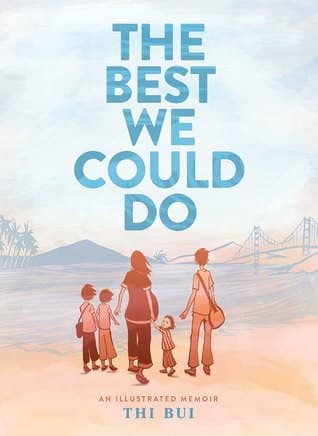
The Best We Could Do cover
Archivist's Choice

The Best We Could Do

Thi Bui (2017)

Genre

Biography / Memoir / History

Reading Time

180 min

Key Themes

See below

Track Your Reading

Sign in to track this book

Thi Bui's illustrated memoir explores the impact of war and displacement on her family, from their escape from Vietnam to her own journey into motherhood.

Core Idea

Thi Bui's "The Best We Could Do" is a graphic memoir about how the Vietnam War and the refugee experience affected her family. It shows the trauma and cultural change her parents faced when they left Vietnam, and how these events shaped Bui's life and identity in America. The book argues that understanding one's family history, especially the silent struggles of immigrant parents, helps connect individual identity with inherited cultural legacies, revealing the deep love and sacrifice that allowed them to survive.
Reading time
180 min
Difficulty
Medium
✓ Read this if...
You are interested in understanding the deeply personal and intergenerational impact of war, migration, and the refugee experience, particularly from a Vietnamese-American perspective, and appreciate visual storytelling as a powerful medium for complex narratives.
✗ Skip this if...
You prefer traditional prose memoirs without graphic novel elements or are looking for a light, uncomplicated read without exploring themes of trauma, displacement, and cultural identity.

Core idea

The central argument and framework that powers the entire book.

Thi Bui's "The Best We Could Do" is a graphic memoir about how the Vietnam War and the refugee experience affected her family. It shows the trauma and cultural change her parents faced when they left Vietnam, and how these events shaped Bui's life and identity in America. The book argues that understanding one's family history, especially the silent struggles of immigrant parents, helps connect individual identity with inherited cultural legacies, revealing the deep love and sacrifice that allowed them to survive.

At a glance

Reading time

180 min

Difficulty

Medium

Read this if...

You are interested in understanding the deeply personal and intergenerational impact of war, migration, and the refugee experience, particularly from a Vietnamese-American perspective, and appreciate visual storytelling as a powerful medium for complex narratives.

Skip this if...

You prefer traditional prose memoirs without graphic novel elements or are looking for a light, uncomplicated read without exploring themes of trauma, displacement, and cultural identity.

Key Takeaways

1

The Intergenerational Echo of Trauma

Unprocessed history reverberates through family lines, shaping identity and relationships.

Quote

All children inherit something from their parents. I got all their stories.

Bui shows how her parents' untreated war and displacement traumas deeply influenced her upbringing and identity. Their quiet strength, born from great suffering and the need to survive, created emotional distance in the family. This silence about their past, perhaps meant to protect their children, unintentionally left Bui to understand her heritage and her parents' complex behaviors on her own. The memoir highlights how the 'ghosts' of war—loss, fear, constant movement—do not simply disappear but appear as anxieties, communication st...

Supporting evidence

Bui's parents' reluctance to discuss their past, often deflecting questions or offering terse responses, forces her to reconstruct their history through fragmented memories, old photographs, and her own investigative efforts.

Apply this

Reflect on your family's history, particularly any significant events or migrations. How might those experiences, even if unspoken, have shaped your parents' or grandparents' behaviors and, by extension, your own upbringing and emotional landscape? Seek to understand the 'why' behind family patterns, not just the 'what.'

intergenerational-traumapost-memoryinherited-identity
2

Migration's Invisible Scars

The journey of displacement leaves lasting psychological and cultural imprints far beyond the physical move.

Quote

To be a refugee is to live with a past that is always present.

Bui's family story shows that migration is not one event but a continuous process of adjusting and losing. Escaping Vietnam was only the start; the real challenge was adapting to a new culture, language, and social expectations while carrying their past. Her parents' difficulty forming strong connections in America, their constant saving, and their quiet strength are all direct results of their refugee experience. The memoir shows how migrants often live between two worlds, always missing a home that no longer exists and struggling to...

Supporting evidence

The detailed accounts of her family's initial struggles in refugee camps and their subsequent attempts to assimilate into American society, including her father's difficulty finding work commensurate with his education and her mother's constant worry about providing for the family.

Apply this

Cultivate empathy for immigrant and refugee communities by recognizing that their journey extends far beyond arrival. Offer support that acknowledges the psychological and cultural challenges of integration, not just material needs. Seek out and listen to their stories.

refugee-experiencecultural-assimilationdiaspora-identity
3

The Unspoken Language of Parental Love

Love manifests in sacrifice and duty, often without explicit verbal expression, especially in cultures shaped by hardship.

Quote

My parents, like so many others, showed their love through their presence, their work, their struggle.

Bui's memoir explores how her Vietnamese parents, shaped by war and survival, showed love not with many words or open affection, but through hard work, providing, and sacrifice. Their love was a stable, steady presence, a commitment to their children's future even at great personal cost. This type of love, while deeply felt, often left Bui wanting verbal reassurance and emotional closeness. It highlights a cultural difference in showing care, where actions matter more than words, and providing for family is the ultimate proof of devot...

Supporting evidence

Her mother's tireless work ethic, saving every penny, and her father's quiet determination to provide despite setbacks, are consistently portrayed as their primary ways of demonstrating love and ensuring their children's well-being.

Apply this

Observe the actions and sacrifices of your own parents or elders. Consider how their cultural background or life experiences might have shaped their way of expressing love. Try to 'translate' their actions into expressions of care, even if they don't align with your preferred love language.

love-languagescultural-communicationfilial-piety
4

Reconciling Parent and Child Identities

Becoming a parent illuminates one's own childhood, fostering empathy and a deeper understanding of one's parents.

Quote

It took having my own child to truly see my parents as people, not just as my parents.

A main theme in the book is Bui's change when she becomes a mother. This new role makes her face the deep responsibilities, fears, and sacrifices of parenthood. Suddenly, her parents' seemingly distant or strict behaviors make more sense, and she feels more empathy for them. She starts to understand their worries about providing, protecting, and guiding their children through a dangerous world. This change in view helps her move past childhood resentments and see her parents as complex people with their own histories, struggles, and s...

Supporting evidence

Bui explicitly draws parallels between her own anxieties as a new mother and her mother's struggles to raise children in war-torn Vietnam and as a refugee in a new land. She recounts moments of frustration with her own child that echo her parents' past decisions.

Apply this

If you are a parent, reflect on how your experiences have changed your perception of your own parents. If you are not, consider how taking on significant responsibilities or caring for others might broaden your perspective on the challenges your parents faced.

parental-empathygenerational-understandingidentity-formation
5

History's Personal Footprint

Grand narratives of war and political upheaval are ultimately composed of countless individual human stories.

Quote

The stories of our families are the stories of history, etched in our bones.

Bui skillfully connects the large historical events of the Vietnam War and its aftermath with her family's personal struggles. She goes beyond news headlines to show the human cost of conflict and displacement. By focusing on her parents' individual experiences—their education, loves, losses, and desperate escape—she humanizes a historical period often reduced to numbers and political talk. The memoir argues that to truly understand history, one must look at these personal stories, recognizing that every statistic is a life, and every...

Supporting evidence

The detailed accounts of her grandfather's role in the anti-French resistance, her parents' experiences during the American War in Vietnam, and the harrowing journey on overcrowded boats, all contextualized within specific dates and political shifts.

Apply this

When learning about historical events, seek out personal accounts, memoirs, or oral histories from those who lived through them. Understand that history is not abstract but profoundly affects individuals and families.

oral-historyhumanizing-historymemoir-as-history
6

The Burden and Beauty of Memory

Memory is a reconstructive, often painful, but essential act for understanding self and legacy.

Quote

Memory is a way of holding onto the things you love, the things you are, the things you never want to lose.

Bui's entire project is an act of memory—not just remembering, but actively building and interpreting her family's past. She deals with the unreliability of memory, the gaps in her parents' recollections, and the need to fill those gaps with her own research and imagination. The process is often painful, uncovering traumas and hard truths, but it is also a beautiful example of love and strength. By putting together these fragmented memories, Bui not only understands her family better but also solidifies her own identity and legacy for...

Supporting evidence

Bui's artistic process of drawing her family's stories, often depicting multiple perspectives or imagined scenes when direct memory is absent, is a visual representation of this reconstructive act. She explicitly states her difficulty in getting full stories from her parents.

Apply this

Engage in acts of personal or family memory-keeping: interview elders, create scrapbooks, write down family stories. Acknowledge that memories can be subjective and incomplete, but their value lies in the shared narrative and connection they foster.

collective-memoryautobiographical-memorynarrative-therapy
7

The Power of Visual Storytelling

Graphic memoir uniquely conveys emotional depth and historical complexity, bridging gaps words alone cannot.

Quote

There are some stories that are better told with images, where words would falter.

As a graphic memoir, 'The Best We Could Do' uses the unique power of sequential art to tell a story that is both personal and historically broad. Bui's art style—expressive, fluid, and often using a limited color palette—shows emotions and details that might be lost in prose. The visual contrast of past and present, the depiction of unspoken emotions through faces and body language, and the ability to show complex historical events in an understandable way make the medium very effective. The interaction between text and image lets rea...

Supporting evidence

Specific panels where facial expressions carry the weight of emotion (e.g., her mother's stoicism, her father's quiet contemplation), or where historical context is visually embedded within personal scenes (e.g., refugee boats, war-torn landscapes).

Apply this

Explore graphic novels and memoirs as a powerful medium for storytelling. Consider how visual elements can enhance your own communication, whether in presentations, personal projects, or creative endeavors.

graphic-narrativevisual-literacymemoir-as-art
8

Finding Home in the 'In-Between'

For many, 'home' is not a fixed place but a constantly negotiated space between cultures and generations.

Quote

Home is not a place, it's a feeling, a memory, a constant search.

Bui's family, like many immigrant families, does not have one simple definition of 'home.' For her parents, Vietnam is a deeply felt, lost home, while America is where their children's future is, but not truly 'theirs.' For Bui herself, home is a complex mix of her Vietnamese heritage, her American upbringing, and the family she creates. The memoir suggests that for those shaped by migration, home is often an 'in-between' space—a negotiation of cultures, languages, and memories. It is about building a sense of belonging not in a fixed...

Supporting evidence

The constant struggle of her parents to reconcile their Vietnamese identity with their lives in America, and Bui's own journey to understand her roots while being distinctly American-born. The return visits to Vietnam that feel both familiar and foreign.

Apply this

Challenge monolithic definitions of 'home' and 'belonging.' Recognize that for many, identity is fluid and multifaceted, shaped by multiple cultural influences. Support initiatives that create inclusive spaces for diverse communities.

cultural-hybriditysense-of-belongingtransnational-identity
9

The Weight of Survival Guilt

Surviving immense hardship can carry a hidden emotional cost, shaping outlook and behavior.

Quote

Every day we lived was a day others didn't. That stays with you.

Though not directly stated, the feeling of survivor's guilt subtly runs through the story, especially in Bui's parents' actions and attitudes. Having escaped war and poverty, they carry the burden of those who did not, and the great sacrifices made for their children's future. This guilt often appears as deep-seated saving, a dislike of waste, a strong work ethic, and a quiet sense of responsibility. It can also add to their emotional distance, as they may feel unworthy of joy or weighed down by the past. Bui observes how this unspoke...

Supporting evidence

Her mother's constant worry about money and food, despite relative stability, and her father's quiet, almost somber demeanor, even in moments of success, suggest a persistent sense of scarcity and the lingering trauma of past losses.

Apply this

Be aware that individuals who have experienced extreme hardship may carry unseen emotional burdens. Practice patience and understanding, recognizing that their coping mechanisms and perspectives may be shaped by deep-seated experiences like survival guilt.

survivor-guiltpost-traumatic-stressresilience-cost
10

The Imperative of Documentation

To understand ourselves and our collective past, we must actively seek out and preserve personal histories.

Quote

If I don't tell their story, who will?

Thi Bui's entire effort shows how important it is to document personal histories, especially those of marginalized or overlooked communities. She undertakes this project not just for herself, but for her son and for future generations, making sure her family's sacrifices, struggles, and successes are not forgotten. The memoir highlights that official histories often miss the human element, and it is through individual stories that we gain a richer, more empathetic understanding of the past. Her work is a call to action: to interview e...

Supporting evidence

Bui's meticulous research, interviews with family members, and the sheer dedication to crafting this detailed graphic memoir over many years demonstrate her commitment to preserving her family's story.

Apply this

Start documenting your own family history. Ask elders about their lives, record their stories, and preserve old photographs or letters. Understand that these personal archives are invaluable contributions to understanding broader historical and cultural narratives.

family-historyarchival-practicecultural-preservation

Critical analysis

Notable Quotes

I was born in a country that no longer exists, in a time that was erased, in a family that was displaced.

Opening lines of the book, setting the stage for Thi Bui's family history and the impact of the Vietnam War.

How do you carry a country in your heart when that country has ceased to be?

Thi Bui reflecting on her parents' experience of losing their homeland and the struggle to maintain a connection.

My parents' story is not a unique one. It is a common story, one of many millions.

Bui emphasizing the universality of her family's refugee experience, despite its personal details.

The past is never dead. It's not even past.

A direct quote from William Faulkner, used by Bui to underscore the enduring impact of historical events on present lives.

I wanted to understand my parents, to understand myself, to understand the history that shaped us all.

Bui articulating her motivation for embarking on the journey of documenting her family's story.

The stories we tell each other are how we survive.

Highlighting the importance of oral history and shared narratives in processing trauma and maintaining cultural ties.

What do you do when your children ask you about a war you've tried to forget?

Bui pondering the challenge of explaining the Vietnam War to her own children, and her parents' reluctance to share their experiences.

My parents didn't flee a war; they fled the aftermath of a war.

A nuanced distinction made by Bui, emphasizing the ongoing instability and hardship that prompted her parents to leave Vietnam.

We carried our memories like invisible baggage.

Describing the unseen burdens and psychological weight of past experiences carried by refugees and immigrants.

The best we could do. That's what my parents always said.

The origin of the book's title, reflecting her parents' resilience and the limitations of their choices amidst hardship.

Sometimes, the only way to move forward is to look back.

Bui's realization that confronting her family's past is essential for her own healing and understanding.

They were just people trying to make a life, and the world kept getting in the way.

A poignant summary of her parents' struggles, highlighting the external forces that shaped their destiny.

The act of telling is an act of love.

Bui's conclusion about the value of sharing her family's story, not just as history, but as a testament to connection and care.

I drew my parents' lives to understand my own.

Bui explaining her artistic process and its personal significance in her journey of self-discovery.

Each generation tries to make sense of what came before, and tries to do better.

Reflecting on the intergenerational effort to heal and improve, building upon the experiences of ancestors.

Quiz

Test Your Knowledge

Ready to see how well you understood this book? Take our interactive quiz with 10 questions.

10
Questions
~5
Minutes
?
Best Score

Key Questions (FAQ)

'The Best We Could Do' is an illustrated memoir by Thi Bui that chronicles her family's escape from South Vietnam in the 1970s and their subsequent struggles to build new lives. It explores themes of immigration, displacement, the lasting effects of war, and the complexities of parenthood.

About the author