BookBrief
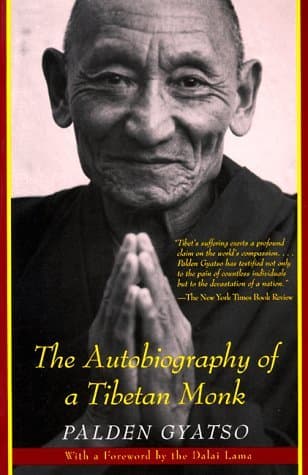
The Autobiography of a Tibetan Monk cover
Archivist's Choice

The Autobiography of a Tibetan Monk

Palden Gyatso (1997)

Genre

Biography / Memoir / History / Spirituality

Reading Time

320 min

Key Themes

See below

Track Your Reading

Sign in to track this book

Palden Gyatso's memoir is a harrowing account of a Tibetan monk's 33 years of Chinese imprisonment and torture, showing his steadfast Buddhist faith despite his culture's destruction.

Core Idea

Palden Gyatso's autobiography details his 33 years of imprisonment and torture under Chinese occupation in Tibet. The book reveals the systematic cultural destruction aimed at erasing Tibetan identity and Buddhism, but also the strength of individuals and communities in resisting this oppression. It argues that even in extreme dehumanization, the human capacity for memory, witness, and a form of forgiveness can endure, turning personal suffering into a global call for human rights.
Reading time
320 min
Difficulty
Medium
✓ Read this if...
You want a first-hand account of the human cost of political and cultural oppression, are interested in the resilience of the human spirit, or seek to understand the Tibetan struggle through a deeply personal lens.
✗ Skip this if...
You are sensitive to detailed descriptions of torture and extreme suffering, or prefer books with a less somber and more optimistic tone.

Core idea

The central argument and framework that powers the entire book.

Palden Gyatso's autobiography details his 33 years of imprisonment and torture under Chinese occupation in Tibet. The book reveals the systematic cultural destruction aimed at erasing Tibetan identity and Buddhism, but also the strength of individuals and communities in resisting this oppression. It argues that even in extreme dehumanization, the human capacity for memory, witness, and a form of forgiveness can endure, turning personal suffering into a global call for human rights.

At a glance

Reading time

320 min

Difficulty

Medium

Read this if...

You want a first-hand account of the human cost of political and cultural oppression, are interested in the resilience of the human spirit, or seek to understand the Tibetan struggle through a deeply personal lens.

Skip this if...

You are sensitive to detailed descriptions of torture and extreme suffering, or prefer books with a less somber and more optimistic tone.

Key Takeaways

1

The Unbreakable Spirit of Faith

Spiritual conviction as a shield against unimaginable brutality.

Quote

My mind had developed an inner strength and resilience that no amount of physical suffering could break.

Palden Gyatso's autobiography shows how strong spiritual belief can help someone endure extreme physical and psychological torment. Despite decades of imprisonment, starvation, forced labor, and repeated torture by Chinese authorities, Gyatso's Buddhist faith remained a steady anchor. His commitment to the Dharma, the teachings of Buddha, helped him understand suffering, feel compassion even for his captors, and maintain an inner sense of freedom beyond his physical confinement. This resilience was not passive acceptance but an active...

Supporting evidence

Gyatso recounts being subjected to 'struggle sessions,' public humiliations, electric shocks, beatings, and being forced to denounce the Dalai Lama and his Buddhist beliefs. Yet, he consistently refused to recant, often finding solace and strength in silent meditation and recalling Buddhist teachings.

Apply this

Cultivate a strong internal moral or spiritual compass that can serve as a bedrock during times of extreme adversity. Practice mindfulness and reflection to build mental resilience, understanding that external circumstances do not dictate inner peace or conviction.


spiritual-resiliencetibetan-buddhisminner-freedom
2

Cultural Genocide: Beyond Physical Destruction

The systematic eradication of a people's heritage and identity.

Quote

They were not just destroying monasteries; they were attempting to destroy the very soul of Tibet.

Gyatso's memoir is a chilling account of cultural destruction, a process more insidious than just physical harm. The Chinese occupation was not only about political control; it aimed to dismantle the entire structure of Tibetan society, which was closely tied to its Buddhist faith. This included destroying monasteries and sacred texts, forcing monks and laypeople into re-education, suppressing language and traditional practices, and rewriting history. Gyatso vividly portrays the psychological cost of seeing one's entire cultural herit...

Supporting evidence

Gyatso describes witnessing the destruction of thousands of monasteries, the burning of ancient scriptures, and the forced participation in 'struggle sessions' where Tibetans were coerced into denouncing their religious leaders and traditions. He also details the systematic attempts to indoctrinate prisoners with communist ideology.

Apply this

Actively support and preserve cultural heritage, especially for marginalized communities. Educate oneself and others about the historical and ongoing impacts of cultural suppression, advocating for the protection of diverse cultural identities worldwide.

cultural-genocidetibetan-historyidentity-preservation
3

The Power of Memory and Witness

Bearing witness to atrocities as an act of resistance and a call for justice.

Quote

I knew I had to survive, not just for myself, but to tell the world what happened to Tibet.

Palden Gyatso's life and his decision to write this autobiography show the power of memory as resistance. His detailed recall of torture, imprisonment, and cultural destruction is an invaluable historical record. It challenges official narratives and ensures that the suffering of the Tibetan people is not forgotten. By documenting the atrocities, Gyatso changes from a victim into a witness, giving voice to countless others who died or were silenced. His determination to share his story, even after escaping Tibet, emphasizes the moral ...

Supporting evidence

After his release and eventual escape from Tibet, Gyatso traveled the world, testifying before human rights organizations, displaying his torture instruments, and sharing his story to raise awareness about the plight of Tibet. This book is a direct fulfillment of that commitment.

Apply this

Actively listen to and amplify the voices of those who have experienced injustice. Document and preserve personal and collective histories, especially from marginalized communities, to ensure that truth is not suppressed and lessons are learned.

historical-memoryhuman-rightstruth-telling
4

The Resilience of Community (Even in Chains)

The subtle ways human connection endures under extreme oppression.

Quote

Even in the darkest moments, a shared glance, a whispered word, could rekindle hope.

While often isolated and brutalized, Gyatso's account subtly reveals the persistent human need for community and how it appeared even in prison. Brief moments of unity among prisoners—a shared look, smuggled food, collective defiance against demands to denounce their faith—provided important psychological support. These interactions, though often dangerous and brief, showed that the human spirit's need for connection and mutual support is incredibly hard to extinguish. These small acts of defiance and compassion prevented total dehuma...

Supporting evidence

Gyatso describes instances where fellow prisoners would share meager food rations, offer silent encouragement during interrogations, or collectively resist forced labor in small, symbolic ways. He also mentions the solidarity among monks who refused to denounce the Dalai Lama, strengthening each other's resolve.

Apply this

Actively seek and foster supportive communities, recognizing their vital role in mental and emotional well-being. In challenging environments, look for small ways to connect and show solidarity with others, understanding that even minor gestures can make a significant difference.

human-connectionsocial-supportcollective-resistance
5

The Dehumanizing Cycle of Torture

How systematic abuse aims to break the spirit, not just the body.

Quote

The purpose was not just to inflict pain, but to break your will, to make you betray everything you held sacred.

Gyatso's descriptions of torture reveal its insidious goal: to strip individuals of their dignity, identity, and moral compass, forcing them to betray their deepest beliefs and loved ones. The physical pain, while horrific, was often a means to a psychological end—to create fear, confusion, and despair. Chinese captors used methods from public humiliation and sleep deprivation to electric shocks and starvation. All these methods aimed to dismantle the prisoner's sense of self and community. This deliberate, calculated cruelty aimed to...

Supporting evidence

Gyatso recounts being subjected to 'struggle sessions' where he was forced to denounce his faith, receiving electric shocks from cattle prods, being beaten with rifle butts, enduring prolonged solitary confinement, and severe starvation. He also describes the psychological torment of false confessions and forced denunciations of religious figures.

Apply this

Educate oneself about the psychological impacts of torture and oppression to better understand its insidious nature. Advocate for human rights and the abolition of torture globally, recognizing its profound and lasting damage to individuals and societies.

psychological-torturehuman-dignityauthoritarianism
6

The Enduring Power of Forgiveness (and its limits)

Navigating the complex path of compassion amidst profound suffering.

Quote

Buddhism teaches compassion for all beings, even those who inflict suffering. But forgiveness does not mean forgetting justice.

A core Buddhist idea is compassion, even for enemies. Palden Gyatso struggled with this ethical challenge throughout his imprisonment. While he tried to cultivate compassion and avoid hatred, his story also acknowledges the limits of this approach when facing systematic, unrepentant cruelty. His eventual decision to become a global advocate for Tibet, displaying his torture instruments, shows a commitment not just to personal spiritual growth but to justice and accountability. This nuanced view suggests that while personal forgiveness...

Supporting evidence

Gyatso often describes meditating on compassion during his torture, trying to understand his captors' motivations. However, upon his release, he did not retreat into quiet spiritual life but actively engaged in public advocacy, showing his torture scars and instruments to the world, clearly seeking justice and awareness, not just internal peace.

Apply this

Reflect on the distinction between personal forgiveness and the pursuit of justice. While striving for compassion, recognize that accountability for wrongdoings is crucial for both individual healing and societal progress. Advocate for systems that offer both rehabilitation and justice.

forgivenessjusticebuddhist-ethics
7

The Fragility of Freedom

Freedom as a precious, easily lost, and hard-won commodity.

Quote

To be truly free is to have your mind unbound, even when your body is in chains.

Gyatso's life story is a stark reminder of how fragile freedom is, both personal and national. Born into a free Tibet, he saw its rapid subjugation and the loss of all civil and human liberties under Chinese occupation. His 33 years of imprisonment show how quickly political freedom can disappear and how easily individual liberties can be taken away. Yet, his story also champions 'inner freedom'—the ability to maintain one's beliefs, dignity, and mental autonomy even when physically enslaved. This dual perspective shows that while ext...

Supporting evidence

Gyatso's entire experience, from the invasion of Tibet to his decades in prison, is a testament to the loss of external freedom. His refusal to recant his beliefs, despite torture, exemplifies his maintenance of inner freedom.

Apply this

Actively participate in democratic processes and advocate for the protection of human rights and civil liberties. Cultivate practices that foster mental resilience and inner autonomy, recognizing that true freedom is multifaceted.

political-freedomcivil-libertiesinner-autonomy
8

Education as a Weapon and a Shield

How knowledge can be both a tool of oppression and a source of strength.

Quote

They tried to re-educate us, to wash our minds clean of the Dharma, but the Dharma was too deeply ingrained.

The Chinese regime used 're-education' as a main tool for cultural destruction, trying to erase Tibetan identity and instill communist ideology. Prisoners were forced into political study sessions, denouncing their past and adopting new doctrines. This shows how education, when manipulated, can become a weapon of oppression. However, Gyatso's story also shows that his earlier monastic education in Buddhist philosophy acted as a powerful shield. His deep understanding of the Dharma gave him intellectual and spiritual tools to resist in...

Supporting evidence

Gyatso describes forced 'thought reform' sessions, where prisoners were made to study communist texts and criticize their former beliefs. Simultaneously, he often retreats into his knowledge of Buddhist scriptures and philosophical concepts to endure torture and maintain his sanity.

Apply this

Seek out diverse sources of knowledge and develop critical thinking skills to discern truth from propaganda. Invest in education that fosters independent thought and moral reasoning, recognizing its power to both enlighten and protect.

indoctrinationcritical-thinkingspiritual-education
9

The Global Imperative of Human Rights

A personal story that transcends borders, demanding universal accountability.

Quote

My story is not just about Tibet; it is about the fundamental rights of all human beings.

While deeply personal and rooted in the Tibetan experience, Gyatso's autobiography extends beyond its specific context, showing the universal nature of human rights. His suffering, inflicted for merely holding beliefs and an identity, is a stark reminder that abuses against any group threaten the dignity of all humanity. His journey from an obscure Tibetan village to becoming a global advocate highlights the moral need for international vigilance and intervention when fundamental rights are violated. The book is a powerful call to act...

Supporting evidence

After escaping Tibet, Gyatso became an international voice for human rights, testifying before the United Nations, the U.S. Congress, and various human rights organizations, always emphasizing that his story was about universal human dignity.

Apply this

Engage with and support international human rights organizations. Stay informed about global human rights issues and advocate for policies that prioritize human dignity and accountability, recognizing that silence can embolden perpetrators.

human-rightsglobal-justiceuniversal-dignity

Critical analysis

Notable Quotes

The Chinese said, 'If you want to live, you must denounce the Dalai Lama.' I said, 'I would rather die.'

Palden Gyatso's refusal to denounce the Lama even under torture.

In prison, I learned that the human spirit can endure almost anything, but it can never be broken if it holds onto hope.

Reflecting on his long years of imprisonment and torture.

They took away my freedom, my family, my country, but they could never take away my mind or my religion.

Contemplating what was taken from him by the Chinese occupation.

Even in the darkest moments, I found solace in my prayers and the teachings of the Buddha.

Describing how he maintained his spiritual practice in prison.

The greatest weapon against injustice is not violence, but truth and unwavering compassion.

His philosophy on how to combat oppression.

I saw many die, but their courage and their faith became a torch for those of us who survived.

Witnessing the deaths of fellow prisoners.

Freedom is not just the absence of chains; it is the ability to choose your own path, even in suffering.

His understanding of true freedom after years of captivity.

My body was bruised and broken, but my mind remained free to wander the vast landscapes of Tibet, to meditate on the teachings.

Describing his mental escape during physical torture.

The Chinese wanted to erase our culture, our language, our very identity, but they only made us cling to it more fiercely.

Reflecting on the impact of cultural repression.

When I finally tasted freedom, it was not as sweet as I imagined, for the scars of my past remained, and my country was still in chains.

His mixed feelings upon his release from prison.

To forgive is not to forget, but to release the anger and hatred that bind you to your tormentors.

His approach to forgiveness after his experiences.

I carried the voices of the dead and the suffering of the living out of Tibet, so the world would know.

His motivation for speaking out after escaping Tibet.

A single human life, lived with integrity, can be a powerful testament against overwhelming evil.

A broader reflection on the impact of individual action.

The silence of the world was sometimes more painful than the screams of the torture chamber.

His frustration with international inaction regarding Tibet.

Quiz

Test Your Knowledge

Ready to see how well you understood this book? Take our interactive quiz with 10 questions.

10
Questions
~5
Minutes
?
Best Score

Key Questions (FAQ)

'The Autobiography of a Tibetan Monk' is the memoir of Palden Gyatso, an ordained Buddhist monk who endured 33 years of imprisonment, torture, and forced labor under Chinese occupation in Tibet. It chronicles his personal struggles, the destruction of Tibetan culture, and his unwavering faith.

About the author