BookBrief
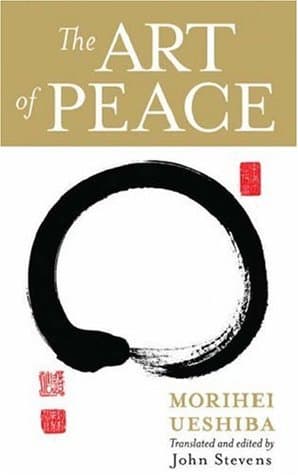
The Art of Peace cover
Archivist's Choice

The Art of Peace

Morihei Ueshiba (1992)

Genre

Spirituality / Philosophy

Reading Time

90 min

Key Themes

See below

Track Your Reading

Sign in to track this book

Explore the wisdom of Aikido's founder, Morihei Ueshiba, as he presents the 'Art of Peace' – a path to nonviolent victory and balanced living through compassion, understanding, and courage.

Core Idea

The Art of Peace is a spiritual guide for developing inner balance and extending that peace to all interactions, turning conflict into cooperation. Morihei Ueshiba, the founder of Aikido, states that true victory is self-mastery achieved through physical and spiritual training, uniting mind, body, and spirit with the universe. By embracing universal love, non-resistance, and the creative power of Ki, practitioners can protect all creation and create a world of peace, not through dominance, but through a connection to the divine spirit in all life.
Reading time
90 min
Difficulty
Medium
✓ Read this if...
You are seeking a profound spiritual philosophy centered on peace, non-violence, and self-mastery, especially if you are interested in martial arts principles beyond combat.
✗ Skip this if...
You are looking for a practical, step-by-step guide to conflict resolution or a secular approach to personal development.

Core idea

The central argument and framework that powers the entire book.

The Art of Peace is a spiritual guide for developing inner balance and extending that peace to all interactions, turning conflict into cooperation. Morihei Ueshiba, the founder of Aikido, states that true victory is self-mastery achieved through physical and spiritual training, uniting mind, body, and spirit with the universe. By embracing universal love, non-resistance, and the creative power of Ki, practitioners can protect all creation and create a world of peace, not through dominance, but through a connection to the divine spirit in all life.

At a glance

Reading time

90 min

Difficulty

Medium

Read this if...

You are seeking a profound spiritual philosophy centered on peace, non-violence, and self-mastery, especially if you are interested in martial arts principles beyond combat.

Skip this if...

You are looking for a practical, step-by-step guide to conflict resolution or a secular approach to personal development.

Key Takeaways

1

True Victory is Self-Mastery

Conquering yourself is the ultimate triumph, leading to invincibility without conflict.

Quote

True victory (masakatsu) is victory over oneself (agatsu).

Ueshiba says that real victory is not about beating an external opponent, but about overcoming one's own ego, fears, and negative impulses. When you master yourself, you gain inner calm and clarity, making external aggression unimportant. This internal victory lets you respond to challenges with wisdom and compassion, instead of reactive violence. The goal is not to win by force, but to end conflict by changing your own internal state, which disarms the aggression of others. This self-mastery is the basis for a life lived in balance, ...

Supporting evidence

The core principle of Aikido's movements, which redirect an attacker's energy rather than meeting it with force, directly embodies this idea. The practitioner's calm center allows them to flow with the attack, demonstrating a victory over their own instinct to fight fire with fire.

Apply this

Before reacting to an external conflict, pause and identify your own internal triggers (anger, fear, pride). Practice deep breathing and mindfulness to recenter yourself. Address your own emotional response first, then approach the external situation from a place of calm, seeking mutual understanding rather than domination.


self-masterynon-resistanceinner-peace
2

The Art of Peace is Universal Love

Love is the ultimate protector and the true essence of the warrior's path.

Quote

The Art of Peace begins with you. Work on yourself and your appointed task of the Art of Peace. Everyone has a spirit that can be refined, a body that can be trained in some manner, a suitable path to follow. You are here for no other reason than to realize your inner divinity and express your innate enlightenment.

Ueshiba sees love as a basic cosmic principle and the strongest force in the universe. He teaches that the true warrior embodies universal love (ai), showing compassion to all beings, even perceived enemies. This is not a passive love, but an active, protective force that aims to harmonize rather than destroy. By aligning with this universal love, one becomes an instrument of peace, able to resolve conflict without violence and encourage growth and understanding. This view changes the 'warrior' into a guardian of life, not a bringer o...

Supporting evidence

Ueshiba's personal transformation from a fierce martial artist to a spiritual leader who taught Aikido as a path to universal harmony, even in the context of Japan's militaristic era, exemplifies this. His teachings consistently emphasize the sacredness of all life.

Apply this

In daily interactions, consciously practice empathy and seek common ground, even with those you disagree with. When faced with conflict, ask yourself how 'love' (meaning compassion, understanding, and a desire for harmony) might guide your response. Actively seek to protect and uplift others, rather than diminish them.

universal-lovecompassionharmony
3

Mind-Body-Spirit Unity

True power arises from the seamless integration of your physical, mental, and spiritual being.

Quote

Your heart is full of fertile seeds, waiting to sprout. Just as a lotus flower blooms from mud, so too can you grow and blossom from any difficult situation.

Ueshiba stresses that people are not fragmented but whole. True strength comes from aligning the mind, body, and spirit into a single, unified unit. When these elements work together, one can move with effortless power, clear thought, and spiritual insight. This unity allows for intuitive action, where the body responds without conscious thought, guided by a refined spirit and a focused mind. Disconnection between these aspects leads to weakness, hesitation, and internal conflict. Developing this unity is central to both martial arts ...

Supporting evidence

Aikido training heavily emphasizes centering (hara), proper breathing, and a calm, focused gaze, all of which are physical manifestations of mental and spiritual alignment. Practitioners learn to move from their core, integrating their whole being into each technique.

Apply this

Practice mindfulness exercises that connect your breath, body sensations, and thoughts. Engage in physical activities (like yoga, tai chi, or Aikido) that emphasize fluid movement and internal focus. Regularly reflect on your actions, ensuring they align with your deeper values and intentions, fostering a sense of inner congruence.

holismcenteringintegration
4

Become One With the Universe

Aligning with natural laws grants access to boundless energy and intuitive wisdom.

Quote

To practice properly, you must be in harmony with the universe. You must be centered in your practice. You must be an extension of the Creator, and you must be in tune with the flow of the universe.

Ueshiba teaches that our individual existence is a small part of a vast, interconnected universe. By letting go of ego and developing a sense of oneness with creation, we access an endless source of power and wisdom. This 'oneness' is not just a philosophical idea but a practical state that allows the practitioner to move with the flow of energy, anticipate actions, and respond intuitively. Conflict comes from a sense of separation; peace is found in recognizing our connection to all things. When you act in harmony with universal prin...

Supporting evidence

Ueshiba often spoke of being 'one with the universe' and 'receiving divine inspiration' during his martial demonstrations, allowing him to effortlessly deflect multiple attackers. This isn't supernatural, but rather a profound attunement to energy and intention.

Apply this

Spend time in nature, observing its patterns and interconnectedness. Practice meditation to quiet the ego and foster a sense of connection to something larger than yourself. Before making decisions, pause and consider the broader impact and whether your actions align with principles of harmony and sustainability.

cosmic-unityflow-stateintuition
5

The Path of Non-Resistance

Yielding to an attack transforms it, leading to a peaceful resolution rather than direct confrontation.

Quote

Do not meet the attacker with force. Let your body flow with the attack, then control it.

A core part of Aikido, Ueshiba's idea of non-resistance teaches that instead of directly opposing an aggressive force, one should blend with it, redirect it, and neutralize it. This is not passive surrender, but an active, intelligent yielding that uses the attacker's own momentum against them. By not meeting force with force, you avoid making conflict worse and create a chance to guide the situation towards a peaceful solution. This principle applies beyond physical combat, suggesting that in any confrontation, seeking to understand ...

Supporting evidence

The physical techniques of Aikido, such as iriminage or kokyunage, exemplify this. An attacker's grab or punch is not blocked, but rather joined and redirected, causing the attacker to lose balance and control without the need for striking.

Apply this

In a disagreement, instead of immediately defending your position, listen actively to the other person's perspective. Try to understand their 'attack' (their argument or frustration) and 'blend' with it by acknowledging their feelings. Then, gently 'redirect' the conversation towards common goals or solutions, rather than a win-lose debate.

yieldingredirectionconflict-resolution
6

Daily Practice, Lifelong Refinement

Consistent effort and dedication are essential for spiritual growth and mastery in any art.

Quote

The Art of Peace is not easy. It is a daily struggle. It is a constant battle against oneself. But it is a battle that can be won, and the rewards are immeasurable.

Ueshiba stresses that mastery, in martial arts or in life, is achieved not through occasional effort but through consistent, dedicated daily practice. This continuous improvement is not just about physical technique but also about refining one's character, developing inner peace, and deepening spiritual insight. Every moment is a chance for practice—how we interact, how we breathe, how we think. The path is ongoing, with no final 'finish line,' only continuous growth and improvement. This commitment to daily discipline changes one's e...

Supporting evidence

Ueshiba himself trained relentlessly for decades, even into old age, constantly refining his art and teachings. The rigorous daily training regimen in traditional dojos reflects this philosophy, where repetition and dedication are paramount.

Apply this

Identify one small, positive habit related to your personal growth (e.g., 5 minutes of meditation, journaling, mindful movement) and commit to practicing it daily for a month. Observe how consistent, small efforts accumulate over time to create significant change. Approach challenges not as failures, but as opportunities for further practice and refinement.

disciplineperseverancecontinuous-improvement
7

Protect All Creation

The true warrior's purpose is to act as a guardian of life, fostering growth and harmony.

Quote

The purpose of the Art of Peace is to protect all creation, not to destroy it.

Ueshiba changes the warrior's role, shifting it from destruction to protection and nurturing. The true warrior, he teaches, is not someone who harms, but someone who protects life, creates peace, and promotes the well-being of all beings and the environment. This broad view of protection extends beyond human life to include nature and the entire cosmos. By acting as a guardian, the warrior embodies the creative force of the universe, ensuring harmony and growth rather than conflict and decay. This is a profound ethical stance, making ...

Supporting evidence

Ueshiba's later teachings explicitly moved away from the idea of combat for personal gain or victory, emphasizing Aikido as a path to unite the world and protect its inhabitants. His personal example of cultivating his farm and living in harmony with nature reinforces this.

Apply this

Consider how your actions impact not just yourself, but your community, the environment, and future generations. Engage in activities that promote conservation, social justice, or support vulnerable populations. Frame your professional and personal goals through the lens of 'how can I contribute to protection and growth?'

stewardshipeco-consciousnessaltruism
8

The Power of Breath and Ki

Conscious breathing connects us to universal energy, enhancing vitality and focus.

Quote

The Art of Peace is the medicine for a sick world. It is the breath of the universe, the breath of life, the breath of creation.

Ueshiba places great importance on breath (kokyu) and Ki (life force energy). He teaches that conscious, deep breathing is not just a physical function but a direct link to the universal energy that gives life to all things. By using proper breathing techniques, one can gather and circulate Ki, improving physical vitality, mental clarity, and spiritual awareness. This mastery of breath allows for powerful, effortless movement in Aikido and provides a stable base for handling life's challenges. It is a practical method for centering on...

Supporting evidence

Aikido training heavily emphasizes 'kokyu-ryoku' (breath power), where techniques are executed with a coordinated inhale/exhale that channels Ki from the practitioner's center, generating surprising force and stability.

Apply this

Practice diaphragmatic breathing for 5-10 minutes daily. Focus on slow, deep inhales that expand your abdomen and equally slow exhales. When feeling stressed or unfocused, take a few deep, conscious breaths to recenter yourself and bring awareness back to your body and the present moment.

pranaqimindful-breathing
9

Spiritual Training is Physical Training

The dojo is a microcosm of life, where physical discipline cultivates spiritual growth.

Quote

The Art of Peace is a spiritual art, but it is also a physical art. The two cannot be separated.

For Ueshiba, there is no separation between physical training and spiritual development. The strict discipline of martial arts practice is not just about learning techniques, but about purifying the spirit, developing character, and embodying ethical principles. Every movement, every fall, every interaction in the dojo is a chance for self-reflection and growth. The physical challenges refine the body, but also train the mind to be calm under pressure and the spirit to be resilient and compassionate. The dojo becomes a place where one...

Supporting evidence

The traditional Aikido dojo structure, where students bow, clean, and follow strict etiquette, underscores this. The physical techniques are taught not just for self-defense but as a vehicle for understanding principles like centering, non-resistance, and harmony.

Apply this

Approach your physical activities (e.g., exercise, sports, even daily chores) with mindfulness and intention. See them not just as tasks, but as opportunities to cultivate focus, discipline, and inner calm. Reflect on how challenges in physical training mirror challenges in your personal or professional life and how you can apply lessons learned.

embodied-cognitionmindful-movementcharacter-development
10

Embrace the Void and Emptiness

Cultivating a state of no-mind allows for spontaneous, intuitive action.

Quote

The Art of Peace is the absence of discord. It is the void, the emptiness, the nothingness that gives birth to all things.

Ueshiba's teachings often discuss 'emptiness' or 'void' (mu), similar to Zen Buddhist ideas. This is not a negative emptiness, but a state of mind free from preconceived ideas, ego, and attachment. When the mind is empty, it is open and receptive, allowing for spontaneous, intuitive action that responds perfectly to the present moment without hesitation or intellectual interference. This state of 'no-mind' (mushin) is important for true mastery, as it allows one to act in perfect harmony with the universe, going beyond the limits of c...

Supporting evidence

In high-level Aikido, practitioners move with incredible fluidity and anticipation, often seeming to know an attacker's next move before it happens. This isn't magic, but the result of extensive training leading to a state where action arises spontaneously from an empty, receptive mind.

Apply this

Practice 'beginner's mind' by approaching new situations or familiar tasks without judgment or expectations. Engage in activities that encourage flow states (e.g., creative arts, sports, meditation) where self-consciousness fades. When faced with a complex problem, try to quiet your internal monologue and allow solutions to emerge intuitively, rather than forcing them through rigid logic.

zenno-mindspontaneity

Critical analysis

Notable Quotes

The Art of Peace begins with you, work on yourself and your appointed task in the Art of Peace. Everyone has a spirit that can be refined, a body that can be trained in some way, and a suitable path to follow.

Opening principles of the Art of Peace.

True victory is victory over oneself.

Emphasizing inner mastery over external conflict.

To injure an opponent is to injure yourself. To control aggression without inflicting injury is the Art of Peace.

Defining the essence of Aikido and non-violence.

The Way of a Warrior is to establish harmony.

Reinterpreting the traditional warrior path.

Never fear challenges. Dig deep within yourself to discover the solution. For challenges are opportunities for growth.

Encouraging a positive outlook on adversity.

Your heart is full of fertile seeds, waiting to sprout. Just as a plant sends roots deep into the earth, you must send roots deep into your soul to find the nourishment that will allow you to blossom.

Metaphorical guidance for self-discovery and fulfillment.

When you are defeated, you are not defeated by a person, but by your own weakness. When you win, you win not over a person, but over your own weakness.

Highlighting the internal nature of success and failure.

The Art of Peace is the medicine for a sick world. There is evil and disorder in the world, because people have forgotten that all things emanate from one source.

Explaining the universal application and necessity of the Art of Peace.

To practice the Art of Peace is to practice compassion, to be one with all creation.

Connecting martial practice with spiritual unity and empathy.

The Art of Peace is not easy. It is a bitter struggle, a ordeal to the end. But the purpose of the Art of Peace is to make manifest divine love and wisdom.

Acknowledging the difficulty but emphasizing the ultimate goal of the practice.

Do not look upon this world with fear and loathing. Bravely face whatever comes your way.

Encouraging courage and acceptance of life's challenges.

The Art of Peace is based on four great virtues: bravery, wisdom, love, and friendship, symbolized by the fire, water, wind, and void of nature.

Outlining the foundational virtues of the Art of Peace.

As soon as you concern yourself with the 'good' and 'bad' of your fellows, you create an opening in your heart for maliciousness to enter. Testing, competing with, and criticizing others will weaken and defeat you.

Warning against judgment and comparison.

Your mind should be in harmony with the cosmos; your body in harmony with the movement of the universe. If your body and mind are not in harmony, you will not be able to achieve anything.

Emphasizing the importance of internal and external alignment.

Quiz

Test Your Knowledge

Ready to see how well you understood this book? Take our interactive quiz with 10 questions.

10
Questions
~5
Minutes
?
Best Score

Key Questions (FAQ)

'The Art of Peace' presents Morihei Ueshiba's teachings on the true path of a warrior, emphasizing compassion, wisdom, fearlessness, and a profound love of nature. It advocates for nonviolence as a means to victory in conflict, extending these principles to all aspects of life.

About the author