BookBrief
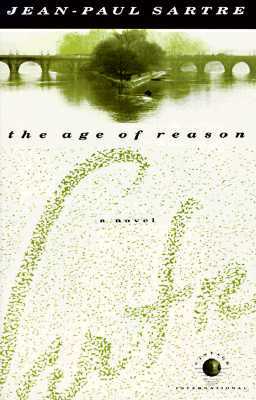
The Age of Reason cover
Archivist's Choice

The Age of Reason

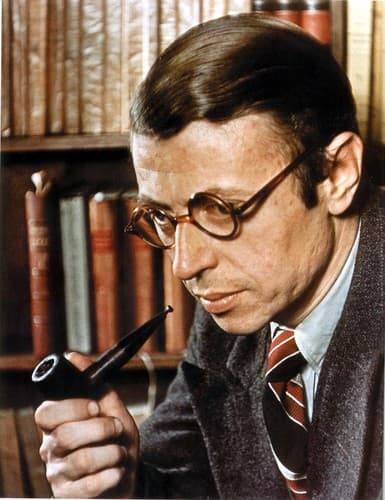
Jean-Paul Sartre (1947)

Genre

Politics / History / Spirituality / Science / Philosophy

Reading Time

10-15 hours (based on 408 pages and complex themes)

Key Themes

See below

Track Your Reading

Sign in to track this book

In the shadow of impending war, a French philosophy professor grapples with the suffocating weight of his own freedom, desperately seeking a definitive act to define his existence amidst the moral ambiguities of 1938 Paris.

Core Idea

Sartre's "The Age of Reason" portrays the pre-World War II intellectual and moral state of Paris, exploring existentialist philosophy. It argues that individuals are condemned to be free, meaning they are responsible for their choices in a world without inherent meaning or predetermined morality. This freedom is not liberating but a burden, as every decision defines one's essence and contributes to the human condition, without any external guide. The novel looks at 'bad faith' – self-deception that tries to escape this freedom and responsibility – through characters dealing with personal crises, political engagement, and the search for authentic existence amidst life's absurdity and the judgment of others.
Reading time
10-15 hours (based on 408 pages and complex themes)
Difficulty
Hard
✓ Read this if...
You are interested in existentialist philosophy presented through a compelling narrative, exploring themes of radical freedom, responsibility, and the human condition in a world without objective meaning. Also, if you appreciate character-driven stories that delve deep into psychological states and moral dilemmas.
✗ Skip this if...
You prefer books with clear-cut moral answers, an optimistic outlook on human nature, or a fast-paced plot. If you find philosophical introspection and a sense of existential dread unappealing, this book might not be for you. Also, if you dislike narratives where characters often struggle with inaction or indecision.

Core idea

The central argument and framework that powers the entire book.

Sartre's "The Age of Reason" portrays the pre-World War II intellectual and moral state of Paris, exploring existentialist philosophy. It argues that individuals are condemned to be free, meaning they are responsible for their choices in a world without inherent meaning or predetermined morality. This freedom is not liberating but a burden, as every decision defines one's essence and contributes to the human condition, without any external guide. The novel looks at 'bad faith' – self-deception that tries to escape this freedom and responsibility – through characters dealing with personal crises, political engagement, and the search for authentic existence amidst life's absurdity and the judgment of others.

At a glance

Reading time

10-15 hours (based on 408 pages and complex themes)

Difficulty

Hard

Read this if...

You are interested in existentialist philosophy presented through a compelling narrative, exploring themes of radical freedom, responsibility, and the human condition in a world without objective meaning. Also, if you appreciate character-driven stories that delve deep into psychological states and moral dilemmas.

Skip this if...

You prefer books with clear-cut moral answers, an optimistic outlook on human nature, or a fast-paced plot. If you find philosophical introspection and a sense of existential dread unappealing, this book might not be for you. Also, if you dislike narratives where characters often struggle with inaction or indecision.

Key Takeaways

1

Freedom as a Burden

The agonizing weight of absolute choice and the impossibility of escaping it.

Quote

Man is condemned to be free; because once thrown into the world, he is responsible for everything he does.

Sartre, through Mathieu, illustrates that freedom is not merely an opportunity but an inescapable burden. Every decision, no matter how trivial, is a manifestation of our absolute freedom, and thus, we are entirely responsible for its consequences. This responsibility creates anguish, a fundamental emotion in existentialism. Mathieu's persistent indecision regarding Marcelle's pregnancy, his financial worries, and his relationships stems from this anguish. He understands that choosing one path means simultaneously rejecting other poss...

Supporting evidence

Mathieu's internal struggle throughout the novel to secure 4,000 francs for an abortion, and his inability to commit to any definitive action or relationship, serves as the central evidence. His repeated justifications and rationalizations for inaction highlight the paralyzing effect of absolute freedom.

Apply this

Recognize that 'not choosing' is itself a choice with consequences. Embrace the inherent anguish of freedom as a call to authentic action, rather than a deterrent. Understand that responsibility is the flip side of freedom.

existentialismanguishresponsibilitybad-faith
2

The Futility of Bad Faith

Escaping freedom by pretending to be an object, but always failing.

Quote

Never for an instant did he regret it, for it was the best way of enjoying his freedom: by not using it.

Bad faith is Sartre's concept for self-deception, where individuals deny their freedom and responsibility by pretending to be determined by external factors, roles, or circumstances. Mathieu often falls into bad faith, convincing himself that his choices are dictated by his poverty, his intellectual pursuits, or the expectations of others. He desires to be 'free' from the consequences of choice by not choosing, or by trying to live as if he were an object, fixed and defined. However, Sartre argues this is futile; even denying freedom ...

Supporting evidence

Mathieu's recurring thought that he is 'free' because he hasn't committed to anything, even as he desperately seeks money for an abortion, is a prime example. His attempt to define himself solely as a 'philosophy professor' or 'bachelor' rather than confronting his active role in his relationships demonstrates bad faith.

Apply this

Identify situations where you attribute your choices to external forces ('I had no choice,' 'It's just the way I am'). Challenge these assumptions and reclaim ownership of your decisions. Practice radical honesty about your agency.

bad-faithauthenticityself-deceptionconsciousness
3

The Gaze of the Other

How others define us and the struggle for self-definition.

Quote

He always felt a little self-conscious in front of Boris, as if Boris were always watching him, judging him.

Sartre explores how our identity is shaped by how others see us, a phenomenon he calls 'the gaze.' When others look at us, they categorize, judge, and define us, often reducing our complex self to a fixed object in their world. This can lead to shame or a feeling of being 'thingified.' Mathieu constantly feels the weight of Boris's youthful judgment, Marcelle's passive expectations, and Ivich's cynical detachment. He struggles to assert his own definition of himself against these external gazes, often retreating into his own thoughts ...

Supporting evidence

Mathieu's discomfort under Boris's detached scrutiny, his awareness of Marcelle's quiet judgment of his inaction, and Ivich's mocking observations all illustrate the impact of the 'gaze.' His self-consciousness in social settings reinforces this theme.

Apply this

Become aware of how you define yourself based on others' perceptions. Practice self-affirmation and define your values internally, rather than seeking constant external validation. Understand that others' perceptions are not your reality.

the-otherintersubjectivityshameobjectification
4

The Absence of God and Objective Morality

In a godless world, we are the sole source of values and meaning.

Quote

If God does not exist, everything is permitted.

A core idea of Sartre's philosophy, present in 'The Age of Reason,' is the absence of God. This is not just an atheistic statement but a philosophical claim with implications for morality and meaning. Without a divine creator or pre-ordained human nature, there are no inherent values, no universal moral laws, and no intrinsic purpose to life. Mathieu, as a philosopher, grapples with this void. He understands that he is 'abandoned' in a world without objective guidelines, forced to invent his own values and meaning through his choices....

Supporting evidence

Mathieu's intellectual musings on freedom and responsibility, his rejection of traditional societal norms, and his struggle to find a 'reason' for his actions beyond his own will, all point to this theme. His lack of a guiding moral compass, beyond his own fluctuating desires, is a key indicator.

Apply this

Confront the reality that you create your own values and meaning. Instead of searching for external moral codes, reflect deeply on what you genuinely value and align your actions accordingly. Embrace the freedom to define your own ethics.

atheismnihilismabandonmentvalue-creation
5

The Impossibility of Authenticity Through Detachment

True freedom requires engagement, not cynical observation.

Quote

He wanted to be free, but he wanted his freedom to be an absolute, uncommitted freedom, a freedom that existed only in thought.

Mathieu often mistakes detachment and cynical observation for true freedom. He believes that by refusing to commit, by holding himself apart from relationships, politics, and even his own desires, he maintains a pure, unblemished freedom. He watches his friends and lovers with an intellectual curiosity, analyzing their lives but rarely fully participating. However, Sartre demonstrates that this detachment leads not to authenticity, but to emptiness and ineffectiveness. True freedom, for Sartre, is not merely the absence of constraint,...

Supporting evidence

Mathieu's constant intellectualizing of his situation, his inability to take decisive action regarding Marcelle, and his cynical observations of his friends' lives, all while remaining uncommitted, exemplify this. His profound dissatisfaction despite his 'freedom' is the proof.

Apply this

Beware of intellectualizing your life to avoid genuine engagement. Identify areas where you are detached and try to commit, even in small ways. Recognize that authentic freedom is forged through action and responsibility, not observation.

detachmentengagementauthenticityinauthenticity
6

The Interconnectedness of Individual and Collective Freedom

Personal freedom is always intertwined with political and social realities.

Quote

One could not be free in isolation; one's freedom was always bound up with the freedom of others.

While 'The Age of Reason' focuses on Mathieu's individual philosophical struggles, the looming shadow of World War II and discussions of communism among his friends highlight the link between individual freedom and collective political realities. Mathieu's personal angst about choice plays out against a backdrop where entire nations are grappling with their destinies. His friends, like Brunet, find their freedom and purpose in collective action and political commitment. Sartre suggests that a purely individualistic understanding of fr...

Supporting evidence

The constant background chatter about the impending war, Brunet's active involvement in the communist party, and the discussions about political engagement among the characters, all serve as a counterpoint to Mathieu's personal, internal focus.

Apply this

Recognize that your personal freedom is not an isolated phenomenon. Consider how your choices impact the collective and how collective conditions impact your individual agency. Engage with social and political issues as part of your own freedom.

political-freedomsocial-responsibilitycollective-actionhistorical-context
7

Existential Nausea and the Absurdity of Existence

The visceral discomfort of confronting the meaningless 'is-ness' of things.

Quote

He had no reason for existing, but he had to exist.

While 'Nausea' is Sartre's more explicit exploration of this concept, 'The Age of Reason' still has strong undertones of existential nausea. This is the discomfort that arises from confronting the raw fact of existence, stripped of all imposed meaning or purpose. It is the realization that things simply 'are,' without inherent justification or reason. Mathieu experiences moments of this, especially when he feels overwhelmed by the mundane reality of his life, or when contemplating the arbitrary nature of his own being. The world, with...

Supporting evidence

Mathieu's moments of profound boredom, his feeling that his life is 'just happening' without direction, and his occasional sense of revulsion at the physical reality of his surroundings or his own body, all hint at this existential nausea. His desperate search for a 'reason' for his actions suggests an underlying dread of the lack of inherent purpose.

Apply this

When feeling overwhelmed by the apparent meaninglessness of life, recognize it as a moment of confronting raw existence. Instead of succumbing, use it as an impetus to actively create your own meaning and purpose. Don't shy away from discomfort, it's a sign of profound realization.

nauseaabsurditymeaninglessnessexistence-precedes-essence
8

The Tyranny of the Past and the Promise of the Future

How past choices define us, but future choices can redefine.

Quote

He was his past, and yet he was not his past; he was always free to choose anew.

Mathieu is haunted by his past – his long-standing relationship with Marcelle, his intellectual pursuits that haven't led to a grand work, his financial debts. He feels trapped by these past decisions, as if they have shaped him into a particular person. He struggles with the idea that he 'is' the sum of his past actions. However, Sartre's philosophy asserts that while our past is undeniable, it does not absolutely determine our future. We are always 'what we are not' in the sense that we are constantly projecting ourselves forward, m...

Supporting evidence

Mathieu's long-term, uncommitted relationship with Marcelle and his persistent financial struggles are direct consequences of past choices. His yearning for a 'clean break' or a definitive act to escape this past highlights the tension between his history and his potential future.

Apply this

Acknowledge your past choices and their consequences without allowing them to entirely define or limit your future. Understand that every moment is an opportunity for a new choice and a new projection of yourself. Focus on what you will choose next, not just what you have chosen.

temporalityprojectfacticitytranscendence
9

The Illusion of Objective Self-Knowledge

We are always more than we can know about ourselves.

Quote

He was always trying to grasp himself, to define himself, but he was always slipping away.

Sartre suggests that we can never fully grasp or objectively define ourselves, because we are always becoming, a constant 'project' towards the future. Mathieu, as a philosopher, is aware of this. He tries to analyze his own motivations, categorize his feelings, and define his identity, yet he consistently finds himself elusive. The moment he thinks he has pinned down 'who he is,' he makes a new choice that contradicts that definition, or he realizes there is a part of himself that remains unknown, an ungraspable 'for-itself.' This re...

Supporting evidence

Mathieu's continuous internal monologue where he attempts to dissect his own feelings and motivations, yet never arrives at a definitive self-understanding, is the primary evidence. His consistent inability to commit to a fixed identity or role illustrates this fluidity of self.

Apply this

Let go of the need for a perfectly defined self-identity. Embrace the ongoing process of becoming and the inherent mystery of your own consciousness. Understand that you are always capable of new choices that redefine who you are.

for-itselfin-itselfconsciousnessself-definition
10

The Moment of Decision: A Leap of Faith into the Unknown

True commitment requires action without guarantees.

Quote

He would not regret anything, he would not make any decision, he would let himself drift.

Throughout the novel, Mathieu grapples with the 'moment of decision.' He intellectualizes, procrastinates, and seeks external validation or a perfect reason to act, but true existential decision-making, as Sartre implies, is a 'leap of faith.' It is an act performed without guarantees, without a pre-existing blueprint for success or a divine justification. Mathieu's inability to make a definitive choice, whether about Marcelle, his career, or his political alignment, stems from his desire for certainty. However, the novel suggests tha...

Supporting evidence

Mathieu's protracted struggle to find 4,000 francs and his inability to commit to marrying Marcelle or abandoning her illustrate his avoidance of decisive action. His eventual, almost involuntary, act of firing a rifle at the end of the novel, even in desperation, signifies a break from his perpetual indecision.

Apply this

Recognize that perfect certainty rarely exists before a significant decision. Practice making choices, even small ones, without overthinking or seeking absolute guarantees. Understand that action itself can create clarity and meaning.

decisioncommitmentactionleap-of-faith

Critical analysis

Notable Quotes

I am condemned to be free. This means that no limits to my freedom can be found except freedom itself or, if you prefer, that we are not free to cease to be free.

A core statement of existential freedom and responsibility.

Man is nothing else but what he makes of himself.

A fundamental declaration about human existence and self-creation.

To be is to be there, in the presence of others.

Highlighting the intersubjective nature of existence.

Existence precedes essence.

The foundational tenet of existentialism, asserting that humans first exist and then define themselves.

Every existing thing is born without reason, prolongs itself out of weakness, and dies by chance.

Reflecting on the contingency and absurdity of existence.

If man is free and if God does not exist, then man is alone, with no excuses.

Exploring the implications of atheistic existentialism.

Hell is other people.

A famous line, expressing the burden of being seen and judged by others.

We are responsible for what we are.

Emphasizing individual accountability for one's choices and being.

Freedom is what you do with what's been done to you.

Suggesting that freedom lies in one's response to external circumstances.

There is no God, so man must invent himself.

Reinforcing the idea of self-creation in the absence of divine guidance.

We have no excuses behind us, no justifications before us. We are alone, with no excuses.

Further emphasizing the radical solitude and responsibility of human existence.

The past is a luxury for those who don't have to worry about the future.

Reflecting on the urgency of present action and the burdens of immediate concerns.

What is life but a series of choices?

A rhetorical question highlighting the continuous process of decision-making that defines human existence.

To exist is to be there, naked, abandoned, without an excuse, without a future, alone.

A stark depiction of the human condition in its raw, unadorned state.

Quiz

Test Your Knowledge

Ready to see how well you understood this book? Take our interactive quiz with 10 questions.

10
Questions
~5
Minutes
?
Best Score

Key Questions (FAQ)

'The Age of Reason' primarily explores the concept of freedom and the individual's responsibility to choose their own existence. It delves into the anxieties and decisions faced by its protagonist, Mathieu, as he grapples with the implications of his choices.

About the author

Jean-Paul Sartre

Jean-Paul Charles Aymard Sartre was a French philosopher, playwright, novelist, screenwriter, political activist, biographer, and literary critic, considered a leading figure in 20th-century French philosophy and Marxism. Sartre was one of the key figures in the philosophy of existentialism. His work has influenced sociology, critical theory, post-colonial theory, and literary studies, and continues to do so. He was awarded the 1964 Nobel Prize in Literature despite attempting to refuse it, saying that he always declined official honors and that "a writer should not allow himself to be turned into an institution."