
BookBrief
We Should All Be Feminists cover
Archivist's Choice

We Should All Be Feminists

Chimamanda Ngozi Adichie (2014)

Genre

Politics

Reading Time

30 min

Key Themes

See below

Track Your Reading

Sign in to track this book

Chimamanda Ngozi Adichie blends personal stories with clear analysis to redefine twenty-first-century feminism as an urgent, inclusive call to action that benefits everyone, exposing both obvious and subtle gender inequalities across cultures.

Core Idea

Chimamanda Ngozi Adichie argues for a more inclusive, accessible, and practical feminism for the 21st century. Using personal stories and observations, she explains how gender socialization subtly and openly limits both women and men, perpetuating harmful stereotypes and unequal power dynamics. The book states that feminism is not about hating men or being a victim, but about working towards a world where gender does not decide opportunity, expectation, or value, which helps everyone. Adichie points out that gender roles are deeply set through language, culture, and upbringing. This creates a 'double bind' for women who are ambitious and stops men from showing emotion. She supports raising children with a clear awareness of gender equality, breaking down the idea of choice that often hides societal pressures, and recognizing that sexism appears in everyday life, not just big events. Ultimately, she sees feminism as good for everyone, essential for human well-being.
Reading time
30 min
Difficulty
Easy
✓ Read this if...
You're looking for a concise, accessible, and modern introduction to feminist thought, or if you want to understand the everyday implications of gender inequality and why feminism is still relevant.
✗ Skip this if...
You are seeking an academic, deeply theoretical, or historical analysis of feminism. This book is a short, polemical essay, not a comprehensive scholarly work.

Core idea

The central argument and framework that powers the entire book.

Chimamanda Ngozi Adichie argues for a more inclusive, accessible, and practical feminism for the 21st century. Using personal stories and observations, she explains how gender socialization subtly and openly limits both women and men, perpetuating harmful stereotypes and unequal power dynamics. The book states that feminism is not about hating men or being a victim, but about working towards a world where gender does not decide opportunity, expectation, or value, which helps everyone.

Adichie points out that gender roles are deeply set through language, culture, and upbringing. This creates a 'double bind' for women who are ambitious and stops men from showing emotion. She supports raising children with a clear awareness of gender equality, breaking down the idea of choice that often hides societal pressures, and recognizing that sexism appears in everyday life, not just big events. Ultimately, she sees feminism as good for everyone, essential for human well-being.

At a glance

Reading time

30 min

Difficulty

Easy

Read this if...

You're looking for a concise, accessible, and modern introduction to feminist thought, or if you want to understand the everyday implications of gender inequality and why feminism is still relevant.

Skip this if...

You are seeking an academic, deeply theoretical, or historical analysis of feminism. This book is a short, polemical essay, not a comprehensive scholarly work.

Key Takeaways

1

A New Definition of Feminism

Moving beyond stereotypes to embrace a feminism of inclusion and awareness.

Quote

My own definition of a feminist is a man or a woman who says, 'Yes, there's a problem with gender as it is today, and we must fix it, we must do better.'

Adichie redefines feminism for the 21st century, removing the negative ideas and stereotypes that often push people away from the term. She argues that feminism is not about hating men, being against marriage, or lacking humor; instead, it is a basic belief in the social, political, and economic equality of the sexes. Her definition is inclusive, inviting anyone who sees the current gender problem and wants to fix it to identify as a feminist. This new way of looking at it is important because it makes feminism accessible and practica...

Supporting evidence

Adichie recounts her initial reluctance to use the term 'feminist' due to its negative associations, and how a friend's advice to call herself a 'Happy Feminist' or 'Feminist-lite' highlighted the need to reclaim the word. She contrasts this with her own simple, direct definition, born from her experiences and observations.

Apply this

Embrace the term 'feminist' without reservation, understanding it as a commitment to gender equality. Challenge negative stereotypes of feminists in conversations and media by embodying Adichie's inclusive definition. Encourage others, especially men, to see themselves within this framework if they believe in equality.

inclusive-feminismgender-equalityreclaiming-terms
2

The Insidious Nature of Gender Socialization

How societal expectations subtly shape gender roles from childhood, often to women's detriment.

Quote

We teach girls to shrink themselves, to make themselves smaller. We say to girls, 'You can have ambition, but not too much. You should aim to be successful, but not too successful, otherwise you will threaten the man.'

Adichie clearly shows how gender roles are not natural but are carefully built through socialization from a very young age. Girls are taught to value attractiveness over intelligence, to be agreeable, and to lessen their ambition so they do not seem threatening. Boys, on the other hand, are taught to be strong and to assert control. These lessons, often given subtly through language, toys, and cultural norms, create a 'gender cage' that limits both sexes but puts more burden on women. This widespread conditioning leads to women believ...

Supporting evidence

She describes a childhood experience in Nigeria where a boy was automatically made 'head boy' over her, despite her having the highest academic scores. This early lesson in assumed male leadership, regardless of merit, profoundly impacted her. She also discusses how girls are told 'not to be too much' and how this curtails their potential.

Apply this

Actively challenge gender stereotypes in parenting, education, and media consumption. Encourage girls to pursue their ambitions without apology and boys to express a full range of emotions. Be mindful of the language used around children regarding their future roles and capabilities.

gender-rolessocializationinternalized-misogyny
3

The Double Bind of Female Ambition

Women face a unique dilemma: success is celebrated but can also be penalized if it challenges traditional gender norms.

Quote

We spend too much time teaching girls to worry about what boys think of them. But the reverse is not the case. We don't teach boys to worry about what girls think of them.

Adichie points out the difficult situation women face when they are ambitious. While society increasingly values female success, there is often an unspoken rule: do not be too successful, too assertive, or too independent, or you might become 'unfeminine,' 'threatening,' or 'unmarriageable.' This double bind makes women balance carefully, often leading them to hold back or downplay their achievements to avoid social problems. This is not just about external judgment; it often leads to internal conflict, where women feel bad for ...

Supporting evidence

Adichie shares an anecdote about a successful female friend who was advised to pretend her husband worked in her business to appear more 'normal' to clients. This illustrates the pressure women face to minimize their professional achievements to fit traditional gender expectations.

Apply this

Support and celebrate women's ambition unequivocally, without attaching caveats about their personal lives or perceived 'niceness.' Encourage women to own their success and push back against societal pressures to diminish themselves. Mentor young women to navigate this double bind with confidence.

female-ambitiondouble-standardsimposter-syndrome
4

The Cost of Gender Roles for Men

While seemingly benefiting men, rigid gender expectations also trap them, limiting emotional expression and connection.

Quote

Gender is not an easy conversation to have. It is also not a conversation for women to have alone.

Adichie correctly notes that gender inequality is not a zero-sum game where men always win and women always lose. While men often have societal advantages, they are also limited by strict gender expectations. Boys are taught to be strong, quiet, and emotionless, hiding vulnerability and real connection. This 'mancage' stops men from fully experiencing and showing their humanity, leading to emotional repression, mental health issues, and poor personal relationships. By forcing men into narrow definitions of masculinity, society takes a...

Supporting evidence

Adichie touches on how boys are often told not to cry or show weakness, leading to a generation of men who struggle with emotional expression. She also notes that men are expected to be providers, a burden that can be immense.

Apply this

Encourage boys and men to express their emotions openly and to pursue interests that defy traditional masculine stereotypes. Challenge the idea that emotional vulnerability is a weakness. Engage men in conversations about gender equality, emphasizing how it benefits them as well.

toxic-masculinitymale-emotionsgender-expectations
5

The Illusion of Choice and the Power of 'Because'

Many 'choices' women make are dictated by societal pressure, not genuine freedom.

Quote

The problem with gender is that it prescribes how we should be rather than recognizing how we are.

Adichie exposes the false idea of 'choice feminism' when it ignores the systemic pressures that limit women's decisions. Often, what seems like a free choice—like a woman putting her husband's career before her own, or doing most of the housework—is actually a compromise made within a system of unequal power dynamics and societal expectations. She argues that true choice can only exist when women have equal power and when society does not implicitly punish them for going against traditional roles. The constant need for women to explai...

Supporting evidence

Adichie discusses how, even in modern societies, women are often expected to change their names upon marriage, or to take on the bulk of childcare, not always out of pure preference but due to deeply ingrained societal norms that make alternative choices seem difficult or 'unnatural.'

Apply this

Question the 'choices' presented to women and analyze whether they are truly free or influenced by societal expectations. Advocate for policies and cultural shifts that enable genuine choice, free from gendered pressures. Encourage women to articulate their desires without needing to justify them with 'because'.

choice-feminismsocietal-pressureautonomy
6

The Peril of Female Competition

Societal norms often pit women against each other, hindering collective progress.

Quote

We teach girls to see other girls as competitors, not as sisters.

Adichie criticizes how women are often taught to see each other as rivals, especially when seeking male attention or societal approval. This competitive dynamic, often fueled by media and culture, breaks down female unity and stops women from supporting each other's progress. Instead of encouraging teamwork and mentorship, it promotes comparison and judgment, making it harder to build a united front against systemic sexism. This internal competition is a clever tool of patriarchy, directing women's energy towards competing for limited...

Supporting evidence

She notes how girls are often encouraged to focus on being 'beautiful' for boys, and how this can create a sense of competition for male attention from a young age, rather than fostering bonds of friendship and support among girls.

Apply this

Actively foster supportive relationships with other women, celebrating their successes and offering encouragement. Challenge narratives that pit women against each other in media and everyday conversations. Promote mentorship and collaboration among women in all spheres of life.

female-solidaritypatriarchyinterpersonal-competition
7

The Importance of Raising Gender-Conscious Children

Creating a more equitable future starts with how we educate the next generation.

Quote

The world is full of women who are doing great things, and we need to tell our girls about them.

Adichie stresses that ending gender inequality requires a basic change in how we raise our children. This means actively challenging stereotypical messages about gender, encouraging girls to be brave and ambitious, and teaching boys to be understanding and respectful. It involves showing children diverse role models, celebrating achievements regardless of gender, and encouraging critical thinking about societal norms. By raising children to be aware of gender, we give them the tools to recognize and reject sexism, and to help create a...

Supporting evidence

Adichie's personal reflection on how her mother challenged gender norms in her upbringing, and how she herself tries to teach her niece to be a 'full human being' rather than just a 'good girl,' underscores this point.

Apply this

Actively seek out and share stories of diverse role models for children, both male and female, who defy gender stereotypes. Challenge gendered language and toys. Teach children to question societal norms and to advocate for fairness and equality for all.

gender-educationconscious-parentingrole-models
8

Feminism as a Universal Good

Achieving gender equality benefits all of humanity, not just women.

Quote

A world in which men and women are happier and truer to themselves.

Adichie concludes by stating that feminism, far from being a divisive or niche movement, is about creating a better world for everyone. When women are empowered, societies do well; when men are free from strict expectations, they lead richer, more satisfying lives. Gender equality releases human potential, encourages new ideas, and promotes greater understanding and empathy in all relationships. By challenging the 'gender cage,' we unlock the full range of human experience for both sexes, leading to healthier families, fairer workplac...

Supporting evidence

Her overall argument throughout the essay, tying together the limitations imposed on both men and women by current gender norms, culminates in the vision of a happier, more authentic world for all if these norms are dismantled.

Apply this

Frame discussions about feminism in terms of its benefits for society as a whole, highlighting how it improves lives for men, women, and children. Advocate for policies that promote gender equality in all sectors, emphasizing the broad societal gains.

universal-feminismsocietal-progresshuman-potential
9

The Everyday Realities of Sexism

Sexism isn't always overt; it's often the subtle, ingrained behaviors that marginalize women.

Quote

Gender matters because it is not just about how we are treated, but how we treat ourselves.

Adichie clearly shows the subtle, often unrecognized forms of sexism that are present in daily life. Beyond obvious discrimination, she highlights the small insults, assumptions, and institutional biases that slowly erode women's confidence and opportunities. These subtle slights—like being interrupted, having ideas credited to male colleagues, or being expected to do emotional work—are so normal that they often go unnoticed, even by those who experience them. Yet, their combined effect is significant, leading to women feeling inadequ...

Supporting evidence

She shares her experiences being told to smile more, or being automatically deferred to a man in a professional setting. Her anecdote about a hotel worker assuming her male colleague was the 'boss' despite her being the speaker at a conference is a powerful example of this subtle bias.

Apply this

Become acutely aware of subtle sexist behaviors and microaggressions in your daily life and challenge them where appropriate. Educate yourself and others on unconscious biases. Practice active listening and ensure all voices are heard and credited fairly in professional and personal settings.

microaggressionsunconscious-biassystemic-sexism
10

Language as a Tool of Oppression and Liberation

The words we use perpetuate or dismantle gender inequality.

Quote

The problem is not about being a woman. The problem is about being treated as a woman.

Adichie implicitly and explicitly highlights the great power of language in shaping how we see gender and reinforcing societal norms. From terms like 'bossy' for assertive girls to the lack of a truly gender-neutral word for 'mankind,' the words we use encode and perpetuate inequality. Language can lessen women's achievements, dictate their roles, and subtly (or openly) control their behavior. On the other hand, conscious language choices can be a powerful tool for freedom, challenging stereotypes and encouraging inclusion. By examini...

Supporting evidence

Her discussion on the term 'feminist' itself, and how it has been weaponized, is central. She also notes how language around women's ambition or appearance differs significantly from that used for men, such as the common phrase 'she's too emotional' versus 'he's too emotional.'

Apply this

Pay close attention to gendered language in everyday conversations, media, and professional settings. Actively use inclusive language and challenge derogatory or stereotypical terms. Advocate for language that reflects equality and human dignity for all genders.

gendered-languagelinguistic-sexisminclusive-language

Critical analysis

Notable Quotes

We teach girls to shrink themselves, to make themselves smaller. We say to girls, 'You can have ambition, but not too much. You should aim to be successful, but not too successful, otherwise you will threaten the man.'

Discussing societal expectations placed on girls and women regarding ambition and success.

Feminist: a person who believes in the social, political and economic equality of the sexes.

Providing a simple and direct definition of feminism.

What if, in raising children, we focus on ability instead of gender? What if we focus on interest instead of gender?

Proposing a shift in child-rearing practices to move beyond gender stereotypes.

The problem with gender is that it prescribes how we should be rather than recognizing how we are.

Highlighting the restrictive nature of gender as a prescriptive rather than descriptive concept.

We have evolved. But our ideas of gender have not evolved very much.

Pointing out the disparity between human evolution and the stagnation of gender ideas.

Culture does not make people. People make culture. If it is true that the full humanity of women is not our culture, then we can and must make it our culture.

Challenging the idea that culture is immutable and arguing for agency in cultural change.

We teach girls to cater to the fragile egos of males.

Critiquing the way girls are taught to prioritize male comfort and ego over their own needs.

Gender matters because of what we have made of it.

Emphasizing that the significance of gender is socially constructed.

We tell girls, 'You can be anything you want,' but then we tell them, 'Just make sure you're liked.'

Exposing the contradictory messages given to girls about ambition versus likability.

A man is happy to have a successful wife, as long as he feels he is more successful.

Illustrating the underlying insecurity and competitive dynamic that can exist in relationships when women achieve success.

The richer a country, the more feminist it is. The poorer a country, the less feminist it is.

Observing a correlation between a nation's economic status and its embrace of feminist ideals.

My own definition of a feminist is a man or a woman who says, 'Yes, there's a problem with gender as it is today, and we must fix it. We must do better.'

Offering an inclusive definition of feminism focused on acknowledging and addressing gender inequality.

We need to reframe how we think about gender. We need to unlearn and relearn.

Calling for a fundamental shift in perception and education regarding gender.

Quiz

Test Your Knowledge

Ready to see how well you understood this book? Take our interactive quiz with 10 questions.

10
Questions
~5
Minutes
?
Best Score

Key Questions (FAQ)

Adichie defines feminism as a belief in the full equality of men and women, advocating for social, political, and economic equality. Her essay offers a modern, inclusive definition that moves beyond traditional stereotypes.

About the author

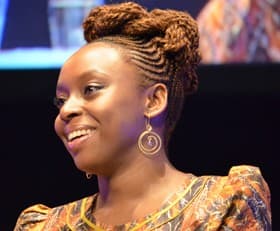
Chimamanda Ngozi Adichie

Chimamanda Ngozi Adichie is a Nigerian writer whose works include novels, short stories and nonfiction. She was described in The Times Literary Supplement as "the most prominent" of a "procession of critically acclaimed young anglophone authors [that] is succeeding in attracting a new generation of readers to African literature", particularly in her second home, the United States.