BookBrief
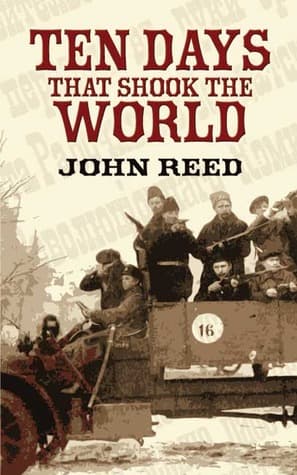
Ten Days that Shook the World cover
Archivist's Choice

Ten Days that Shook the World

John Reed (1919)

Genre

Politics / History

Reading Time

10-12 hours (based on 400 pages)

Key Themes

See below

Track Your Reading

Sign in to track this book

An American journalist's account of the ten days in 1917 when Petrograd exploded with revolution, soldiers and peasants united, and Lenin took power, changing history forever.

Core Idea

John Reed's "Ten Days that Shook the World" is a firsthand account of the October Revolution in Petrograd. It captures the raw, chaotic, and exciting period of the Bolsheviks' rise to power. Reed, an American socialist journalist, shows the revolution not as a single event but as a mix of popular will, political strategy, and spontaneous action. He highlights the role of the Soviets and the working class in overthrowing the Provisional Government. The book details the speeches, decrees, street fights, and popular feelings of these ten days. Reed argues for the Bolshevik takeover's legitimacy and popular support, writing as an involved observer.
Reading time
10-12 hours (based on 400 pages)
Difficulty
Medium
✓ Read this if...
You want a vivid, on-the-ground, and highly influential primary source account of the October Revolution, written from a sympathetic socialist perspective. Ideal for those interested in political history, revolutionary dynamics, and the power of eyewitness journalism.
✗ Skip this if...
You are looking for a detached, objective, or critical analysis of the Russian Revolution, or if you prefer a historical account written with the benefit of hindsight and access to broader archival sources. Also, if you dislike highly partisan narratives.

Core idea

The central argument and framework that powers the entire book.

John Reed's "Ten Days that Shook the World" is a firsthand account of the October Revolution in Petrograd. It captures the raw, chaotic, and exciting period of the Bolsheviks' rise to power. Reed, an American socialist journalist, shows the revolution not as a single event but as a mix of popular will, political strategy, and spontaneous action. He highlights the role of the Soviets and the working class in overthrowing the Provisional Government. The book details the speeches, decrees, street fights, and popular feelings of these ten days. Reed argues for the Bolshevik takeover's legitimacy and popular support, writing as an involved observer.

At a glance

Reading time

10-12 hours (based on 400 pages)

Difficulty

Medium

Read this if...

You want a vivid, on-the-ground, and highly influential primary source account of the October Revolution, written from a sympathetic socialist perspective. Ideal for those interested in political history, revolutionary dynamics, and the power of eyewitness journalism.

Skip this if...

You are looking for a detached, objective, or critical analysis of the Russian Revolution, or if you prefer a historical account written with the benefit of hindsight and access to broader archival sources. Also, if you dislike highly partisan narratives.

Key Takeaways

1

The Power of the Soviets

Local councils became the true voice and engine of the revolution.

Quote

All over Russia, in every city, in most towns, and in many villages, there are Soviets of Workers' and Soldiers' Deputies, which sprang into existence spontaneously at the time of the March Revolution.

John Reed shows how the Soviets—councils of workers, soldiers, and peasants—were the revolution's heart. They were a direct, grassroots democracy that bypassed traditional political structures, giving a voice to people previously without rights. While the Provisional Government struggled for legitimacy, the Soviets, especially the Petrograd Soviet, gained great authority because of their direct link to the working class and military. Their ability to mobilize people, issue decrees, and control local military units made them the real p...

Supporting evidence

Reed details the widespread formation and influence of Soviets across Russia, showing how they issued their own orders (like Order No. 1 from the Petrograd Soviet) and often contradicted or simply ignored directives from the Provisional Government, effectively creating a dual power structure.

Apply this

Understanding the rise of decentralized, grassroots power structures is crucial for analyzing modern social movements. Identify the 'Soviets' of contemporary activism—the informal networks or local assemblies that truly mobilize and represent the will of the people, rather than just official organizations.


dual-powerpetrograd-sovietgrassroots-democracy
2

The Art of Revolutionary Oratory

Speeches were not just communication; they were weapons and catalysts.

Quote

By the sheer force of his logic, of his overwhelming will, of his power to explain, Lenin was able to swing the Petrograd Soviet.

Reed's book contains many direct speeches, showing how important rhetoric was in creating, maintaining, and changing revolutionary passion. Leaders like Lenin and Trotsky were not just politicians; they were skilled speakers who could energize crowds. They simplified complex ideas into clear slogans and inspired great loyalty or anger. These speeches were given in chaotic, often dangerous settings, yet they cut through the noise. They expressed the people's complaints and offered a clear, though radical, path forward. The power of the...

Supporting evidence

Reed frequently transcribes segments of speeches by key figures, particularly Lenin and Trotsky, during critical moments like the debates in the Petrograd Soviet or the All-Russian Congress of Soviets, illustrating their persuasive impact on the delegates and the broader public.

Apply this

When trying to influence a group, don't just present facts; craft a compelling narrative that connects emotionally and offers a clear vision. Practice public speaking not as a formality, but as a tool for genuine persuasion and mobilization.

lenintrotskyrevolutionary-rhetoricpropaganda
3

The Shifting Sands of Popular Will

Public opinion was volatile, easily swayed by events and promises.

Quote

Everywhere the masses were awakening, and with their awakening came a fresh sense of power, a fresh sense of their own importance.

Reed gives a clear sense of how quickly public opinion could change during the revolution. The initial excitement of the March Revolution turned into disappointment with the Provisional Government. It failed to end the war, distribute land, or solve economic problems. This created fertile ground for radical ideas. Reed shows how the Bolsheviks, initially a minority, carefully used these frustrations. They promised 'Peace, Land, and Bread.' Every perceived betrayal by the Provisional Government, every delay in meeting popular demands, ...

Supporting evidence

Reed documents the changing allegiances of soldiers, sailors, and workers, noting their initial support for the Provisional Government eroding into widespread calls for 'All Power to the Soviets,' especially after events like the July Days and the Kornilov affair.

Apply this

In any leadership role, understand that public or team morale is not static. Continuously gauge the pulse of your constituents, address their immediate concerns, and adapt your strategies. Ignoring popular sentiment, even if you believe your course is 'right,' can lead to swift and decisive opposition.

provisional-governmentbolshevikspublic-opinionrevolutionary-momentum
4

The Imperative of Peace

Ending the war was the single most potent demand driving the revolution.

Quote

The great mass of the soldiers—and this was true also of the peasants and workers—wanted peace, and wanted it at any price.

John Reed makes it clear that the main reason for the Bolsheviks' rise was their commitment to ending Russia's involvement in World War I. The Provisional Government's continued pursuit of the war, under Allied pressure, was a fatal mistake. It alienated most soldiers, who were tired, hungry, and without morale, and their families. The Bolshevik slogan 'Peace, Land, and Bread' resonated deeply because 'Peace' addressed the most immediate and painful grievance. Reed shows how the trenches became centers of revolutionary feeling. Soldie...

Supporting evidence

Reed repeatedly highlights the widespread desertion rates, the fraternization with enemy soldiers, and the constant demands for peace from soldiers' committees and factory workers, which the Provisional Government consistently failed to address.

Apply this

When facing a crisis, identify the single most pressing, painful issue for the affected group. Addressing this core grievance, even if it requires radical action, can be far more effective than tackling secondary problems or maintaining a status quo that is causing widespread suffering.

world-war-ipeace-decreesoldiers-committeesanti-war-sentiment
5

The Role of the Intellectual Elite

While the masses provided the muscle, the intellectuals provided the ideology and leadership.

Quote

Lenin, a short, stocky figure, with a big, bald head, a small, red beard, and a shrewd, kindly, squinting look, stood there, gripping the edge of the reading-stand, letting his little, blinking eyes travel over the crowd.

Reed's account, while celebrating the 'masses,' also shows the role played by a small group of educated and ideologically driven intellectuals—the Bolshevik leadership. Figures like Lenin, Trotsky, and Zinoviev, despite their intellectual backgrounds, had a remarkable ability to connect with and mobilize the working class and peasantry. They provided the theoretical framework, strategic direction, and firm resolve needed to take and hold power. Their intellectual skill allowed them to understand complex political situations, create co...

Supporting evidence

Reed frequently describes the intellectual debates, strategic planning sessions, and the profound influence of leaders like Lenin and Trotsky in steering the Bolshevik party and the Soviets through complex political maneuvers, often against significant opposition.

Apply this

In any movement or organization, recognize the value of both intellectual leadership (vision, strategy, theory) and grassroots mobilization (execution, direct action). A successful initiative often requires a strong, cohesive leadership capable of articulating a clear vision and inspiring action, even if they are not from the 'ranks' of the majority.

bolshevik-leadershipleninismtrotskyismintellectual-vanguard
6

The Chaos of Revolution

Order breaks down, and the lines between legitimate and illegitimate power blur.

Quote

There was no government in Russia. The Provisional Government was gone, and the Soviet had not yet taken power.

Reed's story is not a clean, linear progression but a clear picture of the chaos and uncertainty that define revolutionary periods. The collapse of the Provisional Government did not immediately bring stable Bolshevik rule. Instead, it created a power vacuum filled with competing groups, rumors, violence, and a general breakdown of social norms. Looting, street fighting, and struggles for control over key infrastructure were common. Reed captures the confusing atmosphere where 'legitimate' authority was constantly challenged, and powe...

Supporting evidence

Reed describes the widespread looting of liquor stores, the disorganized nature of street battles, the constant rumors, and the struggle for control over key buildings like the Winter Palace and the telegraph office, illustrating the breakdown of state authority.

Apply this

When navigating periods of significant change or disruption, expect and plan for chaos. Recognize that traditional rules may not apply, and be prepared to adapt quickly to rapidly shifting circumstances, understanding that a temporary lack of order is often a prerequisite for a new one to emerge.

power-vacuumsocial-disruptionprovisional-government-fallrevolutionary-violence
7

The Proletariat as Protagonist

The revolution was driven by the collective will and action of ordinary people.

Quote

It was the uprising of the masses, of the workers and soldiers, that finally overthrew the Kerensky government.

Unlike many historical accounts that focus only on prominent figures, Reed's 'Ten Days' puts the working class, soldiers, and peasants at the center of the story. He details their daily lives, their complaints, their debates, and their active participation in revolutionary events. From factory committees to soldiers' trenches, the collective action of these ordinary people—their strikes, demonstrations, and willingness to take up arms—was the force that moved the revolution forward. Reed's access allowed him to capture the voices of t...

Supporting evidence

Reed's detailed descriptions of factory meetings, soldiers' debates, and the mass demonstrations in Petrograd, along with numerous quotes from ordinary citizens, provide direct evidence of their active role and collective agency.

Apply this

When seeking to understand or initiate change, look beyond the official leaders and movements. Focus on the collective sentiment and actions of the broadest base of people involved. True, lasting change often originates from, and is sustained by, the 'bottom up,' not just the 'top down.'

proletariatworking-classsoldiers-revoltpeasant-uprising
8

The Fragility of the Old Order

The Tsarist regime and its successors were rotten from within, ripe for collapse.

Quote

The old order was not merely overthrown; it had collapsed of its own weight.

Reed implies that the October Revolution succeeded not just because of Bolshevik skill but also because of the weakness and internal problems of the previous regimes. The Tsarist autocracy had been severely weakened by years of poor management, social inequality, and military defeats. The Provisional Government, formed after the Tsar's abdication, inherited a deeply divided society and failed to address the basic issues of war, land, and economic hardship. Its inability to govern effectively, its constant compromises, and its lack of ...

Supporting evidence

Reed details the widespread disillusionment with the Provisional Government's policies, its inability to control the army, and its internal divisions, which made it an easy target for the more organized and determined Bolsheviks.

Apply this

When evaluating the stability of any system or organization, look beyond superficial appearances. Examine underlying structural weaknesses, unresolved grievances, and the leadership's ability to address fundamental challenges. A system that ignores critical problems creates the very conditions for its own eventual collapse.

tsarist-regimeprovisional-government-weaknesssocial-inequalitypolitical-decay
9

The Internationalist Vision

The Russian Revolution was seen as the spark for a worldwide socialist movement.

Quote

The Russian Revolution was only the first step, the signal for the world revolution.

A key, though often overlooked, aspect of the October Revolution, as Reed shows, was the strong belief among Bolsheviks and many revolutionaries that their struggle was not isolated but the start of a global socialist uprising. Leaders often spoke of international working-class solidarity, seeing Russia's success as a beacon for workers worldwide. This internationalist view provided great ideological fuel, giving the revolution a larger purpose beyond national borders. Reed shows how this vision influenced propaganda, foreign policy, ...

Supporting evidence

Reed quotes Lenin and other Bolshevik leaders frequently discussing the 'world revolution' and the need for international worker solidarity. He also describes the appeals made to workers in other countries to follow Russia's example.

Apply this

When building a movement or a company, articulate a vision that extends beyond immediate, transactional goals. A grander, more aspirational purpose that connects to universal values or a broader impact can inspire greater dedication and resilience, even in the face of setbacks.

world-revolutionproletarian-internationalismcommunist-manifestoglobal-socialism
10

The Role of Journalism in Revolution

Eyewitness accounts shape understanding and become part of history itself.

Quote

I saw the whole show, and I was deeply impressed by the tremendous enthusiasm and solidarity of the masses.

John Reed's presence and detailed reporting show the important role of journalism, especially immersive eyewitness accounts, in documenting and interpreting revolutionary events. His ability to be in key locations—the Winter Palace, the Smolny Institute, the debates of the Soviets—and to record speeches and conversations provides a unique snapshot of a historical moment. Reed's work is not just a passive retelling; it is an active interpretation, shaping how the Russian Revolution was understood by the outside world and even by its pa...

Supporting evidence

The entire book is evidence, being a direct, first-person journalistic account. Specific examples include his detailed descriptions of the storming of the Winter Palace and his direct quotes from participants and leaders.

Apply this

When documenting significant events, prioritize direct observation and interaction with participants over secondary sources. Seek to capture not just facts, but the atmosphere, emotions, and diverse perspectives. Understand that your narrative, if well-crafted and authentic, can become a vital historical record.

eyewitness-accounthistorical-journalismprimary-sourcenarrative-history

Critical analysis

Notable Quotes

The only reason for the failure of the Bolshevik uprising was that it was not thoroughly prepared.

Reflecting on the early stages of the revolution and the Kerensky government's weakness.

All the toiling masses of Russia, all the workers, soldiers and peasants, demand bread and peace and freedom!

Capturing the popular demands that fueled the revolutionary fervor.

The last words of the Provisional Government were a shriek of defiance.

Describing the final moments of the Kerensky government before its overthrow.

History does not repeat itself, but it often rhymes.

A general observation on historical patterns, often attributed to Mark Twain but fitting the book's narrative style.

The masses are always ready to fight for their rights, if only they are given a clear idea of what they are fighting for.

Highlighting the importance of clear ideological leadership in mobilizing the populace.

The whole world was watching Russia, and Russia was watching Petrograd.

Emphasizing the global significance of the events unfolding in the Russian capital.

This is a workers' and peasants' government, and it will be merciless to its enemies.

A declaration of the new Bolshevik government's resolve and its class-based nature.

The greatest danger to the revolution is not the external enemy, but the internal one.

Reflecting on the challenges of maintaining revolutionary unity amidst internal dissent.

The revolution is not a dinner party.

A famous quote often attributed to Mao Zedong, but the sentiment of the harsh realities of revolution is present in Reed's depiction.

All power to the Soviets!

The central slogan of the Bolshevik revolution, representing the transfer of power to workers' and soldiers' councils.

The machine guns of the revolution were not aimed at the people, but at the enemies of the people.

Justifying the use of force by the revolutionaries against perceived counter-revolutionaries.

We shall now proceed to construct the Socialist order!

Lenin's declaration at the Second All-Russian Congress of Soviets, marking the beginning of the new era.

The whole world knew that something tremendous was about to happen.

Building suspense and emphasizing the palpable tension in Petrograd leading up to the uprising.

There was no force in Russia which could stop the onward sweep of the masses.

Highlighting the unstoppable momentum of the popular uprising once it gained full force.

Quiz

Test Your Knowledge

Ready to see how well you understood this book? Take our interactive quiz with 10 questions.

10
Questions
~5
Minutes
?
Best Score

Key Questions (FAQ)

'Ten Days that Shook the World' is a first-person chronicle by journalist John Reed, detailing his eyewitness account of the October Revolution in Russia in 1917. It captures the political upheaval, the mood of the masses, and the key events leading to the Bolshevik seizure of power.

About the author