Beyond the Textbook
Trade books offer a richer, more engaging path to scientific understanding than traditional textbooks alone.
Quote
'What was your favorite book as a child?' In more than 10 years of facilitating workshops, we have never heard anyone reply, 'My fourth-grade science textbook.' Clearly, textbooks have an important place in the science classroom, but using trade books to supplement a textbook can greatly enrich students' experience.
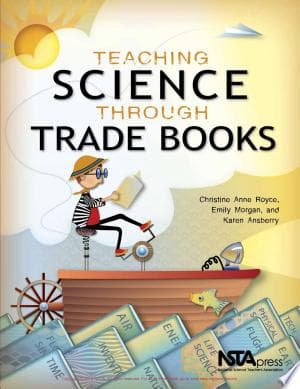
The book argues that textbooks are essential but rarely make students truly engaged or remember things long-term. The authors point out that few people fondly recall a science textbook from childhood. This does not dismiss textbooks but urges teachers to add trade books. Trade books—children's fiction and non-fiction—can change science education by making it relatable, story-based, and emotionally impactful. They provide context, introduce ideas through accessible stories, and spark curiosity in ways a dry textbook often cannot. This ...
Supporting evidence
The authors' anecdote about workshop participants never naming a science textbook as a childhood favorite, contrasting it with the likely positive responses for trade books.
Apply this
Integrate at least one trade book into each science unit. Before introducing a new concept via textbook, use a relevant trade book to build background knowledge, pique interest, and establish a real-world connection. For example, read a story about space exploration before discussing planetary motion.