BookBrief
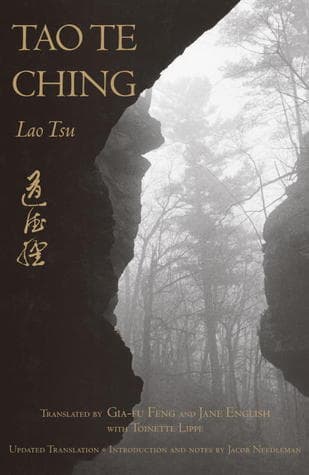
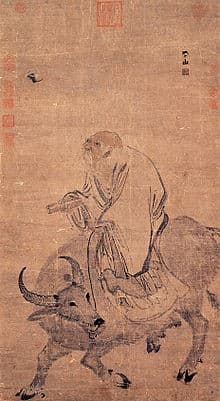
Tao Te Ching cover
Archivist's Choice

Tao Te Ching

Lao Tzu (2000)

Genre

Spirituality / Philosophy

Reading Time

120 min

Key Themes

See below

Track Your Reading

Sign in to track this book

The Tao Te Ching reveals a path to enlightened leadership and personal harmony through humility, spontaneity, and connection to the universe's natural flow.

Core Idea

The Tao Te Ching says the universe runs on a basic, indescribable principle called the Tao. This Tao creates and sustains everything. Real wisdom and balanced living come from following this natural flow, which means being simple, humble, not arguing, and accepting emptiness and contradictions. By letting go of made-up rules, too many wants, and strict control, people and leaders can be very effective and find inner peace. This happens through 'wu wei' – acting without forcing – letting things happen naturally instead of trying to control outcomes.
Reading time
120 min
Difficulty
Medium
✓ Read this if...
You are seeking a foundational text in Eastern philosophy and spirituality, interested in concepts of natural harmony, minimalist living, and paradoxical wisdom, or looking for an alternative perspective on leadership and personal conduct.
✗ Skip this if...
You prefer highly structured, linear arguments, practical self-help guides with step-by-step instructions, or a theological framework with a personal God.

Core idea

The central argument and framework that powers the entire book.

The Tao Te Ching says the universe runs on a basic, indescribable principle called the Tao. This Tao creates and sustains everything. Real wisdom and balanced living come from following this natural flow, which means being simple, humble, not arguing, and accepting emptiness and contradictions. By letting go of made-up rules, too many wants, and strict control, people and leaders can be very effective and find inner peace. This happens through 'wu wei' – acting without forcing – letting things happen naturally instead of trying to control outcomes.

At a glance

Reading time

120 min

Difficulty

Medium

Read this if...

You are seeking a foundational text in Eastern philosophy and spirituality, interested in concepts of natural harmony, minimalist living, and paradoxical wisdom, or looking for an alternative perspective on leadership and personal conduct.

Skip this if...

You prefer highly structured, linear arguments, practical self-help guides with step-by-step instructions, or a theological framework with a personal God.

Key Takeaways

1

Embrace the Uncarved Block

Simplicity and naturalness are the highest forms of wisdom.

Quote

When the Great Way is lost, there is benevolence and righteousness. When cleverness and profit arise, there are great hypocrites. When the six family relationships are not in harmony, there are filial piety and paternal affection. When the country is in chaos and disorder, there are loyal ministers.

The Tao Te Ching often promotes returning to an original, pure state, called the 'uncarved block.' This means a deep simplicity that comes before complex social rules and artificial differences. When people move away from the Tao's natural flow, they create complex systems of right and wrong, and government, to make up for lost natural harmony. These systems, though they seem good, are actually signs of a deeper problem, a move away from the Tao's easy correctness. So, the wise person tries not to add to the world's complexities but t...

Supporting evidence

Chapter 18, which suggests that virtues like 'benevolence and righteousness' only become necessary when humanity has strayed from the natural Way. Also, the frequent mention of 'uncarved block' (pu) as a metaphor for original simplicity.

Apply this

Identify areas in your life where you've over-engineered solutions or created unnecessary rules. Practice simplifying your routines, decisions, and even your thoughts. For example, instead of striving for a complex 'perfect' diet, focus on eating whole, unprocessed foods. Embrace natural inclinations over forced discipline.
wu-weisimplicitynaturalness
2

The Power of Emptiness

True utility often resides in what is absent or unmanifest.

Quote

Thirty spokes converge upon a single hub; it is on the hole in the center that the use of the cart hinges. Clay is molded into vessels; it is on their empty interior that their use depends. Doors and windows are cut out to make a house; it is on their empty space that the use of the house depends. Therefore, just as we take advantage of what is, we should recognize the utility of what is not.

Lao Tzu offers a deep contradiction: the most important parts of things are often their 'nothingness' or emptiness. A wheel's use is not in its spokes, but in the empty space at its center that lets it turn. A cup's purpose is not its clay sides, but the empty space inside that holds liquid. A house's function relies on the empty spaces of its rooms and windows. This idea goes beyond physical things to abstract ideas: real leadership leaves room for others to act, good communication involves listening, and deep wisdom often shows as s...

Supporting evidence

Chapter 11, which explicitly uses the examples of a wheel, a vessel, and a house to illustrate the utility of emptiness.

Apply this

In problem-solving, consider what is missing or what space needs to be created, rather than just what needs to be added. In communication, practice active listening and allow for pauses. In design, appreciate negative space. For personal growth, cultivate moments of quiet and reflection, recognizing their generative power.

emptinessvoidwu-weiparadox
3

Water as the Ultimate Teacher

Adaptability, humility, and persistence lead to insurmountable strength.

Quote

The highest good is like water. Water benefits all things and does not contend. It dwells in places that others despise, and so it is close to the Tao. In dwelling, it is good to be close to the earth. In mind, it is good to be deep. In giving, it is good to be benevolent. In speech, it is good to be sincere. In government, it is good to be orderly. In affairs, it is good to be capable. In action, it is good to be timely. Because it does not contend, it is without fault.

Lao Tzu sees water as a key symbol of the Tao. Water shows the ideal qualities of the wise person and the enlightened leader. It flows to the lowest places, showing humility and not arguing, yet it is completely necessary for life. It is soft and flexible, able to change its shape to any container, yet with constant erosion, it can cut canyons through solid rock. Its quiet, humble nature lets it nourish everything without seeking attention or showing power. This contradiction of soft power, flexibility, and ultimate strength is centra...

Supporting evidence

Chapter 8, which extensively describes the virtues of water as a model for human conduct and alignment with the Tao.

Apply this

When faced with conflict, try to yield rather than resist, finding the path of least resistance. Cultivate humility by seeking to serve rather than dominate. Practice persistent effort over bursts of intensity. Observe how water flows and adapts, and apply these principles to your own decision-making.

yieldingsoftnesspersistencehumility
4

Action Through Non-Action (Wu Wei)

Effortless action aligned with the natural flow achieves more.

Quote

The Tao never acts, yet nothing is left undone. If kings and princes could but hold fast to this, all things would transform themselves. If, after transformation, they should desire to act, they would be restrained by the nameless simplicity. The nameless simplicity is freedom from desire. Freedom from desire brings tranquility, and the world will rectify itself.

Wu Wei, often translated as 'non-action' or 'effortless action,' is a main idea in Taoist thought. It does not mean being lazy or passive. Instead, it means acting in perfect harmony with the universe's natural rhythms and rules (the Tao). It means letting things happen naturally, only stepping in when needed and with very little force, like a skilled gardener who cares for plants without forcing them to grow. The wise person, practicing Wu Wei, gets great results precisely because they do not try hard or fight. Their actions are natu...

Supporting evidence

Chapter 37, which explains how the Tao 'never acts, yet nothing is left undone' and how rulers adhering to this principle would see the world rectify itself.

Apply this

Instead of forcing solutions, step back and observe the natural tendencies of a situation. When leading, empower your team to act autonomously rather than micromanaging. In personal endeavors, find your flow state where action feels effortless and aligned. Learn to trust intuition over rigid planning.

wu-weieffortlessnessspontaneityflow
5

The Value of the Feminine

Embracing receptivity, yielding, and inner strength brings balance.

Quote

Know the masculine, but keep to the feminine. Be a ravine to the world. If you are a ravine to the world, the constant virtue will not depart from you, and you will return to the state of an infant.

The Tao Te Ching often compares the 'masculine' (assertive, dominant, active) with the 'feminine' (receptive, yielding, passive). While not about gender, it suggests developing feminine qualities as necessary for true strength and alignment with the Tao. To 'keep to the feminine' means to accept receptiveness, humility, and inner stillness, instead of always trying for outward control and showing power. The image of the 'ravine' or 'valley' is powerful: it is low, empty, and receptive, yet it gathers all the water and nourishes life. ...

Supporting evidence

Chapter 28, which explicitly advises knowing the masculine but keeping to the feminine, and linking it to being a ravine and returning to the state of an infant.

Apply this

In leadership, prioritize listening and nurturing growth over commanding. In relationships, practice empathy and receptivity. In personal development, cultivate moments of stillness and introspection, allowing insights to emerge rather than forcing them. Embrace vulnerability as a source of strength.

yin-yangreceptivityhumilitysoftness
6

Smallness as Greatness

The subtle, unassuming, and humble hold profound power.

Quote

The great man abides in the thick, not in the thin; in the fruit, not in the flower. Hence he rejects the one and takes the other. He who knows others is wise; he who knows himself is enlightened. He who conquers others is strong; he who conquers himself is mighty. He who is content is rich. He who acts with vigor has a will. He who does not lose his place will endure. He who dies but does not perish has longevity.

The Tao Te Ching often challenges common ideas of greatness, saying that real power and lasting influence are not in what is grand, obvious, or famous, but in what is subtle, humble, and unassuming. The wise person does not try to be the tallest tree but the deep root, not the bright flower but the nourishing fruit. This view encourages focusing on inner growth and self-control over external conquest and display. It suggests that satisfaction, richness, and lasting strength come from within, from being happy with what is, and from a q...

Supporting evidence

Chapter 33, which contrasts knowing others with knowing oneself, and conquering others with conquering oneself, linking true power to internal mastery and contentment.

Apply this

Instead of seeking public recognition, focus on mastering your craft for its own sake. Cultivate contentment with what you have rather than constantly striving for more. Prioritize inner peace and self-awareness over external achievements or status symbols. Find dignity in humble tasks.

humilityinner-strengthcontentmentsubtlety
7

The Danger of Excessive Desire

Attachment to material things and external validation leads to suffering.

Quote

He who knows how to be content will suffer no disgrace. He who knows when to stop will incur no danger. He will last long. The five colors blind the eye. The five notes deafen the ear. The five tastes dull the palate. Racing and hunting madden the mind. Things hard to get injure one’s conduct. Therefore, the sage is for the belly, not for the eye. Hence he rejects the one and takes the other.

Lao Tzu warns against the dangers of too much desire and attachment to sensory pleasures and external things. While not promoting strict self-denial, he points out that an endless hunger for 'more' — whether it is more possessions, more excitement, or more recognition — eventually leads to unhappiness, confusion, and a departure from the Tao. The constant search for external pleasure makes us blind to true wisdom, dulls our senses, and harms our character. The wise person, in contrast, puts inner contentment and basic needs ('for the ...

Supporting evidence

Chapter 12, which details how excessive sensory input and the pursuit of 'things hard to get' lead to harm, and contrasts this with the sage's focus on essential needs.

Apply this

Practice mindful consumption: question why you desire certain things. Regularly declutter your physical and mental space. Limit your exposure to overwhelming sensory input (e.g., excessive screen time). Cultivate gratitude for what you have, rather than focusing on what you lack.

desireattachmentcontentmentmoderation
8

The Paradox of Leadership

The best leader is one whose presence is barely felt, yet whose impact is profound.

Quote

The best rulers are those whose subjects only know that they exist; the next best are those whom they love and praise; the next are those whom they fear; and the next are those whom they despise. When the best ruler's work is done and his aim fulfilled, the people will all say, 'We ourselves have done it.'

The Tao Te Ching offers a very different leadership model from typical top-down, command-and-control approaches. The ideal ruler, or wise leader, acts with such subtlety and alignment with the natural order that their people feel they are leading themselves. Their actions are so perfectly timed and minimal that outcomes seem to happen naturally, creating a sense of ownership and empowerment among the people. This 'invisible hand' approach builds a self-organizing, harmonious society that does not need constant direction, fear, or even...

Supporting evidence

Chapter 17, which outlines the four types of rulers, with the highest being one whose existence is barely known, and whose people believe they achieved results themselves.

Apply this

In leadership roles, focus on creating an environment where others can thrive independently. Provide resources and guidance, but avoid micromanaging. Empower your team to make decisions and take ownership. Celebrate collective achievements, attributing success to the group rather than solely to your own efforts.

leadershipwu-weiempowermenthumility
9

The Cycles of Reversal

Extremes inevitably revert to their opposites; moderation is key.

Quote

Reversal is the movement of the Tao. Weakness is the function of the Tao. All things in the world come from Being, and Being comes from Non-being.

A basic rule of the Tao is the idea of reversal: everything that reaches an extreme will eventually go back to its opposite. Good times turn into bad times, strength into weakness, fame into obscurity, and vice versa. This is not a negative view but an acceptance of life's dynamic, cyclical nature. Understanding this rule encourages moderation in everything and warns against holding on to any single state, whether good or bad. It helps create a sense of detachment, knowing that no condition lasts forever. The wise person, aware of the...

Supporting evidence

Chapter 40, which states 'Reversal is the movement of the Tao' and 'Weakness is the function of the Tao.' This idea is also implicitly present in many other chapters discussing the balance of opposites.

Apply this

Avoid overcommitting or pushing beyond natural limits. When experiencing success, remain humble and prepare for potential shifts. When facing challenges, remember that they are temporary. Embrace the idea that yielding can be a powerful strategy, and that apparent weakness can lead to strength.

reversalcyclesyin-yangmoderation
10

The Nameless and the Named

True reality transcends human language and conceptualization.

Quote

The Tao that can be told is not the eternal Tao. The name that can be named is not the eternal name. The nameless is the beginning of heaven and earth. The named is the mother of the ten thousand things. Therefore, constantly without desire, one can observe its subtlety. Constantly with desire, one can observe its manifestations.

The first lines of the Tao Te Ching immediately set up a basic contradiction: the ultimate reality, the Tao, cannot be understood or described with human language. Any attempt to define it with words will limit and distort its true nature. The 'nameless' Tao is the undifferentiated, unmanifest source from which all existence ('heaven and earth') comes. The 'named' refers to the manifest world, the 'ten thousand things' that we see and label. While we can see the Tao's effects through our desires and interactions with the world, its de...

Supporting evidence

Chapter 1, the very first chapter, which clearly distinguishes between the nameless and the named Tao, and their respective roles in revealing subtlety and manifestations.

Apply this

Recognize the limits of language and logic when trying to understand profound truths. Practice meditation or mindfulness to quiet the mind and experience reality beyond conceptual frameworks. Be open to ambiguity and paradox. Avoid rigid definitions and embrace the mystery inherent in existence.

Taonamelessmysterynon-duality

Critical analysis

Notable Quotes

The Tao that can be told is not the eternal Tao; The name that can be named is not the eternal name.

Opening lines, establishing the ineffable nature of the Tao.

When people see some things as beautiful, other things become ugly. When people see some things as good, other things become bad.

Reflecting on the relativity of human judgment and dualities.

The best of all leaders is he who helps people find their own way, and then steps aside.

Describing the ideal form of leadership, emphasizing non-interference.

He who knows that enough is enough will always have enough.

A lesson on contentment and the dangers of insatiable desire.

A journey of a thousand miles begins with a single step.

Emphasizing the importance of starting and the gradual nature of great endeavors.

The softest thing in the world overcomes the hardest thing in the world.

Illustrating the power of gentleness and yielding over rigidity and force.

Know the masculine, keep to the feminine.

Advocating for balance between opposing forces, particularly active and receptive principles.

Govern a great nation as you would cook a small fish. Do not overdo it.

A metaphor for minimal intervention in governance, advocating for 'wu wei'.

Empty your mind of all thoughts. Let your heart be at peace.

Guidance on meditation and achieving inner tranquility.

If you realize that all things change, there is nothing you will try to hold on to. If you aren't afraid of dying, there is nothing you won't do.

Reflecting on impermanence and freedom from attachment and fear.

The wise man does not lay up his own treasures. The more he gives to others, the more he has for his own.

Highlighting the paradox of generosity and selflessness.

The greatest perfection seems imperfect, yet its use is inexhaustible.

Describing the nature of the Tao and true perfection, which often appears humble or incomplete.

He who is without desire sees the mystery. He who is with desire sees only the manifestations.

Distinguishing between two modes of perception, one leading to deeper understanding.

Fame or your own self: which is more precious? Self or possessions: which is more important?

Posing questions to prompt reflection on priorities and values.

Quiz

Test Your Knowledge

Ready to see how well you understood this book? Take our interactive quiz with 10 questions.

10
Questions
~5
Minutes
?
Best Score

Key Questions (FAQ)

The Tao Te Ching is an ancient Chinese classic text, traditionally attributed to the philosopher Lao Tzu. It is a foundational text for Taoism, offering profound insights into spirituality, philosophy, and the art of living in harmony with the universe.

About the author