BookBrief
Tao of Jeet Kune Do cover
Archivist's Choice

Tao of Jeet Kune Do

Bruce Lee (1975)

Genre

Biography / Reference / Spirituality / Health / Philosophy

Reading Time

240 min

Key Themes

See below

Track Your Reading

Sign in to track this book

Born from a career-threatening injury, Bruce Lee's work goes beyond martial arts to offer a philosophy of adaptability, self-discovery, and living without limits.

Core Idea

Bruce Lee's "Tao of Jeet Kune Do" is not a fixed martial art but a philosophical guide for personal freedom and self-expression through combat. It promotes individual experience and adaptation over strict traditions, focusing on fluidity, efficiency, and constant awareness. The main idea is that real mastery comes from moving past styles and limits to find one's own method, using principles of simplicity, directness, and the unity of opposites in both fighting and life.
Reading time
240 min
Difficulty
Medium
✓ Read this if...
You are a martial artist (of any style) seeking to deepen your understanding of combat philosophy, an athlete interested in peak performance principles, or anyone looking for a unique perspective on self-mastery, adaptability, and personal freedom.
✗ Skip this if...
You are looking for step-by-step instructions on how to fight, a traditional martial arts curriculum, or a historical biography of Bruce Lee. This book is more philosophical and conceptual than practical in a prescriptive sense.

Core idea

The central argument and framework that powers the entire book.

Bruce Lee's "Tao of Jeet Kune Do" is not a fixed martial art but a philosophical guide for personal freedom and self-expression through combat. It promotes individual experience and adaptation over strict traditions, focusing on fluidity, efficiency, and constant awareness. The main idea is that real mastery comes from moving past styles and limits to find one's own method, using principles of simplicity, directness, and the unity of opposites in both fighting and life.

At a glance

Reading time

240 min

Difficulty

Medium

Read this if...

You are a martial artist (of any style) seeking to deepen your understanding of combat philosophy, an athlete interested in peak performance principles, or anyone looking for a unique perspective on self-mastery, adaptability, and personal freedom.

Skip this if...

You are looking for step-by-step instructions on how to fight, a traditional martial arts curriculum, or a historical biography of Bruce Lee. This book is more philosophical and conceptual than practical in a prescriptive sense.

Key Takeaways

1

Be Like Water

Embrace adaptability and formlessness in combat and life.

Quote

Empty your mind, be formless, shapeless — like water. If you put water into a cup, it becomes the cup. You put water into a bottle and it becomes the bottle. You put it in a teapot, it becomes the teapot. Now, water can flow or it can crash. Be water, my friend.

Bruce Lee's main idea, 'Be Like Water,' goes beyond combat strategy, offering a way to live. It suggests a state of ultimate adaptability and fluidity, asking practitioners to let go of rigid forms and old ideas. Just as water fits any container, a Jeet Kune Do practitioner should adjust quickly to an opponent's moves and plans, neither fighting nor forcing, but flowing around obstacles or breaking through them. This idea extends beyond physical fights to mental and spiritual areas, promoting an open mind, readiness for change, and th...

Supporting evidence

Lee constantly emphasizes the need to shed classical forms and styles, which he views as restrictive and artificial. He critiques the 'dryland swimming' of traditional martial arts, advocating for real-world application and spontaneous adaptation over rote memorization.

Apply this

In any challenging situation, pause and assess. Instead of rigidly applying a pre-conceived solution, observe the evolving circumstances and adapt your approach. In negotiations, listen and respond to the other party's arguments rather than sticking to a script. In creative endeavors, allow ideas to flow and morph without forcing them into a predefined structure.
adaptabilityfluidityformlessness
2

The Art of Expressing the Human Body

Martial arts as a means of personal discovery and authentic self-expression.

Quote

Jeet Kune Do is simply the direct expression of one's feelings with the minimum of movements and energy.

Lee sees martial arts as more than a fighting system; it is a journey of self-discovery and true expression. He says that the real goal of training is to free oneself from outside forms, styles, and rules, letting one's natural instincts and unique body movements come out. JKD acts as a mirror, showing the practitioner's inner state and physical abilities. It is about removing what is not needed and embracing what is truly effective and natural for the individual. The goal is not to copy a master, but to understand oneself so well tha...

Supporting evidence

Lee's extensive notes on human anatomy, physiology, and psychology, combined with his detailed sketches of various martial arts techniques, demonstrate his holistic approach to understanding the body as an instrument of expression. He critiques 'classical mess' and 'organized despair' of traditional styles for stifling individual expression.

Apply this

Identify areas in your life where you might be mimicking others or adhering to outdated norms. Practice mindful movement, whether through exercise or daily tasks, paying attention to what feels natural and efficient for your body. In creative work, focus on expressing your unique voice rather than conforming to popular trends. Regularly ask, 'Is this truly me, or am I wearing a mask?'

self-expressionauthenticityindividuality
3

Economy of Motion

Achieve maximum effect with minimum effort and time.

Quote

The shortest distance between two points is a straight line. The most efficient attack is the one that reaches the target first.

Efficiency of motion is a central part of Jeet Kune Do, pushing for the most direct, efficient, and powerful way to reach a goal, whether in fighting or in life. This idea focuses on getting rid of unnecessary movements, wasted energy, and extra steps. Every action should have a clear purpose, delivered with accuracy and speed. Lee breaks down techniques to their basic parts, focusing on hitting and blocking at the same time, direct lines of attack, and avoiding big wind-ups. It is about being practical and effective, making sure all ...

Supporting evidence

Lee's detailed analysis of punching and kicking mechanics consistently highlights the importance of directness and speed. He often illustrates how traditional martial arts forms incorporate inefficient, circular movements that waste time and energy compared to a direct 'straight blast' punch.

Apply this

Before starting a task, identify the absolute essential steps. Eliminate any redundant actions or unnecessary 'fluff.' In communication, aim for clarity and conciseness, getting straight to the point. When learning a new skill, focus on mastering the core mechanics before adding embellishments. Streamline your daily routines to reduce wasted time and effort.

efficiencydirectnesspragmatism
4

Intercepting the Interception

Anticipate and neutralize an opponent's attack before it fully materializes.

Quote

To intercept means to take advantage of the opponent's movements and intentions before they are fully executed.

Jeet Kune Do gets its name, 'The Way of the Intercepting Fist,' from this key idea. It is not just about blocking an attack and then hitting back, but about stopping the opponent's intention and action right when it starts. This needs sharp awareness, exact timing, and the ability to read an opponent's small signs and preparation movements. The goal is to 'beat the punch to the punch,' stopping the threat before it gets going. This active approach reduces danger and makes one's own counter-attack more effective, often combining defens...

Supporting evidence

Lee provides numerous diagrams and explanations of how to read an opponent's 'telegraphing' movements – the subtle shifts in weight, muscle tension, or eye movements that precede an attack – allowing for an early interception. He details techniques like 'stop-hits' and 'simultaneous parry-and-strike' as prime examples.

Apply this

In debates or discussions, listen actively for underlying assumptions or the direction an argument is heading, and address them before they fully manifest. In project management, identify potential roadblocks early and implement preventative measures. In personal interactions, pay attention to non-verbal cues to anticipate needs or concerns before they become explicit problems.

anticipationtimingproactiveness
5

Simplicity and Non-Classicality

Discard elaborate forms and embrace what is practical and effective.

Quote

Research your own experience. Absorb what is useful, discard what is useless, and add what is specifically your own.

Lee strongly rejects the stiff, complex, and often impractical forms of traditional martial arts, calling them 'classical mess.' He promotes a philosophy of simple practicality, urging practitioners to remove all unnecessary decorations and ritualistic movements. The focus should be only on what is effective, direct, and immediately useful in a real fight. This means questioning every technique, every stance, and every tradition, keeping only what truly works for the individual. JKD is not a style with set techniques, but an idea of f...

Supporting evidence

Lee's constant critique of classical styles, which he describes as 'dryland swimming,' highlights his belief that they prepare students for ritualized performance rather than actual fighting. His book is filled with comparisons showing simpler, more direct JKD applications versus complex traditional techniques.

Apply this

In your professional life, identify processes or tools that are overly complex and simplify them. In learning, focus on foundational principles rather than rote memorization of intricate details. In personal habits, discard routines or beliefs that no longer serve you, and embrace simpler, more effective alternatives. Regularly audit your commitments and eliminate anything that is not essential or truly effective.

simplicityeffectivenessdeconstruction
6

Total and Constant Awareness

Cultivate an alert, non-judgmental state of mind in all moments.

Quote

The consciousness is not a rigid entity but a fluid process, constantly changing.

Beyond physical technique, Lee highlights the importance of mental and sensory awareness. This is not just about being alert to an opponent's movements, but about developing a continuous, open, and non-judgmental awareness of one's surroundings, one's own body, and one's inner state. It is a state of 'no-mind' or 'beginner's mind,' where one is fully present, free from old ideas, and able to see reality as it is. This heightened awareness allows for immediate, intuitive responses, without hesitation or overthinking. It is about being ...

Supporting evidence

Lee frequently references Zen Buddhist concepts like 'no-mind' (mushin) and the importance of being present. His training regimen included not only physical drills but also extensive meditation and philosophical study to cultivate mental acuity and tranquility.

Apply this

Practice mindfulness daily. Whether eating, walking, or working, try to be fully present and observe without judgment. Reduce distractions during tasks. Engage in active listening during conversations, focusing entirely on the speaker. Regularly check in with your own body and mind, noticing sensations and thoughts without getting carried away by them.

mindfulnesspresenceintuition
7

The Four Ranges of Combat

Master the dynamics of kicking, punching, trapping, and grappling for complete versatility.

Quote

The skillful JKD man is a complete fighter. He can fight at long range, medium range, close range, and grappling range.

Lee divides combat into four connected ranges: kicking (long range), punching (medium range), trapping (close range), and grappling (ground fighting/clinch). A true Jeet Kune Do practitioner must be skilled and comfortable moving between all these ranges, having many different techniques. This full understanding prevents specializing in a way that leaves one exposed in certain situations. The goal is to be able to control the range or adapt easily to whatever range the situation needs, instead of being limited to one preferred distanc...

Supporting evidence

Lee's extensive notes include detailed techniques and strategies for each of the four ranges, drawing from various martial arts like Wing Chun, boxing, fencing, and judo. He emphasizes cross-training and the integration of these different skill sets into a cohesive whole.

Apply this

In skill development, avoid over-specialization. If you're a writer, also practice public speaking and visual storytelling. If you're a salesperson, understand not just pitching but also negotiation and client retention. Ensure your personal 'skill toolkit' is well-rounded, allowing you to adapt to different challenges.

versatilityrange-controlholistic-training
8

The Oneness of Opposites (Yin/Yang)

Recognize the interconnectedness and complementary nature of all forces.

Quote

Life is a process of flowing and becoming, a combination of 'being' and 'doing.'

Lee often brings the philosophy of Yin and Yang into his martial arts and life philosophy. This idea shows the connection and complementary nature of seemingly opposite forces – soft and hard, passive and active, defense and offense. True mastery is not about picking one, but about understanding how they work together and that both are needed. A JKD practitioner must be able to yield like Yin and strike like Yang, moving between them easily. This idea encourages seeing the world in terms of balance and harmony, knowing that extremes a...

Supporting evidence

The Yin/Yang symbol is prominently featured throughout the book, often drawn by Lee himself. He applies this concept to various aspects of combat, such as simultaneous blocking and striking, yielding to an opponent's force to redirect it, and the balance between physical training and mental cultivation.

Apply this

In decision-making, consider both the pros and cons, the short-term and long-term impacts, the logical and emotional aspects. In personal relationships, balance giving and receiving. In your work, find the equilibrium between focused effort and rest, between individual contribution and teamwork. Embrace paradoxes rather than trying to resolve them into a single truth.

dualitybalanceintegration
9

No Way as Way, No Limitation as Limitation

Transcend all dogmas and self-imposed boundaries to achieve ultimate freedom.

Quote

Jeet Kune Do is not a style. It is not a system. It is a process of liberation.

This strong contradiction captures the ultimate freedom and philosophy of Jeet Kune Do. Lee says that the true 'way' is to have no fixed way, to not be held back by any single style, rule, or technique. To accept 'no limitation as limitation' means to see that the only real limits are those we put on ourselves, either by sticking strictly to tradition or by doubting ourselves. JKD is a constant process of self-exploration, adaptation, and growth, always changing and rejecting dogma. It is about breaking free from all prisons – physica...

Supporting evidence

The entire premise of JKD, as detailed in the introduction by Linda Lee and Gilbert L Johnson, is its lack of definite lines or boundaries, being a reflection of the individual. Lee's personal journey of moving from traditional Wing Chun to developing JKD exemplifies this shedding of 'way' for a more personal, limitless approach.

Apply this

Challenge your own assumptions and beliefs, especially those that limit your potential. Question established norms in your field or industry. Regularly step outside your comfort zone to explore new skills or perspectives. Avoid rigidly defining yourself or your capabilities, allowing room for constant evolution and reinvention. Embrace the idea that your path is unique and self-created.

freedomtranscendenceunconventional

Critical analysis

Notable Quotes

Using no way as way, having no limitation as limitation.

A core principle of Jeet Kune Do's adaptability and freedom.

Empty your mind, be formless, shapeless, like water. If you put water into a cup, it becomes the cup. You put water into a bottle and it becomes the bottle. You put it in a teapot, it becomes the teapot. Now, water can flow or it can crash. Be water, my friend.

A famous analogy explaining the ideal state of flexibility and responsiveness.

The great mistake is to anticipate the outcome of the engagement; you ought not to be thinking of whether it ends in victory or defeat. Let nature take its course, and your tools will strike at the proper moment.

Emphasizing presence and non-attachment to results during combat.

Research your own experience. Absorb what is useful, discard what is useless, and add what is specifically your own.

A foundational tenet of Jeet Kune Do's individualistic and pragmatic approach.

A good fighter must be focused, but not to the extent of tunnel vision. He must be aware of his opponent and his environment.

Highlighting the importance of broad awareness in combat.

To express oneself honestly, not dishonestly, this is the first step.

Connecting martial arts to self-expression and authenticity.

Walk on! Learn to be of no mind. Do not let your mind be tied up in any way. Be alert, but not tense. Relaxed, but not asleep.

Describing the desired mental state for a martial artist.

Jeet Kune Do is not a style, it is a process of liberation.

Clarifying the nature of JKD as a journey of self-discovery rather than a rigid system.

The highest technique is to have no technique. My technique is a result of your technique; my movement is a result of your movement.

Explaining the reactive and adaptable nature of advanced Jeet Kune Do.

The meaning of life is that it is to be lived, and it is not to be traded and conceptualized and squeezed into a pattern. We are not going to be able to understand the meaning of life until we are able to understand ourselves.

A broader philosophical reflection on life and self-understanding.

The essence of JKD is simplicity, directness, and freedom.

Summarizing the core attributes and goals of Jeet Kune Do.

Don't get set into one form, adapt it and build your own, and let it grow, be like water.

Reinforcing the idea of personal growth and adaptation over rigid adherence to forms.

The true martial artist is one who can adapt to any situation and use any means necessary to achieve his goal.

Defining the ideal martial artist through their capacity for adaptation and pragmatism.

Man, the living creature, the creating individual, is always more important than any established style or system.

Prioritizing the individual's experience and expression over dogmatic adherence to systems.

Quiz

Test Your Knowledge

Ready to see how well you understood this book? Take our interactive quiz with 10 questions.

10
Questions
~5
Minutes
?
Best Score

Key Questions (FAQ)

Jeet Kune Do (JKD) is a martial arts philosophy and system developed by Bruce Lee, emphasizing adaptability, efficiency, and personal freedom. It is not a fixed style but a concept that encourages individuals to find their own path and discard what is useless.

About the author

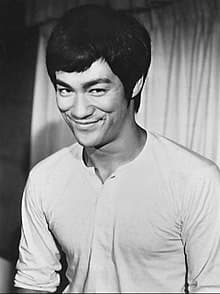
Bruce Lee

Bruce Lee was a martial arts legend, philosopher, and actor. His seminal work, "The Tao of Jeet Kune Do," published posthumously, offers profound insights into his martial philosophy and approach to combat. Lee's writings and teachings continue to influence martial artists and thinkers worldwide.