BookBrief
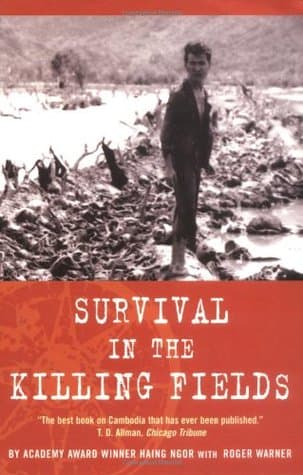
Survival in the Killing Fields cover
Archivist's Choice

Survival in the Killing Fields

Haing Ngor (1987)

Genre

Biography / Memoir / History

Reading Time

10-12 hours

Key Themes

See below

Track Your Reading

Sign in to track this book

Haing Ngor's memoir describes the horrors of forced labor camps and the loss of his family under the Khmer Rouge, showing the human spirit's resilience during Cambodia's genocide.

Core Idea

Haing Ngor's "Survival in the Killing Fields" is a direct account of the Cambodian genocide under the Khmer Rouge. It shows how an educated doctor lost his identity, profession, and humanity, forced to see terrible acts and endure starvation, torture, and the execution of loved ones. The book suggests that survival was less about individual strength and more about luck, a strong will to live, and occasional, dangerous acts of kindness within a regime designed to remove all traces of pre-revolutionary life and learning. Ngor details the psychological and physical damage from the Khmer Rouge's radical farming experiment, which turned Cambodia into a large labor camp and killing field. He explains the moral problems faced daily, where basic human decency became risky and the idea of 'liberation' hid a plan to dehumanize people. He also stresses the importance of memory and bearing witness to prevent future genocides.
Reading time
10-12 hours
Difficulty
Hard
✓ Read this if...
You want a deeply personal, unflinching, and historically vital first-hand account of the Cambodian genocide, focusing on the human experience of survival against impossible odds.
✗ Skip this if...
You are highly sensitive to graphic descriptions of violence, starvation, and human suffering, or prefer a more detached, academic analysis of historical events.

Core idea

The central argument and framework that powers the entire book.

Haing Ngor's "Survival in the Killing Fields" is a direct account of the Cambodian genocide under the Khmer Rouge. It shows how an educated doctor lost his identity, profession, and humanity, forced to see terrible acts and endure starvation, torture, and the execution of loved ones. The book suggests that survival was less about individual strength and more about luck, a strong will to live, and occasional, dangerous acts of kindness within a regime designed to remove all traces of pre-revolutionary life and learning.

Ngor details the psychological and physical damage from the Khmer Rouge's radical farming experiment, which turned Cambodia into a large labor camp and killing field. He explains the moral problems faced daily, where basic human decency became risky and the idea of 'liberation' hid a plan to dehumanize people. He also stresses the importance of memory and bearing witness to prevent future genocides.

At a glance

Reading time

10-12 hours

Difficulty

Hard

Read this if...

You want a deeply personal, unflinching, and historically vital first-hand account of the Cambodian genocide, focusing on the human experience of survival against impossible odds.

Skip this if...

You are highly sensitive to graphic descriptions of violence, starvation, and human suffering, or prefer a more detached, academic analysis of historical events.

Key Takeaways

1

The Illusion of Liberation

How radical ideology can mask a descent into unimaginable cruelty.

Quote

The Khmer Rouge promised a new dawn, a liberation from Western influence and corruption. Instead, they delivered a darkness that consumed everything.

Ngor's memoir clearly shows how the initial promise of a communist revolution, meant to purify Cambodian society and return it to a farming ideal, quickly became a genocidal nightmare. The Khmer Rouge's 'Year Zero' policy was not just a political change but a complete societal reset, breaking down institutions, cities, and personal identities. This radical idea, presented as a path to a better society, was actually a system of control and dehumanization. The 'liberation' from perceived foreign influence and class differences became an...

Supporting evidence

The forced evacuation of Phnom Penh, where millions were driven into the countryside, regardless of age, health, or social standing, marking 'Year Zero' and the obliteration of urban life.

Apply this

Be wary of political movements that promise immediate, radical societal overhauls and demand absolute loyalty. Scrutinize rhetoric that demonizes entire groups or seeks to erase history, as these are often precursors to authoritarian control and human rights abuses.

khmer-rougeyear-zerototalitarianism
2

The Dehumanization Machine

Survival under Pol Pot required shedding identity and embracing a new, brutal reality.

Quote

They wanted to break us, to make us forget who we were. To survive, you had to become a nobody, a mere cog in their machine.

Ngor, a respected surgeon, had to hide his education and professional background, pretending to be an uneducated farmer to avoid execution. This act of hiding was a complete suppression of his former self, a necessary adaptation to the Khmer Rouge's policy of leveling society. The regime targeted anyone with education, foreign ties, or professional skills, seeing them as threats to their farming communist ideal. The book vividly describes the psychological cost of this forced anonymity, where personal history, family connections, and ...

Supporting evidence

Ngor's constant fear of being discovered as a doctor, even when faced with the suffering of others, and his strategic decision to deny his past, even to those he might have helped.

Apply this

Recognize the importance of individual identity and the dangers of systems that seek to erase or homogenize personal history. Support education and critical thinking as bulwarks against authoritarian attempts to control thought and narrative.

dehumanizationidentity-suppressionpolitical-repression
3

Love as a Lifeline

In the face of utter despair, the bonds of love offer the only true solace and motivation to endure.

Quote

My love for my wife, for my family, was the tiny flame that kept me from being extinguished in the darkness. It was all I had left.

Ngor's story is shaped by his lasting love for his wife, Chang My Huoy, and his family. Despite the regime's efforts to break all family bonds and reduce individuals to laborers, Ngor's commitment to his loved ones was his main reason for survival. The book details the huge sacrifices he made, the risks he took, and the unbearable pain he endured, all fueled by the hope of reuniting or the memory of their shared past. This deep emotional connection, often secret and dangerous to keep, served as a psychological anchor in a world design...

Supporting evidence

Ngor's unwavering devotion to his wife, even after her death, and his decision to carry her remains with him as he fled, a testament to a love that transcended even the horrors of the Killing Fields.

Apply this

Cherish and actively cultivate deep personal relationships. Understand that in times of crisis, these bonds can provide essential emotional resilience and a profound sense of purpose, serving as a powerful antidote to isolation and despair.

resiliencehuman-connectionlove-in-adversity
4

The Pervasiveness of Hunger

Food scarcity was not just a hardship, but a deliberate tool of control and a constant, agonizing obsession.

Quote

Hunger was a constant companion, a gnawing ache that overshadowed every thought, every feeling. It was a weapon they wielded with devastating effect.

Ngor vividly describes the constant and overwhelming hunger that affected the Cambodian people under the Khmer Rouge. Food was deliberately kept scarce, rations were small, and starvation was common. This was not just a result of poor farming policy but a planned strategy to keep the population weak, obedient, and unable to resist. The book shows how hunger reduced human existence to a basic fight for survival, where looking for insects, roots, or anything edible became a daily, dangerous activity. This constant malnutrition harmed ph...

Supporting evidence

Descriptions of people eating anything they could find, including insects, leaves, and even human waste in extreme cases, and the severe physical deterioration of the population due to starvation.

Apply this

Recognize food security as a fundamental human right and a cornerstone of societal stability. Advocate for policies that address hunger and food scarcity, understanding their profound impact on human dignity and well-being.

starvationfood-securitypolitical-control
5

The Fragility of Morality

Extreme circumstances force impossible choices, blurring the lines between good and evil.

Quote

In the Killing Fields, the rules of normal life ceased to exist. You did what you had to do to survive, even if it meant sacrificing a part of your soul.

Ngor's memoir shows the moral compromises and difficult decisions forced upon people in an environment of total terror. People were made to betray neighbors, steal from the dying, or watch passively as loved ones suffered, simply to improve their own small chances of survival. The Khmer Rouge's system broke down traditional ethics, replacing them with a brutal practicality where self-preservation often came before helping others. Ngor himself, despite his medical background, had to make hard choices, putting his own survival before th...

Supporting evidence

Instances where individuals, including Ngor, had to make choices that would be considered morally reprehensible in normal society, such as not intervening to save a dying person to avoid drawing attention to oneself.

Apply this

Cultivate empathy and understanding for those who have endured extreme trauma and made difficult choices under duress. Reflect on the societal conditions that can lead to such moral erosion and work to prevent them.

moral-dilemmassurvival-ethicstrauma
6

The Power of Memory and Witness

Bearing witness to atrocity is a moral imperative, ensuring that such horrors are never forgotten.

Quote

I survived so that I could tell the world what happened. My silence would be a betrayal of all who died.

Ngor's decision to write this memoir and his later work in film (winning an Academy Award for 'The Killing Fields') came from a strong sense of responsibility to the victims of the Khmer Rouge. He felt he had to speak for those who could not, to ensure the world understood the scale and brutality of the Cambodian genocide. His detailed memories, often terrible and painful, serve as a vital historical record, countering denial and giving a human face to the numbers of suffering. This act of witnessing is not just about telling facts; i...

Supporting evidence

Ngor's dedication of his Academy Award to the Cambodian people and his tireless efforts to speak out against genocide, despite the emotional burden.

Apply this

Actively seek out and engage with survivor testimonies and historical accounts of atrocities. Support efforts to preserve historical memory and educate future generations about the dangers of extremism and genocide.

historical-memorygenocide-educationsurvivor-testimony
7

The Arbitrariness of Death

Life and death under the Khmer Rouge were often determined by sheer chance and unpredictable whims.

Quote

Death was everywhere, a constant presence. Sometimes it came for a reason, sometimes for no reason at all. It was a lottery of pain.

One of the most terrifying aspects of life under the Khmer Rouge was how random death was. People could be executed for the smallest mistake, a perceived insult, or simply for being in the wrong place. Ngor tells of many times when individuals were killed for wearing glasses (a sign of being educated), speaking a foreign language, or even for crying. This unpredictability created extreme paranoia and fear, where no one felt safe, and every interaction could have fatal results. The lack of fair process, the quick executions, and the sh...

Supporting evidence

The constant 'purges' and arbitrary killings, such as the execution of people for minor infractions or for simply being suspected of disloyalty, often without any trial or explanation.

Apply this

Recognize the importance of rule of law, due process, and human rights in preventing arbitrary violence. Be vigilant against systems that grant unchecked power to authorities and erode individual protections.

arbitrary-violencetotalitarian-controlhuman-rights
8

The Indomitable Human Spirit

Despite unimaginable suffering, the will to live and the capacity for hope can persist.

Quote

Even when everything was taken from us, the spark of life, the desire to see another sunrise, refused to be extinguished.

While Ngor's memoir directly details the horrors, it also shows the resilience of the human spirit. Despite seeing terrible brutality, enduring starvation, forced labor, and losing almost everything he cared about, Ngor never fully gave up hope. His resolve to survive, fueled by love, memory, and a deep desire to tell his story, is a repeated theme. The book shows how even in the darkest human experiences, people can find strength, moments of connection, and a stubborn refusal to quit. This is not a romanticized view of suffering, but...

Supporting evidence

Ngor's repeated escapes, his careful planning, and his unwavering commitment to carrying his wife's memory and remains with him, all demonstrating an unyielding will to live and bear witness.

Apply this

Draw inspiration from stories of resilience in the face of adversity. Cultivate personal fortitude and a belief in the human capacity to overcome even the most challenging circumstances, while acknowledging the profound cost of such endurance.

resiliencehuman-spiritperseverance

Critical analysis

Notable Quotes

If I die, I die, but I will not let the Khmer Rouge kill my spirit.

Haing's internal resolve as he faces constant threats and atrocities under the Khmer Rouge.

We were all actors in a play we didn't audition for, and the director was a madman.

Reflecting on the forced labor and absurd, deadly rules imposed by the Khmer Rouge.

The greatest tragedy was not just the dying, but the living without hope.

Describing the psychological toll and despair that permeated daily life in the work camps.

To survive, you had to become less human, or more human than you ever thought possible.

Contemplating the moral compromises and extraordinary acts of kindness required for survival.

Every grain of rice was a victory, every day lived a miracle.

Highlighting the extreme scarcity of food and the constant struggle for basic sustenance.

The past is a wound that never truly heals, but it can teach us to value the present.

Looking back on his experiences and the lasting impact they had on him.

They took away our names, our families, our history, but they could not take away what we remembered.

Speaking about the Khmer Rouge's attempts to erase identity and culture, and the power of memory.

A doctor's hands are meant to heal, not to dig graves.

Haing, a trained doctor, forced to perform manual labor and witness widespread death instead of saving lives.

Even in the darkest times, the smallest act of kindness could be a lifeline.

Recalling instances where human compassion offered brief solace amidst pervasive cruelty.

I carry the ghosts of the killing fields within me, and they demand to be heard.

Explaining his motivation to speak out and bear witness to the atrocities he experienced.

The silence of the world was as deafening as the screams of the dying.

Expressing frustration and sorrow over the international community's inaction during the Cambodian genocide.

Freedom is not just the absence of chains; it is the presence of dignity.

Reflecting on what true freedom means after enduring years of dehumanization.

To forget is to allow it to happen again.

A powerful statement on the importance of remembering historical atrocities to prevent their recurrence.

My life became a constant calculation of risk and reward, of when to speak and when to be silent.

Describing the constant vigilance and strategic thinking required to navigate the treacherous environment under the Khmer Rouge.

Quiz

Test Your Knowledge

Ready to see how well you understood this book? Take our interactive quiz with 10 questions.

10
Questions
~5
Minutes
?
Best Score

Key Questions (FAQ)

'Survival in the Killing Fields' is a gripping memoir by Haing Ngor, detailing his harrowing experiences as a survivor of the Pot Pot regime and the Cambodian holocaust. It provides an eyewitness account of life under the Khmer Rouge, revealing the brutal realities of war slaves and the destruction of family life, while also offering a message of hope and resilience.

About the author