BookBrief
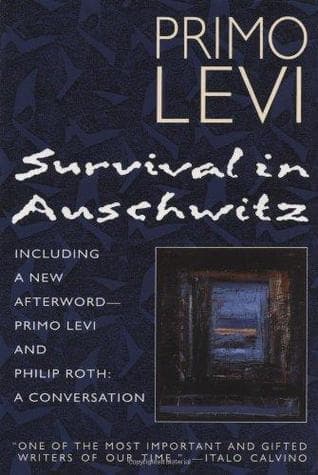
Survival in Auschwitz cover
Archivist's Choice

Survival in Auschwitz

Primo Levi (2012)

Genre

Biography / Memoir / History

Reading Time

3-4 hours

Key Themes

See below

Track Your Reading

Sign in to track this book

In the inferno of Auschwitz, a young chemist confronts systematic dehumanization, showing the resilience of the human spirit amidst cruelty.

Core Idea

Primo Levi's "Survival in Auschwitz" is a firsthand account detailing the Nazi regime's dehumanizing processes in concentration camps. It argues that the camps were not just places of death, but engineered systems designed to strip people of their identity and dignity, reducing them to automatons in a constant struggle for basic survival. Levi's work shows the normalization of evil and the moral degradation forced upon both prisoners and perpetrators, revealing how extreme conditions distorted human nature and redefined existence. The book suggests that survival was less about individual strength and more about a combination of luck, specific skills, and an unconscious adaptation to a morally inverted world. It explores the 'gray zone' where moral lines blurred, and the deep, lasting damage inflicted on the human spirit, stressing the need to remember to prevent future atrocities.
Reading time
3-4 hours
Difficulty
Medium
✓ Read this if...
You want a profound, harrowing, and intellectually rigorous firsthand account of the Holocaust, focusing on the psychological and moral degradation within a concentration camp.
✗ Skip this if...
You are looking for a historical overview of WWII or a story with a traditional narrative arc of heroism and triumph.

Core idea

The central argument and framework that powers the entire book.

Primo Levi's "Survival in Auschwitz" is a firsthand account detailing the Nazi regime's dehumanizing processes in concentration camps. It argues that the camps were not just places of death, but engineered systems designed to strip people of their identity and dignity, reducing them to automatons in a constant struggle for basic survival. Levi's work shows the normalization of evil and the moral degradation forced upon both prisoners and perpetrators, revealing how extreme conditions distorted human nature and redefined existence.

The book suggests that survival was less about individual strength and more about a combination of luck, specific skills, and an unconscious adaptation to a morally inverted world. It explores the 'gray zone' where moral lines blurred, and the deep, lasting damage inflicted on the human spirit, stressing the need to remember to prevent future atrocities.

At a glance

Reading time

3-4 hours

Difficulty

Medium

Read this if...

You want a profound, harrowing, and intellectually rigorous firsthand account of the Holocaust, focusing on the psychological and moral degradation within a concentration camp.

Skip this if...

You are looking for a historical overview of WWII or a story with a traditional narrative arc of heroism and triumph.

Key Takeaways

1

The Stripping of Humanity

Auschwitz systematically dismantled identity, reducing individuals to mere numbers.

Quote

Then for the first time we became aware that our language lacks words to express this offense, the demolition of a man. In a moment, with almost prophetic intuition, the reality was revealed to us: we had reached the bottom. It is not possible to sink lower than this.

Levi describes the initial shock and the loss of human dignity upon arrival at Auschwitz. The process began with confiscating belongings, shaving hair, tattooing numbers, and forcing prisoners into ill-fitting uniforms. This was a deliberate psychological attack designed to dehumanize. Stripped of names, clothes, and history, prisoners became an interchangeable mass, easier to control, exploit, and destroy. Replacing names with tattooed numbers symbolized the erasure of individual identity, a key step in the Nazi extermination machine...

Supporting evidence

Levi's detailed account of the 'selections' upon arrival, the immediate confiscation of all possessions, the shaving of heads and bodies, and the tattooing of prisoner numbers on forearms.

Apply this

Recognize the subtle ways systems or institutions can diminish individual identity. Actively resist conformity that suppresses personal expression or unique worth. Advocate for systems that respect and preserve individual dignity, even in challenging circumstances.


dehumanizationidentity-erosionsystematic-cruelty
2

The Language of Survival

Mastering the camp's unwritten rules and pidgin language was crucial for daily existence.

Quote

The memory of these things is not simple and it is not easy for me to tell them. But I must remember them, and I must tell them.

Survival in Auschwitz was not just about physical endurance; it was about understanding and adapting to a new, brutal reality with its own perverse logic. Levi highlights the importance of quickly learning 'Lagerjargon,' a mix of German, Polish, and Yiddish, along with the camp's unspoken rules. Misunderstanding an order, failing to grasp power dynamics, or not knowing how to 'organize' (steal or barter) necessities meant immediate danger. This linguistic and social adaptation was a matter of life and death, showing how even in extrem...

Supporting evidence

Levi's descriptions of the constant fear of not understanding commands, the need to learn how to 'organize' food or tools, and the complex social hierarchy among prisoners and Kapos.

Apply this

When entering a new or challenging environment, prioritize understanding its unique culture, language, and unwritten rules. Observe, listen, and seek guidance to adapt effectively. Recognize that communication barriers can be as dangerous as physical ones.

linguistic-adaptationsocial-intelligencecamp-culture
3

The Privilege of Skill

Specialized knowledge offered a fragile, temporary advantage in the struggle for life.

Quote

To survive here, you must be a specialist.

One of Levi's striking observations is how certain skills, especially scientific or technical ones, could offer a fleeting chance for better conditions or even survival. As a chemist, Levi was assigned to the Buna factory laboratory, a position that, while still dangerous, offered slightly better food, shelter, and some intellectual engagement. This was not a guarantee of survival, but it was an advantage over the 'Musselmänner' (the walking dead). This shows the perverse logic of the camp, where even an inhumane system could find 'ut...

Supporting evidence

Levi's own transfer to the chemical laboratory at Buna, which provided him with warmer clothing, less strenuous work, and a sense of purpose that others lacked.

Apply this

Cultivate diverse and adaptable skills. In any challenging situation, consider how your unique abilities could provide leverage or offer solutions. Never underestimate the value of expertise, even in unexpected contexts.

skill-utilitytechnical-expertisesurvival-advantage
4

The Gray Zone of Morality

Auschwitz forced impossible moral compromises, blurring the lines between victim and perpetrator.

Quote

The Lager was a great machine for reducing us to animals. But we were not animals. We were men, and in that sense, we were still responsible for our actions.

Levi addresses the agonizing moral ambiguities of the camp, a concept he later called 'the gray zone.' He describes the prisoner hierarchy, from 'Prominents' (Kapos, block elders) who often brutalized fellow inmates for favor, to desperate acts of 'organizing' that amounted to theft. Survival often demanded acts that would be reprehensible in normal society. This does not excuse collaboration, but helps understand the extreme pressures that distorted moral choices. It explores how oppressive systems force individuals into roles where ...

Supporting evidence

The existence of Kapos and other 'Prominents' who were prisoners themselves but wielded power and often inflicted violence. The necessity of 'organizing' (stealing or bartering) to survive, which meant taking from others.

Apply this

Reflect on the ethical compromises individuals are forced to make under extreme duress. Cultivate empathy for those caught in impossible situations, recognizing that moral clarity is a luxury not always afforded. Advocate for systems that reduce the 'gray zones' where human dignity is compromised.

moral-dilemmagray-zoneethical-compromise
5

The Fragility of Memory

The trauma of the camp distorted and eroded memories, making accurate recollection a struggle.

Quote

It is a difficult thing to describe, and I do not want to be melodramatic. But the hunger, the cold, the fear, these things warp the memory.

Levi is aware that memory can be unreliable, especially after extreme trauma and deprivation. He admits his own recollections might be incomplete or altered by time and the sheer horror. The constant struggle for survival left little room for contemplation or precise observation, and psychological defense mechanisms could also obscure the truth. This self-awareness gives credibility to his account, emphasizing that even eyewitness testimony from survivors is a reconstructed narrative, not a perfect recording, and shows trauma's destru...

Supporting evidence

Levi's frequent interjections acknowledging the difficulty of remembering details, the blurring of days, and the possibility of his memory being 'corrupted' by the trauma.

Apply this

Approach historical accounts, especially those of trauma, with a critical yet empathetic lens, understanding the complexities of memory. Encourage journaling and documentation in challenging times to preserve accurate records. Recognize that personal narratives, while invaluable, are inherently subjective.

trauma-memoryhistorical-accuracynarrative-reliability
6

The Power of Small Resistances

Even minor acts of defiance or humanity offered profound psychological sustenance.

Quote

We were not allowed to have any personal possessions, but we tried to keep some small things, a piece of string, a button, a splinter of wood. These were our small treasures, our last connection to our past.

In a place designed to erase individuality, Levi notes the immense psychological importance of small acts of defiance. Whether secretly keeping a button, sharing bread, or trying to maintain cleanliness despite impossible conditions, these actions were vital. They were not grand rebellions, but assertions of self, small victories against the dehumanizing machinery of the camp. These acts affirmed that despite everything, prisoners were still human, capable of agency and compassion, and not entirely reduced to the 'Muselmann' state. Th...

Supporting evidence

Levi's account of sharing a bowl of soup with a friend, the effort to wash one's shirt, or the attempt to explain Dante's 'Canto of Ulysses' to a fellow prisoner, as a way to connect with a lost world of culture and humanity.

Apply this

In oppressive or challenging environments, identify and engage in small acts that affirm your values, identity, or humanity. Recognize that seemingly insignificant gestures can have profound psychological impact. Support and acknowledge others' small acts of resistance.

psychological-resiliencehuman-dignitypassive-resistance
7

The Indifference of Nature

The natural world remained beautiful and indifferent, a stark contrast to human depravity.

Quote

The sky was blue and the air was clear, and it seemed as if the world outside was continuing its normal course, indifferent to our suffering.

A recurring, poignant detail in Levi's narrative is the contrast between the camp's horrors and the indifferent beauty of nature. He often describes the clear sky, changing seasons, or distant bird sounds. This stark contrast shows the man-made nature of the suffering within Auschwitz. Nature continued its cycles, unconcerned with the human tragedy unfolding. This indifference is not cruel, but a profound comment on humanity's capacity for both immense beauty and unimaginable depravity, and how our actions are confined to our own sphe...

Supporting evidence

Levi's descriptions of the clear winter sky, the beauty of a sunset, or the feeling of rain, often observed from within the confines of the camp.

Apply this

Cultivate an appreciation for the natural world as a source of perspective and solace. Reflect on humanity's place within the larger cosmos and the importance of our stewardship of both nature and each other. Recognize that human suffering is our responsibility, not nature's.

nature's-indifferencehuman-depravityperspective
8

The Illusion of Freedom

Even liberation brought a new, complex burden of survival and memory.

Quote

Many things were to happen, good and bad; but in the short space of these ten days, the Lager was still our only reality. We were still prisoners.

The end of the war did not immediately bring freedom or peace of mind. Levi details the chaotic, dangerous period after the Germans abandoned the camp, where starvation, disease, and the struggle to return home were still major concerns. The transition from prisoner to free man was not instant; psychological scars remained, and the 'Lager' continued to define their reality for a long time. This shows that survival is not just about escaping a physical threat, but also about the long, difficult process of reclaiming one's life, identit...

Supporting evidence

Levi's account of the period after the Germans fled, the continued struggle for food and shelter, the slow and arduous journey home, and the lingering psychological impact on survivors.

Apply this

Understand that recovery from trauma is a long, non-linear process. Provide sustained support to those who have endured extreme hardship, recognizing that 'liberation' is often just the beginning of a new journey. Be patient and empathetic with the complexities of healing.

post-trauma-recoverypsychological-scarslong-term-survival
9

The Duty to Bear Witness

Levi's writing is an urgent, moral imperative to remember and inform.

Quote

It happened, therefore it can happen again: this is the core of what we have to say. It can happen, and it can happen everywhere.

Beyond recounting his experiences, Levi felt a moral obligation to bear witness. His writing is clear, precise, and lacks sensationalism, driven by the belief that the world must understand what happened in Auschwitz to prevent its recurrence. He writes not for revenge, but for justice and understanding, emphasizing that the mechanisms leading to the Holocaust are inherent dangers in all societies. This commitment to truth and memory transforms his memoir from a personal story into a universal warning, making it an important document ...

Supporting evidence

The measured, analytical tone of the book, Levi's explicit statements about the importance of remembering and warning, and his later works like 'The Drowned and the Saved' which further explore the moral implications.

Apply this

Recognize the importance of historical memory and education in preventing future atrocities. Actively seek out and support narratives that bear witness to injustice. Engage in critical thinking about societal trends that could lead to dehumanization or oppression.

historical-memorymoral-imperativeprevention-of-atrocities
10

The Normalization of Evil

The true horror lay in the systematic, bureaucratic nature of the extermination.

Quote

We were not allowed to have any personal possessions, but we tried to keep some small things, a piece of string, a button, a splinter of wood. These were our small treasures, our last connection to our past.

Levi's account subtly reveals that the most terrifying aspect of Auschwitz was not just individual acts of cruelty, but the cold, rational, and bureaucratic efficiency with which humans were processed for extermination and exploitation. The camp operated like a perverse factory, with schedules, quotas, and systems for everything from prisoner intake to body disposal. This normalization of evil, where unimaginable atrocities became routine administrative tasks, demonstrates Hannah Arendt's concept of 'the banality of evil.' It shows ho...

Supporting evidence

The detailed descriptions of daily routines, the 'selections' as a regular process, the systematic deprivation of food and rest, and the efficient operation of the gas chambers and crematoria.

Apply this

Be vigilant against the normalization of injustice or dehumanization in any form. Question authority and resist blind adherence to rules that compromise ethical principles. Understand how bureaucratic systems can enable large-scale harm if unchecked by moral scrutiny.

banality-of-evilsystemic-crueltybureaucratic-horror

Critical analysis

Notable Quotes

It was not possible to think of anything else, to remember anything else. The past was a burden, the future a threat. Only the present existed, and the present was hunger, cold, and a constant, gnawing fear.

Describing the all-consuming nature of survival in the camp, where basic needs eclipsed all else.

Then for the first time we became aware that our language is devoid of words to express this offense, the demolition of a man. In a moment, with almost prophetic intuition, the reality was revealed to us: we had reached the bottom. It is not possible to sink lower than this; no human condition is more miserable than this, nor has it ever been.

Reflecting on the initial realization upon entering Auschwitz and understanding the profound dehumanization.

We, the survivors, are not the true witnesses. This is an uncomfortable notion that I have gradually come to accept. The true witnesses, the ones with a story to tell, are those who did not return.

A profound and often cited reflection on the limitations of survivor testimony, highlighting the unique experience of those who perished.

The memory of the things we saw, the words we heard, the food we ate, the blows we received, the cold we suffered, the hunger that tormented us, is still alive in us, and it will be as long as we live.

Emphasizing the indelible impact of the camp experience on the survivors.

Perhaps the most important thing to remember is that there were no 'good' or 'bad' people in the camp, only people trying to survive.

A more nuanced view of morality within the extreme conditions of the camp, challenging simplistic judgments.

To destroy a man is difficult, almost as difficult as to create him.

A chilling observation on the systematic and arduous process of dehumanization in the camp.

It is not in our power to choose what we remember, but we can choose how we interpret it.

A reflection on the agency survivors have in shaping their narratives and understanding their past.

I have learned that the world is full of suffering, but it is also full of people who are trying to alleviate it.

A broader philosophical reflection on the human capacity for both cruelty and compassion, even in the darkest times.

Man is a creature of habit, and this is true even in the most extreme conditions. We adapted to the camp, not because we wanted to, but because we had to.

Discussing the human capacity for adaptation, even to the most inhumane circumstances.

The Lager was a great experiment on man: an attempt to reduce him to an animal, to strip him of his humanity. And it succeeded, for the most part.

Levi's view of the camp as a deliberate and largely successful project of dehumanization.

Even in the Lager, there were moments of beauty, moments of humanity, moments of grace. They were rare, but they existed, and they were precious.

Highlighting unexpected instances of human connection or aesthetic appreciation amidst the horror.

The worst thing about the Lager was not the physical suffering, but the spiritual death that it inflicted.

Emphasizing the psychological and existential toll of the camp over mere physical pain.

We who survived, carry within us the mark of the Lager. We are different, irrevocably so, from those who did not experience it.

Reflecting on the permanent psychological and existential transformation experienced by survivors.

And the word 'why' was on everyone's lips, but there was no answer.

Capturing the pervasive and unanswered existential questioning among the prisoners.

Quiz

Test Your Knowledge

Ready to see how well you understood this book? Take our interactive quiz with 10 questions.

10
Questions
~5
Minutes
?
Best Score

Key Questions (FAQ)

'Survival in Auschwitz' is Primo Levi's firsthand memoir detailing his ten months of imprisonment and eventual survival in the Auschwitz concentration camp during World War II. It chronicles the systematic dehumanization and extreme conditions faced by prisoners, offering a powerful testament to human endurance.

About the author

Primo Levi

Primo Michele Levi was an Italian chemist, partisan, writer, and Jewish Holocaust survivor. He was the author of several books, collections of short stories, essays, poems and one novel. His best-known works include If This Is a Man, his account of the year he spent as a prisoner in the Auschwitz concentration camp in Nazi-occupied Poland; and The Periodic Table (1975), linked to qualities of the elements, which the Royal Institution named the best science book ever written.