BookBrief
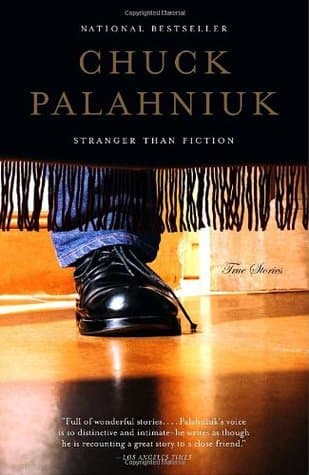
Stranger than Fiction cover
Archivist's Choice

Stranger than Fiction

Chuck Palahniuk (2004)

Genre

Biography / Memoir

Reading Time

240 min

Key Themes

See below

Track Your Reading

Sign in to track this book

From the strange Testicle Festival to hospice volunteering and his father's murder, Chuck Palahniuk explores the unsettling realities that shape his fiction.

Core Idea

Chuck Palahniuk's "Stranger than Fiction" is a collection of non-fiction essays. In them, he explores strange, intense, and sometimes dangerous subcultures and events to understand humanity at its most basic. The book suggests that understanding life, death, and creativity often comes from direct involvement and a clear look at society's dark and odd edges. For Palahniuk, fiction relies heavily on these real-life experiences, using personal grief, curiosity, and a constant search for what is real to explore uncomfortable truths about existence.
Reading time
240 min
Difficulty
Medium
✓ Read this if...
you are a fan of Chuck Palahniuk's fiction and want to understand the real-life inspirations behind his unique worldview, or if you enjoy gonzo journalism and explorations of extreme subcultures and human behavior.
✗ Skip this if...
you prefer conventional memoirs, are easily disturbed by graphic descriptions of bizarre or morbid events, or dislike non-linear essay collections.

Core idea

The central argument and framework that powers the entire book.

Chuck Palahniuk's "Stranger than Fiction" is a collection of non-fiction essays. In them, he explores strange, intense, and sometimes dangerous subcultures and events to understand humanity at its most basic. The book suggests that understanding life, death, and creativity often comes from direct involvement and a clear look at society's dark and odd edges. For Palahniuk, fiction relies heavily on these real-life experiences, using personal grief, curiosity, and a constant search for what is real to explore uncomfortable truths about existence.

At a glance

Reading time

240 min

Difficulty

Medium

Read this if...

you are a fan of Chuck Palahniuk's fiction and want to understand the real-life inspirations behind his unique worldview, or if you enjoy gonzo journalism and explorations of extreme subcultures and human behavior.

Skip this if...

you prefer conventional memoirs, are easily disturbed by graphic descriptions of bizarre or morbid events, or dislike non-linear essay collections.

Key Takeaways

1

The Allure of Extremity

Palahniuk's world is a magnet for the bizarre, revealing how the fringes illuminate the mainstream.

Quote

The world is full of people doing strange, beautiful, and sometimes horrifying things, and if you look closely enough, you'll find the fiction in their lives.

Palahniuk often goes to extremes, not just for shock, but to understand human nature. He uncovers hidden desires, worries, and social pressures that appear in unusual ways. This is not just about recording oddities; it is about seeing that 'normal' often hides important truths that only show up in unusual situations. By joining these groups, Palahniuk gains deep insight into the human mind, showing the raw parts of life most people prefer to ignore. His interest in these subcultures and strange events suggests that 'stranger than fict...

Supporting evidence

His detailed accounts of the Rock Creek Lodge Testicle Festival, where ordinary people engage in public sex acts, or the detailed description of Marilyn Manson's eccentric life, serve as primary examples of this gravitational pull towards the extreme.

Apply this

Seek out experiences or perspectives that challenge your preconceived notions of 'normalcy.' Engage with subcultures or individuals outside your usual social circles to broaden your understanding of human behavior and motivations. This doesn't require participating in extreme events, but rather cultivating an open mind and a keen observational eye for the unusual in everyday life.
subculture-explorationhuman-extremitysocietal-reflection
2

The Author as Participant Observer

Palahniuk doesn't just report; he immerses himself, blurring the lines between journalist and subject.

Quote

To truly understand a world, you must become a part of it, even if just for a moment.

Unlike a distant journalist, Palahniuk often puts himself into the stories he explores. This is not just about getting access; it is a choice that improves his understanding and, in turn, his writing. By trying steroids, working on an assembly line, or volunteering in hospice, he directly experiences the physical, emotional, and mental realities of his subjects. This active approach allows him to capture details and real viewpoints that simply watching would miss. It also gives his non-fiction a raw, strong quality, making the reader ...

Supporting evidence

His personal experiments with steroids and his dual life working on an assembly line by day and as a hospice volunteer by night are direct examples of his immersive approach.

Apply this

When trying to understand a complex issue or a different perspective, don't just read or observe from afar. Actively seek out opportunities for direct, even if brief, participation or immersion. This could be volunteering, taking a class, or spending time in an environment vastly different from your own to gain a deeper, more empathetic understanding.

immersive-journalismparticipatory-researchempathy-building
3

Grief as a Catalyst for Creation

The brutal murder of his father, a deeply personal tragedy, profoundly shapes Palahniuk's artistic output.

Quote

Sometimes, the greatest darkness in our lives becomes the fuel for our most profound creations.

The murder of Palahniuk's father by a white supremacist is not just a personal tragedy; it clearly shapes his creative vision. This deep experience with violence, loss, and human darkness gives his fiction many themes. It makes him face how fragile life is, the nature of evil, and how people deal with trauma. This event likely increased his interest in the macabre, the grotesque, and the psychological reasons for human behavior, giving his work a raw, honest feel. It shows how even the most painful personal experiences can become stro...

Supporting evidence

The direct mention of his father's brutal murder by a white supremacist is the central piece of evidence for this takeaway.

Apply this

Reflect on significant personal challenges or traumas you've faced. Consider how these experiences, while painful, might offer unique insights or perspectives that could be channeled into creative endeavors, problem-solving, or even simply a deeper understanding of life. Recognize that vulnerability can be a source of strength and creative inspiration.

trauma-creativitygrief-processingartistic-transformation
4

The Cult of Personality: Manson's World

Marilyn Manson's carefully constructed persona reveals the performative nature of identity and fame.

Quote

Every public figure is a performance, a carefully orchestrated illusion designed to captivate and control perception.

Palahniuk's meeting with Marilyn Manson offers an interesting look at how celebrity and identity are built. Manson, known for controversy and rebellion, is shown not just as a shock rocker but as a carefully created character. His Tarot card readings and 'sweet' behavior toward his girlfriend, compared to his public image, highlight how fame is a performance. It suggests that even the most 'real' rebels operate within a carefully managed story. Palahniuk subtly examines how people create their public image, how media uses and presents...

Supporting evidence

The description of Marilyn Manson reading his own Tarot cards and talking 'sweetly' to his actress girlfriend in a mansion once occupied by The Rolling Stones provides the specific evidence.

Apply this

Be critical of public personas, whether of celebrities, politicians, or even those in your own social circles. Understand that what is presented publicly is often a curated version of reality. Practice discerning the underlying motivations and constructions behind perceived identities, fostering a more nuanced understanding of human interaction and influence.

celebrity-cultureidentity-constructionmedia-perception
5

The Mundane and the Macabre

Palahniuk finds the grotesque and profound lurking beneath the surface of everyday life.

Quote

Look closely enough, and the horror and the beauty of existence are intertwined in the most ordinary places.

One of Palahniuk's strengths is his ability to find the unusual, often disturbing, parts of seemingly ordinary situations. His time working on an assembly line, for example, is not just a description of labor; it is a study of routine, dehumanization, and the quiet despair that can grow in normal places. Similarly, his hospice volunteering is not just about charity; it is a direct confrontation with death, suffering, and the raw human experience at the end of life. He shows that 'stranger than fiction' is not always found in exotic pl...

Supporting evidence

His personal experiences working on an assembly line by day and as a hospice volunteer by night illustrate how he finds profound themes in everyday work and life-ending situations.

Apply this

Practice mindful observation in your daily life. Instead of passively moving through your routine, actively seek out the unusual, the poignant, or the unsettling details in your environment, interactions, and even your own thoughts. This can lead to deeper insights and a richer appreciation for the complexities of existence.

everyday-grotesquehidden-realitiesmindful-observation
6

The Quest for Meaning in the Absurd

From castle builders to amateur rocket scientists, people seek purpose in extraordinary, often illogical, pursuits.

Quote

Humans are driven by an innate need to create, to believe, to leave a mark, no matter how outlandish the vehicle.

Palahniuk introduces us to people who spend their lives on very unusual projects, like building full-size castles or personal rocketships. These are not just strange hobbies; they show a deep human need to create, to achieve, and to find meaning in a world that often seems uncaring. The absurdity of these projects, in a normal sense, is exactly what makes them interesting. They show human imagination, resilience, and the constant pursuit of dreams, even when those dreams defy logic or social expectations. Palahniuk celebrates this uni...

Supporting evidence

The descriptions of men building their own full-size castles and rocketships that they intend to send into space serve as direct examples of this quest.

Apply this

Identify an area in your life where you might be limiting your own ambitions or creative impulses due to societal expectations or a fear of appearing 'absurd.' Allow yourself to explore unconventional interests or goals, recognizing that personal fulfillment often lies outside the well-trodden path. Embrace the joy of creation for its own sake, regardless of external validation.

human-ambitionabsurdist-meaningunconventional-pursuits
7

Fiction's Debt to Reality

Palahniuk's non-fiction reveals the raw material from which his distinctive fictional worlds are forged.

Quote

The most outlandish fiction is often just a slight exaggeration or rearrangement of the strange truths of reality.

This collection shows that fiction, especially Palahniuk's dark, satirical, and often shocking stories, comes from real life. The strange characters, unusual social dynamics, and strong experiences in his non-fiction directly reflect the themes and settings of his novels. It offers a fascinating look 'behind the scenes' of his creative process, showing how real-world oddities and personal traumas are used, amplified, and turned into his unique writing style. This book highlights that imagination does not work in a vacuum; it constantl...

Supporting evidence

The entire collection, by showing what 'inspires his fiction,' serves as the evidence. Specific examples like the Rock Creek Lodge Testicle Festival (echoing themes of public transgression) or his hospice work (confronting mortality) directly inform his novels.

Apply this

Pay closer attention to the unique stories, characters, and events happening around you. Cultivate a habit of journaling or note-taking to capture interesting observations, conversations, or personal experiences. Recognize that these real-world fragments are invaluable raw material for any creative endeavor, whether writing, art, or problem-solving.

creative-inspirationreality-fiction-nexusauthorial-process
8

The Unflinching Gaze

Palahniuk confronts the uncomfortable, forcing readers to acknowledge the darker aspects of humanity.

Quote

True understanding often begins when we stop averting our eyes from what makes us uncomfortable.

A key part of Palahniuk's work, both fiction and non-fiction, is his willingness to face the grotesque, the violent, or the morally unclear. He does not just observe these elements; he presents them with an almost clinical detachment, making the reader confront realities that are often cleaned up or ignored in common discussions. Whether it is casual public sex acts, the brutality of his father's murder, or the raw vulnerability of hospice patients, Palahniuk looks directly. This approach, while sometimes unsettling, is important to h...

Supporting evidence

The explicit descriptions of the Testicle Festival's public sex acts and the brutal nature of his father's murder are prime examples of his unflinching portrayal of uncomfortable realities.

Apply this

Challenge yourself to engage with topics or perspectives that make you uncomfortable, rather than avoiding them. Seek out diverse sources of information, even those that contradict your existing beliefs. This practice can foster intellectual humility and a more robust understanding of complex issues, leading to more informed opinions and decisions.

confronting-discomfortdark-humanitysocietal-unveiling
9

The Search for Authenticity

Amidst the spectacle, Palahniuk seeks genuine human connection and meaning in an often-superficial world.

Quote

Beyond the masks and the performances, there is always a flicker of something real, something profoundly human.

Despite his interest in the strange and the performative (like Marilyn Manson), Palahniuk's main goal seems to be finding what is real. He explores these extreme situations not just for entertainment, but to find moments of true human experience – whether it is the raw vulnerability of someone facing death in hospice, the shared companionship on an assembly line, or the sincere belief of someone building a castle. He removes layers of social custom and individual performance to reveal the basic human drives, fears, and hopes that conn...

Supporting evidence

His deep engagement with hospice patients, revealing their vulnerability and humanity, and his immersion in the assembly line environment, showcasing shared human experience, are key examples of this search for authenticity.

Apply this

In your interactions, look beyond superficial appearances or roles. Strive to connect with people on a deeper, more authentic level by asking open-ended questions, actively listening, and sharing your own genuine thoughts and feelings. Seek out environments or activities that encourage genuine self-expression and connection, rather than performance.

authentic-connectionhuman-truthmeaning-seeking

Critical analysis

Notable Quotes

The one you love and the one who loves you are never, ever the same person.

A recurring, cynical observation about love and relationships.

The things you own end up owning you.

A reflection on materialism and its control over people.

It's only after we've lost everything that we're free to do anything.

A dark but liberating thought about hitting rock bottom.

You are not your job, you're not how much money you have in the bank. You're not the car you drive. You're not the contents of your wallet. You're not your fucking khakis.

A powerful statement about identity beyond material possessions.

We've all been raised on television to believe that one day we'd all be millionaires, movie gods, rock stars. But we won't. And we're slowly learning that fact. And we're very, very pissed off.

Commentary on the disillusionment of the millennial generation.

Without pain, without sacrifice, we would have nothing.

A philosophical take on the necessity of suffering for growth or achievement.

You know how they say you only hurt the ones you love? Well, it works both ways.

A bitter insight into the reciprocal nature of emotional pain in close relationships.

On a long enough timeline, the survival rate for everyone drops to zero.

A stark reminder of mortality and the inevitability of death.

If you don't know what you want, you end up with a lot of stuff you don't.

Advice on clarity of purpose and avoiding accumulation of unwanted things.

This is your life and it's ending one minute at a time.

A blunt statement about the relentless passage of time and impending death.

Sticking with your vision, even when it's unpopular, is the spice of life.

An encouraging thought about perseverance and individuality despite opposition.

The trick to not caring is not caring.

A deceptively simple, yet profound, observation on emotional detachment.

You are not a beautiful and unique snowflake. You are the same decaying organic matter as everyone else, and we are all part of the same compost pile.

A cynical deconstruction of individuality and human exceptionalism.

Only in death will we have our own names since only in death are we no longer part of the group.

A dark reflection on identity and individuality only truly achieved in finality.

Quiz

Test Your Knowledge

Ready to see how well you understood this book? Take our interactive quiz with 10 questions.

10
Questions
~5
Minutes
?
Best Score

Key Questions (FAQ)

'Stranger than Fiction' is Chuck Palahniuk's first collection of nonfiction, offering readers a glimpse into his unique world and the real-life inspirations behind his often bizarre and provocative fiction. It compiles various essays and experiences that have shaped his perspective.

About the author

Chuck Palahniuk

Chuck Palahniuk is a highly influential contemporary author, best known for his debut novel "Fight Club." His works, including "Haunted" and "Guts," are characterized by their transgressive themes, dark humor, and often shocking narratives. Palahniuk's distinctive style has earned him a significant cult following and cemented his reputation as a master of postmodern fiction.