BookBrief
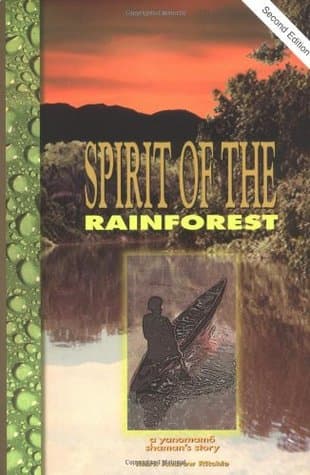
Spirit of the Rainforest cover
Archivist's Choice

Spirit of the Rainforest

Mark Andrew Ritchie (2018)

Genre

Biography / History / Spirituality

Reading Time

9-12 hours

Key Themes

See below

Track Your Reading

Sign in to track this book

A Yanomamo shaman tears back the veil of the Amazon, revealing his people's brutal battles for survival against both rival tribes and malevolent spirits, forcing us to confront their complex identity beyond simple labels.

Core Idea

Mark Andrew Ritchie's "Spirit of the Rainforest" offers a look into the spiritual and physical world of the Yanomamo people, particularly through the lens of shamanism and the constant struggle for survival. The book argues that the Yanomamo worldview is shaped by a dualistic understanding of the soul, where the 'buhii' (animal spirit) and 'noreshi' (human spirit) dictate a reality intertwined with spiritual warfare, ancestral wisdom, and the influence of forest spirits. It explores how shamanic practices are not merely rituals but active engagements in spiritual combat against malevolent entities and rival tribes, directly impacting the cycle of vengeance, justice, and the precarious balance of life within the Amazonian rainforest. The narrative shows how dreams serve as a 'second reality' for spiritual interaction and guidance, revealing a belief system where the spiritual and material realms are inseparable, driving both the brutality and resilience of Yanomamo existence.
Reading time
9-12 hours
Difficulty
Medium
✓ Read this if...
You are fascinated by indigenous spiritual practices, shamanism, and the raw, unvarnished realities of tribal life in the Amazon, or if you want a deep dive into the Yanomamo worldview before significant external contact.
✗ Skip this if...
You prefer a purely academic or anthropological text, are sensitive to descriptions of violence and tribal conflict, or are looking for a light, feel-good spiritual read.

Core idea

The central argument and framework that powers the entire book.

Mark Andrew Ritchie's "Spirit of the Rainforest" offers a look into the spiritual and physical world of the Yanomamo people, particularly through the lens of shamanism and the constant struggle for survival. The book argues that the Yanomamo worldview is shaped by a dualistic understanding of the soul, where the 'buhii' (animal spirit) and 'noreshi' (human spirit) dictate a reality intertwined with spiritual warfare, ancestral wisdom, and the influence of forest spirits. It explores how shamanic practices are not merely rituals but active engagements in spiritual combat against malevolent entities and rival tribes, directly impacting the cycle of vengeance, justice, and the precarious balance of life within the Amazonian rainforest. The narrative shows how dreams serve as a 'second reality' for spiritual interaction and guidance, revealing a belief system where the spiritual and material realms are inseparable, driving both the brutality and resilience of Yanomamo existence.

At a glance

Reading time

9-12 hours

Difficulty

Medium

Read this if...

You are fascinated by indigenous spiritual practices, shamanism, and the raw, unvarnished realities of tribal life in the Amazon, or if you want a deep dive into the Yanomamo worldview before significant external contact.

Skip this if...

You prefer a purely academic or anthropological text, are sensitive to descriptions of violence and tribal conflict, or are looking for a light, feel-good spiritual read.

Key Takeaways

1

The Duality of the Yanomamo Soul

Yanomamo cosmology posits a complex spiritual anatomy where the soul is not a singular entity but a multi-faceted presence susceptible to external forces.

Quote

The Yanomamo believe a person has several souls, not just one. The main soul, the *noreshi*, is the most vulnerable and is often the target of shamanic attacks and spirit possession.

The Yanomamo worldview, as articulated by Jungleman, is rooted in a sophisticated spiritual understanding where human identity is linked to multiple soul components. Unlike Western concepts of a singular, indivisible soul, the Yanomamo believe in at least four distinct soul parts: the noreshi (animal spirit), the bore (true soul), the 'eyeball soul' (that travels after death), and the soul part in the chest. This fragmentation makes individuals vulnerable to spiritual attacks, particularly from hostile shamans and malevolent spiri...

Supporting evidence

Jungleman's detailed descriptions of shamanic battles, where shamans 'shoot' disease-carrying darts into the *noreshi* of enemies, and his own experiences with soul-loss and recovery rituals.

Apply this

To understand the Yanomamo, one must suspend Western notions of self and embrace a worldview where spiritual vulnerability is a constant, tangible threat. This challenges us to consider how different cultures define life, death, and well-being beyond purely physical terms.

yanomamo-cosmologyspiritual-vulnerabilitynoreshi
2

Shamanism as Spiritual Warfare

Yanomamo shamans are not just healers but powerful spiritual warriors engaged in constant battles with malevolent spirits and rival shamans.

Quote

The shaman's life is a constant battle. We fight spirits for the souls of our people, and we fight other shamans who try to steal our strength or send sickness.

Jungleman's narrative shows shamanism not as a passive spiritual practice but as an active, often brutal, form of spiritual warfare. Shamans are the primary protectors of their community, constantly ingesting hallucinogenic ebene powder to enter trance states and communicate with, or battle, the hekura spirits. These battles are vivid and dangerous, involving spiritual arrows, soul capture, and the manipulation of natural elements. A shaman's power is linked to his ability to control and command a retinue of hekura, using them for...

Supporting evidence

Jungleman's accounts of consuming ebene, experiencing visions of *hekura* spirits, and engaging in spiritual duels to retrieve lost souls or repel disease. He describes specific instances of shamans 'shooting' sickness into enemies and 'sucking out' illness from the afflicted.

Apply this

Recognize that 'healing' in some cultures extends far beyond physical medicine, encompassing a spiritual struggle against unseen forces. This challenges modern medicine to consider the psychological and spiritual dimensions of illness, even if not literally supernatural.

shamanic-warfarehekura-spiritsebene-ritual
3

The Cycle of Vengeance and Survival

Yanomamo society is characterized by a relentless cycle of vengeance, deeply embedded in their social structure and spiritual beliefs, making conflict a perpetual state.

Quote

To not avenge a death is to invite weakness, to allow your enemies to grow strong. Vengeance is not just an act, it is a way of life, a duty to the dead and the living.

The book starkly reveals that the Yanomamo are not 'noble savages' living in idyllic harmony, but a people for whom warfare and vengeance are fundamental to survival and social standing. Raids, abductions of women, and the killing of men are common, perpetuating an endless cycle of retribution. This is not just about resource scarcity; it is intertwined with honor, spiritual beliefs (e.g., avenging a soul stolen by a rival shaman), and the maintenance of tribal strength. Jungleman's narrative pulls back the curtain on this brutal real...

Supporting evidence

Jungleman's vivid descriptions of specific raids, the abduction of women, the killing of men, and the subsequent planning of retaliatory attacks. His personal experiences with loss and the pressure to avenge his kin.

Apply this

When evaluating indigenous cultures, move beyond simplistic 'noble savage' or 'bloodthirsty savage' stereotypes. Understand that complex social structures and survival strategies often involve violence, dictated by unique cultural logics rather than universal morality.

yanomamo-warfarevengeance-cycletribal-conflict
4

The Power of the Forest and Its Spirits

The rainforest is not merely a backdrop for the Yanomamo but a living, sentient entity teeming with spirits that directly influence human life.

Quote

The forest is alive. Every tree, every rock, every animal has a spirit, and they can help you or harm you. You must know how to speak to them, how to respect them.

For the Yanomamo, the Amazon rainforest is not just an environment; it is a sacred, animated realm imbued with spiritual significance. Every element – trees, rivers, animals, and even specific rocks – possesses a spirit, a hekura, that can be interacted with, appeased, or battled. This deep ecological spirituality means that human actions within the forest have immediate spiritual repercussions. Shamans derive their power from their ability to communicate with and command these forest spirits, using them for healing, hunting, or war...

Supporting evidence

Jungleman's descriptions of *hekura* spirits residing in specific natural features, his accounts of shamans 'calling' animal spirits to aid hunters, and the importance of rituals to appease forest spirits before undertaking activities like clearing land.

Apply this

Cultivate a deeper respect for natural environments, recognizing their intrinsic value beyond utility. Consider how indigenous spiritual connections to land can offer insights into sustainable living and environmental stewardship.

ecological-spiritualityforest-spiritssacred-landscape
5

Dreams as a Second Reality

For the Yanomamo, dreams are not mere subconscious activity but a vital, often dangerous, realm where souls wander and spiritual encounters occur.

Quote

When you dream, your *noreshi* leaves your body and travels. You must be careful, for in the dream world, other shamans can attack your soul, or spirits can capture it.

Jungleman's narrative shows the Yanomamo belief that dreams are not passive mental events but active spiritual journeys. During sleep, the noreshi (animal spirit) is believed to leave the body and wander, entering a 'dream world' that is as real, and often more perilous, than waking life. In this realm, individuals can encounter hekura spirits, communicate with ancestors, or even be targeted by rival shamans who attempt to capture or harm their wandering soul. Dreams serve as omens, warnings, and opportunities for spiritual growth...

Supporting evidence

Jungleman recounts specific dreams that foretold future events, warned of danger, or revealed the actions of spirits or rival shamans. He describes the fear surrounding bad dreams and the importance of shamanic interpretations.

Apply this

Pay more attention to dreams, not necessarily as literal prophecies, but as a rich source of subconscious insights, emotional processing, and creative inspiration. Explore lucid dreaming or dream journaling as a way to engage with this inner world.

dream-worldsoul-travelnoreshi-dreams
6

The Brutality of Tribal Justice

Justice within Yanomamo society is often swift, violent, and deeply personal, emphasizing retribution and the maintenance of honor over formal legal systems.

Quote

When someone wrongs you, you must act. If you do not, you are weak, and others will take advantage. The spear, the club, these are our laws.

The book reveals a stark picture of Yanomamo justice, which operates without formal courts or prisons. Instead, transgressions, especially those involving honor, theft, or sexual misconduct, are often met with immediate and violent retribution. This can range from ritualized club fights between individuals to full-scale raids between villages. The emphasis is on restoring balance, avenging wrongs, and demonstrating strength to deter future aggressions. This system, while brutal by Western standards, maintains social order within their...

Supporting evidence

Jungleman's detailed accounts of club fights, the punitive actions taken against individuals who violated social norms, and the swift, often lethal, responses to perceived slights or thefts within or between villages.

Apply this

Reflect on the evolution of legal systems and the role of violence in maintaining social order in different societies. Recognize that what constitutes 'justice' is culturally constructed and can manifest in vastly different, often shocking, ways.

tribal-justiceretributionhonor-culture
7

The Scarcity of the Sacred Fire

The Yanomamo's constant struggle to maintain fire reflects their precarious existence and deep dependence on the forest for basic survival.

Quote

Fire is life. Without it, we are cold, the food is raw, and the spirits of the night are stronger. To lose your fire is to lose part of yourself.

A subtle but powerful detail in Jungleman's narrative is the constant, almost desperate, effort to keep fires burning. Fire is not just a source of warmth or a tool for cooking; it is a vital life force, a protector against cold, wild animals, and malevolent spirits. The difficulty of starting fire in a damp rainforest environment means that communities go to great lengths to preserve embers and transport them. This constant vigilance around fire shows the fragility of their existence, where basic survival needs are a daily challenge....

Supporting evidence

Jungleman's descriptions of carrying smoldering logs when moving camp, the communal effort to keep fires alive through the night, and the dire consequences of a fire going out, particularly during cold or rainy periods.

Apply this

Appreciate the conveniences of modern life, especially those related to basic survival. Reflect on how essential elements like fire, often taken for granted, represent monumental achievements and constant effort in less developed societies.

fire-culturesurvival-strugglerainforest-life
8

The Impact of External Contact

The arrival of outsiders, even well-intentioned ones, inevitably brings profound and often destructive changes to indigenous societies.

Quote

Before the 'Naba' (outsiders) came, we fought, yes, but we knew who we were. Now, there are new sicknesses, new desires, and our old ways are fading like smoke.

While the book primarily focuses on internal Yanomamo life, it implicitly highlights the irreversible impact of outside contact. Jungleman's narrative is a product of this contact, bringing Yanomamo culture to a Western audience. The introduction of new goods, diseases, and ideologies, even through missionary or anthropological efforts, invariably disrupts traditional social structures, spiritual practices, and ecological balance. The 'Spirit of the Rainforest' is not just about the Yanomamo's internal struggles but also the encroachi...

Supporting evidence

The very premise of the book, where Jungleman shares his story with an outsider (Ritchie), implies a degree of contact. While not explicitly detailed within the provided summary, the book's context suggests the growing presence of missionaries, miners, and researchers, bringing with them new tools, diseases, and concepts that inevitably alter the Yanomamo way of life.

Apply this

Engage critically with the ethics of cultural contact and intervention. Consider the long-term, often negative, consequences of imposing external values or technologies on indigenous communities, even with good intentions.

cultural-contactindigenous-rightscultural-erosion
9

The Wisdom of Ancestral Knowledge

Yanomamo survival is predicated on a vast, orally transmitted body of ancestral knowledge encompassing everything from plant medicine to spiritual protocols.

Quote

The old ones, they knew everything. How to hunt, how to heal, how to speak to the spirits. We must remember their words, or we will be lost.

Jungleman's story shows the depth and importance of ancestral knowledge for the Yanomamo. Their ability to thrive, or even survive, in the challenging Amazonian environment depends entirely on generations of accumulated wisdom. This knowledge encompasses understanding of plant properties for medicine and poison, hunting techniques, navigation, social protocols, and the complex spiritual landscape. It is passed down orally, through stories, rituals, and direct teaching, and forms the bedrock of their culture and identity. The loss of e...

Supporting evidence

Jungleman's reliance on traditional remedies for illness, his understanding of animal behavior for hunting, and his participation in rituals guided by elder shamans, all of which are rooted in long-standing ancestral practices.

Apply this

Value and seek out traditional and indigenous knowledge systems, recognizing them as rich sources of wisdom, particularly concerning ecological sustainability, holistic health, and community building, often overlooked by modern science.

ancestral-wisdomoral-traditionindigenous-knowledge

Critical analysis

Notable Quotes

The shaman’s power is not his own, but a conduit for the power of the rainforest itself.

Describing the source of a tribal shaman's spiritual and healing abilities.

To truly understand the rainforest, you must not just observe it, but allow it to observe you.

Ritchie's reflection on the immersive and reciprocal nature of experiencing the jungle.

The forest breathes, and in its breath, all life is sustained.

A poetic observation of the rainforest's vital role in global ecosystems.

Fear is a shadow, but ignorance is the darkness that casts it.

Ritchie's internal struggle with the unknown dangers of the jungle and his eventual understanding.

They did not own the land; the land owned them, in a way that modern man could never comprehend.

Describing the indigenous tribes' deep spiritual and physical connection to their ancestral lands.

The greatest classroom is not within four walls, but under an open sky, surrounded by life.

Ritchie's realization about the profound lessons learned from his time in the rainforest.

Civilization often mistakes complexity for progress, forgetting the profound simplicity of true wisdom.

A critique of Western society's values compared to the indigenous way of life.

The spirits of the ancestors are not gone; they are woven into the very fabric of the forest.

Explaining the tribal belief in the enduring presence of their ancestors in the natural world.

Every rustle, every chirp, every drop of rain tells a story if you only learn to listen.

Emphasizing the rich sensory experience and constant communication within the rainforest.

To lose the rainforest is to lose a part of our own soul, a library of life we can never replace.

A plea for conservation, highlighting the irreplaceable value of the rainforest.

The path to understanding is often found in letting go of what you think you already know.

Ritchie's personal journey of unlearning preconceived notions to embrace new perspectives.

There is a silent language in the trees, a wisdom whispered on the wind.

Reflecting on the deeper, non-verbal communication and knowledge inherent in nature.

The true wealth of a people is not measured in gold, but in their harmony with the earth.

Contrasting Western material values with the sustainable and balanced lifestyle of indigenous tribes.

Even in the darkest canopy, a single shaft of light can illuminate an entire world.

A metaphor for finding hope and revelation even in the most dense and challenging environments.

Quiz

Test Your Knowledge

Ready to see how well you understood this book? Take our interactive quiz with 10 questions.

10
Questions
~5
Minutes
?
Best Score

Key Questions (FAQ)

The Yanomamo are an indigenous people of the Amazon rainforest, residing in areas of southern Venezuela and northern Brazil. They are known for their unique culture, spiritual beliefs, and traditional way of life deep within the jungle.

About the author