“Little lamb, who made thee? / Dost thou know who made thee?”
— From 'The Lamb', a child's innocent questioning about creation.

Genre
Spirituality / Creativity
Reading Time
60 min
Key Themes
See below
Sign in to track this book
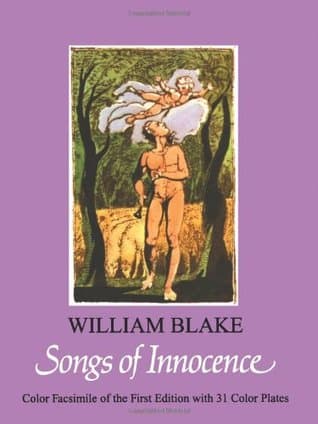
This edition of William Blake's "Songs of Innocence" brings together his poetry and hand-colored engravings, restoring his original vision of art.
The collection begins with the 'Introduction.' A piper, resting by a stream, meets a child on a cloud. The child cries with joy as the piper plays a happy tune. The child then asks the piper to play the song again, and then to sing it. Finally, the child asks the piper to write down his songs in a book so that 'every child may joy to hear.' The piper, using a 'hollow reed' for a pen and 'water clear' for ink, writes the songs. This symbolizes the natural origin of the poems and their wide appeal. This sets the mood for the whole collection, focusing on childlike wonder, joy, and nature's pure voice.
In 'The Lamb,' a speaker, likely a child, talks to a lamb. The child asks about its origin and gentle nature. The child admires the lamb's soft wool, its tender voice, and how it feeds by the stream and in the meadow. The child then answers its own question, saying the lamb was made by one who calls himself a lamb, and is also called a child — referring to Jesus Christ. The poem shows the shared innocence and purity between the lamb, the child, and Christ. It connects the divine with gentleness and creation. It celebrates God's kind presence in nature and in an innocent heart.
This poem introduces Tom Dacre, a young chimney sweeper whose head was shaved by his father after his mother died. Another, older sweeper comforts him. Tom dreams that an angel unlocks the coffins (chimneys) of thousands of sweepers, freeing them to play in a green field and wash in a river, their sooty bodies becoming bright. The angel tells Tom that if he is a good boy, God will be his father and he will always have joy. Waking up, the children rise early, feeling warm and happy. They believe that if they do their duty, they 'need not fear harm.' This poem contrasts the harsh reality of child labor with the comfort of faith and hope for a better afterlife.
A little black boy tells of his mother's lessons about the sun, which stands for God's love. His mother explains that their dark skin is just a cloud that will be shed in heaven. There, their souls will shine equally bright, bathed in God's love. The boy wants to shield his white friend from the heat of God's love until the white child is strong enough. This shows deep selflessness and spiritual understanding. He believes that in eternity, they will both stand before God, equal in love and understanding, leaving behind their earthly differences.
This poem states that God lives within the human virtues of Mercy, Pity, Peace, and Love. It says these virtues are found in all people, no matter their race or religion. Praying to these virtues is like praying to God. The poem highlights the inherent goodness and divinity in every person. Blake suggests that these qualities are not just God's traits but are God's essence shown in humanity. By practicing these virtues, humans embody the divine. It is a core statement on Blake's spiritual humanism.
The poem describes a parade of thousands of poor children, dressed in 'red & blue & green,' walking to St. Paul's Cathedral on Holy Thursday. 'Beadles' with 'wands as white as snow' lead them. The sight is shown as innocent beauty and grace. The children's voices, singing hymns, are compared to 'multitudes of lambs,' creating a strong, harmonious sound that 'raise your head, you guardians of the poor.' The poem at first seems to celebrate charity and the children's joy. However, it subtly hints at the social structures that make such charity necessary. This sets the stage for the later, more critical 'Songs of Experience' version.
In 'Nurse's Song,' a nurse calls her charges inside as the sun sets. But the children ask to stay out and play longer, their laughter filling the valley. The nurse, moved by their joy and innocent wish, lets them continue playing. She says that 'your hearts are at rest' and 'no harm can come to you.' This poem celebrates the freedom and joy of childhood. It shows the kind, understanding nurse who puts the children's happiness before strict rules, reflecting a world where innocence is valued and protected.
'Infant Joy' is a short poem, a conversation between a mother and her two-day-old baby. The mother asks the baby what it wants to be called, and the baby answers, 'Joy is my name.' The mother then confirms this name, showing her own joy and blessing the infant with happiness. The poem is a pure celebration of new life, innocent happiness, and the simple bond between a mother and child. It captures the essence of pure bliss and the simple, inherent goodness of existence at its start.
The speaker tells of a dream where a 'wandering ant' is lost, crying and missing its 'pained heart' (its family). A 'glow-worm' then offers light to guide the ant, and a 'field-mouse' advises the ant to ask a 'friendly Emmet' (another ant) for directions. The dream shows how nature connects creatures and how they help each other. The speaker wakes up realizing that 'We are all alike, no matter what we say.' This highlights a universal bond among all creatures. It suggests that even small beings share common struggles and the ability to feel compassion.
This poem looks at empathy and divine compassion. The speaker asks if a human can see another's sorrow without feeling pity, or hear a sigh without sighing back. It then extends this to God, asking if God, who made humanity, can see suffering without sharing it. The poem concludes that God does share in human grief, becoming 'a man of sorrows' and 'a weeping eye' for humanity. This shows God's presence and His deep, personal connection to the pain of His creation. It portrays a compassionate God.
A young boy, lost in a 'lonely fen,' cries for his father who has disappeared. His father, distracted, had walked away, leaving the boy separated and scared. The boy's cries are heard, not by his earthly father, but by a divine figure. God, shown as a 'kindly light' or an 'old man white,' appears to the boy, takes his hand, and leads him back to his mother. This poem shows how vulnerable children are and how divine love is always there to protect when earthly support fails. It shows God as a kind guide and comforter.
This poem is the continuation of 'The Little Boy Lost.' It describes the mother's frantic search for her lost son, crying and upset. Meanwhile, the 'old man white' (God) leads the little boy directly to his weeping mother. The reunion is joyful, with the mother embracing her child. The poem strengthens the theme of divine care and comfort. It shows that even in despair, a higher power steps in to bring back peace and happiness. It ends the story with a sense of security and renewed family love under God's watch.
The Narrator/Initiator
Transforms from a musician to a transcriber of divine-inspired songs, becoming the voice of innocence.
The Divine inspiration/Audience
Serves as a static symbol of pure innocence and divine inspiration.
The Symbol of innocence/Christ figure
Static symbol of divine innocence and creation.
The Child laborer/Protagonist of 'The Chimney Sweeper'
Experiences a dream that provides spiritual comfort and hope amidst his difficult life.
The Child protagonist
Maintains a static, mature understanding of spiritual equality.
The Supporting character/Caretaker
Demonstrates benevolent understanding, allowing children to express their joy.
The Divine presence/Protector
Serves as a static, benevolent force throughout the collection.
The Child protagonist
Goes from being lost and fearful to being reunited and safe through divine intervention.
The main theme of 'Songs of Innocence' is the celebration and protection of childhood innocence. Blake shows children as pure, uncorrupted beings, closer to God and having natural wisdom and joy. This theme appears in poems like 'The Lamb,' where a child's questions lead to a deep spiritual truth, and 'Infant Joy,' which delights in a newborn's happiness. Even when facing hardship, as in 'The Chimney Sweeper,' children's hope and faith remain. This suggests that innocence is a strong state of being that can find comfort and meaning despite outside suffering. The collection supports the free and natural goodness of childhood.
“And I made a rural pen, / And I stained the water clear, / And I wrote my happy songs / Every child may joy to hear.”
Blake consistently shows a kind and ever-present God in 'Songs of Innocence.' This God is not distant or critical but a loving, comforting, and empathetic figure. God is often shown as a father, shepherd, or a 'man of sorrows' who shares in human pain. In 'The Divine Image,' God is linked to the human virtues of Mercy, Pity, Peace, and Love. This makes the divine accessible and present within humanity. God's direct help in 'The Little Boy Lost' and 'Found' further highlights this theme, showing a protective deity who actively guides and comforts the vulnerable. This theme gives a deep sense of security and spiritual comfort.
“And he is called by thy name, / For he calls himself a Lamb: / He is meek & he is mild, / He became a little child.”
A strong idea throughout the collection is the importance of empathy and compassion, both human and divine. 'On Anothers Sorrow' directly addresses this, asking how one can see suffering without feeling pity. It concludes that God Himself shares in human grief. The Little Black Boy's wish to shield his white friend from the 'heat' of God's love shows a selfless compassion that goes beyond race. Even the Nurse in 'Nurse's Song' shows empathy by letting the children continue their joyful play. This theme highlights how all beings are connected and the moral need to share and lessen suffering, reflecting God's compassionate example.
“Can a mother sit and hear / An infant groan an infant fear? / No, no! never can it be! / Never, never can it be!”
While mainly about innocence, the collection subtly hints at social criticism. These hints become clearer in 'Songs of Experience.' 'The Chimney Sweeper' is the most direct example, showing the harsh reality of child labor despite the child's hopeful view. The poem 'Holy Thursday' (Innocence) presents a beautiful image of charity children. However, the sheer 'multitudes' and their supervised procession subtly question the social conditions that require such widespread poverty and charity, instead of fixing the root causes. These poems, though framed with innocent hope, prepare for a deeper look at social injustices and the exploitation of innocence. They suggest that the innocent world is not entirely separate from the world of experience.
“When my mother died I was very young, / And my father sold me while yet my tongue / Could scarcely cry 'weep! 'weep! 'weep! 'weep!”
The use of idyllic natural landscapes to symbolize innocence and purity.
Blake frequently employs pastoral settings—green fields, streams, meadows, and clouds—to evoke a sense of untouched beauty and harmony. This device is crucial in establishing the innocent world. For example, the Piper sits by a 'water clear' in the 'Introduction,' and the freed chimney sweepers dream of playing on a 'green plain.' These natural landscapes symbolize a paradise-like state, free from the corruption and complexities of urban or industrialized society, reinforcing the idea of a pure, unblemished existence where joy and spiritual connection thrive.
Presenting the world through the perspective of a child to convey innocence and simple truth.
Many poems in 'Songs of Innocence' are narrated by or feature a child as the primary speaker, such as in 'The Lamb,' 'The Chimney Sweeper,' and 'The Little Black Boy.' This device allows Blake to express profound spiritual and moral truths through a voice that is unburdened by adult cynicism or societal conditioning. The child's perspective offers a direct, unmediated view of the world, highlighting inherent goodness, simple faith, and an intuitive understanding of divine love and justice. It underscores the idea that fundamental truths are often most accessible through an innocent gaze.
Using animals, particularly lambs, to represent purity, gentleness, and divine connection.
Animals, especially the lamb, are potent symbols in 'Songs of Innocence.' The lamb, in its eponymous poem, is a direct symbol of purity, gentleness, and is explicitly linked to Christ, embodying divine innocence and sacrifice. Other animals like the 'glow-worm' and 'field-mouse' in 'A Dream' represent interconnectedness and mutual aid in nature. These animal symbols serve to connect the natural world with spiritual truths, suggesting that divine qualities are manifest in all of God's creation, particularly in its most vulnerable and gentle forms. They reinforce the harmonious and benevolent aspect of the innocent world.
The use of dreams to reveal spiritual truths and offer solace or hope.
The dream vision is a significant device, notably in 'The Chimney Sweeper.' Tom Dacre's dream provides him with a powerful vision of liberation and divine comfort, transforming his grim reality into one of hope and reassurance. Similarly, 'A Dream' explores themes of universal connection through a symbolic dream narrative. Dreams in Blake's work often serve as a bridge between the physical world and the spiritual realm, allowing characters (and readers) to glimpse profound truths, receive divine messages, or find solace that transcends their waking circumstances. They are a means of accessing deeper, often subconscious, spiritual understanding.
“Little lamb, who made thee? / Dost thou know who made thee?”
— From 'The Lamb', a child's innocent questioning about creation.
“And I made a rural pen, / And I stained the water clear, / And I wrote my happy songs, / Every child may joy to hear.”
— From the 'Introduction' to Songs of Innocence, describing the poet's inspiration and purpose.
“When the voices of children are heard on the green, / And laughing is heard on the hill,”
— From 'Nurse's Song', depicting children at play and the nurse's watchful presence.
“For Mercy has a human heart, / Pity a human face, / And Love, the human form divine, / And Peace, the human dress.”
— From 'The Divine Image', attributing divine virtues to human characteristics.
“How can a bird that is born for joy, / Sit in a cage and sing?”
— From 'The School Boy', lamenting the loss of freedom and joy in formal education.
“And I am black, but O! my soul is white; / White as an angel is the English child,”
— From 'The Little Black Boy', expressing spiritual equality despite racial difference.
“He is meek & he is mild, / He became a little child.”
— From 'The Lamb', describing Jesus's humble nature.
“When the green woods laugh with the voice of joy, / And the dimpling stream runs laughing by;”
— From 'Laughing Song', celebrating the joyous sounds of nature.
“I have no mother and my father is dead; / And I am sold to sweep in the dark.”
— From 'The Chimney Sweeper', a poignant depiction of child labor and orphanhood.
“And wash all my white hair clean, / And I rise up and away.”
— From 'The Chimney Sweeper', a dream of liberation and purity after death.
“For many a child / Of the friendly wild, / Was fed with milk, and fed with bread.”
— From 'A Dream', a mother robin's dream of her lost children being cared for.
“Then come home my children, the sun is gone down, / And the dews of night arise;”
— From 'Nurse's Song', calling children home as evening falls.
“Sweet joy befall thee! / I sing the songs of joy / And so may you.”
— From 'Spring', a celebration of the season and an invitation to share in its joy.
Ready to see how well you understood this book? Take our interactive quiz with 10 questions.
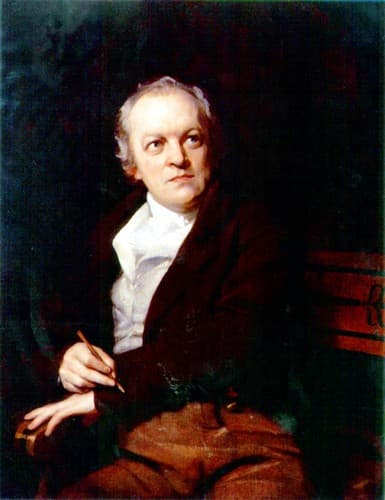
William Blake was an English poet, painter, and printmaker. Largely unrecognised during his life, Blake is now considered a seminal figure in the history of the poetry and visual art of the Romantic Age. What he called his "prophetic works" were said by 20th-century critic Northrop Frye to form "what is in proportion to its merits the least read body of poetry in the English language". His visual artistry led 21st-century critic Jonathan Jones to proclaim him "far and away the greatest artist Britain has ever produced". In 2002, Blake was placed at number 38 in the BBC's poll of the 100 Greatest Britons. While he lived in London his entire life, except for three years spent in Felpham, he produced a diverse and symbolically rich collection of works, which embraced the imagination as "the body of God" or "human existence itself".
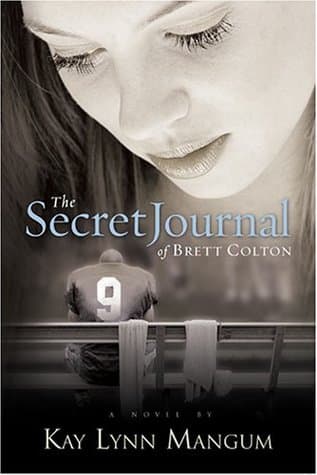
Kay Lynn Mangum
4.3
Stormie Omartian
4.3
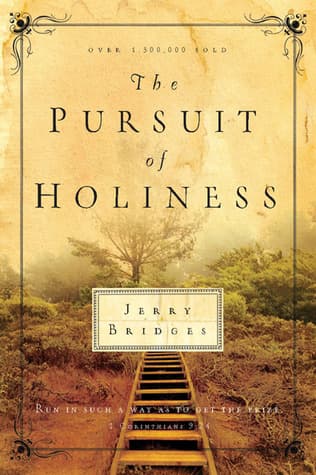
Jerry Bridges
4.3
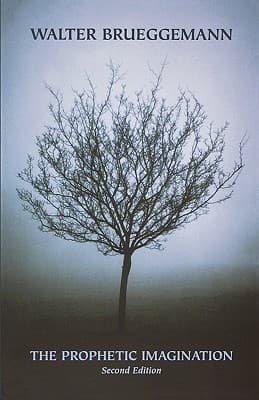
Walter Brueggemann
4.3
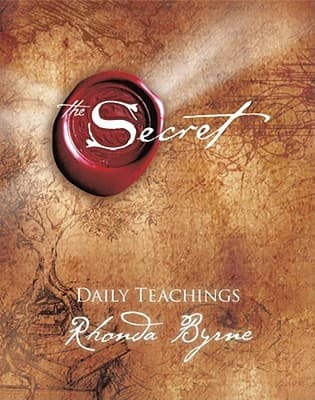
Rhonda Byrne
4.3
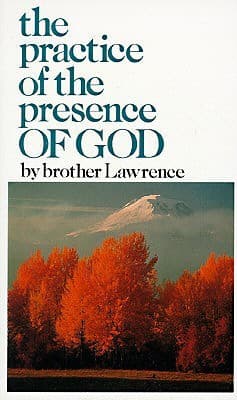
Brother Lawrence
4.3
Joseph Campbell
4.3
Unknown
4.3