BookBrief
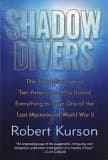
Shadow Divers cover
Archivist's Choice

Shadow Divers

Robert Kurson (2004)

Genre

Biography / History / Mystery / Science

Reading Time

7-9 hours

Key Themes

See below

Track Your Reading

Sign in to track this book

Two rival deep wreck divers risk their lives in the treacherous Atlantic to identify a mysterious, officially nonexistent WWII German U-boat and its lost crew, forming an unlikely brotherhood with each other and the dead.

Core Idea

Shadow Divers tells the story of two recreational divers, John Chatterton and Richie Kohler, and their dangerous, obsessive search to identify a mysterious German U-boat found off the New Jersey coast in 1991. The book looks at the human need to discover what is unknown, the strong bond and mental strain of extreme technical diving, and the moral issues that come with disturbing a final resting place. It shows the value of direct evidence and the hidden sacrifices made to find historical truth. The story ultimately reveals the U-boat's identity and its crew, giving their families closure, while also showing the dangers and ethical problems of deep-sea exploration.
Reading time
7-9 hours
Difficulty
Medium
✓ Read this if...
You are fascinated by real-life mysteries, extreme adventure, the psychological aspects of obsession, or the meticulous process of historical investigation. Also for those interested in technical diving and maritime history.
✗ Skip this if...
You dislike intense suspense, detailed descriptions of dangerous situations, or stories involving significant risk and potential tragedy. Not for those averse to technical explanations of diving.

Core idea

The central argument and framework that powers the entire book.

Shadow Divers tells the story of two recreational divers, John Chatterton and Richie Kohler, and their dangerous, obsessive search to identify a mysterious German U-boat found off the New Jersey coast in 1991. The book looks at the human need to discover what is unknown, the strong bond and mental strain of extreme technical diving, and the moral issues that come with disturbing a final resting place. It shows the value of direct evidence and the hidden sacrifices made to find historical truth. The story ultimately reveals the U-boat's identity and its crew, giving their families closure, while also showing the dangers and ethical problems of deep-sea exploration.

At a glance

Reading time

7-9 hours

Difficulty

Medium

Read this if...

You are fascinated by real-life mysteries, extreme adventure, the psychological aspects of obsession, or the meticulous process of historical investigation. Also for those interested in technical diving and maritime history.

Skip this if...

You dislike intense suspense, detailed descriptions of dangerous situations, or stories involving significant risk and potential tragedy. Not for those averse to technical explanations of diving.

Key Takeaways

1

The Allure of the Unknowable

An insatiable human drive to solve mysteries, even at great personal cost.

Quote

The sea, once it casts its spell, holds one in its net of wonder forever.

Finding an unknown German U-boat off the New Jersey coast started an obsession in John Chatterton and Richie Kohler that went beyond just sport. The fact that such a wreck shouldn't exist, according to official records, drove a relentless, almost spiritual, search for its identity. This shows the deep human need to classify, understand, and bring closure to the unknown, especially when it appears in such a dramatic and historically important way. The U-boat became more than just a wreck; it was a puzzle to solve, a historical oddity t...

Supporting evidence

The initial discovery of the U-boat, lacking any identifying marks, immediately sets off the mystery. The official records stating no U-boat should be there further deepens the enigma, compelling the divers to dedicate years to its identification.

Apply this

Embrace intellectual curiosity. When confronted with an anomaly or a compelling mystery, resist the urge to dismiss it. Instead, view it as an opportunity for deep investigation and learning, understanding that significant discoveries often lie beyond the easily explained.


historical-mysteryhuman-curiosityobsessionunidentified-wreck
2

Brotherhood Forged in the Deep

Extreme environments can transform rivalry into an unbreakable bond.

Quote

In the deep, there was only the dive, the mission, and the absolute necessity of trusting the man next to you with your life.

John Chatterton and Richie Kohler started as competitive, even rival, deep wreck divers. However, the shared, life-threatening experience of exploring the U-boat, with its immense pressures, darkness, and dangers, created an extraordinary bond between them. Their survival depended on complete trust, careful planning, and smooth teamwork. This intense environment removed their individual egos and competitive urges, replacing them with a deep sense of friendship and mutual reliance. The U-boat, at first a source of individual challenge,...

Supporting evidence

The book details their initial competitive dynamic and then meticulously illustrates how each dive, fraught with near-fatal incidents and complex problem-solving, deepened their trust and reliance on each other, ultimately leading to a 'mystical sense of brotherhood.'

Apply this

Seek out collaborative challenges, even with individuals you initially perceive as rivals. Understand that shared high-stakes experiences can foster profound trust and partnership, building stronger teams and more resilient relationships.

teamworkcamaraderierivalry-to-friendshipextreme-environments
3

The Psychological Toll of Obsession

The relentless pursuit of a goal can strain personal lives to their breaking point.

Quote

The U-boat consumed them, body and soul. Everything else became secondary.

The search to identify the U-boat became an all-consuming obsession for Chatterton and Kohler, requiring not only their physical and mental strength but also significant personal costs. Their marriages suffered under the constant pressure of their dangerous pursuit, the financial strain, and the emotional distance caused by their sole focus. This highlights the negative side of intense dedication: while it can lead to great achievements, it often comes at the expense of other important parts of life, especially relationships with love...

Supporting evidence

The narrative explicitly describes the breakdown of Chatterton's and Kohler's marriages, detailing arguments, financial difficulties, and the emotional toll on their wives and families due to the divers' unwavering dedication to the U-boat project.

Apply this

Recognize the potential for obsession in passionate pursuits. Regularly assess the impact of your goals on your personal life and relationships. Actively seek balance and communication with loved ones to mitigate the corrosive effects of single-minded dedication.

obsessionwork-life-balancepersonal-sacrificepsychological-impact
4

The Perils of Technical Diving

Pushing human limits in extreme environments demands meticulous preparation and unflinching courage.

Quote

Every dive to the U-869 was a calculated risk, a dance with the edge of human survival.

The diving done by Chatterton, Kohler, and their team was not recreational; it was highly technical deep wreck diving, pushing the limits of human endurance and equipment. The U-boat lay at 230 feet, a depth where nitrogen narcosis caused hallucinatory effects, oxygen toxicity was a constant danger, and decompression sickness was a real possibility. The cold temperatures, strong currents, and the complicated, unstable wreckage itself presented many dangers. This emphasizes the extreme technicality and dangers involved, showing the car...

Supporting evidence

The book vividly describes the specific dangers encountered: nitrogen narcosis ('rapture of the deep'), oxygen toxicity seizures, equipment failures, getting entangled in wreckage, the extreme cold, and the long, perilous decompression stops. Several divers on the team either died or had near-fatal incidents.

Apply this

When undertaking high-risk endeavors, whether physical or professional, invest heavily in thorough preparation, continuous training, and understanding your equipment's limitations. Never underestimate the power of the environment or the importance of safety protocols.

technical-divingdecompression-sicknessnitrogen-narcosisrisk-assessmentextreme-environments
5

The Ethics of Discovery and Respect

Uncovering history requires sensitivity towards the deceased and their legacy.

Quote

They were not just a U-boat; they were men, sailors who died far from home.

Beyond the excitement of discovery, the divers dealt with the deep ethical issues of their find. The U-boat was a war grave, holding the remains of a German crew who died far from home. Their initial excitement turned into a deep sense of respect and responsibility toward the dead. This highlights the moral need to treat historical sites, especially those with human remains, with dignity and respect. The divers' mission changed from just identification to an act of historical closure, honoring the fallen sailors, regardless of their n...

Supporting evidence

The divers' increasing emotional connection to the lost crew, culminating in their efforts to identify the U-boat's specific number (U-869) and its crew, and their eventual communication with German authorities and the families of the deceased sailors.

Apply this

When engaging with historical sites or artifacts, particularly those involving human tragedy, prioritize ethical considerations. Seek to understand and respect the context, ensure dignity for the deceased, and aim to contribute to historical understanding rather than mere exploitation.

war-gravehistorical-ethicsdignity-of-the-deadremembrance
6

The Power of Primary Evidence

Direct observation and painstaking data collection can overturn established historical narratives.

Quote

What they found defied every official record, every expert's opinion.

The main part of the U-boat mystery was its very presence at that location, which went against all known naval records. The divers' constant efforts to gather direct evidence—artifacts, serial numbers, and even the unique design features of the U-boat—were key in correcting decades of wrong information. This shows the scientific method in action: when direct observation conflicts with established theory, the observation must be carefully investigated. Their detailed documentation and firm belief in their own findings, despite expert d...

Supporting evidence

The painstaking process of identifying the U-boat through obscure parts like the unique 'dog tag' of a specific U-boat type, the discovery of specific torpedo designs, and the eventual match with the U-869's patrol records, all despite official German and US naval archives initially denying its presence.

Apply this

In any field, prioritize primary sources and direct observation over unchallenged secondary accounts. Be prepared to challenge prevailing assumptions with solid evidence, even if it means going against established expert opinion.

historical-revisionprimary-evidenceempirical-datachallenging-assumptions
7

The Unseen Sacrifices

Significant achievements often stand on the unacknowledged sacrifices of many.

Quote

For every hero celebrated, there are countless others whose efforts and sacrifices paved the way, often in the shadows.

While Chatterton and Kohler are the main characters, the book subtly shows the large network of support, often unseen and unacknowledged, that made their mission possible. This includes the other divers who risked their lives, the boat captains and crews, the families who endured the emotional and financial stress, and the countless hours spent researching and coordinating. This reminds us that no great achievement is done alone. Behind every celebrated success are many individuals whose contributions, sacrifices, and steady support a...

Supporting evidence

The book details the involvement of other divers who joined the team, some of whom died or were injured. It also touches upon the financial strain on the divers' families and the logistical challenges of organizing each expedition, requiring the support of boat crews and shore teams.

Apply this

When acknowledging achievements, look beyond the central figures to appreciate the broader network of support and sacrifice. Actively recognize and value the contributions of all team members, understanding that collective effort drives significant results.

collective-effortunseen-contributionssupport-systemteam-dynamics
8

The Legacy of the Lost

Giving a name to the nameless provides profound closure and historical truth.

Quote

They found not just a U-boat, but a story, a crew, and a piece of history that deserved to be known.

The ultimate success of the Shadow Divers was not just finding a U-boat, but identifying it as the U-869 and, by extension, the names of its lost crew. This act provided deep closure not only for the divers themselves but also for the families of the German sailors who had lived for decades with uncertainty. This highlights the power of historical identification: it turns anonymous casualties into individuals with stories, restoring their place in history and offering comfort to those they left behind. It underscores the human need fo...

Supporting evidence

The emotional climax of the book, where the divers finally confirm the U-869's identity, leading to contact with German authorities and eventually the families of the crew members, bringing decades of uncertainty to an end.

Apply this

Recognize the importance of historical accuracy and the power of naming. In personal or professional contexts, strive to bring clarity and closure to unresolved issues, understanding that identification and remembrance can have a profound impact on individuals and communities.

remembrancehistorical-closurelegacyidentity
9

The Call of the Deep

The ocean's mysteries possess an enduring, almost spiritual, draw.

Quote

The sea reveals its secrets slowly, and only to those who dare to look.

Throughout the story, the ocean acts as a character—mysterious, dangerous, and completely captivating. The divers' attraction to the deep is not just about the thrill of the sport, but a deeper, almost spiritual connection to the underwater world and its hidden histories. This explores the basic human fascination with the unknown depths, the appeal of discovery, and the deep sense of connection one can feel to places and events hidden by time and water. The U-boat became a gateway to this deeper relationship, drawing the divers into a...

Supporting evidence

The recurring descriptions of the ocean's immense power, beauty, and danger, and the divers' own reflections on their almost mystical connection to the U-boat and the deep, despite the immense risks.

Apply this

Cultivate a sense of wonder and respect for the natural world, particularly its unexplored frontiers. Allow yourself to be drawn to mysteries, understanding that engagement with the unknown can lead to profound personal growth and discovery.

ocean-explorationmysteryspiritual-connectionnatural-world

Critical analysis

Notable Quotes

The sea does not give up her dead easily.

A recurring theme highlighting the immense difficulty and danger of deep-sea diving and recovery.

There are old divers and bold divers, but there are no old, bold divers.

A common saying among the diving community, emphasizing the need for caution and experience over recklessness.

They were driven by a need to know, a need to solve the puzzle, even if it might kill them.

Describing the motivation of the divers to identify the U-boat, despite the inherent risks.

The deep was a place where mistakes were magnified, where small errors quickly became fatal.

Reflecting on the unforgiving nature of deep-sea diving environments.

Every wreck has a story to tell, if you're willing to listen and brave enough to find it.

Illustrating the allure of shipwrecks and the historical narratives they hold.

You don't conquer the ocean; you just try to survive it.

A humbling perspective on humanity's relationship with the powerful forces of nature.

The silence down there was absolute, a heavy, crushing silence that could drive a man mad or give him peace.

Describing the unique sensory experience of deep-sea diving.

It wasn't about treasure; it was about history, about giving names to the nameless.

Highlighting the true motivation of the divers, which was historical identification rather than material gain.

The line between courage and madness was often blurred at those depths.

Commenting on the extreme mental and physical demands placed on the divers.

They were ghosts, these men, frozen in time and forgotten by the world, until now.

Referring to the drowned U-boat crew, whose identities the divers sought to reveal.

The greatest discoveries often lie where no one else dares to look.

A reflection on the nature of exploration and uncovering hidden truths.

He understood that the ocean was a living thing, with moods and tempers, and it demanded respect.

Illustrating the deep reverence and understanding the experienced divers had for the sea.

Every dive was a gamble, a roll of the dice against the crushing pressure and the unforgiving cold.

Emphasizing the constant peril inherent in their deep-sea expeditions.

Quiz

Test Your Knowledge

Ready to see how well you understood this book? Take our interactive quiz with 10 questions.

10
Questions
~5
Minutes
?
Best Score

Key Questions (FAQ)

The central mystery revolves around the discovery of an unidentified World War II German U-boat off the coast of New Jersey, at a location where official records stated no such submarine should exist. Divers John Chatterton and Richie Kohler embark on a perilous six-year quest to identify the U-boat and its crew.

About the author