BookBrief
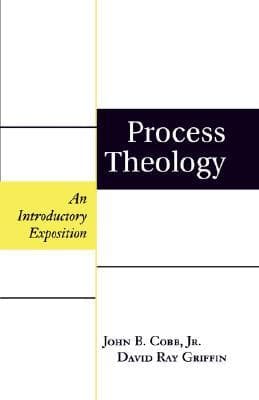
Process Theology cover
Archivist's Choice

Process Theology

John B. Cobb Jr.

Genre

Spirituality / Philosophy

Reading Time

240 min

Key Themes

See below

Track Your Reading

Sign in to track this book

Explore a vision of God and the universe where divine influence is persuasive love, not coercive power, evolving with a constantly changing world.

Core Idea

Process Theology presents a new understanding of God and reality, different from older theological and philosophical ideas. It says that reality is a flow of connected, creative events, not unchanging things. God is not an all-powerful, controlling ruler but the most persuasive and responsive source of all being. God constantly guides the world toward more value and newness, while respecting the real freedom and creativity in every event. This God is a 'fellow sufferer' who experiences and responds to the world's joys and pains. God's power comes from influence and co-creation rather than total control, making the future truly open and undecided.
Reading time
240 min
Difficulty
Hard
✓ Read this if...
You are a serious student of theology or philosophy, frustrated by traditional concepts of God and reality, and open to a dynamic, evolutionary, and experientially-grounded understanding of the divine and the cosmos.
✗ Skip this if...
You prefer traditional, dogmatic theology, seek simple answers to complex questions, or are uninterested in dense philosophical and metaphysical arguments about the nature of God and reality.

Core idea

The central argument and framework that powers the entire book.

Process Theology presents a new understanding of God and reality, different from older theological and philosophical ideas. It says that reality is a flow of connected, creative events, not unchanging things. God is not an all-powerful, controlling ruler but the most persuasive and responsive source of all being. God constantly guides the world toward more value and newness, while respecting the real freedom and creativity in every event. This God is a 'fellow sufferer' who experiences and responds to the world's joys and pains. God's power comes from influence and co-creation rather than total control, making the future truly open and undecided.

At a glance

Reading time

240 min

Difficulty

Hard

Read this if...

You are a serious student of theology or philosophy, frustrated by traditional concepts of God and reality, and open to a dynamic, evolutionary, and experientially-grounded understanding of the divine and the cosmos.

Skip this if...

You prefer traditional, dogmatic theology, seek simple answers to complex questions, or are uninterested in dense philosophical and metaphysical arguments about the nature of God and reality.

Key Takeaways

1

God is Persuasive, Not Coercive

Divine power operates through influence and attraction, not absolute control.

Quote

God's power is not that of a cosmic dictator, but rather a lure for feeling, a persuasive force that calls all creatures toward their optimal actualization.

Traditional theology often shows God as all-powerful, meaning absolute control over everything, which leads to the problem of evil. Process theology redefines omnipotence, suggesting God's power is mainly persuasive. God influences the world by presenting new possibilities and aiming for the best outcomes, but does not solely decide them. Every entity, from subatomic particles to humans, has some self-determination, or 'actual occasion' of experience. God's role is to offer 'initial aims' that guide these entities toward greater compl...

Supporting evidence

Cobb draws heavily from Whitehead's concept of God as the 'lure for feeling' and Hartshorne's 'dipolar theism,' where God has both an abstract, unchanging pole and a concrete, ever-changing pole that responds to the world.

Apply this

Reframe your understanding of divine intervention. Instead of praying for God to unilaterally change a situation, pray for wisdom, guidance, and the ability to respond creatively to the 'initial aims' God offers, recognizing your own agency in co-creating the future.


divine-persuasioninitial-aimdipolar-theism
2

Reality as Interconnected Events

The universe is a web of dynamic, mutually influencing 'actual occasions,' not static substances.

Quote

The primary constituents of reality are not enduring substances but momentary, interconnected 'actual occasions' of experience, each prehending and responding to its past and influencing its future.

Process philosophy changes how we understand reality. Instead of static things, it sees reality as a dynamic flow of connected events, or 'actual occasions.' Each actual occasion is a brief burst of experience, a 'drop of experience' that arises, incorporates its past ('prehends' it), makes a decision about its present, and then ends, contributing its data to the future. This applies to everything: a photon, a cell, a thought, a human life. There is no lasting 'thing' behind the experiences; the 'thing' is the sequence of experiences....

Supporting evidence

Whitehead's concept of 'actual occasions' and 'prehension' are central here, explaining how each momentary event grasps aspects of its past and integrates them into its present, then becoming data for future occasions.

Apply this

Cultivate a deeper awareness of interconnectedness. Recognize that your actions, thoughts, and even your very existence are deeply interwoven with the fabric of the universe, influencing and being influenced by countless other 'actual occasions.' This fosters a sense of responsibility and belonging.

actual-occasionsprehensionrelationality
3

God is Experientially Responsive

God is not immutable and unaffected, but deeply influenced by the world's suffering and joy.

Quote

God is not an impassive, unchanging being, but rather the supreme 'actual occasion' who prehends all the feelings and experiences of the world, suffering with its suffering and rejoicing with its joy.

Older theology often describes God as unchanging, unaffected by the world. Process theology challenges this, arguing that a truly loving and involved God must be affected by the world. God is the most inclusive and complex actual occasion, constantly 'prehending' (experiencing and integrating) all other actual occasions' experiences. This means God literally feels the suffering, joy, beauty, and tragedy of every creature. God's 'consequent nature' is continually enriched and changed by the world's experiences. This makes God a supreme...

Supporting evidence

Cobb emphasizes Hartshorne's concept of God's 'consequent nature,' which is the pole of God that is concrete, temporal, and responsive to the world, contrasting it with God's 'primordial nature' which is abstract and eternal.

Apply this

When facing personal or global suffering, find solace in the understanding that God is not apathetic but intimately shares in that experience. This can deepen your prayer life, fostering a sense of divine companionship and empathy.

consequent-nature-of-goddivine-empathyimpassibility-critique
4

Creativity is Ultimate

Creativity, not substance, is the fundamental principle of the universe, driving novelty and becoming.

Quote

The ultimate category of existence is not being, but 'creativity,' the ongoing process by which novel actual occasions arise from the data of the past and contribute to the future.

For process philosophy, the basic 'stuff' of reality is not a static substance or being, but 'creativity.' Creativity is the principle by which new actual occasions come into being, integrating the past, making choices, and contributing to the future. It is the drive toward actualization, toward the emergence of new forms and experiences. God is the supreme example of creativity, but creativity is also part of every actual occasion, from the simplest to the most complex. This means the universe is not just following a predetermined pl...

Supporting evidence

Whitehead identifies 'creativity' as the 'category of the ultimate' in his metaphysics, emphasizing its foundational role over concepts of substance or being.

Apply this

Embrace your own creative potential, recognizing it as a fundamental aspect of your being and participation in the ongoing creation of the world. Seek out opportunities for novelty, learning, and contributing unique perspectives, understanding that this is a divine impulse within you.

category-of-the-ultimatenoveltyemergence
5

Evil as Failed Actualization

Evil arises from the failure to achieve optimal harmony and intensity of experience.

Quote

Evil is not a positive entity, but rather the privation of good, the failure of actual occasions to achieve their optimal intensity and harmony of experience, often due to competing aims or limited resources.

Process theology offers a perspective on the problem of evil. Since God's power is persuasive rather than coercive, God cannot unilaterally prevent evil. Evil happens when actual occasions fail to integrate their past experiences harmoniously, or when their individual aims conflict, leading to discord, suffering, and less value. It is not a positive force, but a lack or a 'missed opportunity' for greater good, beauty, and intensity of experience. Natural evil, like earthquakes, comes from the freedom and interactions of non-human actu...

Supporting evidence

Cobb explains that God's aim is always for the maximum possible good, but this aim can be thwarted by the inherent freedom of all actual occasions, leading to 'discord' or 'triviality' of experience.

Apply this

Instead of blaming God for evil, focus on actively working to reduce suffering and promote harmony, recognizing that you are participating with God's ongoing persuasive efforts. Understand that even in suffering, there's always an 'initial aim' for a more creative, resilient response.

problem-of-evilprivation-of-gooddiscord
6

The Value of Every Experience

Every momentary 'actual occasion' of experience has intrinsic value and contributes to the divine life.

Quote

No actual occasion, however fleeting or seemingly insignificant, is without value. Each contributes its unique feeling-tone to the ongoing life of the universe and is 'remembered' in the consequent nature of God.

A major idea of process theology is that every 'actual occasion' of experience, from the smallest atomic event to the most complex human thought, has intrinsic value. This is because each occasion contributes its unique data and feeling-tone to the universe and, importantly, is experienced and kept within God's consequent nature. Nothing is truly lost; every experience, good or bad, beautiful or ugly, adds to the richness and complexity of God's ongoing life. This gives immense dignity and meaning to all existence, challenging human-c...

Supporting evidence

The concept of God's 'consequent nature' as a 'memory' or 'repository' of all past actual occasions, ensuring their eternal preservation and contribution to the divine experience.

Apply this

Practice mindfulness and appreciation for the present moment, recognizing that every experience, however mundane, holds intrinsic value and contributes to a larger, divine tapestry. Cultivate a sense of reverence for all forms of life and natural processes.

intrinsic-valuedivine-memorysacredness-of-experience
7

Future is Genuinely Open

The future is not predetermined but emerges from the choices of all actual occasions, guided by God's aims.

Quote

The future is genuinely open, not a mere unfolding of a predetermined script. It is co-created by the free choices of all actual occasions in response to God's ceaseless presentation of novel possibilities.

Unlike deterministic or strictly predestined theological ideas, process theology states that the future is genuinely open and undecided. While the past is set and provides data for the present, the present 'actual occasion' involves an element of creative self-determination. Each entity, in its moment of becoming, chooses how to integrate its past and respond to God's 'initial aim' for its future. This means the future is not just a divine plan unfolding, but a dynamic, co-created process involving God and all other entities. This ope...

Supporting evidence

The emphasis on 'initial aims' as persuasive suggestions rather than irresistible commands, and the inherent 'freedom' of each actual occasion to realize or reject those aims.

Apply this

Embrace a sense of active participation in shaping the future. Recognize that your choices matter and contribute to the ongoing creation of reality. This encourages hope, agency, and a commitment to positive change, knowing the future is not fixed.

open-futureco-creationself-determination
8

God as 'Fellow Sufferer'

God is not just powerful, but also the ultimate 'fellow sufferer who understands.'

Quote

God is not an aloof, transcendent being, but rather the 'fellow sufferer who understands,' intimately participating in the joys and sorrows of the world.

This phrase, often linked to Whitehead, summarizes a core idea of process theology's understanding of God. Far from being an unaffected, distant deity, God is deeply present and empathetic, experiencing with all creatures. When a child suffers, God suffers. When there is joy, God rejoices. This understanding changes our relationship with the divine. It allows for a more relatable and comforting image of God, one who is not only aware of our pain but truly shares in it. This perspective offers deep comfort in times of tragedy and strug...

Supporting evidence

The concept of God's 'consequent nature' absorbing and integrating all the feelings of the world, making God the ultimate recipient and 'rememberer' of all experience, including suffering.

Apply this

When experiencing pain or grief, lean into the understanding that God is truly present as a 'fellow sufferer.' This can transform feelings of isolation into a sense of divine companionship and profound empathy, fostering resilience and hope.

divine-immanencefellow-sufferersuffering-of-god
9

Moral Imperative: Maximize Value

Ethics are grounded in promoting intense, harmonious, and novel experiences for all.

Quote

The ethical imperative for humans, as for God, is to promote the maximum possible intensity and harmony of experience for all actual occasions, contributing to the richness of the world and the divine life.

Process theology offers a strong ethical framework rooted in its metaphysics. 'Good' means promoting 'intensity and harmony of experience.' This means working to create situations where actual occasions (including humans, animals, and even ecological systems) can reach their full potential, integrate their experiences harmoniously, and add to the world's richness and beauty. Conversely, evil is the lessening of value, the creation of discord, or the prevention of optimal actualization. This framework encourages a holistic ethic that g...

Supporting evidence

Cobb explains that God's 'initial aim' for every actual occasion is always towards its optimal intensity and harmony, thus making this the normative ethical standard for creatures as well.

Apply this

When making decisions, consider not just your own well-being, but how your actions contribute to the 'intensity and harmony of experience' for others, including the environment. This encourages a more expansive and compassionate ethical lens.

process-ethicsintensity-of-experienceecological-theology
10

Temporality is Fundamental

Time and change are not illusions but fundamental aspects of reality and the divine.

Quote

Temporality is not a defect or an illusion to be overcome, but an irreducible feature of reality, essential to both creaturely existence and the concrete actuality of God.

Many older philosophies and theologies saw time as a lesser, imperfect way of existing, with true reality being timeless and unchanging. Process theology reverses this, saying that temporality and change are basic to the nature of reality, and even to God's concrete existence. To be is to become. Every 'actual occasion' is momentary, arises, ends, and contributes to the next. God, in God's 'consequent nature,' is also temporal, constantly responding to and enriched by the world's development. This acceptance of temporality allows for ...

Supporting evidence

The entire metaphysical scheme of 'actual occasions' and 'prehension' is inherently temporal, as each occasion arises from the past and creates the future. God's 'consequent nature' is the divine pole that is concrete, temporal, and ever-changing.

Apply this

Embrace the impermanence of life and the inevitability of change, seeing it not as a flaw but as the very engine of creativity and growth. Find meaning in the unfolding present and the dynamic process of becoming, rather than seeking static perfection.

temporalityprocess-of-becomingdivine-temporality

Critical analysis

Notable Quotes

God is not an entity alongside other entities, but the very ground of their being and becoming.

Introducing a core concept of process theology's understanding of God's immanence.

The world is not a static given, but an ongoing process of creative advance.

Emphasizing the dynamic and evolving nature of reality.

Every actual occasion is a moment of experience, however rudimentary.

Highlighting the panexperientialist view that even non-human entities have a form of experience.

God persuades rather than coerces, luring the world towards greater beauty and intensity of experience.

Explaining God's mode of influence as non-coercive persuasion.

Evil is not a positive entity, but a privation of greater good, a failure to actualize richer possibilities.

Defining evil within a process framework, not as a created force but as a missed opportunity.

The future is genuinely open, not predetermined by a divine blueprint.

Affirming the real contingency of the future and the importance of creaturely freedom.

Creativity is the ultimate category of explanation.

Positioning creativity as a fundamental aspect of reality, even more basic than substance.

Value is not imposed from without, but arises in the process of actualization.

Discussing the emergent nature of value in the world's becoming.

God suffers with the world and is affected by its joys and sorrows.

Emphasizing God's responsiveness and empathetic relationship with creation.

The divine aim for each occasion is for the greatest possible intensity of experience, given its initial data.

Describing God's specific aim for each moment of reality, balancing novelty and order.

Every entity contributes to the ongoing creation of the universe.

Highlighting the participatory role of all entities in the cosmic process.

Spirituality is found not in escaping the temporal, but in engaging it with depth and purpose.

Connecting process thought to a practical spirituality that values engagement with the world.

The past is preserved in the present through objective immortality.

Explaining how past actual occasions contribute to and are integrated into subsequent moments of reality.

A truly ecological theology must recognize the intrinsic value of all creatures, not just their instrumental value to humans.

Extending process theology's panexperientialism to environmental ethics.

Quiz

Test Your Knowledge

Ready to see how well you understood this book? Take our interactive quiz with 10 questions.

10
Questions
~5
Minutes
?
Best Score

Key Questions (FAQ)

Process Theology is a theological movement deeply rooted in the philosophies of Alfred North Whitehead and Charles Hartshorne. It offers a dynamic understanding of God and the world, emphasizing becoming, relationship, and the idea that God is not static but intimately involved in the ongoing creative process of the universe.

About the author