BookBrief
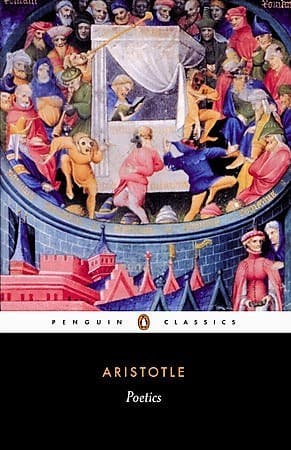
Poetics cover
Archivist's Choice

Poetics

Aristotle (1536)

Genre

Creativity / Philosophy

Reading Time

180 min

Key Themes

See below

Track Your Reading

Sign in to track this book

Aristotle's 'Poetics' explains how tragedy works, showing how well-made plots, flawed heroes, and the mix of pity and fear lead to catharsis, turning pain into pleasure for the audience.

Core Idea

Aristotle's Poetics presents a theory of tragedy, defining its main parts, purpose, and effects. He says tragedy, as an imitation (mimesis) of a serious and complete action, aims to create pity and fear in the audience, ending in catharsis—a release or cleansing of these feelings. The plot is most important, acting as the 'soul' of tragedy by guiding a unified series of events that change the protagonist's luck. Key to a good plot are 'recognition' and 'reversal,' often from a 'hamartia' (tragic error) by the protagonist, who should be a good but not perfect character. Aristotle stresses that visual spectacle is less important than plot and language in achieving tragedy's emotional and moral effect.
Reading time
180 min
Difficulty
Hard
✓ Read this if...
You are interested in the foundational theories of Western literary criticism, the structure and purpose of storytelling, or the philosophical underpinnings of drama and art.
✗ Skip this if...
You are looking for a modern, accessible guide to creative writing, a light philosophical read, or a book that directly addresses contemporary literary forms.

Core idea

The central argument and framework that powers the entire book.

Aristotle's Poetics presents a theory of tragedy, defining its main parts, purpose, and effects. He says tragedy, as an imitation (mimesis) of a serious and complete action, aims to create pity and fear in the audience, ending in catharsis—a release or cleansing of these feelings. The plot is most important, acting as the 'soul' of tragedy by guiding a unified series of events that change the protagonist's luck. Key to a good plot are 'recognition' and 'reversal,' often from a 'hamartia' (tragic error) by the protagonist, who should be a good but not perfect character. Aristotle stresses that visual spectacle is less important than plot and language in achieving tragedy's emotional and moral effect.

At a glance

Reading time

180 min

Difficulty

Hard

Read this if...

You are interested in the foundational theories of Western literary criticism, the structure and purpose of storytelling, or the philosophical underpinnings of drama and art.

Skip this if...

You are looking for a modern, accessible guide to creative writing, a light philosophical read, or a book that directly addresses contemporary literary forms.

Key Takeaways

1

Plot as the Soul of Tragedy

The arrangement of incidents is paramount, not character.

Quote

The plot is the source and, as it were, the soul of tragedy; character comes second.

Aristotle says the most important part of tragedy is the plot, or the 'arrangement of incidents.' He believes a well-made plot, with a clear beginning, middle, and end, is more important than character development or spectacle. The order of events, their logical connection, and their inevitable progression create pity and fear in the audience, leading to catharsis. A strong plot can exist without deeply drawn characters, but strong characters cannot carry a tragedy without a strong plot. This challenges modern ideas that often priorit...

Supporting evidence

Aristotle uses the analogy of a painting, stating that a random splash of colors, however beautiful, is less impactful than a coherent outline. He also points out that 'tragedy is an imitation not of men but of action and life.'

Apply this

When crafting any narrative, prioritize the logical and compelling sequence of events. Map out the plot points, reversals, and recognitions first, ensuring they build inevitably towards a resolution, rather than relying solely on charismatic characters or thematic exposition.
plot-structurenarrative-priorityaction-over-character
2

The Power of Mimesis

Art imitates life, but not slavishly; it reveals universal truths.

Quote

Poetry is a more philosophical and a higher thing than history: for poetry tends to express the universal, history the particular.

Mimesis, or imitation, is central to Aristotle's theory, but people often misunderstand it as simple copying. He clarifies that art does not just copy reality; it imitates actions and human experience in a way that shows universal patterns and truths. A poet, through mimesis, creates a probable or necessary series of events that show what could happen, not just what has happened. This makes poetry (and all creative stories) more meaningful than history, which is limited to specific facts. The power is in simplifying and organizing...

Supporting evidence

Aristotle contrasts poetry with history, asserting that history deals with 'what Alcibiades did or suffered,' while poetry deals with 'what kind of things a certain kind of man will do or say probably or necessarily.'

Apply this

When creating, don't just recount events; seek to distill universal human experiences and emotions. Ask what underlying truth or pattern your narrative is revealing about the human condition, rather than simply documenting facts. Strive for 'poetic truth' over literal accuracy.

imitation-artuniversal-truthpoetic-truth
3

Catharsis: The Emotional Release

Tragedy purges pity and fear, offering emotional purification.

Quote

Tragedy, then, is an imitation of an action that is serious, complete, and of a certain magnitude... through pity and fear effecting the proper purgation of these emotions.

Catharsis is tragedy's main goal and effect, a concept that has caused centuries of discussion. Aristotle describes it as the 'purging' or 'purification' of pity and fear. This means not just feeling these emotions strongly, but experiencing them in a controlled, artistic way that ultimately cleanses or relieves the audience. By seeing others' suffering, audiences face their own weaknesses and fears, allowing for a release that is both emotionally satisfying and morally instructive. This suggests that art has a healing role, helping u...

Supporting evidence

The plays of Sophocles, such as 'Oedipus Rex,' are prime examples where the protagonist's downfall elicits profound pity (for his undeserved suffering) and fear (that such a fate could befall anyone), culminating in a powerful emotional release for the audience.

Apply this

When designing experiences or narratives intended to evoke strong emotions, consider how to guide the audience through an emotional arc that leads to a sense of resolution or release, rather than leaving them in a state of unresolved distress. Understand the power of shared emotional experience for group cohesion and individual processing.

emotional-releasepity-feartragic-effect
4

Hamartia: The Tragic Error

A character's downfall stems from a significant, often intellectual, mistake.

Quote

The change of fortune should be not from wickedness to goodness, but from goodness to badness, and this change should come about not as a result of vice but of some great error or frailty (hamartia).

Hamartia, often called a 'tragic flaw,' is better understood as a 'great error' or 'mistake,' often intellectual rather than moral. It is not necessarily a vice, but a misjudgment or lack of knowledge about important facts that causes the tragic hero's downfall. This difference is important because it makes the hero's suffering more pitiable – they are not evil, but fall due to a understandable human mistake. This concept highlights the role of human choice and decisions, however flawed, in shaping destiny, making the tragedy more imp...

Supporting evidence

Oedipus's hamartia is not pride, but his relentless pursuit of the truth, unknowingly unraveling his own horrifying past. He is a good man making a series of errors in judgment and knowledge, leading to his ruin.

Apply this

When developing characters, especially those facing significant challenges, consider how their downfall might stem from a specific, identifiable error in judgment or a blind spot, rather than outright malice. This creates a more nuanced and psychologically resonant narrative.

tragic-flawerror-judgmentcharacter-downfall
5

Recognition and Reversal

The most effective plots feature sudden shifts in fortune and knowledge.

Quote

The finest kind of Recognition is one that occurs along with Reversal, like that in Oedipus.

Aristotle names 'recognition' (anagnorisis) and 'reversal' (peripeteia) as key parts of a complex and effective plot. A reversal is a sudden change from one situation to its opposite, often from good fortune to bad. Recognition is a change from not knowing to knowing, often involving finding out a true identity or an important fact. When these two happen at the same time, as in 'Oedipus Rex' where the messenger's news meant to reassure Oedipus instead reveals his true parentage and crime, the effect is very powerful. This structural c...

Supporting evidence

In 'Oedipus Rex,' the messenger arrives to relieve Oedipus's fear of marrying his mother by revealing he was adopted. This news, however, triggers Oedipus's recognition of his true parentage and the fulfillment of the prophecy, simultaneously reversing his fortune from king to pariah.

Apply this

In storytelling, strategically place moments of sudden, ironic reversal and profound discovery. Consider how a piece of information intended to help a character might inadvertently lead to their undoing, or how a long-held belief might be suddenly shattered by a revelation.

anagnorisisperipeteiaplot-twist
6

The Ideal Tragic Hero

A character who is 'intermediate' – not wholly good or evil.

Quote

The change of fortune should be not from goodness to badness... but from good to bad, of one who is not eminently good and just, yet whose misfortune is brought about not by vice or depravity, but by some error or frailty.

Aristotle states that the tragic hero should not be perfectly good, as their downfall would be only shocking and not pitiable. Nor should they be completely bad, as their suffering would feel deserved, removing pity. Instead, the ideal tragic hero is 'intermediate' – a generally good, fair character of high standing, who makes a significant error (hamartia). This creates a relatable figure whose suffering causes both pity (because they are mostly good) and fear (because their downfall seems possible for anyone). This nuanced portrayal...

Supporting evidence

Characters like Oedipus or Creon in 'Antigone' fit this description. They are noble figures, often rulers, who possess admirable qualities but whose fatal errors lead to their ruin, rather than inherent wickedness.

Apply this

When creating protagonists for dramatic narratives, avoid overly simplistic portrayals of good or evil. Develop characters with a mix of virtues and recognizable human failings, making their struggles and potential downfalls more resonant and emotionally impactful for the audience.

tragic-herocharacter-complexityrelatable-suffering
7

Unity of Action

A single, complete, and coherent plot is essential for impact.

Quote

As therefore in the other imitative arts, one imitation is always of one thing, so in poetry the imitation must be of one action, and of that a whole, the several incidents of which are so constituted, that if any one of them be displaced or removed, the whole will be disjoined and disturbed.

Aristotle stresses the importance of 'unity of action,' meaning a tragedy should focus on one complete action with a clear beginning, middle, and end. Every event in the plot must be logically connected and necessary; removing any part should disrupt the entire structure. This strict coherence ensures the plot's inevitability and maximizes its emotional impact, preventing distractions and keeping the audience focused on the main tragic progression. This idea, often misunderstood as 'unity of time and place' (which Aristotle mentions b...

Supporting evidence

He criticizes plays that try to encompass an entire hero's life, arguing that such breadth sacrifices depth and coherence. Instead, he champions plays like 'Oedipus Rex,' which focuses intensely on a single, unfolding crisis.

Apply this

In any creative project, ensure a clear, singular focus. Identify the core action or problem and remove any extraneous elements that do not directly contribute to its progression or resolution. Every scene, character, or detail should serve the central narrative purpose.

narrative-unityplot-cohesionstory-focus
8

Spectacle is Secondary

The visual elements are the least artistic and least important.

Quote

The Spectacle has, indeed, an emotional attraction of its own, but, of all the parts, it is the least artistic, and connected least with the art of poetry. For the power of Tragedy, we may be sure, is independent of representation and actors.

Aristotle places spectacle (the visual elements, scenery, costumes, etc.) at the bottom of his list of tragic elements. While he admits it can create emotion, he calls it 'least artistic' because it depends on external production rather than the poet's skill. A truly great tragedy, he argues, should move an audience even when simply read, proving its power comes from plot, character, and language, not just what is seen. This view prioritizes intellectual and structural artistry over mere sensory appeal, an important difference often m...

Supporting evidence

He implies that a well-written play should be able to achieve its emotional effects through its text alone, without elaborate staging. He critiques playwrights who rely on 'spectacular means' to achieve tragic effects that should arise from the plot itself.

Apply this

When evaluating or creating art, look beyond surface-level aesthetics. Prioritize the underlying structure, narrative, and thematic depth. Ask if the work would still be powerful and meaningful if stripped of its visual or auditory embellishments. Focus on the core message and construction.

visual-hierarchyartistic-valuesubstance-over-style
9

The Purpose of Poetic Language

Language should be clear but elevated, avoiding banality or obscurity.

Quote

The perfection of style is to be clear without being mean.

Aristotle discusses the importance of diction (lexis) in tragedy, supporting language that is clear and suitable but also elevated and ornate. It should not be so common as to be ordinary, yet not so obscure or old-fashioned as to be hard to understand. Metaphor, epithet, and unusual words can enrich the language, but they must be used carefully to avoid being over-the-top or confusing. The goal is to create a sense of dignity and distance fitting for serious topics, while still conveying meaning effectively. This balance ensures the ...

Supporting evidence

He discusses the use of 'rare words, metaphors, and lengthened forms' as ways to elevate style, but warns against their excessive use, which can lead to riddles or barbarism.

Apply this

In writing or speaking, strive for clarity without sacrificing elegance or impact. Use evocative language and rhetorical devices thoughtfully to enhance your message, rather than to obscure it or show off. Find the balance between accessibility and intellectual richness.

dictionpoetic-languagestyle-clarity
10

Tragedy's Moral Function

Beyond entertainment, tragedy offers moral and intellectual insight.

Quote

Tragedy is an imitation of an action that is serious, complete, and of a certain magnitude... through pity and fear effecting the proper purgation of these emotions.

While often seen as primarily entertainment, Aristotle's 'Poetics' suggests tragedy has a deep moral and intellectual role. By presenting actions that are 'serious' and 'complete,' and by creating pity and fear leading to catharsis, tragedy gives audiences more than just pleasure. It offers insights into human nature, the results of actions, the fragility of fortune, and the universal patterns of justice and suffering. The experience of tragedy, when well-made, is not just emotional but also instructional, helping people understand an...

Supporting evidence

The entire framework of catharsis, hamartia, and the ideal tragic hero points to a deliberate design to not just entertain, but to educate and purify the audience's emotions and understanding of the human condition.

Apply this

When creating or consuming narratives, consider the deeper implications and lessons embedded within the story. Look for how the narrative explores moral dilemmas, human failings, and universal truths, rather than just focusing on plot mechanics or superficial enjoyment. Engage with art as a tool for understanding life.

moral-lessonart-purposeintellectual-insight

Critical analysis

Notable Quotes

Epic poetry and Tragedy, Comedy also and Dithyrambic poetry, and the music of the flute and of the lyre in most of their forms, are all in fact modes of imitation.

Opening statement on the nature of various art forms.

Tragedy is an imitation of an action that is serious, complete, and of a certain magnitude; in language embellished with each kind of artistic ornament, the several kinds being found in separate parts of the play; in the form of action, not of narrative; through pity and fear effecting the proper purgation of these emotions.

Aristotle's famous definition of tragedy.

The Plot, then, is the first principle, and, as it were, the soul of Tragedy.

Emphasizing the primacy of plot over other elements of tragedy.

A perfect plot, accordingly, must not be too simple, nor yet too complex, but must imitate actions which excite pity and fear, —this being the distinctive mark of tragic imitation.

Discussing the ideal complexity of a tragic plot.

It is not the function of the poet to relate what has happened, but what may happen,—what is possible according to the law of probability or necessity.

Distinguishing poetry from history, highlighting poetry's focus on universals.

Hence poetry is more philosophical and a higher thing than history: for poetry tends to express the universal, history the particular.

Further elaborating on the superiority of poetry due to its universal scope.

The change of fortune from good to bad should come about not through vice and depravity, but through some great error or frailty.

Describing the cause of the tragic hero's downfall (hamartia).

Recognition is, as the name indicates, a change from ignorance to knowledge, producing love or hate between the persons destined by the poet for good or ill fortune.

Defining recognition (anagnorisis) as a key element of plot.

Peripeteia is the change from one state of things within the play to its opposite, in the way we have described, and that too in the probable or necessary sequence of events.

Defining reversal (peripeteia) as a key plot element.

Pity is aroused by unmerited misfortune, fear by the misfortune of a man like ourselves.

Explaining the conditions under which pity and fear are evoked.

A man who is too good to be tragic, or too bad, would be unsuitable. The best is a character between these two extremes.

Discussing the ideal moral standing of a tragic hero.

As therefore, in painting, a painter may draw a picture of one who is not perfectly beautiful, and yet omit nothing that is characteristic, and may even make him better looking; so too in poetry, the poet must imitate men as they are, or as they are said or thought to be, but always in a way that makes them appear better.

Comparing poetry to painting, suggesting an idealization in art.

The Dithyramb and the Nomes are, again, forms of poetry, but they differ in that the former is sung by a chorus, the latter by a single performer.

Distinguishing between different ancient poetic forms based on performance.

It is clear that the poet should be an inventor of tales rather than of verses, since he is a poet because he imitates, and what he imitates are actions.

Reiterating the importance of plot/story over mere versification for a poet.

Quiz

Test Your Knowledge

Ready to see how well you understood this book? Take our interactive quiz with 10 questions.

10
Questions
~5
Minutes
?
Best Score

Key Questions (FAQ)

Aristotle's Poetics is primarily a work of literary criticism that examines the elements and principles of Greek tragedy. It analyzes how dramatic components like plot, character, language, and spectacle combine to evoke specific emotional responses in the audience, such as pity and fear.

About the author

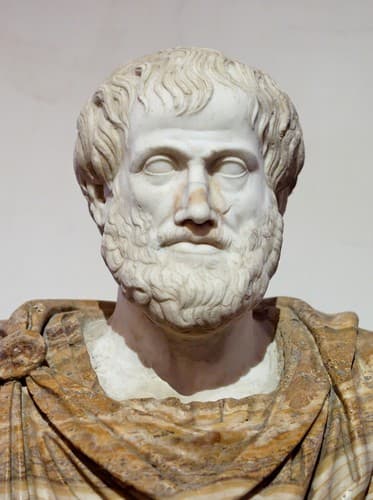
Aristotle

Aristotle was a Greek philosopher and polymath whose writings covered many subjects, including physics, ethics, politics, and art. He is renowned for his seminal works such as "Physics," "Poetics," and "Politics," which laid the groundwork for Western philosophy and scientific inquiry. A student of Plato and tutor to Alexander the Great, Aristotle's intellectual contributions continue to influence thought across numerous disciplines.