BookBrief
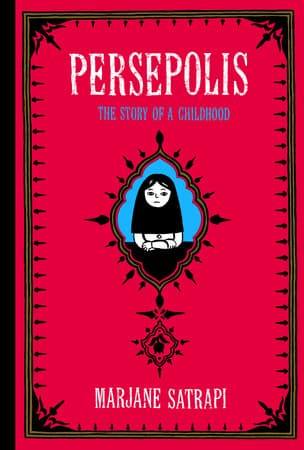
Persepolis: The Story of a Childhood cover
Archivist's Choice

Persepolis: The Story of a Childhood

Marjane Satrapi

Genre

Biography / Memoir / History

Reading Time

153 min

Key Themes

See below

Track Your Reading

Sign in to track this book

In a vivid black-and-white graphic memoir, a spirited young girl navigates the bewildering contradictions and brutal realities of the Islamic Revolution and war with Iraq, all while trying to find her place in a country rapidly losing its own.

Core Idea

Persepolis is a graphic memoir that chronicles Marjane Satrapi's childhood in Tehran during the Islamic Revolution and the Iran-Iraq War. Through the eyes of a young girl, the book explores how political and social upheaval affects personal identity, family life, and individual freedoms. Satrapi argues that while historical events shape nations, their true cost and complexity are best understood through the personal, often contradictory, experiences of ordinary people caught in their wake. The book shows the universal struggle to maintain individuality and hope amidst repression and violence.
Reading time
153 min
Difficulty
Easy
✓ Read this if...
You're interested in understanding the Iranian Revolution from a deeply personal perspective, appreciate graphic novels as a powerful storytelling medium, or want to explore themes of identity, resistance, and the loss of innocence.
✗ Skip this if...
You prefer traditional prose memoirs, are uncomfortable with political themes, or are looking for a purely objective historical account rather than a personal narrative.

Core idea

The central argument and framework that powers the entire book.

Persepolis is a graphic memoir that chronicles Marjane Satrapi's childhood in Tehran during the Islamic Revolution and the Iran-Iraq War. Through the eyes of a young girl, the book explores how political and social upheaval affects personal identity, family life, and individual freedoms. Satrapi argues that while historical events shape nations, their true cost and complexity are best understood through the personal, often contradictory, experiences of ordinary people caught in their wake. The book shows the universal struggle to maintain individuality and hope amidst repression and violence.

At a glance

Reading time

153 min

Difficulty

Easy

Read this if...

You're interested in understanding the Iranian Revolution from a deeply personal perspective, appreciate graphic novels as a powerful storytelling medium, or want to explore themes of identity, resistance, and the loss of innocence.

Skip this if...

You prefer traditional prose memoirs, are uncomfortable with political themes, or are looking for a purely objective historical account rather than a personal narrative.

Key Takeaways

1

The Duality of Identity

Navigating personal beliefs amidst public conformity is a constant struggle in oppressive regimes.

Quote

Everywhere in the streets there were demonstrations for and against the veil. The year 1979 saw three revolutions. ... And then there was the war with Iraq.

Marjane's early life shows how she learned to code-switch out of necessity under theocratic rule. Her family, secular and intellectual, taught her about freedom and critical thought. However, outside their home, she faced the widespread and often violent enforcement of religious rules, especially for women. This constant balance between her internal world of progressive ideas and the external reality of repressive laws makes Marjane develop a dual identity. She is a rebel, but also a survivor, learning when to outwardly conform to avo...

Supporting evidence

Marjane's parents secretly drinking alcohol and hosting parties while publicly adhering to Islamic laws, and Marjane herself wearing a denim jacket and Nike shoes while outwardly conforming to the veil.

Apply this

Reflect on areas in your life where you might be compromising personal values for external pressures. Identify small, safe ways to assert your authentic self, even if only in private, to maintain your inner integrity.

identity-crisiscultural-dissonancecode-switching
2

The Child's Eye View

Complex political and social upheavals are rendered starkly through the innocent yet perceptive lens of a child.

Quote

With the revolution, my father was imprisoned for a short time for being a Marxist. It was then that I understood the importance of the truth.

Satrapi uses her childhood perspective to make complex historical events into relatable, emotional moments. The grand stories of revolution, war, and political repression are filtered through Marjane's changing understanding, making them accessible and impactful. Her initial, almost naive, interpretations of political slogans and revolutionary excitement gradually give way to a more nuanced, often cynical, grasp of reality as she sees the human cost. This narrative choice lets readers experience the bewilderment and eventual disillusi...

Supporting evidence

Marjane's initial admiration for the 'heroes' of the revolution, her confusion over the 'martyrs,' and her later horror at the violence and hypocrisy she witnesses, such as the execution of her Uncle Anoosh.

Apply this

When trying to understand complex issues, try to strip away jargon and adult biases. Consider how a child might perceive the situation to uncover fundamental truths or hidden absurdities.

perspective-takingcoming-of-agehistorical-narrative
3

The Weight of History

Personal histories and familial legacies profoundly shape individual identity and political consciousness.

Quote

My grandfather was a prince... He was a communist... My Uncle Anoosh was a hero... My family had a long tradition of political activism.

Marjane's sense of self is tied to her family's notable and often sad history. From her great-grandfather, a Qajar prince, to her communist grandfather and revolutionary uncle, her family line shows defiance, intellectualism, and sacrifice. This rich background gives Marjane a strong sense of identity and purpose, giving her a strong moral compass and skepticism towards authoritarianism. However, it also burdens her with high expectations and the painful reality of history repeating itself, as she sees similar injustices happen to her...

Supporting evidence

The stories of her Uncle Anoosh's imprisonment and execution, her grandfather's political struggles, and her parents' activism all directly influence Marjane's worldview and her understanding of justice and injustice.

Apply this

Explore your own family history and identify key figures or events that have shaped your family's values or your personal outlook. Understand how these legacies continue to influence you today.

familial-legacyhistorical-traumaintergenerational-influence
4

Resistance through Laughter

Humor and absurdity become vital coping mechanisms against the bleakness of political repression.

Quote

When we were finally alone, my parents started to laugh. 'It’s not funny,' I said. 'Oh yes, it is!' said my mother. 'It’s absurd!'

In a world of state-sanctioned violence, arbitrary rules, and constant fear, Satrapi shows how humor becomes a powerful, almost subversive, act of resistance. Finding absurdity in tragedy, laughing at ridiculous oppressive laws, and joking about dangerous situations allows Marjane and her family to maintain their humanity and sanity. This is not a casual dismissal of suffering, but a strong assertion of control—a refusal to let the regime dictate their emotional state. Laughter, in Persepolis, is a shield and a weapon. It shows the hu...

Supporting evidence

Marjane and her family's jokes about the 'Guardians of the Revolution,' their satirical observations about the hypocrisy of the regime, and their ability to find humor even in the face of bombings and raids.

Apply this

In challenging or stressful situations, try to identify the absurdities or ironies. Use humor, appropriately, as a way to lighten the mood, build camaraderie, or maintain your own emotional resilience.

coping-mechanismsdark-humorsubversive-art
5

The Universal Language of Childhood

Despite cultural and political differences, the core experiences of childhood are universally recognizable.

Quote

I loved to read. I loved to play. I loved my friends. I loved to be a child.

Beneath the extraordinary backdrop of the Iranian Revolution, Satrapi grounds her story in the familiar experiences of childhood. Marjane's struggles with fitting in, her first crushes, her arguments with parents, her desire for independence, and her imagination connect with readers regardless of their own upbringing. This universality is important; it allows readers to connect with Marjane on a fundamental human level before learning about the complex political situation. By showing these everyday moments—even amidst bombings and pol...

Supporting evidence

Marjane's love for Bruce Lee, her desire to wear Western clothes, her attempts to smoke cigarettes, her crushes on boys, and her imaginative games with friends are all relatable childhood experiences.

Apply this

When encountering people from different cultural or political backgrounds, seek out common human experiences or shared developmental stages to build empathy and understanding.

human-connectioncross-cultural-understandingdevelopmental-psychology
6

The Personal is Political

Individual choices, especially for women, become battlegrounds for ideological control.

Quote

The veil was not a simple piece of cloth. It was a symbol of submission. And I refused to submit.

Persepolis shows how personal freedoms, especially for women, are often the first things lost in political upheaval. The veil, sex segregation, and strict dress codes are not just religious rules; they are tools of control meant to strip individuals of their autonomy and enforce a specific ideology. Marjane's personal defiance—her choice of clothing, her open discussions, her refusal to be silent—becomes a political act. The book shows how the 'personal' realm of fashion, music, and social interaction becomes 'political' when a regime...

Supporting evidence

Marjane's clashes with the Guardians of the Revolution over her 'punk' attire, her parents' risk-taking to smuggle in forbidden posters and tapes, and the general oppression faced by women in public spaces.

Apply this

Recognize how seemingly small personal choices can carry political weight in various contexts. Support movements that advocate for individual autonomy and challenge attempts to control personal expression.

feminismautonomypolitical-repression
7

The Betrayal of Ideals

Revolutions, often born of noble intentions, can easily devolve into new forms of oppression.

Quote

We had demonstrated for freedom, but we ended up with a dictatorship.

Satrapi shows the tragic irony of the Iranian Revolution: a movement initially driven by a diverse group seeking freedom and justice ultimately replaced one oppressive regime with another, arguably more restrictive, one. The initial excitement and hope quickly turn into disillusionment as the 'heroes' of the revolution become the new oppressors. This betrayal of ideals is a central idea. It shows how fragile revolutionary promises are and how easily power can corrupt. Marjane's journey from an eager revolutionary child to a cynical te...

Supporting evidence

The transition from the Shah's regime to the Islamic Republic, the immediate implementation of strict religious laws, the execution of political prisoners (including friends of her family), and the suppression of dissent that followed the revolution.

Apply this

Critically examine political movements and leaders, especially those promising radical change. Be wary of monolithic ideologies and always question how power is consolidated and exercised, even in the name of 'the people'.

revolutionary-betrayalpower-dynamicspolitical-disillusionment
8

The Scars of War

War's impact extends far beyond the battlefield, shaping daily life and personal psychology.

Quote

The war was everywhere. It was in our minds, in our conversations, in our fears.

The Iran-Iraq War is not just a historical event in Persepolis; it is a constant presence that affects every part of Marjane's childhood. Satrapi avoids grand battle scenes to focus on the subtle, everyday impact of conflict: air raid sirens, rationing, propaganda, the loss of friends and family, and the constant fear. This personal portrayal shows how war changes the psychological state of a nation and its children, leading to insecurity, cynicism, and a desperate search for normalcy amidst chaos. The scars of war are not just physic...

Supporting evidence

The bombing of Tehran, the mandatory military conscription, the 'keys to paradise' given to child soldiers, and the constant fear of losing loved ones, culminating in the death of their neighbor's family.

Apply this

Seek to understand the long-term, non-combat psychological and societal effects of war. Support initiatives that address trauma and rebuild communities affected by conflict, focusing on the daily lives of civilians.

war-traumacivilian-experiencegenerational-impact
9

The Power of Storytelling

Memoir and graphic narrative offer unique avenues for bearing witness and fostering empathy.

Quote

I wanted to tell the story of my country, the story of my people, the story of my family.

Satrapi's choice of the graphic novel format is not just stylistic; it is important to the book's impact. The stark black-and-white images show emotion, historical context, and the absurdities of life under repression quickly. The visual simplicity allows for universal recognition of complex feelings, while the sequential art guides the reader through Marjane's changing understanding. By combining personal story with historical events, Satrapi creates an accessible and empathetic link between her experience and the reader's. This show...

Supporting evidence

The use of simple, expressive drawings to depict complex emotions (e.g., fear, defiance, grief), the clear visual distinction between private and public life, and the direct, unembellished portrayal of violence and injustice.

Apply this

Consider using visual or multi-modal storytelling to convey complex ideas or personal experiences. Recognize that different mediums can unlock new levels of understanding and empathy in your audience.

graphic-memoirvisual-narrativeempathy-building

Critical analysis

Notable Quotes

I wanted to be a prophet because our maid did not eat with us, because my father had a Cadillac, and, above all, because my grandmother's knees always ached.

Marjane explains her childhood desire to become a prophet to address social injustices she observed.

In a country where half the population is illiterate, you cannot unite the people around Marx. The only thing that can really unite them is nationalism or a religious ethic.

Marjane's father discusses the political challenges in Iran during the revolution.

The revolution is like a bicycle. When the wheels don't turn, it falls.

Marjane's uncle Anoosh uses this metaphor to explain the necessity of continuous change in a revolution.

I was born with religion. At the age of six I was already sure I was the last prophet.

Marjane reflects on her early religious fervor and sense of destiny.

One can forgive but one should never forget.

Marjane's grandmother advises her after she lies to protect someone from the regime.

To die a martyr is to inject blood into the veins of society.

Marjane hears this slogan at school, reflecting the regime's propaganda about sacrifice.

Freedom always has a price.

Marjane reflects on the costs of political dissent and personal expression under the regime.

The regime had understood that one person leaving her house while wondering, 'Is my veil in place? Do my hairs show?' is not as dangerous as one who leaves her house while thinking, 'Where is my freedom of thought?'

Marjane comments on the psychological control exerted by the Islamic regime over women.

I finally understood what my grandmother meant. She said that in life you'll meet a lot of jerks. If they hurt you, tell yourself that it's because they're stupid.

Marjane recalls her grandmother's wisdom after facing betrayal and hardship.

We found ourselves veiled and separated from our friends.

Marjane describes the immediate changes after the Islamic Revolution, particularly for women and girls.

It's fear that makes us lose our conscience. It's also what transforms us into cowards.

Marjane reflects on how fear under the regime affects people's actions and morality.

I was a westerner in Iran, an Iranian in the West. I had no identity.

Marjane expresses her sense of cultural displacement after being sent abroad for safety.

You have to learn to defend your rights as a woman from now on.

Marjane's mother advises her as she grows up in a restrictive society.

The world is not divided between East and West. You are American, I am Iranian, we don't know each other, but we talk and we understand each other perfectly. The difference between you and your government is much bigger than the difference between you and me.

Marjane tells an American in Vienna, highlighting shared humanity over political divisions.

Quiz

Test Your Knowledge

Ready to see how well you understood this book? Take our interactive quiz with 10 questions.

10
Questions
~5
Minutes
?
Best Score

Key Questions (FAQ)

Persepolis is Marjane Satrapi's graphic memoir about growing up in Iran during the Islamic Revolution and the Iran-Iraq War. It follows her childhood from ages 6 to 14, depicting her experiences with political upheaval, family life, and the contradictions between private and public spheres in revolutionary Iran.

About the author