BookBrief
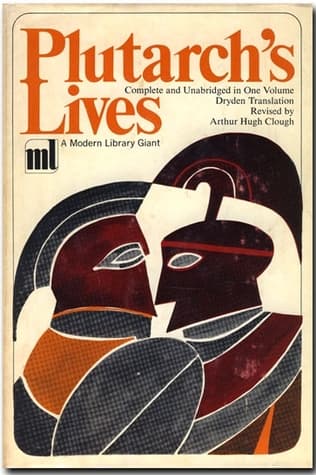
Parallel Lives cover
Archivist's Choice

Parallel Lives

Plutarch (1564)

Genre

Biography / History / Philosophy

Reading Time

2000+ min (estimated, highly variable based on reading speed and depth)

Key Themes

See below

Track Your Reading

Sign in to track this book

Plutarch's 'Parallel Lives' pairs the lives of Greek and Roman figures, not to chronicle history, but to show character through anecdote and detail, revealing how virtue and vice shaped their destinies.

Core Idea

Plutarch's 'Parallel Lives' compares the lives of prominent Greeks and Romans, presenting character as the main shaper of destiny and illustrating how personal virtues and vices affect public and private outcomes. Through these biographical pairings, Plutarch explores themes of leadership, moral responsibility, the corrupting nature of power, and the interaction between individual choice and luck. The work aims to provide moral examples and warnings that last beyond their time. It argues that history offers a mirror for self-reflection and moral improvement, demonstrating how reputation, speaking skill, and personal integrity determine the legacy of important figures.
Reading time
2000+ min (estimated, highly variable based on reading speed and depth)
Difficulty
Hard
✓ Read this if...
You are fascinated by ancient history, the development of character, ethical leadership, and the comparative study of human nature across cultures and eras. Ideal for those who enjoy detailed biographical accounts and philosophical reflections on virtue and power.
✗ Skip this if...
You prefer concise narratives, modern historical analysis, or purely factual accounts without moralizing or philosophical digressions. Not suitable for readers looking for a quick read or a light introduction to ancient history.

Core idea

The central argument and framework that powers the entire book.

Plutarch's 'Parallel Lives' compares the lives of prominent Greeks and Romans, presenting character as the main shaper of destiny and illustrating how personal virtues and vices affect public and private outcomes. Through these biographical pairings, Plutarch explores themes of leadership, moral responsibility, the corrupting nature of power, and the interaction between individual choice and luck. The work aims to provide moral examples and warnings that last beyond their time. It argues that history offers a mirror for self-reflection and moral improvement, demonstrating how reputation, speaking skill, and personal integrity determine the legacy of important figures.

At a glance

Reading time

2000+ min (estimated, highly variable based on reading speed and depth)

Difficulty

Hard

Read this if...

You are fascinated by ancient history, the development of character, ethical leadership, and the comparative study of human nature across cultures and eras. Ideal for those who enjoy detailed biographical accounts and philosophical reflections on virtue and power.

Skip this if...

You prefer concise narratives, modern historical analysis, or purely factual accounts without moralizing or philosophical digressions. Not suitable for readers looking for a quick read or a light introduction to ancient history.

Key Takeaways

1

Character as Destiny's Architect

Plutarch prioritizes the inner life over grand events to understand human fate.

Quote

For my design is not to write histories, but lives. And the most glorious exploits do not always furnish us with the clearest discoveries of virtue or vice in men; sometimes a matter of a slight importance, a word, or a jest, gives a greater insight into characters than battles with all their slaughter, and the greatest sieges, and the like.

Plutarch's main idea is that character, not circumstances, is the primary driver of a person's life and legacy. He states his disinterest in simply listing historical events, instead focusing on how virtues and vices shape a person. This view makes seemingly small details—a casual remark, a personal habit, a reaction to a minor slight—more important than monumental achievements or failures. He believed that these small details expose the true nature of a soul, offering lessons on human morality and the forces that guide destinies. Thi...

Supporting evidence

Plutarch's opening remarks in the 'Life of Alexander' directly address this, stating his intent is not history but 'lives,' prioritizing character over 'the most glorious exploits.' He then proceeds to illustrate Alexander's character through anecdotes like his magnanimity towards Darius's family, rather than solely focusing on battle strategies.

Apply this

To truly understand historical figures or even contemporaries, look beyond their public accomplishments or controversies. Pay close attention to their consistent habits, their reactions in unguarded moments, and their treatment of those beneath them. These small observations often reveal more about their true character and motivations than their grandest deeds or pronouncements.
character-driven-narrativemoral-philosophybiographical-method
2

The Power of Parallelism

Comparing Greek and Roman figures reveals universal moral truths and cultural distinctions.

Quote

My purpose being to write the lives of famous men, I have collected into this book, as it were, so many pairs of parallels.

The structure of 'Parallel Lives'—pairing a Greek and a Roman figure—is a philosophical tool. By placing leaders, generals, and statesmen from two distinct cultures side-by-side, Plutarch highlights both universal human virtues and vices, as well as the unique cultural expressions of those traits. This comparative method allows readers to see recurring patterns in ambition, integrity, and folly across different historical contexts. It supports the idea that despite variations in societal norms, certain fundamental aspects of human cha...

Supporting evidence

The pairing of Alexander the Great with Julius Caesar allows Plutarch to explore similar themes of ambition, military genius, and the corrupting influence of power, while also contrasting their approaches to governance and personal relationships.

Apply this

When evaluating leaders or individuals, consciously seek out comparable figures or situations. By drawing parallels and contrasts, you can gain a deeper understanding of underlying principles, identify common pitfalls, and appreciate the nuances that shape different outcomes.

comparative-biographycross-cultural-analysisuniversal-virtues
3

Virtue as a Spectrum

No hero is without flaws; true understanding requires acknowledging the full human condition.

Quote

For neither can a city be made of houses, nor a life of virtues, but of men.

Plutarch's portraits are nuanced for his time. He shows the contradictions within even the most celebrated figures: Alexander's moments of irrational cruelty alongside his generosity, Caesar's strategic brilliance coupled with his ruthless ambition, or Cato's unwavering integrity mixed with his severe inflexibility. This balanced approach shows the complexity of human nature, demonstrating that virtues often exist alongside, and sometimes even contribute to, vices. It is a lesson that true leadership and ethical living are not about a...

Supporting evidence

In the 'Life of Cato the Younger,' Plutarch details Cato's unyielding adherence to Stoic principles, which, while admirable, also made him politically inflexible and ultimately contributed to his downfall in a pragmatic world.

Apply this

Avoid simplistic judgments of individuals, especially leaders. Recognize that everyone, including yourself, possesses a mixture of strengths and weaknesses. Understanding this complexity fosters empathy and provides a more realistic framework for evaluating character and making decisions.

moral-complexityhuman-fallibilitynuanced-portraits
4

The Weight of Reputation

A leader's public image and the perception of their character profoundly impact their power and legacy.

Quote

It is not so much by what is said of them, as by what they do, that men are judged; yet reputation often precedes and influences judgment.

Plutarch often shows how a leader's reputation—whether earned or cultivated—can be as potent as their armies or political alliances. The perception of honesty, courage, or wisdom can inspire loyalty and deter enemies, while a reputation for treachery or weakness can erode authority and invite rebellion. He shows how figures like Pericles managed their public image, while others, like Alcibiades, lost their potential due to perceived moral failings. This highlights the critical role of public trust and the psychological impact of a lea...

Supporting evidence

Pericles's reputation for incorruptibility and his eloquent speeches were crucial to his long-standing influence in Athens, even when facing political opposition. Conversely, Alcibiades's perceived impiety and debauchery led to his recall from command and ultimately contributed to Athens's defeat.

Apply this

Understand that your actions, and how they are perceived, build your reputation. Be mindful of the consistency between your values and your behavior, as this consistency builds trust and credibility. A strong, positive reputation is a powerful asset in any endeavor.

public-imageleadership-legacypolitical-influence
5

The Corrupting Nature of Power

Even the noblest intentions can be warped by unchecked authority and ambition.

Quote

Great power is not a test of character, but a revelation of it.

A recurring theme throughout the 'Parallel Lives' is how power can corrupt even the most promising individuals. Plutarch details how initial virtues—courage, ambition, strategic skill—can turn into arrogance, tyranny, and ruthlessness once absolute power is attained. Figures like Sulla, initially hailed as a savior, succumb to brutal acts, and even Alexander, in his later years, shows flashes of paranoia and cruelty. This serves as a warning: power does not inherently improve a person, but rather amplifies their existing tendencies, o...

Supporting evidence

Sulla's early military successes and initial reforms gave way to an unprecedented reign of terror and proscriptions once he consolidated absolute power in Rome, demonstrating the extreme lengths to which unchecked authority can lead.

Apply this

Be wary of situations where power is absolute and accountability is scarce, both in public and personal life. Actively seek diverse perspectives and constructive criticism to prevent your own authority from leading to unchecked arrogance or tyranny. Cultivate humility and self-awareness.

tyrannyhubrisabsolute-power
6

The Role of Fortune (Tyche)

While character is paramount, external forces undeniably shape and challenge human endeavors.

Quote

For fortune, as a painter, sometimes helps the design, and sometimes spoils it.

Despite his focus on character, Plutarch is not a determinist. He often acknowledges the unpredictable and decisive role of 'Tyche' or Fortune. Whether it is an unexpected turn of events in battle, a sudden illness, or a change in political winds, external circumstances often intervene to uplift or thwart even the most virtuous and well-prepared individuals. This recognition adds tragic realism to his narratives, reminding us that while we control our character and actions, we do not control the world. It suggests that true wisdom lie...

Supporting evidence

The 'Life of Timoleon' is a prime example, with Timoleon often succeeding against overwhelming odds due to fortuitous weather, unexpected enemy blunders, or timely divine interventions, which Plutarch attributes to Fortune.

Apply this

Focus on what you can control – your character, effort, and decisions. Prepare diligently, but also cultivate adaptability and mental fortitude to respond gracefully when unforeseen circumstances (good or bad) inevitably arise. Don't let external setbacks define your internal worth.

fate-vs-free-willcontingencyresilience
7

Oratory as a Weapon

Skillful speech is a potent force in shaping public opinion and wielding political power.

Quote

The power of speech, when it is truly great, is not to be measured by the number of those who hear it, but by the effect it produces on those who do.

Plutarch often highlights the critical role of rhetoric and eloquence in the political arenas of Greece and Rome. Figures like Demosthenes and Cicero are celebrated not just for their intellect or strategy, but for their ability to sway assemblies, inspire troops, and counter opponents through their words. He demonstrates how powerful speaking could unite factions, ignite patriotism, or even incite civil war. This emphasizes the enduring power of communication, not just as a way of conveying information, but as a tool for persuasion, ...

Supporting evidence

The 'Lives' of Demosthenes and Cicero are replete with examples of their speeches influencing critical political decisions, rallying citizens, and shaping the course of their respective states, often against formidable opposition.

Apply this

Cultivate strong communication skills, particularly in public speaking and persuasive writing. Understand that clear, compelling articulation of your ideas is crucial for leadership, influence, and effective advocacy in any field. Study the art of rhetoric to understand how arguments are constructed and received.

rhetoricpersuasionpolitical-communication
8

The Enduring Lessons of Antiquity

Ancient lives offer timeless guidance for navigating modern moral and ethical dilemmas.

Quote

For the mind is not a vessel to be filled, but a fire to be kindled.

Plutarch's work, though focused on ancient figures, remains relevant for contemporary readers. His examination of character, leadership, ambition, and corruption goes beyond historical context, offering insights into the human condition. By studying the triumphs and failures of these Greek and Roman figures, we gain a deeper understanding of universal moral dilemmas, the complexities of political power, and the challenges of ethical living. The 'Parallel Lives' offer a look into moral philosophy, encouraging readers to reflect on thei...

Supporting evidence

The 'Lives' of the Gracchi brothers, for instance, offer timeless insights into the challenges of social reform, populist movements, and the dangers of political polarization, issues that remain highly relevant today.

Apply this

Actively seek wisdom from historical texts and figures, not just for factual knowledge but for moral and ethical guidance. Engage in critical reflection on the choices made by historical leaders to inform your own decision-making and understanding of human nature in the present.

historical-wisdommoral-instructiontimeless-truths
9

Leadership as Moral Stewardship

True leadership demands not just competence, but a profound commitment to ethical governance and public good.

Quote

The greatest glory of a good man is to make others good.

Plutarch implicitly argues that effective leadership is linked to moral responsibility. While military skill and political acumen are necessary, sustained and admirable leadership, in his view, is rooted in a leader's commitment to justice, temperance, and the well-being of their people. Figures like Solon, Numa Pompilius, and Pericles (despite his flaws) are admired for their contributions to law, order, and civic flourishing, often prioritizing the common good over personal gain. Conversely, those who succumb to greed, cruelty, or s...

Supporting evidence

Numa Pompilius's 'Life' emphasizes his peaceful reign, focus on religious institutions, and wise laws, which Plutarch presents as foundational for Roman society, contrasting sharply with the more warlike Romulus.

Apply this

As a leader or aspiring leader, consistently evaluate your decisions against a moral compass. Prioritize the long-term well-being of those you lead over short-term gains or personal ambition. Understand that your ethical conduct sets the tone for your entire organization or community.

ethical-leadershipcivic-virtuepublic-service
10

The Weight of Personal Choice

Despite external forces, individuals retain agency in shaping their character and facing their ultimate fate.

Quote

Men's natures are not to be changed by their fortunes, but fortunes by their natures.

Ultimately, Plutarch's 'Parallel Lives' shows the lasting significance of personal choice. While acknowledging the influence of 'Fortune' and the complexities of human nature, he consistently brings the focus back to the decisions individuals make in the face of adversity, temptation, and opportunity. Whether it is Cato's adherence to principles, Alcibiades's self-destructive tendencies, or Caesar's crossing of the Rubicon, each life is a narrative of choices that cumulatively forge character and determine destiny. This philosophical ...

Supporting evidence

Cato the Younger's life is a stark portrayal of a man who consistently chose to adhere to his Stoic principles, even when it meant political isolation and ultimately, his own death, rather than compromise his integrity.

Apply this

Recognize that you are the primary architect of your character through your daily choices, big and small. Take ownership of your decisions and their consequences, and consciously strive to align your actions with the person you aspire to be, regardless of external pressures.

moral-agencyself-determinationpersonal-responsibility

Critical analysis

Notable Quotes

For it is not the things themselves that disturb men, but their judgments about these things.

A general philosophical observation Plutarch often weaves into his biographies.

The mind is not a vessel to be filled, but a fire to be kindled.

Reflecting on education and the purpose of learning, often attributed to Plutarch.

An imbalance between rich and poor is the oldest and most fatal ailment of all republics.

Commentary on the political struggles and decline of Roman and Greek states.

To make no mistakes is not in man; but from their errors and mistakes the wise and good learn wisdom for the future.

Discussing the imperfections of great leaders and the value of learning from failure.

I am not afraid of an army of lions led by a sheep; I am afraid of an army of sheep led by a lion.

Attributed to Alexander the Great, highlighting the importance of leadership.

The whole life of a man is but a point of time; let us enjoy it, therefore, while it lasts, and not spend it in a succession of vanities and anxieties.

A reflection on mortality and the pursuit of a meaningful life.

No man ever wetted clay and then left it, as if there would be bricks by chance and fortune.

Emphasizing the necessity of effort and intention in achieving goals.

It is a thing of no great difficulty to raise objections against Aristotle, but to understand him perfectly is a work of great labor.

A comment on intellectual humility and the challenge of true understanding.

It is indeed a desirable thing to be well-descended, but the glory belongs to our ancestors.

Discussing the nature of nobility and personal merit versus inherited status.

For we do not make history, we are made by it.

Underlining the powerful influence of historical events and circumstances on individuals.

When Demosthenes was asked what was the first part of oratory, he answered, 'Action'; and the second, 'Action'; and the third, 'Action'.

Highlighting the importance of delivery and presence in rhetoric.

The very spring and root of honesty and virtue lie in good education.

Emphasizing the foundational role of upbringing and instruction in character development.

For fortune is not a goddess to the wise, but to the foolish.

A philosophical take on luck, suggesting that wise individuals control their destiny more than the unwise.

Quiz

Test Your Knowledge

Ready to see how well you understood this book? Take our interactive quiz with 10 questions.

10
Questions
~5
Minutes
?
Best Score

Key Questions (FAQ)

Plutarch's primary aim was not to write history, but to explore the influence of character on the lives and destinies of prominent Greek and Roman figures. He sought to illuminate virtues and vices through their biographies.

About the author