BookBrief
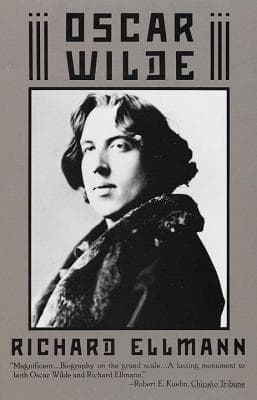
Oscar Wilde cover
Archivist's Choice

Oscar Wilde

Richard Ellmann (1969)

Genre

Biography / History

Reading Time

15-20 hours

Key Themes

See below

Track Your Reading

Sign in to track this book

Oscar Wilde's brilliant mind and forbidden desires sparked a cultural shift, only to be crushed by the rigid morality of his time.

Core Idea

Richard Ellmann's "Oscar Wilde" details the life of the famous aesthete, arguing that Wilde shaped his public image as a work of art. He used wit and paradox not just for entertainment but as a core philosophical stance against Victorian moral rules. The biography suggests that Wilde's search for beauty, his individualism, and his challenge to social norms were linked to his art and led to his tragic end. This made him a symbol for aestheticism and personal freedom. Ellmann shows how Wilde's life became his greatest creation, a performance that both captivated and shocked, leaving a lasting mark on literature and culture.
Reading time
15-20 hours
Difficulty
Medium
✓ Read this if...
You are fascinated by Oscar Wilde, Victorian society, the history of aestheticism, or the intricate relationship between an artist's life and work.
✗ Skip this if...
You prefer concise biographies or are not interested in detailed historical context and literary analysis.

Core idea

The central argument and framework that powers the entire book.

Richard Ellmann's "Oscar Wilde" details the life of the famous aesthete, arguing that Wilde shaped his public image as a work of art. He used wit and paradox not just for entertainment but as a core philosophical stance against Victorian moral rules. The biography suggests that Wilde's search for beauty, his individualism, and his challenge to social norms were linked to his art and led to his tragic end. This made him a symbol for aestheticism and personal freedom. Ellmann shows how Wilde's life became his greatest creation, a performance that both captivated and shocked, leaving a lasting mark on literature and culture.

At a glance

Reading time

15-20 hours

Difficulty

Medium

Read this if...

You are fascinated by Oscar Wilde, Victorian society, the history of aestheticism, or the intricate relationship between an artist's life and work.

Skip this if...

You prefer concise biographies or are not interested in detailed historical context and literary analysis.

Key Takeaways

1

The Art of Posing

Wilde's life was a meticulously crafted performance, blurring the lines between art and identity.

Quote

He took the world as his audience and life as his stage, crafting an persona that was both a shield and a sword.

Oscar Wilde was not just a writer; he was a living work of art, a master of self-creation. From his early days at Oxford, he consciously built a public image defined by aestheticism, wit, and individualism. This 'posing' was not superficial but a core part of who he was. It was a way to navigate a traditional world while challenging its rules. His clothes, his speech, his public statements were all performances meant to provoke, entertain, and define his place in society. This deliberate artistry extended to his private life, where ev...

Supporting evidence

Ellmann details Wilde's early adoption of aesthetic dress, his carefully cultivated conversational style, and his public pronouncements on art and life, all contributing to the 'Apostle of Aestheticism' persona.

Apply this

Embrace authenticity while understanding the power of presentation. Recognize that how you present yourself, both professionally and personally, contributes significantly to your narrative and impact.
aestheticismperformance-artself-invention
2

Wit as Weapon and Shield

Wilde's brilliance lay in his epigrams, which served as both social critique and personal defense.

Quote

I have nothing to declare except my genius.

Wilde's wit was more than just entertainment; it was how he engaged with the world. His epigrams and paradoxes were sharp tools for social criticism, showing the hypocrisy and absurdities of Victorian society. They allowed him to challenge conventional morality, class differences, and intellectual laziness without being openly aggressive. His wit also served as a defense, deflecting criticism, charming opponents, and maintaining an air of superiority even when vulnerable. The quick brilliance of his conversation and writing created an...

Supporting evidence

Ellmann recounts numerous anecdotes of Wilde's legendary conversational prowess and includes countless examples of his iconic epigrams from his plays and essays, such as 'The only way to get rid of a temptation is to yield to it.'

Apply this

Cultivate articulate communication and the ability to express complex ideas concisely. Use humor and wit strategically to engage, persuade, and subtly challenge, but ensure it doesn't become a substitute for genuine expression.

epigramsatireintellectualism
3

The Price of Authenticity

Wilde's pursuit of a life true to his desires ultimately led to his downfall.

Quote

He lived a life of audacious self-expression in an age that demanded conformity, and paid the ultimate price.

Wilde's talent was linked to his refusal to follow the sexual and social rules of his era. His relationships with men, especially Lord Alfred Douglas, were not just private affairs. They became public spectacles that directly challenged Victorian England's strict moral codes. While his plays and writings subtly explored themes of hypocrisy and forbidden desire, his personal life became an open act of rebellion. This bold authenticity, while admirable now, was a dangerous risk at the time. The society he charmed and criticized eventual...

Supporting evidence

The detailed accounts of Wilde's three trials, particularly the evidence presented regarding his relationships and letters, clearly illustrate the direct link between his personal life and his legal persecution.

Apply this

Understand the societal context in which you operate. While striving for authenticity is vital, be aware of the potential risks and the importance of strategic navigation, especially when challenging deeply ingrained norms.

homosexualitysocial-conformitypersecution
4

The Power of Paradox

Wilde's embrace of contradiction revealed deeper truths about human nature and society.

Quote

The truth is rarely pure and never simple.

Wilde's ideas were built on paradox. He enjoyed flipping conventional wisdom, showing the contradictions in Victorian morality, art, and social structures. His plays, like 'The Importance of Being Earnest,' are examples of paradoxical wit. In them, superficiality hides depth, and earnestness is a carefully built facade. This embrace of paradox let him explore complex themes — identity, the artificiality of social codes, the tension between appearance and reality — with a lightness and irony that made his criticisms stronger. He unders...

Supporting evidence

Ellmann analyzes Wilde's plays, particularly 'Lady Windermere's Fan' and 'The Importance of Being Earnest,' to demonstrate how paradox is central to their structure, character development, and thematic concerns.

Apply this

Challenge simplistic thinking and embrace complexity. Look for the inherent contradictions in situations and arguments, understanding that truth is often multifaceted and rarely fits neatly into predefined categories.

paradoxironydeconstruction
5

The Symbiotic Relationship with Adversity

Wilde's greatest works often emerged from or were shaped by personal struggle.

Quote

Out of the depths of his despair, he forged a work of profound beauty and lasting testament.

While Wilde's downfall was tragic, it also led to some of his most lasting works. 'De Profundis,' written from Reading Gaol, is a deeply honest and moving letter. It goes beyond personal complaint to become a philosophical reflection on suffering, love, and Christ. The experience of imprisonment, humiliation, and public scorn removed the superficiality of his earlier image. It forced him to face raw emotional truths. This time of intense hardship, though devastating, allowed him to access a depth of feeling and introspection that migh...

Supporting evidence

Ellmann dedicates significant analysis to 'De Profundis,' highlighting its unique place in Wilde's oeuvre and its direct connection to his experiences in prison.

Apply this

Recognize that adversity, while painful, can be a crucible for growth and creativity. Seek to understand and process difficult experiences, as they can lead to unexpected insights and profound expressions.

sufferingcreativityredemption
6

The Ephemeral Nature of Fame

Wilde's meteoric rise and catastrophic fall illustrate the fickle nature of public adoration.

Quote

To be great is to be misunderstood, but to be forgotten is the true tragedy.

Oscar Wilde experienced the heights of celebrity, becoming the most talked-about person in London society. His plays filled theaters, and his every word was eagerly awaited. Yet, this intense public adoration was fragile. The same public that praised him quickly condemned and abandoned him once scandal broke out. His fall from grace was swift and complete. This showed how quickly public opinion can change, especially when fueled by moral panic and sensationalism. Ellmann carefully tracks this path, showing how the adoration was often ...

Supporting evidence

Ellmann meticulously documents Wilde's social triumphs, his plays' successes, and the subsequent public outrage and abandonment during his trials and imprisonment.

Apply this

Maintain a healthy perspective on public praise and criticism. Understand that fame can be fleeting and that true value comes from internal integrity and the quality of one's work, not solely from external validation.

celebrity-culturepublic-opinionscandal
7

The Legacy of Language

Wilde's mastery of language ensured his enduring impact beyond his personal tragedy.

Quote

I have put my genius into my life; I have put only my talent into my works.

Despite his own claims, Wilde's literary talent, especially his command of language, secured his lasting legacy. His plays, essays, and stories are full of memorable lines, sparkling dialogue, and insights that still resonate. Ellmann emphasizes that while his life was dramatic, his written words allow us to appreciate his intellect and wit across generations. His influence on later writers, playwrights, and thinkers is clear, showing the lasting power of language to go beyond personal circumstances and historical periods. The tragedy...

Supporting evidence

Ellmann’s analysis consistently returns to Wilde's literary output, dissecting the brilliance of his dialogue, the structure of his plays, and the philosophical depth of his essays, showcasing their lasting impact.

Apply this

Prioritize clarity, precision, and artistry in your communication. Recognize that well-crafted language has the power to convey complex ideas, evoke emotion, and leave a lasting impression, shaping narratives and influencing generations.

literary-legacyprosewitticism
8

The Interplay of Art and Life

For Wilde, the boundaries between his artistic creations and his lived experience were fluid and permeable.

Quote

Life imitates Art far more than Art imitates Life.

Wilde's famous saying was not just a clever reversal; it guided his existence. Ellmann shows how Wilde's life was not only material for his art but was actively shaped by his aesthetic ideas and the characters he created. His pursuit of beauty, his embrace of decadence, and his challenge of Victorian norms all reflected his artistic philosophy brought to life. Conversely, his personal experiences, especially his forbidden desires and the resulting scandal, deeply influenced the themes and emotional depth of his later works. This conne...

Supporting evidence

Ellmann draws parallels between characters and situations in Wilde's plays (e.g., Lord Henry Wotton in 'Dorian Gray') and aspects of Wilde's own life and philosophy, demonstrating how his theories manifested in his behavior.

Apply this

Consider how your personal values and life experiences influence your creative or professional output, and conversely, how your work might shape your worldview and actions. Seek genuine integration between your internal and external worlds.

art-as-lifeaestheticismcreative-process
9

The Enduring Power of the Misfit

Wilde's story resonates because it embodies the universal struggle of the exceptional individual against societal norms.

Quote

To be different is to be dangerous, yet it is often the different who move the world forward.

Oscar Wilde was, in many ways, the ultimate outsider — a brilliant, sensitive, non-conformist individual born into a society ill-equipped to understand or accept his uniqueness. His story, as told by Ellmann, connects to a universal human experience: the struggle to maintain one's identity and desires when faced with immense pressure to conform. While his specific situation was unique, the core conflict of the exceptional individual clashing with rigid societal expectations remains relatable. His tragedy is not just a historical event...

Supporting evidence

Ellmann frames Wilde's life as a continuous negotiation with Victorian society, from his early aesthetic provocations to his ultimate defiance in the trials, portraying him as a figure consistently at odds with the mainstream.

Apply this

Embrace and cultivate your unique perspectives and talents, even if they diverge from the norm. Understand that challenging conventional thinking can be a catalyst for progress, but be prepared for potential resistance.

non-conformityindividualitysocial-tolerance
10

The Burden of Genius

Wilde's extraordinary intellect and sensibility came with a profound vulnerability.

Quote

He was too brilliant for his own good, too sensitive for the harsh realities of his world.

Ellmann's biography shows a man burdened by his own extraordinary gifts. Wilde's sharp sensitivity, his deep understanding of human nature, and his dazzling intellect were the source of his charm and art. But they also made him very vulnerable to the world's harshness. He felt things deeply, saw hypocrisy clearly, and experienced beauty with an intensity that often bordered on pain. This heightened sensibility meant that the societal rejection and personal betrayals he endured were amplified, leading to deep despair. His genius was no...

Supporting evidence

Ellmann describes Wilde's emotional reactions to various events, from the initial accusations to the despair of his imprisonment, highlighting his deep emotional responses despite his public bravado.

Apply this

Recognize that great strengths can often be accompanied by specific vulnerabilities. Cultivate self-awareness and strategies for managing the emotional toll that comes with intense passion, creativity, or insight.

vulnerabilitysensitivityintellectual-burden

Critical analysis

Notable Quotes

I have been so many things in my life. I have been a poet, a playwright, an aesthete, a wit, a dandy, a criminal, a martyr. But I have always been myself. And that is the one thing that matters.

A reflection on his multifaceted identity and unwavering selfhood.

We are all in the gutter, but some of us are looking at the stars.

A famous line from 'Lady Windermere's Fan,' spoken by Lord Darlington.

The only way to get rid of a temptation is to yield to it.

A paradoxical statement reflecting his philosophy of experience.

To live is the rarest thing in the world. Most people exist, that is all.

A critique of mundane existence, emphasizing the importance of genuine living.

I am not young enough to know everything.

A witty remark highlighting the wisdom that comes with age and experience.

A man who does not think for himself does not think at all.

An assertion of intellectual independence and critical thought.

Life imitates Art far more than Art imitates Life.

A central tenet of his aesthetic philosophy, challenging traditional notions of mimesis.

Consistency is the last refuge of the unimaginative.

A playful dismissal of rigid adherence to principles, advocating for flexibility and creativity.

I put all my genius into my life; I put only my talent into my works.

A self-assessment of his priorities, emphasizing the art of living.

Fashion is a form of ugliness so intolerable that we have to alter it every six months.

A cynical yet humorous observation on the transient nature of fashion.

The public is wonderfully tolerant. It forgives everything except genius.

A commentary on the public's reaction to exceptional talent and originality.

Experience is simply the name we give our mistakes.

A concise and witty definition of experience, highlighting its often negative origins.

I never travel without my diary. One should always have something sensational to read on the train.

A lighthearted remark from 'The Importance of Being Earnest,' showcasing his wit.

No great artist ever sees things as they really are. If he did, he would cease to be an artist.

An argument for the artist's unique perspective and departure from reality.

Quiz

Test Your Knowledge

Ready to see how well you understood this book? Take our interactive quiz with 10 questions.

10
Questions
~5
Minutes
?
Best Score

Key Questions (FAQ)

Oscar Wilde was a prominent Irish poet, playwright, and essayist, celebrated for his wit, flamboyant style, and the satirical depth of his works, such as 'The Importance of Being Earnest' and 'The Picture of Dorian Gray'. He was a central figure in the Aesthetic movement and a significant personality in late Victorian London's cultural scene.

About the author