“I was born in the North of England in the early 1960s. I remember the day I was saved.”
— The opening lines of the book, establishing the narrator's background and early religious experience.

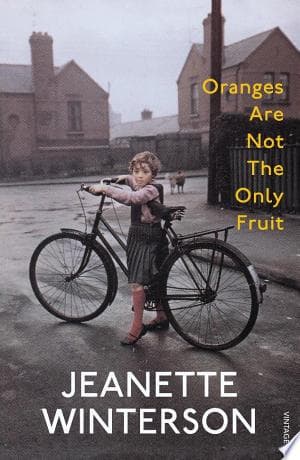
Jeanette Winterson (2009)
Genre
Spirituality
Reading Time
240 min
Key Themes
See below
Sign in to track this book
Raised in the intense world of evangelical Christianity, a young woman's missionary path changes when her heart and faith are challenged by loving another woman.
Jeanette, the narrator, is adopted by her mother, a fiercely devout and eccentric woman who believes she is one of God's chosen. Jeanette's childhood is steeped in Pentecostal Christianity in Accrington, Lancashire. Her mother's life revolves around the church, spreading the gospel, and preparing for the Second Coming. Jeanette is home-schooled, mainly through Bible stories and parables, and her only friends are from the church. She is taught that the world outside their strict religious community is full of sin and temptation. Her mother's interpretations of scripture are literal and often strange, shaping Jeanette's understanding of reality. Jeanette's father is a quiet, unassuming man who largely defers to his wife's religious passion, providing a stark contrast to her intensity.
As Jeanette grows, she becomes a dedicated and enthusiastic member of her mother's church. She excels at memorizing scripture and storytelling, often using her vivid imagination to weave elaborate tales that captivate the congregation, especially during missionary efforts. Her mother proudly displays Jeanette's talents, believing she is destined for a life of service to God, possibly as a missionary or even a prophet. Jeanette genuinely believes in the teachings and the purpose, finding a sense of belonging and identity within the church community, despite its often isolating nature from the outside world. She participates in street preaching and door-to-door evangelism, fully committed to her perceived divine calling.
Jeanette meets Melanie, a new and somewhat rebellious girl who joins the church. Jeanette is immediately drawn to Melanie, experiencing feelings she doesn't understand but finds intensely compelling. Their friendship quickly deepens, becoming a romantic relationship. This relationship is a significant awakening for Jeanette, introducing her to a different kind of intimacy and love entirely outside the rules of her religious upbringing. They share secret moments and affections, hidden from the watchful eyes of the congregation and especially Jeanette's mother. This growing love directly contradicts everything Jeanette has been taught about sin and proper relationships, creating significant internal conflict.
Jeanette and Melanie's relationship is inevitably discovered by the church elders and, later, by Jeanette's mother. The discovery is met with horror and condemnation. Jeanette's mother sees her daughter's homosexuality as a demonic possession and a profound betrayal of God. The church community tries to 'exorcise' the 'evil spirits' from Jeanette through intense prayer meetings, fasting, and shunning. Jeanette endures these traumatic experiences, torn between her genuine feelings for Melanie and the immense pressure to conform and repent. Melanie, unable to withstand the pressure, eventually leaves the church and Jeanette, deepening Jeanette's pain and confusion.
After Melanie leaves, Jeanette struggles with loneliness and her mother's continued attempts to 'cure' her. She then meets Elsie, another young woman within the church. A similar pattern unfolds, and Jeanette again finds herself falling in love. This relationship, too, is passionate and secret. However, the church and her mother are even more vigilant after the incident with Melanie. When her relationship with Elsie is discovered, the reaction is even more severe. Jeanette's mother sees this as further proof of Jeanette's 'wilful' sin and resistance to God's will, increasing the emotional and spiritual abuse Jeanette endures from the church community.
The church elders, strongly influenced by Jeanette's mother, subject Jeanette to public shaming and a form of excommunication. She is ostracized, forced to sleep in the living room, and subjected to constant sermons and accusations. Her mother tries various methods to 'save' her, including locking her in a room with only the Bible. Jeanette, however, refuses to deny her feelings or pretend to be 'cured.' Her steadfastness is interpreted as stubborn defiance and a deeper manifestation of her 'sin.' Ultimately, her mother gives her an ultimatum: repent or leave. Jeanette chooses to leave, unable to compromise her identity any longer.
After being cast out, Jeanette finds work in an ice cream van and later as a door-to-door saleswoman for frozen food, experiencing the 'outside world' she was always warned against. These jobs offer her a glimpse into a different way of life, one free from the constant scrutiny and judgment of the church. She learns to support herself and experiences a newfound sense of independence, though she still carries the emotional scars of her upbringing. She observes the mundane and sometimes cruel realities of secular life, contrasting them with the intense, often surreal world of her childhood faith. This period is marked by a mix of freedom and deep loneliness.
As Jeanette establishes her life outside the church, she often reflects on her past, her mother's teachings, and the nature of love and faith. The narrative interweaves these reflections with fantastical parables, echoing her mother's storytelling style. She occasionally encounters members of her former church, who still try to 'save' her, but she stands firm in her choices. Later, Jeanette decides to visit her mother. The reunion is full of unspoken tension and lingering pain. While there isn't a full reconciliation or an apology, there's a subtle shift in their dynamic, a quiet acknowledgment of their enduring connection despite their irreconcilable differences.
Throughout the novel, the metaphor of oranges appears, symbolizing the limited worldview imposed by her mother, who believes oranges are the only fruit, a perfect fruit, and anything else is suspect. Jeanette's journey is about discovering that 'oranges are not the only fruit,' that there is a vast and diverse world of experiences, loves, and truths beyond the confines of her mother's rigid rules. She learns that love, in its various forms, is not sinful but a natural part of human existence. Her experiences with Melanie and Elsie, and her life outside the church, solidify this understanding, allowing her to forge her own identity and belief system.
By the end of the novel, Jeanette has come to terms with her past and found a way to integrate her unique upbringing into her identity. She recognizes the power of storytelling, a skill she learned from her mother and the church, but now uses it to tell her own experiences and truths. She is no longer defined solely by her mother's faith or her rejection of it, but by her ability to navigate and interpret the complexities of life, love, and belief on her own terms. She finds peace in her identity as a lesbian woman and a storyteller, understanding that her journey, though painful, has shaped her into the person she is.
The Protagonist
Jeanette transforms from a compliant, religiously fervent child into an independent woman who embraces her sexuality and defines her own spirituality and truth, separate from her mother's dogma.
The Antagonist
Her character remains largely static, adhering to her rigid beliefs despite Jeanette's departure, though a subtle, complex understanding of her daughter's independence may emerge by the end.
The Supporting
His arc is minimal; he remains a constant, quiet presence, offering a contrast to the Mother's intensity.
The Supporting
Melanie's arc is brief but impactful, serving as the initial spark for Jeanette's rebellion and self-discovery.
The Supporting
Elsie's role reinforces Jeanette's sexual identity and solidifies her resolve to leave the repressive church environment.
The Supporting
He remains a static representation of the church's judgmental and unyielding authority.
The Supporting
May's character offers minor glimpses of humanity within the rigid church structure, but does not significantly change.
The Mentioned
This concept remains a foundational, unchanging tenet of the Mother's faith, driving much of the plot's conflict.
The novel explores various forms of love—familial, religious, and romantic—and specifically looks at the complexities of lesbian identity within a repressive environment. Jeanette's discovery of her attraction to Melanie and Elsie directly challenges the 'unnatural' label her mother and the church imposed. Her journey shows that love, in its true form, cannot be dictated or 'cured,' and that authentic love is a basic part of self-discovery, regardless of societal or religious condemnation. This is central to her understanding that 'oranges are not the only fruit,' meaning love comes in many forms.
“I was a girl and I loved a girl. I was a girl and I loved a girl. I was a girl and I loved a girl. I was a girl and I loved a girl. I was a girl and I loved a girl. I was a girl and I loved a girl. I was a girl and I loved a girl. I was a girl and I loved a girl.”
This theme examines the conflict between strict religious doctrine and an individual's personal experience of truth and selfhood. Jeanette's mother represents absolute adherence to dogma, believing her interpretation of God's word is the only truth. Jeanette's struggle is to reconcile this imposed truth with her own internal feelings and desires. The novel critiques the destructive power of fundamentalism when it suppresses individual identity and authentic experience. Jeanette's eventual departure from the church signifies her choice to create her own spiritual and moral compass, one that accommodates her whole self rather than denying parts of it.
“I had been taught that the outside world was full of devils, but now I knew that the devils were inside, and that they had been there all along.”
Storytelling is a common theme, both as a tool for control and a way to freedom. Jeanette's mother uses biblical parables and her own dramatic narratives to shape Jeanette's worldview and reinforce religious dogma. Jeanette, in turn, is a talented storyteller, initially using her talent for the church. As she grows, she reclaims this power, using her own narrative voice to reinterpret her past, challenge her mother's 'truths,' and create her own understanding of the world. The fragmented, fable-like structure of the novel itself mirrors this theme, showing how personal narratives can go beyond imposed ones and create new realities.
“I did not know then that words are the only threads that can hold a life together.”
The search for identity and a sense of belonging is central to Jeanette's journey. Initially, her identity is entirely defined by her mother's faith and her role within the church. Her adoption further complicates this, as she grapples with where she truly comes from and where she belongs. Her homosexuality forces a painful break from the only community she has ever known, compelling her to build a new identity outside its confines. The novel explores the deep impact of belonging—and the trauma of its loss—on the formation of self, and how one ultimately creates a sense of belonging within oneself when external communities fail.
“I was looking for a place to be myself, and I didn't know where that was.”
The complex and often difficult relationship between Jeanette and her adopted mother forms the emotional core of the novel. It is a relationship characterized by intense love, fierce loyalty, and deep conflict. The mother's love is possessive and conditional, tied to Jeanette's adherence to her religious beliefs. Jeanette's struggle for independence is largely a struggle against her mother's powerful influence and suffocating love. Despite the pain and eventual separation, a deep, if complicated, bond persists, exploring how parental relationships can both shape and scar, and how one eventually learns to love and understand a parent even in disagreement.
“My mother never understood why I couldn't be like an orange, a perfect fruit.”
Jeanette's perspective is shaped by her unique upbringing and personal biases.
While Jeanette recounts her life story, her narration is colored by her subjective experiences, her imaginative mind, and her evolving understanding of events. The reader perceives the world through her unique lens, often blending reality with the fantastical and the metaphorical, echoing her mother's storytelling style. This unreliability isn't about deceit but about the subjective nature of memory and interpretation, allowing for a richer, more personal exploration of themes and ensuring the reader is actively engaged in discerning the 'truth' of her experiences.
Interspersed short stories that mirror and comment on Jeanette's experiences.
Throughout the novel, short, allegorical fables and parables are woven into Jeanette's personal narrative. These stories, often featuring talking animals or mythical figures, serve multiple purposes: they reflect Jeanette's mother's teaching style, provide commentary on the main plot, explore themes like love, faith, and difference in an abstract way, and highlight Jeanette's own developing storytelling voice. They act as a parallel narrative, offering symbolic insights into Jeanette's emotional and spiritual journey, and reinforcing the idea that 'oranges are not the only fruit' by presenting alternative ways of understanding the world.
Oranges represent purity, conformity, and a limited worldview.
The symbol of oranges is central to the novel's title and its thematic exploration. For Jeanette's mother, oranges represent perfection, purity, and the 'only fruit' God intended, symbolizing her rigid, exclusive worldview. Anything else is suspect or 'unnatural.' Jeanette's journey is a realization that 'oranges are not the only fruit,' meaning there is a vast diversity of experiences, loves, and truths beyond the narrow confines of her mother's dogma. The orange thus becomes a powerful metaphor for the limitations of fundamentalism and the liberation found in embracing difference and complexity.
The story jumps between Jeanette's childhood and later reflections.
The novel does not follow a strictly linear chronological order. Instead, Jeanette's present-day reflections are interspersed with vivid flashbacks to her childhood and various stages of her life within and outside the church. This non-linear structure allows for a deeper exploration of how past experiences continually shape present understanding. It mimics the process of memory and introspection, highlighting the enduring impact of her upbringing while allowing the narrator to comment on past events with the wisdom of hindsight, creating a more complex and nuanced portrayal of her emotional and psychological development.
“I was born in the North of England in the early 1960s. I remember the day I was saved.”
— The opening lines of the book, establishing the narrator's background and early religious experience.
“I always wanted a happy ending, but now I've learned, in the midst of a very sad story, that there's no such thing as an ending. And every day, I'm finding out that I don't need one.”
— Jeanette reflects on the nature of stories and the ongoing process of life, moving beyond the need for traditional narrative closure.
“When you are in love, you want to live forever. You want to embrace and contain every moment. You want to be the light and the dark, the day and the night. You want to be everywhere and nowhere. You want to be the world. You want to be the universe.”
— Jeanette describes the expansive and all-encompassing feeling of being in love, connecting it to a desire for transcendence.
“The trouble with a book is that you never know what it's going to say until you read it.”
— A simple but profound observation about the nature of reading and discovery, often reflecting the narrator's own journey of understanding.
“I had a dream, which was not all a dream. The bright sun was extinguished, and the stars did wander darkling in the eternal space, rayless, and pathless, and the icy earth swung blind and blackening in the moonless air.”
— Jeanette often weaves in literary allusions. This is a direct quote from Byron's 'Darkness', used to convey a sense of profound loss or spiritual desolation.
“Why is the measure of love loss?”
— A poignant question posed by Jeanette, reflecting on the pain and absence often associated with deep affection.
“The future is a foreign country; they do things differently there.”
— Another literary reference (L.P. Hartley's 'The Go-Between'), used to highlight the unpredictable and alien nature of what is to come, especially as Jeanette contemplates her own path.
“The world is not a safe place. It is a dangerous place. And if you are not careful, you will be eaten up by it.”
— Jeanette's mother's stark and often fear-mongering view of the world, shaping Jeanette's early understanding of danger and sin.
“I grew up in a world of absolute certainty. The world was flat, and if you sailed too far, you fell off. The world was good, and if you were good, you went to heaven. The world was simple, and if you were simple, you understood it.”
— Jeanette describes the rigid, black-and-white worldview imposed by her adoptive mother and the church.
“Sometimes I think I'm a bit like the boy who cried wolf. Only I'm crying 'love'.”
— Jeanette reflects on her intense emotional experiences and the potential for them to be dismissed or misunderstood by others.
“You cannot leave a place until you have learned everything it has to teach you.”
— A realization Jeanette comes to about the necessity of fully engaging with her past and her origins before truly moving on.
“Orange is the colour of the sun. It is the colour of joy. It is the colour of fruit. It is the colour of oranges. Oranges are not the only fruit.”
— A playful yet profound statement that forms the title, symbolizing the richness and diversity of life beyond narrow perspectives.
“It was a dark and stormy night. No, it wasn't. It was a beautiful day. The sun was shining. The birds were singing. And I was in love.”
— Jeanette subverts a classic literary opening to emphasize the personal joy and transformation she experiences.
“The thing about love is that we can't tell if it's real or not. Not until it's over.”
— A cynical yet insightful observation about the elusive nature of love and the clarity often gained only in retrospect.
Ready to see how well you understood this book? Take our interactive quiz with 10 questions.
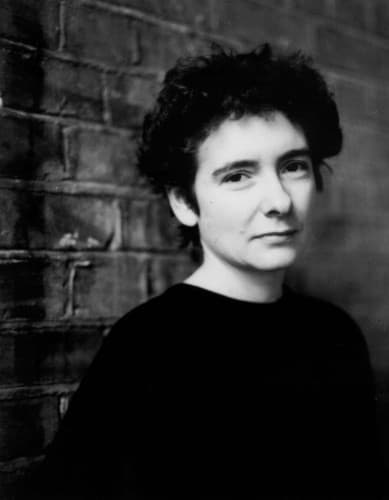
Jeanette Winterson is an English author. Her first book, Oranges Are Not the Only Fruit, was a semi-autobiographical novel about a sensitive teenage girl rebelling against convention. Other novels explore gender polarities and sexual identity and later ones the relations between humans and technology. She broadcasts and teaches creative writing. She has won a Whitbread Prize for a First Novel, a BAFTA Award for Best Drama, the John Llewellyn Rhys Prize, the E. M. Forster Award and the St. Louis Literary Award, and the Lambda Literary Award twice. She has received an Officer of the Order of the British Empire (OBE) and a Commander of the Order of the British Empire (CBE) for services to literature, and is a Fellow of the Royal Society of Literature.

Kay Lynn Mangum
4.3
Stormie Omartian
4.3
Jerry Bridges
4.3
Walter Brueggemann
4.3

Rhonda Byrne
4.3
Brother Lawrence
4.3
Joseph Campbell
4.3

Unknown
4.3