BookBrief
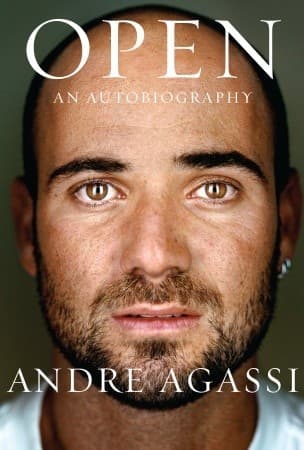
Open cover
Archivist's Choice

Open

Andre Agassi (2009)

Genre

Biography / Memoir

Reading Time

8-10 hours

Key Themes

See below

Track Your Reading

Sign in to track this book

Andre Agassi's 'Open' tells the story of a child tennis prodigy who grew to resent the sport that imprisoned him, battling fame, personal struggles, and injuries to find his own path to redemption and love.

Core Idea

Andre Agassi's "Open" is an honest look at a life lived with immense talent and constant public attention. It argues that a person finds their true self and purpose not through external success, but through a long process of rejecting others' expectations, facing personal problems, and finally accepting who they are, flaws and all. The book shows how Agassi's rebellion against tennis, his father, and his own fame helped him build a meaningful life, supported by love and service beyond the game.
Reading time
8-10 hours
Difficulty
Medium
✓ Read this if...
You are interested in the psychological toll of elite performance, the complexities of identity formation, or a deeply candid look at a celebrity's struggle for authenticity.
✗ Skip this if...
You're looking for a purely technical tennis book or a light, inspirational sports story without significant introspection and darkness.

Core idea

The central argument and framework that powers the entire book.

Andre Agassi's "Open" is an honest look at a life lived with immense talent and constant public attention. It argues that a person finds their true self and purpose not through external success, but through a long process of rejecting others' expectations, facing personal problems, and finally accepting who they are, flaws and all. The book shows how Agassi's rebellion against tennis, his father, and his own fame helped him build a meaningful life, supported by love and service beyond the game.

At a glance

Reading time

8-10 hours

Difficulty

Medium

Read this if...

You are interested in the psychological toll of elite performance, the complexities of identity formation, or a deeply candid look at a celebrity's struggle for authenticity.

Skip this if...

You're looking for a purely technical tennis book or a light, inspirational sports story without significant introspection and darkness.

Key Takeaways

1

The Unbearable Burden of Talent

Raw ability can be a cage if not coupled with genuine passion.

Quote

I play tennis for a living even though I hate tennis, hate it with a dark and secret passion, and always have.

Agassi's memoir shows a deep contradiction: he was a tennis prodigy who hated the sport. His talent was clear, a gift from his demanding father, Mike Agassi, who built a 'dragon machine' to feed him 2,500 balls a day. This early, intense training created a world-class athlete but also caused deep resentment. Agassi's internal conflict—the public image of a tennis star versus his private dislike for the game—is a main theme. It shows how external success, when not connected to a person's own drive, can lead to unhappiness and a feeling...

Supporting evidence

Agassi's vivid descriptions of his father's relentless training regimen, including the 'dragon machine,' and his recurring declaration throughout the book that he 'hates tennis' despite his success.

Apply this

Reflect on activities where you possess talent but lack passion. Consider if you're pursuing external validation at the expense of genuine fulfillment. Seek ways to either rekindle passion or pivot towards endeavors that align with your true interests, even if it means sacrificing some level of 'success.'

passion-vs-talentintrinsic-motivationexternal-validation
2

Identity Forged in Rebellion

Rebellion can be a search for self in the shadow of imposed expectations.

Quote

My identity was tied to my hair, my earrings, my clothes. It was all a mask, but it was my mask.

Agassi's famous 1980s look—neon outfits, long hair, earrings—was more than just fashion. It was an act of defiance against the strict, traditional world of tennis and his father's control. Sent to Nick Bollettieri's academy at 13, a place he called a 'prison,' Agassi's rebellion became his main way to express himself and maintain control. He couldn't choose his sport, but he could choose how he appeared within it. This outward punk style was a protective shield, a way to stand out and show individuality in an environment that demanded...

Supporting evidence

His detailed accounts of dying his hair, piercing his ears, and choosing flashy outfits, specifically linking these choices to his feeling of being a 'ninth-grade dropout' and an outsider at the Bollettieri academy.

Apply this

Examine your own 'rebellions' or non-conformist tendencies. Are they purely reactive, or are they attempts to define your authentic self? Consider how you can constructively assert your individuality in your professional or personal life, even within established structures.

identity-formationconformity-vs-individualityself-expression
3

The Inner Game of Fame

Public adoration can be a hollow substitute for self-acceptance.

Quote

Fame is a monster. It feeds on you, and then it leaves you empty.

Agassi gained great fame and admiration, becoming a global figure, yet he often felt 'empty' and 'confused.' His story reveals the sharp difference between the glamorous public image of a sports superstar and the inner turmoil of the person behind it. He describes how constant scrutiny and expectations from fans and media created a deep sense of isolation. His short, high-profile marriage to Brooke Shields, which he tells with surprising honesty, further shows how external approval and celebrity pairings often fail to address deeper i...

Supporting evidence

Agassi's detailed recollections of his relationship with Barbra Streisand and his marriage to Brooke Shields, where he felt a disconnect between their public image and private struggles. His repeated use of words like 'empty' and 'confused' after major wins.

Apply this

Be wary of seeking validation solely from external sources like social media likes, professional accolades, or public opinion. Cultivate internal sources of self-worth and meaningful relationships that offer genuine connection, independent of your public persona.

celebrity-psychologyself-worthexternal-validation
4

The Power of Mentorship and Connection

True growth often requires guidance from those who see beyond your flaws.

Quote

Brad Gilbert didn't try to change me. He helped me find myself.

After years of struggling with his game and personal problems, Agassi's career—and life—changed significantly with Brad Gilbert as his coach. Gilbert, unlike previous coaches, did not try to change Agassi's game or personality. Instead, he focused on strategy, mental toughness, and, importantly, understanding Agassi as a person. Gilbert's practical, empathetic approach helped Agassi use his raw talent and turn his frustrations into focused energy. This relationship highlights the impact of a mentor who believes in your potential, even...

Supporting evidence

Agassi's detailed accounts of his coaching relationship with Brad Gilbert, including their strategic discussions and Gilbert's ability to motivate him without changing who he was. The role of Gil Reyes as a constant source of encouragement and stability.

Apply this

Actively seek out mentors and advisors who offer not just technical guidance but also emotional intelligence and a belief in your unique strengths. Be open to their perspectives, especially when they challenge your self-limiting beliefs.

mentorship-impactcoaching-philosophyemotional-intelligence
5

Finding Purpose Beyond the Game

Giving back can transform a life of resentment into one of fulfillment.

Quote

I realized that if I was going to hate tennis, at least I could use it for good.

A major turning point for Agassi was starting the Andre Agassi Charitable Foundation and the Andre Agassi College Preparatory Academy. This shift from focusing only on his personal career to philanthropic work, especially in education for disadvantaged youth, gave him a deep sense of purpose. He began to see his tennis career, which he still 'hated,' as a way to an end—a platform to make positive change. This realization changed his relationship with the sport, making it bearable and even meaningful. It shows how shifting one's focus ...

Supporting evidence

The detailed narrative of founding and building the Andre Agassi College Preparatory Academy, and his description of the joy and meaning he derived from seeing the school succeed and its students thrive.

Apply this

Identify areas in your life where you feel a lack of purpose. Consider how your skills, resources, or platform could be leveraged to contribute to a cause greater than yourself. Explore volunteer opportunities or philanthropic endeavors that resonate with your values.

philanthropypurpose-driven-lifemeaning-making
6

The Redemptive Power of Love

A healthy partnership can be the anchor in a turbulent life.

Quote

With Stefanie, I found a partner, a friend, someone who truly understood me.

Agassi's relationship and marriage to fellow tennis legend Stefanie Graf marked a significant change in his life. After the chaos of his previous high-profile relationships, Graf offered stability, understanding, and a shared experience of the unique pressures of professional tennis. Her quiet strength and grounded nature provided a strong contrast to Agassi's earlier chaotic personal life. Their partnership was not just about romance; it was about finding someone who could truly see and accept him, flaws and all. This part of the sto...

Supporting evidence

Agassi's descriptions of his life before and after Stefanie Graf, noting the calm and stability she brought. Their shared understanding of the tennis world and the mutual respect evident in his accounts.

Apply this

Prioritize building relationships based on mutual respect, understanding, and genuine support. Reflect on how your current relationships contribute to your emotional well-being and personal growth. Be open to finding love in unexpected places or forms.

healthy-relationshipsemotional-supportpartnership-dynamics
7

Embracing the Struggle, Finding Grace in the End

Even a hated journey can culminate in profound personal triumph.

Quote

I’ve had a love affair with the game, but it's always been a love-hate relationship.

Agassi's final years on the tour, dealing with severe back pain and facing younger rivals, show his incredible resilience and a reluctant acceptance of his situation. Despite his lifelong 'hate' for tennis, he found a way to compete with dignity and even grace, ending with his emotional farewell at the 2006 US Open. His final speech, acknowledging the fans and his journey, revealed a man who, though scarred, had found peace with his complex legacy. This part of the story shows that even when one's path is filled with inner conflict, e...

Supporting evidence

His vivid descriptions of playing through excruciating back pain in his final years, his epic run at the 1999 French Open, and the raw emotion of his farewell speech at the 2006 US Open.

Apply this

When faced with difficult, long-term commitments, acknowledge your frustrations but seek to find meaning and integrity in the process. Focus on how you show up and endure, rather than solely on the desire for it to end. The journey itself can be a source of strength and growth.

resilienceacceptancelegacy
8

The Cost of Perfectionism and Control

An obsessive drive for control can lead to self-sabotage and internal chaos.

Quote

My father wanted perfection. I craved control.

From his father's constant search for the perfect tennis stroke to Agassi's own inner struggles, 'Open' highlights the damaging effects of perfectionism and the desire for absolute control. Agassi's early problems, including his well-known 'choking' in Grand Slam finals, often came from an overwhelming pressure to perform perfectly and a fear of failure. This drive for control, ironically, often led to a loss of control on the court. His journey to maturity involved letting go of this rigid need, learning to trust his instincts, and a...

Supporting evidence

His accounts of his father's obsessive focus on hitting 2,500 balls a day with the 'dragon machine,' and Agassi's own detailed self-analysis of his mental blocks and 'choking' during crucial matches, particularly in early Grand Slam finals.

Apply this

Identify areas in your life where you might be overly perfectionistic or control-oriented. Practice self-compassion and learn to embrace imperfections as part of the process. Delegate when possible, and focus on progress over flawless execution.

perfectionismcontrol-fearsself-sabotage
9

The Weight of Expectations

Living up to others' dreams can eclipse your own desires.

Quote

My father's dream was my burden.

Agassi's entire career was shaped by the huge expectations placed upon him, first by his father, then by the tennis world. His father, a former Olympic boxer, put his own unfulfilled ambitions onto Andre, carefully shaping him into a tennis champion from an early age. This created an identity crisis for Agassi, as he struggled to tell the difference between his own desires and the path set for him. The book clearly shows the psychological cost of carrying such a heavy burden, demonstrating how external expectations, no matter how well...

Supporting evidence

His descriptions of his father's 'dream' for him to be number one, the rigorous training that began in infancy, and Agassi's constant feeling of being 'pushed' and 'forced' into tennis.

Apply this

Reflect on whose expectations you are currently striving to meet. Distinguish between your own aspirations and those imposed by family, society, or peers. Give yourself permission to redefine success on your own terms, even if it deviates from others' visions for you.

parental-expectationsidentity-struggleself-determination
10

The Unvarnished Truth as Liberation

Radical honesty, even about one's flaws, can be a path to peace.

Quote

I opened up because I had to. It was the only way to be free.

'Open' is notable for its raw, honest approach. Agassi holds nothing back, revealing his wig, his drug use, his hatred for tennis, and his personal failures with surprising frankness. This complete transparency, unusual for a sports memoir, is not just a style choice but a key part of his journey toward self-acceptance. By exposing his vulnerabilities and contradictions, Agassi frees himself from the burden of maintaining a perfect public image. His willingness to reveal the truth, however uncomfortable, shows that true peace often co...

Supporting evidence

His confessions about wearing a wig, using crystal meth, and his explicit declaration of hating tennis throughout his career, all detailed with an almost brutal self-assessment.

Apply this

Consider areas in your life where you might be holding back the truth, either from yourself or others. Explore the potential for liberation and deeper connection that can come from practicing radical honesty, especially about your authentic feelings and experiences.

radical-honestyvulnerabilityself-acceptance

Critical analysis

Notable Quotes

I play tennis for a living even though I hate tennis, hate it with a dark and secret passion, and always have.

Opening lines, revealing his complex relationship with the sport.

A win doesn't feel as good as a loss feels bad.

Reflecting on the psychological impact of competition.

The problem with having a parent as your coach is that it's hard to separate the criticism of your game from the criticism of you.

Discussing his father's coaching and its personal toll.

I’m not a tennis player. I’m a professional tennis player. There’s a difference.

Highlighting the demands and identity of professional sport.

You can play a match and lose it, and still be a winner. You can play a match and win it, and still be a loser.

Reflecting on the deeper meaning of success and failure beyond the score.

The greatest joy of my life is my wife. And what I've learned from her is that love is not a feeling, it's a practice.

Speaking about his marriage to Steffi Graf and the nature of love.

My father hit 2,500 balls a day for eight years. He trained me to hit a tennis ball, and he trained me to hate it.

Describing his rigorous and often brutal childhood training.

What you do in life is not as important as how you do it.

A broader philosophical reflection on his approach to life and tennis.

I want to hit a tennis ball, but I don't want to be a tennis player.

Articulating the internal conflict between his skill and his identity.

The game, for all its beauty and brutality, is a test of will, a test of character, a test of nerve.

Summarizing the essence of tennis beyond mere athleticism.

You can't fake it on the tennis court. You can't hide. Every weakness is exposed.

Emphasizing the intense vulnerability and honesty required in the sport.

I've learned that the only way to be truly happy is to be truly yourself.

A personal realization about authenticity and happiness.

The only thing certain about life is that it will change.

A general observation about the nature of existence and adaptation.

Tennis is a sport of loners, for loners. I was a loner myself, so it was a perfect fit.

Reflecting on the solitary nature of tennis and his own personality.

Quiz

Test Your Knowledge

Ready to see how well you understood this book? Take our interactive quiz with 10 questions.

10
Questions
~5
Minutes
?
Best Score

Key Questions (FAQ)

'Open' delves into Andre Agassi's tumultuous journey through professional tennis, from his childhood training and early struggles with fame to his spectacular comebacks and personal transformations. It offers an intimate look at his inner conflicts and relationships both on and off the court.

About the author

Andre Agassi

Andre Agassi is a former world No. 1 professional tennis player and Olympic gold medalist. His 2009 autobiography, "Open," is a New York Times bestseller, lauded for its candid and introspective portrayal of his life and career on and off the court. The book offers a raw look into the pressures of professional sports and Agassi's personal journey.