Embrace 'Autobifictionalography'
Truth and fiction intertwine to reveal deeper emotional realities.
Quote
I mixed the true and the un-true into something she calls 'autobifictionalography.'
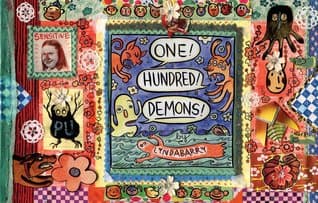
Barry's idea of 'autobifictionalography' asks us to mix memoir and fiction. It doesn't mean making up events, but seeing that memory is creative, shaped by feelings, viewpoint, and time. By feeling free to add to, reframe, or even invent details, Barry finds a deeper emotional truth than a factual story might. This way frees the artist (and reader) from needing exact accuracy, focusing instead on the felt experience and the 'demons' or joys of a moment. It suggests the 'real' story is often beyond facts, in our inner lives.
Supporting evidence
The entire structure of 'One Hundred Demons' exemplifies this, with stories like 'The Thing' or 'Resurrection' where the emotional impact is paramount, regardless of precise historical accuracy.
Apply this
When reflecting on personal experiences for creative work or self-understanding, allow for the possibility that emotional resonance can be more important than strict factual recall. Experiment with re-imagining scenes or conversations to uncover deeper feelings.