BookBrief
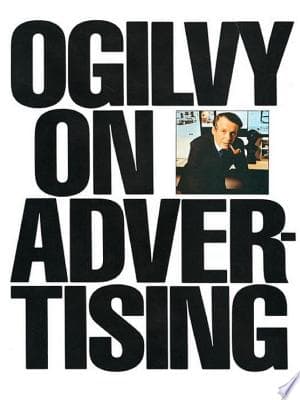
Ogilvy on Advertising cover
Archivist's Choice

Ogilvy on Advertising

David Ogilvy (2013)

Genre

Marketing

Reading Time

240 min

Key Themes

See below

Track Your Reading

Sign in to track this book

David Ogilvy's guide to creating advertising that sells and lasts, sharing his wisdom on Madison Avenue.

Core Idea

David Ogilvy's "Ogilvy on Advertising" says good advertising comes from good research, clear and honest messages, and a focus on results. It promotes building a strong, consistent brand with good visuals and informative writing. The main goal is to sell, not just entertain. Ogilvy argues that effective advertising needs discipline, ongoing learning, and a commitment to understanding customers.
Reading time
240 min
Difficulty
Medium
✓ Read this if...
You are a marketing professional, an aspiring advertiser, a business owner looking to improve your brand's communication, or anyone interested in the foundational principles of effective advertising from a legendary practitioner.
✗ Skip this if...
You are only interested in cutting-edge digital marketing tactics, prefer highly theoretical academic texts over practical advice, or are looking for a book that solely focuses on social media or SEO.

Core idea

The central argument and framework that powers the entire book.

David Ogilvy's "Ogilvy on Advertising" says good advertising comes from good research, clear and honest messages, and a focus on results. It promotes building a strong, consistent brand with good visuals and informative writing. The main goal is to sell, not just entertain. Ogilvy argues that effective advertising needs discipline, ongoing learning, and a commitment to understanding customers.

At a glance

Reading time

240 min

Difficulty

Medium

Read this if...

You are a marketing professional, an aspiring advertiser, a business owner looking to improve your brand's communication, or anyone interested in the foundational principles of effective advertising from a legendary practitioner.

Skip this if...

You are only interested in cutting-edge digital marketing tactics, prefer highly theoretical academic texts over practical advice, or are looking for a book that solely focuses on social media or SEO.

Key Takeaways

1

The Power of Research: Unearthing Your USP

Before creation, deep dive into product and consumer insights.

Quote

I did not want to be a copywriter who was ignorant of research. I know from experience that good research is an invaluable aid to good advertising.

Ogilvy says thorough research is the base of good advertising, not just an extra step. He argues that understanding the product completely—its history, how it's made, its rivals, and its unique selling point (USP)—is key. Just as important is a deep understanding of the target customer: their wants, fears, language, and current opinions. This detailed early work does not stop creativity. Instead, it provides the necessary facts and direction. This keeps campaigns from being based on guesswork or artistic whims. It helps advertisers fi...

Supporting evidence

Ogilvy's success with campaigns like 'The man in the Hathaway shirt' was built on meticulous research into the product's quality and the aspirational image desired by its target market. He also cites his work with Rolls-Royce, where he dug deep into the car's engineering and quietness to craft the iconic headline, 'At 60 miles an hour the loudest noise in this new Rolls-Royce comes from the electric clock.'

Apply this

Dedicate significant time to pre-campaign research. Conduct interviews, analyze existing data, and personally experience the product. Identify the single, most compelling benefit your product offers that competitors do not, or cannot claim as effectively. This USP will be the cornerstone of your entire message.
unique-selling-propositionmarket-researchconsumer-insights
2

Headline is King: The Gateway to Engagement

Craft compelling headlines that stop readers and pull them into the copy.

Quote

On average, five times as many people read the headline as read the body copy. When you have written your headline, you have spent eighty cents out of your dollar.

Ogilvy clearly states that the headline is the most important part of any ad. It decides if a potential customer will read the rest of your message or move on. A good headline must do more than just announce something. It must create curiosity, offer a benefit, or share news that is relevant and interesting to the target audience. He suggests headlines that are clear, specific, and strong, often using active verbs and numbers. The goal is to get attention right away and give a strong reason for the reader to keep reading. A weak or co...

Supporting evidence

Ogilvy famously used headlines like 'At 60 miles an hour the loudest noise in this new Rolls-Royce comes from the electric clock' and 'They laughed when I sat down at the piano—but when I started to play!' These headlines are not just catchy; they convey a powerful benefit or narrative hook that compels further reading.

Apply this

Spend 80% of your copywriting time on the headline. Write at least 20-30 different headlines for each piece of copy, then select the most impactful. Focus on headlines that offer a clear benefit, announce news, or provoke curiosity. Test different headlines to see which ones perform best in terms of engagement and conversion.

headline-writingcopywriting-techniquesattention-capture
3

The Importance of Long Copy: More Information, More Sales

Don't fear detailed explanations; informed customers are buying customers.

Quote

The more facts you tell, the more you sell. An advertisement is not a work of art; it is a selling tool.

Against the modern idea of being short for the sake of it, Ogilvy strongly supports the use of long copy, as long as it contains compelling, useful information. He believed that customers, especially when buying expensive items, want to be well-informed. An ad's main goal is to sell, and selling often means explaining the product's benefits, features, and advantages in detail. Long copy allows for a full argument, addressing possible concerns, building trust, and showing value. It is not about using too many words, but about giving en...

Supporting evidence

Ogilvy's campaigns for Rolls-Royce and Hathaway shirts often featured extensive body copy, detailing the craftsmanship, history, and unique qualities of the products. The success of these campaigns, despite their lengthy text, proved that a well-written, informative sales message could captivate an audience and drive sales.

Apply this

Don't shy away from writing detailed body copy if your product warrants it. Focus on providing valuable information, addressing customer pain points, and highlighting benefits. Structure your copy with subheadings and bullet points to enhance readability. Aim to answer all potential questions a customer might have before making a purchase decision.

long-form-copypersuasive-writinginformation-marketing
4

Build a Brand Image: The Long-Term Investment

Create a consistent, desirable identity that endures beyond individual campaigns.

Quote

Every advertisement should be thought of as a contribution to the complex symbol which is the brand image.

Ogilvy knew that advertising does more than just make immediate sales. It also builds and maintains a distinct brand image over time. He believed that every ad, no matter its specific goal, adds to how a brand is seen overall. This image, a 'complex symbol,' includes everything from product quality and reliability to its inspiring values and emotional connection. Consistent messages, visual style, and tone of voice are key to cementing this image in the customer's mind. A strong brand image builds loyalty, allows for higher prices, an...

Supporting evidence

The 'man in the Hathaway shirt' campaign is a prime example. The eye patch wasn't about the shirt itself, but about building an intriguing, sophisticated persona that became synonymous with the brand, giving it a distinctive and memorable image that transcended mere fabric.

Apply this

Define your brand's core values, personality, and desired perception. Ensure every marketing touchpoint, from ads to customer service, reinforces this consistent image. Develop a distinctive visual and verbal identity that sets your brand apart. Think about the long-term legacy you are building, not just the immediate campaign results.

brand-identitybrand-consistencybrand-equity
5

Visuals Matter: Pictures and Layout for Impact

Effective imagery and clear layout enhance readability and persuasion.

Quote

The picture is the most important element in an advertisement.

While a master of writing, Ogilvy also stressed the important role of visuals in advertising. He believed that the picture is often the first thing a reader sees and can either attract them or turn them away. Images should be relevant, engaging, and tell a story, working with the headline to share the main message. Beyond the image itself, the overall layout and type are important for readability and how it looks. A messy or poorly arranged ad can deter readers, no matter how good its content is. Ogilvy suggested clean, elegant layout...

Supporting evidence

Ogilvy's campaigns frequently featured powerful, often slightly eccentric, imagery, such as the Hathaway shirt man with his eye patch, or the elegant, aspirational scenes for Rolls-Royce. These visuals were memorable and instantly conveyed a sense of sophistication and intrigue.

Apply this

Invest in high-quality, impactful imagery that resonates with your target audience and supports your headline. Ensure your layout is clean, organized, and easy to read, with sufficient white space. Use legible fonts and appropriate font sizes. Test different visual approaches to see what captures attention most effectively.

visual-marketingad-layouttypography
6

The Importance of Direct and Honest Communication

Speak directly to the consumer, offering genuine value and avoiding hyperbole.

Quote

Never write an advertisement which you wouldn't want your own family to read. You wouldn't tell lies to your own family. Don't tell them to mine.

Ogilvy strongly supported honesty and directness in advertising. He believed that customers are smart and can spot dishonesty or overstatement. So, he urged advertisers to avoid exaggeration, misleading claims, and tricks. Instead, the focus should be on clearly sharing real benefits and value. This approach builds trust, which is very important for building long-term customer relationships. Speaking directly to the customer, using their language, and addressing their needs creates a more personal and convincing connection. Ogilvy saw...

Supporting evidence

Ogilvy's 'Confessions of an Advertising Man' and his general approach to client relationships emphasized transparency and straightforward communication. His campaigns, while sophisticated, always conveyed a clear, believable message about the product's benefits, rather than relying on empty promises.

Apply this

Always be truthful and transparent in your advertising. Focus on genuine product benefits and features. Use clear, simple language that resonates with your target audience. Avoid jargon, buzzwords, and exaggerated claims. Write as if you are speaking directly to a trusted friend or family member.

ethical-advertisingtransparent-marketingcustomer-trust
7

Test Everything: Data-Driven Optimization

Never assume; measure, analyze, and refine your advertising efforts.

Quote

Never stop testing, and your advertising will never stop improving.

Ogilvy was a leader in pushing for constant testing and measurement in advertising. He firmly believed that intuition, while useful, must be checked by data. Advertisers should never guess what works. Instead, they should carefully test different headlines, visuals, writing angles, and media placements to find what truly connects with the target audience and gets results. This cycle of testing, analyzing, and improving is key to making campaigns better and getting the most from investments. It changes advertising from an art to a scie...

Supporting evidence

Ogilvy's agency was known for its emphasis on direct response advertising principles, where the effectiveness of different elements (like coupons, calls to action) could be directly measured. He also highlighted the importance of post-campaign analysis to understand what worked and why, informing future strategies.

Apply this

Implement A/B testing for headlines, images, calls to action, and entire ad variations. Track key metrics such as click-through rates, conversions, and engagement. Use data to inform your decisions and continuously optimize your campaigns. Don't be afraid to discard ideas that don't perform well, regardless of initial appeal.

a/b-testingmarketing-analyticscampaign-optimization
8

The Art of Management: Nurturing Talent and Client Relationships

Great advertising stems from a culture that values creativity, respect, and partnership.

Quote

If each of us hires people who are smaller than we are, we shall become a company of dwarfs. But if each of us hires people who are bigger than we are, we shall become a company of giants.

Beyond the technical parts of advertising, Ogilvy spent much time on how to run an agency. He stressed the important role of leadership in encouraging creativity and strong client relationships. He believed in hiring talented people who were 'bigger' than himself, giving them power, and creating a place where they could do well. This meant giving freedom, encouraging curiosity, and building a culture of mutual respect. Also, Ogilvy understood that clients are partners, not just customers. Building trust and open communication with cli...

Supporting evidence

Ogilvy's own agency, Ogilvy & Mather, was renowned for its culture of excellence and intellectual rigor. He famously sent new employees a set of Russian nesting dolls, with a note about hiring people 'bigger than yourself,' symbolizing his philosophy of empowering talent.

Apply this

As a leader, prioritize hiring and nurturing top talent. Create an environment that encourages creative freedom, continuous learning, and intelligent risk-taking. Cultivate open, honest, and long-term relationships with clients, positioning yourself as a trusted advisor rather than just a vendor.

agency-managementtalent-developmentclient-relations
9

The Power of Enthusiasm and Conviction

Believe in your product and your message to genuinely persuade others.

Quote

If you are lucky enough to have a client who believes in your advertising, you will find that he sells more than clients who don't.

Ogilvy quietly but strongly says that real enthusiasm and belief are catching and necessary for good advertising. It is not enough to just make a clever message. The advertiser, and by extension the client, must truly believe in the product and the power of the advertising to sell it. This belief leads to a more convincing and real message, unlike one that feels forced or just about money. When an advertiser is truly excited about a product and confident in the plan, that energy shows in the creative work. This makes it more convincin...

Supporting evidence

While not a specific campaign example, Ogilvy's entire career demonstrates his deep personal commitment to his clients' success and his unwavering belief in the principles of good advertising. His writings themselves are imbued with this conviction, making them highly persuasive.

Apply this

Before launching any campaign, cultivate a deep belief in the product's value and the efficacy of your advertising strategy. Share your enthusiasm with your team and your clients. If you struggle to believe in a product, reconsider your approach or even the product itself, as your lack of conviction will likely undermine your efforts.

persuasionbelief-marketingmarketing-passion
10

Never Stop Learning: The Perpetual Student of Advertising

The best advertisers are lifelong learners, constantly adapting and refining their craft.

Quote

The more you learn, the more you earn.

Ogilvy's "Ogilvy on Advertising" itself shows his belief in always learning. He constantly read, experimented, and observed, urging others in the field to do the same. The advertising world changes, with customer behaviors, technologies, and media channels always evolving. To stay effective, advertisers must always be students, keeping up with new research, trends, and methods. This means not only studying advertising but also understanding psychology, sociology, economics, and various industries. A commitment to lifelong learning pre...

Supporting evidence

Ogilvy's own career trajectory, his constant reference to research findings, and his advice to young advertisers to read extensively and study consumer behavior all point to his belief in continuous learning.

Apply this

Make continuous learning a core part of your professional development. Read widely, attend workshops, analyze successful and unsuccessful campaigns, and actively seek out new knowledge in advertising, psychology, and relevant industries. Never assume you know it all; always be open to new ideas and perspectives.

continuous-learningprofessional-developmentmarketing-education

Critical analysis

Notable Quotes

I do not regard advertising as an entertainment or an art form, but as a medium of information. When I write an advertisement, I don't want you to find it 'creative.' I want you to find it so interesting that you buy the product.

Defining the purpose and nature of advertising.

The consumer is not a moron; she is your wife. You insult her intelligence if you assume that a mere slogan and a few vapid adjectives will persuade her to buy anything.

Emphasizing respect for the consumer's intelligence.

If you are lucky enough to write a classic, it will sell for 50 years.

Discussing the longevity and impact of truly effective advertising campaigns.

Never write an advertisement which you wouldn't want your own family to read. You wouldn't tell lies to your own wife. Don't tell them to mine.

Advocating for honesty and ethical practices in advertising.

On the average, five times as many people read the headline as read the body copy. When you have written your headline, you have spent eighty cents out of your dollar.

Highlighting the critical importance of strong headlines.

Big ideas are usually simple ideas.

Reflecting on the nature of groundbreaking and impactful advertising concepts.

Tell the truth, but make the truth fascinating.

Balancing factual accuracy with compelling presentation.

Search your advertising for a Big Idea. You won't find it if you're not looking for it.

Encouraging a proactive search for transformative advertising concepts.

The more informative your advertising, the more persuasive it will be.

Connecting the provision of information with the ability to convince consumers.

Never stop testing, and your advertising will never stop improving.

Emphasizing the continuous process of experimentation and refinement in advertising.

Don't be a copycat. The only way to succeed is to be original.

Advising against imitation and promoting uniqueness in campaigns.

Advertising people who ignore research are as dangerous as generals who ignore decodes of enemy signals.

Stressing the indispensable role of market research in strategic decision-making.

Our business is to sell, or else it is not advertising.

Reiterating the fundamental commercial objective of all advertising efforts.

If it doesn't sell, it isn't creative.

A pragmatic view on creativity, linking it directly to commercial success.

Quiz

Test Your Knowledge

Ready to see how well you understood this book? Take our interactive quiz with 10 questions.

10
Questions
~5
Minutes
?
Best Score

Key Questions (FAQ)

'Ogilvy on Advertising' serves as a comprehensive guide to the advertising industry, sharing David Ogilvy's personal insights, strategies, and principles for creating effective and successful campaigns. It covers everything from the craft of copywriting to agency management and ethical considerations.

About the author

David Ogilvy was a renowned British advertising executive, often called the "Father of Advertising." His seminal book, "Ogilvy on Advertising," is a foundational text in the field, offering timeless principles and insights into creating effective advertising campaigns. Ogilvy's innovative strategies and groundbreaking work at Ogilvy & Mather significantly shaped modern advertising practices.