BookBrief
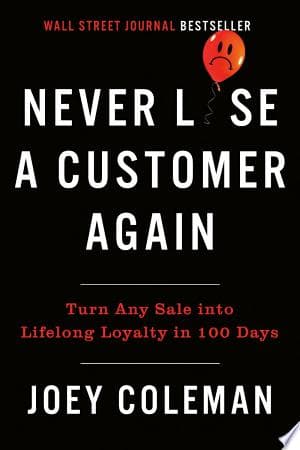
Never Lose a Customer Again cover
Archivist's Choice

Never Lose a Customer Again

Joey Coleman (2018)

Genre

Marketing

Reading Time

240 min

Key Themes

See below

Track Your Reading

Sign in to track this book

Mastering the 'First 100 Days' after a purchase is key to building lasting customer loyalty, turning new buyers into advocates through focused emotional engagement.

Core Idea

The book states that the period after a customer's first purchase, called 'The First 100 Days®', is vital for keeping customers and having them recommend the business. By creating a personal, active, and emotionally relevant onboarding experience during this time, businesses can turn new buyers into loyal, enthusiastic customers. This method moves the focus from just making a sale to building a lasting relationship, using surprise and enjoyable moments, and making customer retention a responsibility for everyone in the company.
Reading time
240 min
Difficulty
Medium
✓ Read this if...
You are a business owner, marketer, salesperson, or customer service professional looking for a structured, actionable framework to significantly improve customer retention and turn new customers into enthusiastic advocates.
✗ Skip this if...
You are only interested in lead generation or closing initial sales and do not believe in the long-term value of customer relationships and retention.

Core idea

The central argument and framework that powers the entire book.

The book states that the period after a customer's first purchase, called 'The First 100 Days®', is vital for keeping customers and having them recommend the business. By creating a personal, active, and emotionally relevant onboarding experience during this time, businesses can turn new buyers into loyal, enthusiastic customers. This method moves the focus from just making a sale to building a lasting relationship, using surprise and enjoyable moments, and making customer retention a responsibility for everyone in the company.

At a glance

Reading time

240 min

Difficulty

Medium

Read this if...

You are a business owner, marketer, salesperson, or customer service professional looking for a structured, actionable framework to significantly improve customer retention and turn new customers into enthusiastic advocates.

Skip this if...

You are only interested in lead generation or closing initial sales and do not believe in the long-term value of customer relationships and retention.

Key Takeaways

1

The First 100 Days® Are Sacred

Customer loyalty isn't built at the sale; it's forged in the critical period immediately following purchase.

Quote

Somewhere between 20%-70% of newly acquired customers will stop doing business with a company within the first 100 days of being a new customer because they feel neglected in the early stages of customer onboarding.

Many businesses incorrectly think that once a sale is made, the customer relationship is secure. However, Coleman states that the 'First 100 Days' after a purchase are the most fragile and important time for keeping customers. This is when initial excitement can quickly turn into regret, fear, and uncertainty. Not paying attention during this time leads to many customers leaving, which affects profits. By actively managing the customer experience during these early days, businesses can stop this loss and set the stage for long-term lo...

Supporting evidence

Coleman highlights that 20-70% of new customers churn within the first 100 days across industries due to feeling neglected.

Apply this

Map out the customer journey for the first 100 days post-purchase, identifying potential emotional highs and lows. Design specific touchpoints and interventions (emails, calls, physical mail, videos, gifts) to support and engage customers during this critical period.
customer-retentioncustomer-onboardingcustomer-lifetime-value
2

Emotion Drives Retention

Anticipate and address the eight emotional phases customers experience post-purchase to build lasting relationships.

Quote

If you can understand and anticipate the customers' emotions, you can apply a myriad of tools and techniques – in-person, email, phone, mail, video, and presents – to cement a long and valuable relationship.

Customers are not purely logical; their buying choices and continued loyalty are greatly affected by emotion. Coleman points out eight different emotional stages customers go through after buying something, from initial excitement to possible fear, doubt, and finally, recommending the product. By understanding these expected emotional changes, businesses can plan experiences that lessen negative feelings and increase positive ones. This emotional understanding allows for personalized communication and support, turning a simple transac...

Supporting evidence

The book details eight distinct emotional phases customers experience after a purchase, applicable to everything from a Starbucks coffee to a house.

Apply this

For each of your customer segments, identify how they might experience the eight emotional phases. Brainstorm specific actions or communications for each phase that would resonate emotionally and address potential concerns or amplify positive feelings.

customer-journey-mappingemotional-intelligencebuyer's-remorse
3

Hold Their Hand Through Acclimation

Over-explaining and simplifying the initial setup process prevents customer frustration and embarrassment.

Quote

In the 'Acclimate' stage, customers need you to hold their hand and over-explain how to use your product or service. They're often too embarrassed to admit they're confused.

A common reason new customers stop using a product or service is difficulty or confusion during the initial setup or onboarding. Customers often feel awkward admitting they do not understand how to use something, which leads to quiet frustration and eventually giving up. The 'Acclimate' stage means actively anticipating these problems and giving clear, simple, and even 'over-explained' instructions. This is not just about manuals; it is about making the learning process engaging and easy to understand, removing any obstacles to succes...

Supporting evidence

PolicyMedical transformed complex installation manuals into a beautiful, engaging puzzle that customers could assemble after completing each milestone, simplifying a non-technical user's onboarding.

Apply this

Review your product/service's onboarding process. Can you simplify instructions, create visual guides, or gamify the learning experience? Provide multiple channels for support, anticipating common questions before they are asked.

onboarding-experienceuser-experiencecustomer-support
4

Welcome Them to the Tribe

Public and private recognition in the 'Adopt' stage fosters a sense of belonging and community.

Quote

In the 'Adopt' stage, customers should be welcomed to the highest tier of tribal membership with both public and private recognitions.

People naturally seek belonging and recognition. The 'Adopt' stage uses this by officially welcoming new customers into the brand's community. This is not just about using the product; it is about identifying with the brand's values and other users. Companies should use both public and private ways to make customers feel special and valued. This sense of belonging makes them less likely to look for other options and instead strengthens their commitment to the brand. It turns customers into members, creating a deeper, more emotional bo...

Supporting evidence

Sephora's VIB Rogue members receive a metallic membership card (private recognition) and an exclusive, members-only shade of lipstick (public display) to signify their elite status.

Apply this

Design a 'welcome to the club' experience for new customers. Consider special welcome kits, unique access to content or events, or even personalized shout-outs. Think about how you can make membership feel exclusive and valuable.

community-buildingbrand-loyaltycustomer-engagement
5

Surprise and Delight for Advocacy

Unexpected generosity and exceptional experiences turn loyal customers into passionate advocates.

Quote

By surprising their loyal fans with amazing referral bonuses (an all-expenses paid safari?!) they guarantee their community will keep providing perfect referrals.

The final stage of customer loyalty is 'Advocacy,' where customers not only stay loyal but also actively promote your brand. This is not achieved through standard marketing; it is earned through consistent, excellent experiences and, importantly, unexpected acts of generosity. Surprise and delight tactics, especially those that go beyond expectations, create strong emotional memories that customers want to share. These 'wow' moments turn passive customers into enthusiastic supporters, generating valuable word-of-mouth referrals and dr...

Supporting evidence

MastermindTalks surprises loyal fans with incredible referral bonuses, like an all-expenses-paid safari, leading to sold-out conferences year after year with no marketing spend.

Apply this

Identify opportunities to surprise and delight your most loyal customers. This could be a personalized thank-you note, a small gift, exclusive early access, or an unexpected upgrade. Focus on genuine gestures that create memorable experiences.

word-of-mouth-marketingcustomer-advocacysurprise-and-delight
6

Minimal Investment, Maximum Impact

Coleman's system focuses on strategic, low-cost interventions that yield significant profit increases.

Quote

Coleman's approach to creating remarkable customer experiences requires minimal financial investment and will be fun for owners, employees, and teams to implement.

A common misunderstanding is that improving customer experience requires large sums of money. Coleman shows that smart, thoughtful, and often low-cost actions can lead to big increases in customer retention and profit. The focus is on creativity, empathy, and consistent action rather than expensive campaigns. By understanding the customer's emotional journey and smartly using simple tools like personalized emails, physical mail, phone calls, or small gifts, businesses can greatly improve loyalty without spending too much. This makes t...

Supporting evidence

Implementing Coleman's methods regularly leads to an increase in profits of 25-100%, even for small businesses and solo entrepreneurs, with minimal financial investment.

Apply this

Brainstorm low-cost, high-impact ways to connect with customers at each stage of their journey. Could you send a handwritten note, a short personalized video, or a small, branded gift? Focus on genuine connection over expensive gestures.

cost-effective-marketingROI-customer-experiencesmall-business-growth
7

Universal Applicability

The 8-phase customer journey is relevant for any industry, company size, or purchase type.

Quote

Applicable to companies in any industry and of any size (whether measured in employee count, revenue, or total number of customers), implementing his methods regularly leads to an increase in profits of 25-100%.

One of the strongest parts of Coleman's method is that it applies to everyone. Whether you are a large company like Hyatt or NASA, a small local shop, or a single entrepreneur, the basic emotional journey customers experience stays the same. The eight phases of the customer journey, from an impulse buy at Starbucks to the careful purchase of a first home, are shared human experiences. This means businesses of all types can adapt and use Coleman's strategies, making sure that customer retention is not just for big companies but a key g...

Supporting evidence

Coleman's system has produced incredible results in dozens of industries, working with clients from Hyatt Hotels and NASA to mom-and-pop shops and solo entrepreneurs.

Apply this

Regardless of your industry or business size, critically analyze your current customer journey through the lens of the eight emotional phases. Identify specific touchpoints where you can improve the experience using the suggested tools.

cross-industry-strategiesscalable-customer-experiencebusiness-growth
8

It's Everyone's Job

Customer retention is not solely the responsibility of customer service; it's a company-wide imperative.

Quote

This book is required reading for business owners, CEOs, and managers - as well as sales and marketing teams, account managers, and customer service representatives...

Customer retention is often kept within customer service departments, but Coleman strongly argues this is a big mistake. Every department, from sales and marketing to product development and accounting, affects the customer experience and, therefore, retention. When an entire organization understands and commits to the ideas of the First 100 Days®, the customer experience becomes smooth and consistently good. This complete approach ensures that customers feel valued at every interaction, strengthening loyalty and making the whole comp...

Supporting evidence

Coleman explicitly states the book is 'required reading' for all key roles: business owners, CEOs, managers, sales, marketing, account managers, and customer service.

Apply this

Organize cross-departmental workshops to educate all teams on the First 100 Days® methodology. Encourage each department to identify how their specific roles can contribute to a better customer experience and retention, fostering a shared sense of responsibility.

customer-centric-cultureorganizational-alignmentemployee-engagement
9

Beyond the Sale: The Relationship Imperative

Shift focus from closing sales to cultivating deep, lasting customer relationships.

Quote

Coleman's theory of building customer loyalty isn't about focusing on marketing or closing the sale: It's about the First 100 Days® after the sale and the interactions the customer experiences.

Many businesses focus heavily on getting new customers, putting resources into marketing and sales to 'close the deal.' Coleman challenges this view, stating that the real measure of success, and the engine of lasting growth, is what happens after the sale. The focus must shift from single transactions to long-term relationships. By prioritizing the customer's experience after purchase and actively nurturing the relationship during the important First 100 Days®, businesses can greatly reduce customer loss, increase the value of each...

Supporting evidence

The core premise of the book is that loyalty is built after the sale, specifically in the First 100 Days®, rather than through initial marketing or closing efforts.

Apply this

Reallocate a portion of your acquisition budget to retention efforts during the First 100 Days®. Train your sales team to set realistic expectations and pass off customer relationships smoothly to the onboarding team, emphasizing the start of a long relationship rather than the end of a sale.

customer-lifetime-valuerelationship-marketingcustomer-centric-strategy
10

Proactive, Not Reactive Support

Anticipate customer needs and issues before they arise to prevent frustration and build trust.

Quote

If you can understand and anticipate the customers' emotions, you can apply a myriad of tools and techniques... to cement a long and valuable relationship.

Traditional customer service often reacts to problems after they happen. Coleman suggests an active approach, where businesses predict common questions, possible frustrations, and emotional changes during the First 100 Days®. By providing information, support, and reassurance before a customer even knows they need it, companies can stop issues from getting worse, make things easier for customers, and build strong trust. This foresight turns the customer experience from potentially frustrating to consistently pleasant, positioning th...

Supporting evidence

The 'Acclimate' stage example with PolicyMedical shows how anticipating user confusion and proactively simplifying the process prevents issues.

Apply this

Conduct a 'pre-mortem' on your customer journey: imagine what could go wrong or what questions customers might have at each stage. Then, design proactive communications or resources to address these points before they become problems. Implement automated check-ins or educational content.

proactive-customer-servicecustomer-successchurn-prevention

Critical analysis

Notable Quotes

The single best way to grow your business isn’t to acquire new customers but to keep the ones you already have.

Early in the book, emphasizing the core premise.

Your customers are not a transaction. They are a relationship.

Highlighting the shift in mindset required for customer experience.

The First 100 Days represent the most vulnerable and most valuable time in the customer relationship.

Introducing the critical importance of the onboarding period.

Every single interaction a customer has with your company either builds or erodes trust.

Discussing the cumulative effect of customer touchpoints.

Surprise and delight are not bonus points; they are essential ingredients for creating raving fans.

Explaining the strategic role of unexpected positive experiences.

People don't just buy products and services; they buy solutions to their problems and feelings.

Emphasizing the emotional and problem-solving aspects of customer needs.

Your customer journey needs to be intentionally designed, not accidentally discovered.

Advocating for a proactive approach to mapping customer experience.

The moments that matter most are often the ones you least expect.

Highlighting the importance of being prepared for unforeseen customer interactions.

You can't fix what you don't measure.

Underlining the necessity of data and metrics in improving customer experience.

Complaints are not problems; they are opportunities disguised as problems.

Encouraging a positive perspective on customer feedback and issues.

The goal isn't just satisfaction; it's advocacy.

Setting a higher bar for customer experience beyond mere contentment.

Every employee is a customer experience architect.

Stressing that customer experience is a company-wide responsibility.

Don't just listen to your customers; hear them.

Distinguishing between passive hearing and active, empathetic listening.

The Customer Experience isn't just a department; it's a philosophy.

Reinforcing that customer experience should permeate the entire organization.

Quiz

Test Your Knowledge

Ready to see how well you understood this book? Take our interactive quiz with 10 questions.

10
Questions
~5
Minutes
?
Best Score

Key Questions (FAQ)

The book's core philosophy is that customer loyalty isn't built through initial marketing or sales, but rather through the experiences a customer has in the 'First 100 Days' after a purchase. By understanding and proactively managing these early interactions, businesses can significantly increase retention.

About the author