BookBrief
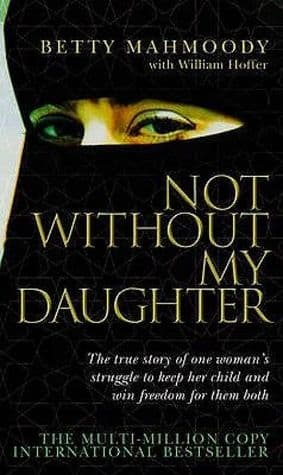
Not Without My Daughter cover
Archivist's Choice

Not Without My Daughter

Betty Mahmoody (1987)

Genre

Biography / Memoir / Spirituality

Reading Time

528 min

Key Themes

See below

Track Your Reading

Sign in to track this book

Trapped in Iran by her fanatical husband, an American mother must navigate a treacherous underground and defy cultural oppression to escape with her young daughter, even if it means leaving her behind.

Core Idea

Betty Mahmoody's 'Not Without My Daughter' chronicles her escape from Iran with her young daughter, Mahtob. Her Iranian-American husband, Moody, took them there for a visit and then refused to let them leave. The book shows how cultural differences, religious fundamentalism, and patriarchal societal structures changed a seemingly loving family man into an oppressive captor. Mahmoody details the psychological abuse, physical threats, and lack of legal recourse she faced as a woman and an American in a foreign legal system. This shows the vulnerability of individuals caught between conflicting cultural and legal frameworks. She plans their escape back to freedom through an underground network of compassionate strangers.
Reading time
528 min
Difficulty
Medium
✓ Read this if...
You are interested in true stories of survival, cultural clashes, and the strength of maternal love, or if you want to understand the challenges faced by individuals trapped in oppressive foreign legal and social systems.
✗ Skip this if...
You are sensitive to detailed descriptions of psychological abuse, cultural insensitivity, or situations involving child endangerment, or if you prefer books with a less intense emotional tone.

Core idea

The central argument and framework that powers the entire book.

Betty Mahmoody's 'Not Without My Daughter' chronicles her escape from Iran with her young daughter, Mahtob. Her Iranian-American husband, Moody, took them there for a visit and then refused to let them leave. The book shows how cultural differences, religious fundamentalism, and patriarchal societal structures changed a seemingly loving family man into an oppressive captor. Mahmoody details the psychological abuse, physical threats, and lack of legal recourse she faced as a woman and an American in a foreign legal system. This shows the vulnerability of individuals caught between conflicting cultural and legal frameworks. She plans their escape back to freedom through an underground network of compassionate strangers.

At a glance

Reading time

528 min

Difficulty

Medium

Read this if...

You are interested in true stories of survival, cultural clashes, and the strength of maternal love, or if you want to understand the challenges faced by individuals trapped in oppressive foreign legal and social systems.

Skip this if...

You are sensitive to detailed descriptions of psychological abuse, cultural insensitivity, or situations involving child endangerment, or if you prefer books with a less intense emotional tone.

Key Takeaways

1

The Illusion of Familiarity

Cultural immersion can reveal a stranger in the most intimate relationship.

Quote

The man I married in America was gone. In Iran, I saw a stranger, a man consumed by a culture I barely recognized.

Betty's experience shows how cultural context shapes identity and behavior, even within a marriage. What she saw as a loving, Americanized husband, 'Moody,' became a different person once back in his native Iran. This was not just a change of scenery, but a re-assimilation into a patriarchal society where his prior liberal leanings were quickly replaced by cultural and religious expectations. The book shows that a person's core values, or their willingness to enforce them, can change when they return to their roots, revealing a hidden...

Supporting evidence

Moody's sudden and complete embrace of fundamentalist Shiite Islam, including his insistence on Betty wearing a chador, his physical abuse, and his legal assertion of control over Betty and Mahtob based on Iranian law, directly contradicts his persona in America.

Apply this

When entering into cross-cultural relationships, it's crucial to thoroughly understand and discuss potential conflicts arising from differing cultural norms, especially concerning gender roles, religious practices, and legal systems, before committing. Don't assume shared values will persist across vastly different societal structures.

cultural-identitymarital-betrayalcross-cultural-relationships
2

The Power of Maternal Instinct

A mother's resolve to protect her child can transcend all fear and logic.

Quote

I knew then that I would never leave Mahtob. If she couldn't go, I wouldn't go. We would live or die together.

Betty Mahmoody's commitment to her daughter, Mahtob, is central to her survival and escape. Faced with the choice of escaping alone and leaving her child, or staying in a dangerous environment, Betty's maternal instinct guided her. This decision was not just emotional; it was an act of defiance against a system meant to separate them and shows a mother's imperative to protect her child. Her refusal to abandon Mahtob, even when offered safer escape routes for herself, highlights the strength that parental love can bring, turning an ord...

Supporting evidence

Betty repeatedly refused offers of escape that did not include Mahtob, enduring severe hardship, abuse, and isolation rather than leaving her daughter behind. This is evident in her interactions with potential helpers and her internal monologues.

Apply this

Recognize and trust the deep wellspring of motivation that can emerge when protecting loved ones. In crisis, focusing on the most vulnerable can provide clarity and purpose, even when personal safety is at risk. Prioritize the well-being of dependents above all else.

maternal-loveresiliencesurvival-instinct
3

Bureaucracy as a Weapon

Legal and administrative systems can become tools of oppression and control.

Quote

The laws were all on his side. I was a woman, an American, and a Christian. I had no rights.

One chilling aspect of Betty's ordeal is how Moody used the Iranian legal and bureaucratic system against her. The very structures meant to provide order and justice became tools for her imprisonment. Iranian law, especially for women and foreign nationals, took away Betty's ability to act, denying her the right to leave, divorce, or keep custody of her child without her husband's permission. This shows how a legal framework can be used to control, especially when cultural biases and political tensions are present. It is a reminder th...

Supporting evidence

Moody's ability to confiscate Betty's passport, obtain a divorce decree against her will, and legally prevent her and Mahtob from leaving the country, all within the bounds of Iranian law.

Apply this

When traveling or living abroad, thoroughly research the local laws regarding women's rights, child custody, divorce, and immigration for your specific nationality. Do not assume your home country's legal protections extend internationally.

legal-oppressionwomens-rights-internationalbureaucratic-control
4

The Peril of Cultural Naivety

Underestimating cultural differences can lead to catastrophic consequences.

Quote

I had thought love was enough. I had thought Moody was Americanized. I was terribly, terribly wrong.

Betty's initial belief that her husband's Americanization was complete, and that their love would bridge cultural gaps, was a miscalculation. Her lack of understanding about the depth of Iranian cultural and religious influence, especially on a man returning to his homeland, put her and her daughter in danger. The book is a warning against superficial understandings of cultural integration, showing that external assimilation does not always erase deeply ingrained societal norms and beliefs. This emphasizes the importance of cultural a...

Supporting evidence

Betty's shock at Moody's sudden transformation, his adherence to restrictive Islamic practices, and his embrace of patriarchal norms that were alien to their life in America.

Apply this

When engaging with vastly different cultures, especially through marriage or long-term relocation, actively seek to understand the underlying values, legal systems, and social expectations, rather than relying on assumptions or superficial observations. Engage with diverse sources and perspectives.

cultural-misunderstandingethnocentrismassimilation-challenges
5

The Invisible Network of Kindness

Amidst oppression, unexpected allies can emerge from the most unlikely places.

Quote

Even in the darkest corners, there were people willing to risk everything to help a stranger.

Despite the fear and control in Iran, Betty and Mahtob found help from a network of brave individuals who risked their own safety. These were not just professional rescuers, but ordinary Iranians—doctors, shopkeepers, even members of Moody's own family—who, driven by compassion or a sense of justice, provided shelter, information, and aid. This shows the human capacity for empathy and resistance, even under authoritarian rule. It demonstrates that even in oppressive environments, humanity and defiance can exist, offering hope and supp...

Supporting evidence

The kind doctor who provided her with a false medical certificate, the shopkeeper who discreetly helped her with phone calls, and the various individuals involved in the 'underground' network who facilitated their escape.

Apply this

When facing extreme adversity, remain open to unexpected sources of help and kindness. Cultivate connections and observe who might be willing to assist, even if their aid is subtle or requires courage on their part.

human-compassionunderground-resistanceunexpected-allies
6

Psychological Warfare and Control

Isolation and manipulation are potent tools for subjugation.

Quote

He didn't just imprison my body; he tried to imprison my mind, to make me believe I had no choice.

Beyond physical confinement, Betty endured psychological attacks. Moody isolated her from support, took her money and passport, and reminded her of her powerlessness within Iranian law. He used fear, threats, and emotional manipulation to break her spirit and make her obey. This tactic is common in abusive relationships and authoritarian control, aiming to erode a victim's self-worth until they believe escape is impossible. The book shows how psychological tactics can be as effective as physical barriers in controlling someone.

Supporting evidence

Moody's threats to separate Mahtob from Betty, his constant surveillance, his control over their finances, and his repeated assertions that Betty had no legal rights in Iran.

Apply this

Recognize the signs of psychological manipulation and isolation in relationships. Maintain independent financial access, communication channels, and social networks to resist attempts at control. Document abusive behavior when possible.

gaslightingdomestic-abusepsychological-manipulation
7

The False Promises of Religious Zealotry

Religious conversion can mask personal grievances and justify cruelty.

Quote

His newfound piety was a convenient excuse for his cruelty, a shield behind which he could hide his true intentions.

Moody's sudden and extreme embrace of Shiite Islam, especially its fundamentalist interpretations, served as a justification for his abusive behavior and the imprisonment of his family. While he presented his actions as religious duty, Betty saw it as a cover for insecurity, a desire for control, and a way to regain status within his family and community. This shows how religious fervor, when not connected to compassion and interpreted through a lens of power, can be used to rationalize cruelty and oppression. It raises questions abou...

Supporting evidence

Moody's selectively applying religious tenets (e.g., forbidding Betty from leaving but allowing himself liberties), and his use of 'Allah's will' to justify his control and violence, often contradicting his prior, more secular behavior.

Apply this

Be wary of sudden, extreme shifts in a partner's religious or ideological beliefs, especially if these shifts lead to increased control, isolation, or justification for abusive behavior. Observe actions more than professed beliefs.

religious-fanaticismabuse-of-powerhypocrisy
8

The Enduring Scars of Trauma

Escape from captivity does not erase the deep psychological wounds.

Quote

We were free, but the shadows of Iran followed us home, etched into our minds.

Even after their escape, Betty and Mahtob carried the psychological scars of their ordeal. The constant fear, abuse, deprivation, and betrayal affected their mental and emotional well-being. The book touches on the struggle for recovery, hinting that freedom is only the first step in a longer healing journey. This emphasizes that trauma is a deep wound that needs ongoing care and understanding. It challenges the idea that 'getting out' is the end of the story, showing the complex battles survivors face long after the physical threat h...

Supporting evidence

Betty's description of Mahtob's night terrors, her own hyper-vigilance, and the lasting fear of being recaptured, even years after their return to America.

Apply this

Recognize that survivors of trauma, especially prolonged captivity or abuse, require compassionate, long-term support for psychological healing. Be patient and understanding with their recovery process, which may involve therapy and ongoing emotional support.

post-traumatic-stresshealing-from-traumasurvivor-experience
9

The Global Divide in Human Rights

Human rights are not universally guaranteed, especially for women.

Quote

My American rights meant nothing there. I was a woman in Iran, and my rights were whatever my husband decided they were.

Betty's story illustrates the disparity in human rights, especially women's rights, across different nations and cultures. What is a fundamental right in one country—freedom of movement, legal autonomy, protection from abuse—is absent or restricted in another. Her powerlessness under Iranian law, where women are considered legal minors and property of their husbands, shows the importance of international advocacy for universal human rights. The book is a reminder that the fight for gender equality and basic human dignity is not over g...

Supporting evidence

Betty's inability to divorce Moody, leave the country, or secure custody of Mahtob without his permission, all legally sanctioned within Iran, contrasts sharply with her rights as an American citizen.

Apply this

Support international organizations working to promote human rights and gender equality globally. Educate yourself and others on the varying legal statuses of women and minorities in different countries.

womens-rightshuman-rights-violationsgender-inequality-global
10

The Indomitable Human Spirit

Even in the face of overwhelming odds, the will to survive can prevail.

Quote

I had to be strong, not just for Mahtob, but for myself. I would not break.

Betty Mahmoody's journey shows the resilience of the human spirit. Despite constant threats, abuse, cultural isolation, and legal and logistical barriers, she never gave up. Her determination, resourcefulness, and hope, fueled by her love for Mahtob, allowed her to navigate a dangerous and oppressive environment. This emphasizes that even in dire circumstances, the human capacity for endurance, adaptation, and the will to survive can lead to feats of courage and freedom. It is a message about inner strength and perseverance.

Supporting evidence

Betty's meticulous planning, her ability to learn Farsi and navigate the city, her resourcefulness in finding help, and her sheer physical and mental endurance during the arduous escape journey through mountains and deserts.

Apply this

Cultivate resilience by focusing on an ultimate goal, breaking down overwhelming challenges into smaller steps, and maintaining a belief in one's capacity to overcome adversity. Seek support and inspiration from stories of survival.

resilienceperseverancecourage

Critical analysis

Notable Quotes

I will never forget the look on his face when he said, 'You are in Iran now. You will live by Iranian rules.'

Moody revealing his true intentions to Betty shortly after their arrival in Iran.

My mind kept replaying the words: 'You are an American. You have rights.' But I had no rights here.

Betty reflecting on her lack of legal standing and freedom in Iran.

Every morning I woke up with the same thought: 'How am I going to get Mahtob out of here?'

Betty's constant preoccupation with escaping Iran with her daughter.

He was a different man. The gentle, loving husband I knew was gone, replaced by a stranger.

Betty observing Moody's drastic personality change after returning to Iran.

I had to pretend to be a good Muslim wife, even though every fiber of my being screamed against it.

Betty describing the facade she had to maintain to survive and plan her escape.

Mahtob was my strength, my reason for fighting, my hope.

Betty emphasizing her daughter's role as her primary motivation.

The only way out was to trust in God and in myself.

Betty's realization that she had to rely on her faith and inner strength.

Fear was a constant companion, but I couldn't let it paralyze me.

Betty acknowledging her fear but refusing to let it control her actions.

Every day was a step closer to freedom, or a step closer to being trapped forever.

Betty's daily struggle and the high stakes of her situation.

The kindness of strangers, even in the darkest of times, can be a beacon of hope.

Betty reflecting on the help she received from unexpected sources during her escape.

I learned that true strength isn't about physical power, but about the will to survive.

Betty's personal growth and understanding of resilience through her ordeal.

The silence of the American government was deafening.

Betty's frustration with the lack of official assistance from her home country.

We were not just escaping a country; we were escaping a life sentence.

Betty's profound understanding of the gravity of their situation.

Freedom is not free. It is something you have to fight for, sometimes with your very life.

Betty's ultimate realization about the cost of liberty.

Quiz

Test Your Knowledge

Ready to see how well you understood this book? Take our interactive quiz with 10 questions.

10
Questions
~5
Minutes
?
Best Score

Key Questions (FAQ)

'Not Without My Daughter' is a biographical memoir by Betty Mahmoody detailing her harrowing experience in Iran. What started as a two-week vacation with her Iranian-American husband and young daughter turned into a permanent captivity, as her husband, rededicating himself to his Shiite Muslim faith, refused to let them leave. The book chronicles Betty's desperate struggle to escape Iran with her daughter.

About the author

Betty Mahmoody is an American author best known for her 1987 memoir, 'Not Without My Daughter.' The book details her harrowing experience escaping Iran with her daughter after her husband took them there under false pretenses. Mahmoody's work provides a stark look at the challenges faced by women in certain patriarchal societies.