BookBrief
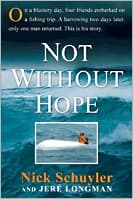
Not Without Hope cover
Archivist's Choice

Not Without Hope

Nick Schuyler (2010)

Genre

Biography / Memoir

Reading Time

240 min

Key Themes

See below

Track Your Reading

Sign in to track this book

Clinging to a propeller in the vast Atlantic, a former college football star recounts the unimaginable boating tragedy that claimed three friends, including two NFL players, and tested the very limits of his will to survive.

Core Idea

Not Without Hope is a first-person account of a fishing trip that went wrong, detailing the four days Schuyler and his friends spent clinging to an overturned boat in the Gulf of Mexico. The book chronicles the physical and psychological toll of extreme exposure, the rapid change from normalcy into a desperate struggle for survival, and the impact of witnessing friends succumb to the elements. It is a stark reminder of how quickly life can change from routine to a fight for existence.
Reading time
240 min
Difficulty
Medium
✓ Read this if...
You are interested in true stories of survival against extreme odds, the psychological impact of disaster, and the raw realities of human endurance in life-or-death situations at sea.
✗ Skip this if...
You are sensitive to graphic descriptions of suffering, death, and the grim details of human decomposition, or prefer books with a more analytical rather than purely narrative focus on survival.

Core idea

The central argument and framework that powers the entire book.

Not Without Hope is a first-person account of a fishing trip that went wrong, detailing the four days Schuyler and his friends spent clinging to an overturned boat in the Gulf of Mexico. The book chronicles the physical and psychological toll of extreme exposure, the rapid change from normalcy into a desperate struggle for survival, and the impact of witnessing friends succumb to the elements. It is a stark reminder of how quickly life can change from routine to a fight for existence.

At a glance

Reading time

240 min

Difficulty

Medium

Read this if...

You are interested in true stories of survival against extreme odds, the psychological impact of disaster, and the raw realities of human endurance in life-or-death situations at sea.

Skip this if...

You are sensitive to graphic descriptions of suffering, death, and the grim details of human decomposition, or prefer books with a more analytical rather than purely narrative focus on survival.

Key Takeaways

1

The Unpredictability of Disaster

Even well-planned outings can turn catastrophic in an instant.

Quote

One minute we were laughing, enjoying a beautiful day on the water, the next we were fighting for our lives.

Schuyler's account shows how fragile life is and how suddenly disaster can strike. What started as a fishing trip with experienced boaters quickly became a fight for survival. The book reminds us that even with preparation and skill, factors like unexpected weather, equipment failure, or human error can lead to life-threatening situations. This is not about blame, but about recognizing risks in seemingly safe activities and how fast circumstances can worsen beyond control, emphasizing the need for constant awareness and respect for na...

Supporting evidence

The sudden anchor line snap and the immediate capsizing of the boat, which happened so quickly that the men had no time to don life vests or make a distress call.

Apply this

Always have an emergency plan, communicate it to everyone on board, and ensure all safety equipment (e.g., life vests, flares, EPIRB) is easily accessible and functional, even for short trips. Practice emergency drills.


unforeseen-dangermaritime-safetysudden-disaster
2

The Cruel Lottery of Survival

Survival often hinges on a combination of luck, physical endurance, and sheer will.

Quote

Every wave was a test, every hour a battle against the cold and the crushing realization of what we'd lost.

Schuyler's survival, while showing his fortitude, also highlights the random nature of who lives and who dies in such bad situations. Despite the group's athletic ability, the ocean was an indiscriminate killer. Factors like initial position, body fat, resistance to hypothermia, and mental strength all played roles. Schuyler's ability to cling to the propeller gave him a slight advantage, but the agonizing wait and his friends' slow decline show that survival is often a cruel lottery, where even the strongest can be overcome by nature...

Supporting evidence

The contrasting fates of Schuyler, who clung to the propeller and was eventually rescued, and his friends, who succumbed to hypothermia and exposure despite being strong swimmers.

Apply this

While you cannot control luck, you can improve your chances by prioritizing physical fitness, mental toughness, and acquiring survival skills. Never underestimate the importance of staying calm under pressure and conserving energy.

survival-instincthuman-endurancehypothermia-risk
3

The Weight of Survivor's Guilt

Living through a tragedy when others don't leaves an indelible emotional scar.

Quote

Why me? Why was I the one who made it out of that water when my friends didn't?

Beyond the physical ordeal, Schuyler struggles with survivor's guilt. This is not just a passing emotion; it is a persistent questioning of his right to live when loved ones died. The memoir reveals the deep psychological toll, as Schuyler recounts replaying events, searching for different outcomes, and the burden of being the only witness to his friends' final moments. This guilt often appears as a struggle to find joy, a feeling of being undeserving, and a sense of responsibility to honor the lost. It is a critical part of trauma re...

Supporting evidence

Schuyler's recurrent nightmares, his difficulty returning to normal life, and his constant internal dialogue questioning why he was spared while his friends were not.

Apply this

If experiencing survivor's guilt, seek professional psychological support. Talk openly about your feelings with trusted friends or family. Engage in activities that honor the memory of those lost, channeling grief into purpose.

trauma-recoverygrief-processingmental-health
4

The Power of a Single Anchor Point

Even a small point of contact can make the difference between life and death.

Quote

That propeller was my lifeline. Without it, I would have been just another body adrift.

One of the most striking details of Schuyler's ordeal is his desperate grip on the boat's propeller. This small detail was critical for his survival. In the vast ocean, having even a single, fixed point to cling to provided stability, saved energy, and offered a psychological focus. Without it, the current and waves would have quickly separated the group and exhausted Schuyler sooner. This shows the importance of using any available resource, no matter how small, to stay grounded in a crisis. It is a strong metaphor for finding stabil...

Supporting evidence

Schuyler explicitly states that clinging to the propeller allowed him to stay with the boat and avoid being swept away, significantly extending his endurance.

Apply this

In any crisis, immediately assess your surroundings for any object or strategy that can provide stability, leverage, or an anchor point. Don't dismiss small advantages; they can be cumulative.

resourcefulnesscrisis-managementsurvival-tactics
5

The Dehumanizing Effect of Exposure

Extreme cold and dehydration rapidly strip away human faculties.

Quote

The cold was a constant, gnawing pain that slowly stole our thoughts, our words, our very will.

Schuyler describes the progression of hypothermia and dehydration. The book is an account of how quickly these elements degrade not just physical strength but also mental clarity, decision-making, and communication. The men's conversations become disjointed, their movements slow, and their hope fades as their bodies shut down. This warns about how fast extreme exposure can turn capable individuals into vulnerable, disoriented shells, showing why immediate rescue is important and how crucial it is to understand the symptoms of these co...

Supporting evidence

The detailed descriptions of his friends' declining mental states, their difficulty speaking coherently, and their eventual quiet succumbing to the elements.

Apply this

Educate yourself on the signs of hypothermia and dehydration. In an emergency, prioritize staying warm, hydrated (if possible), and maintaining morale to stave off the mental and physical decline.

hypothermia-effectsdehydration-riskssurvival-physiology
6

The Power of the Human Spirit

Even in the face of overwhelming despair, the will to live can persist.

Quote

I promised myself I wouldn't give up. I had to get home, for me, for them.

Despite witnessing his friends' deaths and enduring days of extreme cold, thirst, and hunger, Schuyler's resolve to survive never broke. His internal thoughts, memories of loved ones, and a determination to return home fueled his fight. This shows the resilience of the human spirit, even when physical resources are gone and hope seems lost. It is a testament to the instinct for self-preservation and the impact that personal connections and future goals can have on one's ability to endure suffering. This is the core message of 'Not Wit...

Supporting evidence

Schuyler's consistent internal fight against giving up, his focus on his family and friends, and his relentless effort to stay awake and alert despite extreme exhaustion.

Apply this

Cultivate mental resilience through mindfulness, goal-setting, and strong social connections. In a crisis, focus on small victories, visualize rescue, and remember your 'why' to sustain your will to live.

resiliencemental-fortitudewill-to-live
7

The Illusion of Control

Nature's indifference can shatter even the most confident assumptions.

Quote

We thought we knew the water, but it showed us how little we truly understood.

The men on the boat were experienced, athletic, and seemed prepared for a day on the water. Yet, the ocean quickly took away any illusion of control. The incident is a reminder that human strength, technology, and experience are often secondary to nature's raw power. This shows the importance of humility when interacting with powerful natural environments and the constant need for respect, caution, and an understanding that even good plans can be undone by factors beyond human influence. It challenges the idea that humans can control ...

Supporting evidence

The sudden and unpreventable capsizing of the boat, despite the men's efforts and experience, and the overwhelming scale of the ocean that dwarfed their struggle.

Apply this

When engaging in outdoor activities, particularly those involving nature's powerful elements, always err on the side of caution. Over-prepare, respect weather warnings, and never assume you have complete control.

nature's-powerhumilityrisk-assessment
8

The Indispensable Role of Search and Rescue

Professional search efforts are a beacon of hope in the darkest times.

Quote

When I saw that plane, I knew I wasn't alone anymore. It was the most beautiful thing I'd ever seen.

Schuyler's rescue by the Coast Guard, after days adrift, highlights the critical role of professional search and rescue operations. Their systematic approach, technology, and dedication are the last line of defense in such emergencies. The book shows the importance of funding these agencies, as their readiness directly saves lives. For Schuyler, the rescue plane was not just a physical salvation but a psychological shift, pulling him back from despair and proving he had not been forgotten.

Supporting evidence

The detailed account of the Coast Guard's coordinated search efforts, the use of aircraft, and the eventual spotting of Schuyler, leading to his rescue.

Apply this

Support search and rescue organizations through donations or advocacy. If embarking on serious marine or wilderness adventures, ensure you have an EPIRB/PLB and have filed a float plan, facilitating potential rescue.

coast-guardemergency-servicesrescue-operations
9

The Long Road to Healing

Physical survival is only the first step in recovering from profound trauma.

Quote

The ocean let me go, but it left its mark on my soul. Healing wasn't a finish line, but a journey.

The memoir makes it clear that surviving the ordeal was not the end of Schuyler's struggle; it was the beginning of a long journey toward healing. Physical scars fade, but the invisible wounds of losing friends, enduring suffering, and dealing with survivor's guilt persist. Schuyler's story shows that true recovery involves confronting trauma, seeking support, and integrating the experience into a new understanding of life. It is a continuous process of grief, remembrance, and rebuilding, showing that support systems and professional ...

Supporting evidence

Schuyler's ongoing struggles with grief, his need for therapy, and his efforts to come to terms with the loss and his own survival in the years following the accident.

Apply this

Recognize that recovery from trauma is a marathon, not a sprint. Be patient with yourself, seek professional help (therapy, support groups), and allow yourself to grieve and process the experience fully.

post-traumatic-growthemotional-recoverygrief-counseling
10

The Enduring Power of Friendship

Loss deepens the appreciation for the bonds forged in life.

Quote

They were more than just friends; they were brothers. And their memory will forever be a part of who I am.

Despite the horrific circumstances of their deaths, Schuyler's memoir is a tribute to the friendships he shared with the men he lost. The book shows his love and respect for them, highlighting their impact on his life. Even while fighting for his own survival, his thoughts return to his friends, their lives, and shared moments. This shows that while tragedy can take away physical presence, it cannot erase the power of human connection and the lasting legacy of those we love. It is a reminder to cherish relationships and honor the memo...

Supporting evidence

Schuyler's extensive recollections of his friends' personalities, their shared experiences, and his ongoing commitment to keeping their memories alive.

Apply this

Actively nurture your friendships and relationships. Express your appreciation for loved ones. In times of loss, honor their memory through actions, stories, and continuing their positive influence.

friendship-bondslegacy-of-loveremembrance

Critical analysis

Notable Quotes

When you're fighting for your life, there's no room for anything else.

Reflecting on the sheer focus required during the ordeal.

Every sunrise was a gift, a promise of another chance to be found.

Describing the emotional significance of each new day at sea.

The ocean gives and the ocean takes, and sometimes it takes everything.

A somber realization about the power and indifference of the sea.

You don't know how strong you are until being strong is the only choice you have.

A personal reflection on discovering inner strength under duress.

The hardest part wasn't the physical pain, but the mental battle against despair.

Highlighting the psychological toll of being lost at sea.

In the vastness of the sea, we were just specks, forgotten and alone.

Conveying the overwhelming sense of isolation experienced.

Even in the darkest moments, a flicker of hope can keep you going.

Emphasizing the importance of maintaining hope against all odds.

The memory of my friends fueled my fight to survive.

Explaining a key motivator for continuing to endure.

Thirst became a constant companion, a relentless tormentor.

Describing the severe physical challenges faced.

Life can change in an instant, and you're never truly prepared for it.

A reflection on the sudden and drastic turn of events.

The will to live is a powerful force, even when everything else is gone.

Summarizing the core human drive to survive.

Every wave brought a mix of fear and a desperate prayer for rescue.

Illustrating the constant emotional rollercoaster experienced.

Survival isn't just about staying alive; it's about finding a reason to.

A deeper insight into the psychological aspect of survival.

The silence of the open ocean was both terrifying and strangely calming.

Describing the paradoxical nature of the environment.

Quiz

Test Your Knowledge

Ready to see how well you understood this book? Take our interactive quiz with 10 questions.

10
Questions
~5
Minutes
?
Best Score

Key Questions (FAQ)

'Not Without Hope' is Nick Schuyler's gripping memoir detailing the tragic boating accident that claimed the lives of three friends, including NFL players Marquis Cooper and Corey Smith. It chronicles his fight for survival while clinging to the boat's propeller in the Atlantic.

About the author